

TL;DR:
- Develop a pet-inclusive evacuation plan with routes, shelters, and backup caregivers.
- Assemble a 7-10 day emergency kit with food, water, records, and identification.
- Keep identification, microchips, and medical records current for quick reunification.
When disaster strikes, pet owners face a gut-wrenching choice: leave now or wait until their animals are safe. Studies show that pet owners delay evacuation without pet provisions, putting themselves at greater risk. That hesitation is understandable, but it is also preventable. A solid, practiced plan changes everything. This guide walks you through every critical step, from building a pet-inclusive evacuation plan to assembling the right emergency kit, keeping identification current, and handling the unique needs of service animals. Your pets are family. Let’s make sure your emergency planning treats them that way.
Table of Contents
- Develop a pet-inclusive evacuation plan
- Assemble a comprehensive pet emergency kit
- Keep identification and medical records current
- Special considerations for service and special needs pets
- Emergency action steps and recovery tips
- A perspective you won’t find in most emergency guides
- More expert pet safety resources
- Frequently asked questions
Key Takeaways
| Point | Details |
|---|---|
| Never leave pets behind | Abandoning pets during emergencies is fatal and avoidable with proper planning. |
| Build a detailed evacuation plan | Include pets in your household evacuation route and shelter arrangement. |
| Prep a customized emergency kit | Every pet needs a ready-to-go bag with food, ID, and health supplies. |
| Stay updated on pet ID | Regularly update microchip info and display current rescue decals on doors. |
| Practice and adapt | Routine drills and adaptable plans ensure all pets are protected, even those with special needs. |
Develop a pet-inclusive evacuation plan
Building an evacuation plan that actually includes your pets takes more than good intentions. You need mapped routes, confirmed destinations, and backup contacts, all tested before a crisis hits.
Start by researching pet-friendly shelters and hotels along at least two evacuation routes from your home. Not every emergency shelter accepts animals, so you cannot assume one will be available. Call ahead, confirm policies, and save that information somewhere easy to grab in a hurry. The AKC’s dog evacuation planning resource is a solid starting point for identifying what to look for.
Next, build a buddy system. Identify at least two trusted people, a neighbor, a family member, a close friend, who can care for your pets if you cannot reach them in time. Share your plan with each person, give them a spare key, and make sure they know where your pet’s supplies are stored. This backup network is not optional. It is the safety net that catches everyone if your primary plan falls apart.
For multi-pet households, create a written checklist of every animal in your home. Assign a person responsible for each pet during evacuation. Panic causes people to forget things. A written list removes that risk.
Here are the core elements your pet evacuation plan should cover:
- At least two pet-friendly shelter or hotel options per route
- Names and contact numbers for two backup caregivers
- A written list of all pets with descriptions and photos
- A designated meeting point if household members separate
- Scheduled yearly reviews to update shelter info and contacts
- A plan for transporting multiple animals safely
For context on how seriously this matters, consider what FEMA says directly: never leave pets behind, as they cannot survive alone. That is not a suggestion. It is a life-safety principle.
“The time to find out your plan has gaps is during a drill, not during a wildfire evacuation.”
Practice matters more than most owners realize. Run a mock evacuation with your pets at least once a year. See how long it takes to load carriers, leash every dog, and get everyone into the car. You will likely find inefficiencies you never noticed. Our dog emergency preparedness guide covers additional drills and scenario planning to help you stress-test your approach. Also review FEMA’s hurricane season pet guidance for seasonal-specific planning tips.
Assemble a comprehensive pet emergency kit
With your evacuation plan set, the next critical step is making sure your pet’s needs can be met no matter what. An emergency kit is not a luxury. It is the difference between managing a crisis and scrambling through one.
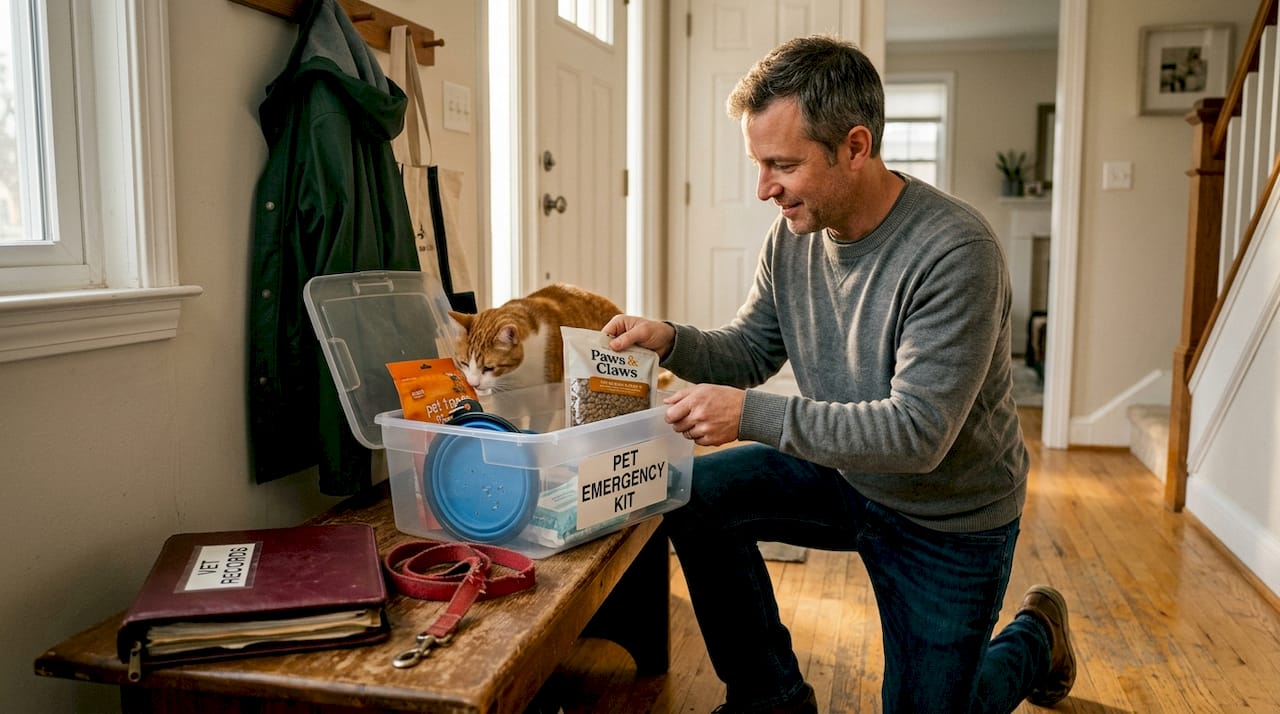
A well-stocked kit should cover at least 7 to 10 days. According to pet preparedness guidelines, every kit needs food and water, medications, medical records, ID tags and microchip documentation, a leash or carrier, first aid supplies, sanitation items, and a photo of your pet with you for identification.
Here is a numbered checklist to build your kit step by step:
- Pack 7 to 10 days of food in a sealed, waterproof container
- Store one gallon of water per pet per day for the same period
- Include all current medications with dosing instructions written out
- Add copies of vaccination records and vet contact information
- Place ID tags, microchip records, and a recent photo in a waterproof bag
- Pack a leash, harness, and a secure carrier appropriate for your pet’s size
- Include a basic pet first aid kit with gauze, antiseptic, and a thermometer
- Add sanitation supplies: waste bags, litter, a small litter box if needed
Different pets need different kit adjustments. Here is a quick reference:
| Pet type | Key additions |
|---|---|
| Dogs | Familiar toys, collapsible bowl, extra leash |
| Cats | Covered litter box, calming spray, pillowcase for quick transport |
| Birds | Covered travel cage, heat pack, familiar perch |
| Reptiles | Heat source, UV lamp, secure locking container |
| Fish | Battery-powered aerator, sealed transport bag, water conditioner |
Store your kit in a single bag or bin near your exit. Do not split supplies across multiple rooms. In a real emergency, you will not have time to gather pieces from different locations. Review and restock every six months, checking expiration dates on food, medications, and first aid supplies.
Pro Tip: Photograph the contents of your kit and save the image to a cloud account. If your kit is lost or damaged, you will have an instant reference list for replacing everything quickly.
For owners with emergency skills for dogs already in place, a well-stocked kit paired with trained behavior dramatically improves outcomes. Also bookmark FEMA’s disaster preparedness page for updated guidance as conditions change year to year.
Keep identification and medical records current
Even the best emergency kit cannot help if your pet is lost or cannot be identified. Keeping ID and records current is one of the simplest and most overlooked parts of pet emergency planning.
FEMA recommends that owners ensure up-to-date vaccinations, microchip registration, and visible ID tags, and place rescue alert stickers on doors indicating pets are inside. Critically, remove those stickers when you evacuate so that first responders do not waste time searching an empty home.
Here is what a complete identification setup looks like:
- A collar with a current ID tag showing your name, phone number, and city
- A registered microchip with updated contact information in the national database
- Vaccination records stored in both physical and digital formats
- A recent photo of your pet alongside you, useful if reunification is needed
- Rescue alert stickers on front and back doors listing the number and type of pets inside
The photo with you is a detail many owners skip. In a chaotic shelter environment, a photo of just your pet is not always enough. A photo of you together removes any doubt about ownership and speeds up reunification significantly.
For microchip for pets details, including how to check and update your registration, that resource walks through the process step by step. Microchips are only effective if the registration is current. Many owners chip their pets and never update the contact information after moving.
Pro Tip: Use a free cloud storage folder to keep digital copies of your pet’s vaccination records, microchip certificate, and ID photos. Share access with your emergency backup contacts so they can assist even if you are unreachable.
For emergency signals for pets and how to communicate your pet’s status to responders, that guide covers practical signaling methods beyond standard stickers. Also review official dog evacuation guidance for additional ID documentation tips.
Special considerations for service and special needs pets
Extra steps are needed for those with service or special needs pets. Here is how to make sure no member of your family is left behind.
Under the PETS Act and ADA, service animals must evacuate with their handlers. Shelters that accept people must accommodate service animals. Knowing this in advance prevents confrontations during stressful evacuations. Carry documentation of your animal’s service status at all times.
Here is a comparison of standard pet planning versus service animal planning:
| Planning element | Standard pets | Service animals |
|---|---|---|
| ID requirements | Tag and microchip | Tag, microchip, and service status documentation |
| Shelter access | Pet-friendly facilities only | All public shelters under ADA |
| Go-bag contents | Food, meds, records | Add task documents, uniform, comfort items |
| Evacuation drills | Recommended | Required for handler and animal together |
| Stress management | Familiar toy or blanket | Practiced crate and crowd desensitization |
Beyond the legal framework, service animal owners need a custom go-bag that includes task documentation, the animal’s vest or uniform, and comfort items that help the animal stay calm in unfamiliar environments. Stress degrades a service animal’s performance, so preparation for chaotic conditions is essential.
For owners of heat-sensitive breeds, mobility-assisted animals, or exotic pets with power-dependent equipment, the risks multiply. Plan for power outages by identifying battery-powered alternatives for any equipment your pet depends on.
Key steps for service and special needs pet owners:
- Carry laminated service status ID for your animal at all times
- Include task documentation and handler contact info in the go-bag
- Practice evacuation drills that simulate crowded, noisy environments
- Identify power-backup options for any medical or mobility equipment
- Inform your backup caregiver of the animal’s specific tasks and needs
For training service animals in emergency-specific scenarios, that resource covers handler-animal coordination under stress. The AKC service animal advice page also provides practical documentation tips.
Emergency action steps and recovery tips
Thorough preparation is essential, but acting quickly and calmly during a crisis can make all the difference. Let’s break down key on-the-ground actions.
The single most important rule: evacuate early. Do not wait for a mandatory order. Evacuate pets as soon as a warning is issued, bring them indoors immediately, and use carriers and leashes to control movement. If sheltering in place, separate species to reduce stress and aggression.
Here is a numbered sequence for emergency action:
- At the first warning, bring all pets indoors and secure them in carriers or on leashes
- Load your pre-packed emergency kit and pet documents into the vehicle
- Follow your pre-planned evacuation route to your confirmed pet-friendly destination
- Keep species separated in the vehicle and at the shelter to prevent conflict
- After arrival, monitor each pet for signs of stress: panting, hiding, refusal to eat
- Check for physical injuries, especially paw pads, eyes, and skin after outdoor exposure
- Reestablish routine feeding and rest schedules as quickly as possible to reduce anxiety
Post-emergency recovery is often underestimated. Pets read stress from their owners and from their environment. A disrupted routine can trigger behavioral changes that last weeks. Consistency in feeding times, rest, and calm interaction speeds recovery significantly.
For owners of brachycephalic breeds like bulldogs or pugs, respiratory risks increase sharply under heat and stress. Birds, reptiles, and fish face unique dangers from temperature shifts and power loss. Build species-specific contingency steps into your action plan.
Knowing your pet’s normal stress signals is critical. Our guide on key dog alerts helps owners recognize early warning signs before they escalate. Also review FEMA’s disaster advice for post-emergency recovery resources.
A perspective you won’t find in most emergency guides
Most emergency guides hand you a checklist and call it done. But here is what we have learned from working with service dog handlers and owners with special needs pets: the list is the easy part. The hard part is building the daily habits that make the list actually work.
A kit sitting in a closet, never opened, never practiced, fails the moment you need it. The owners who get their pets out safely are not the ones with the most gear. They are the ones who know how dogs detect emergencies, who have run drills, who have talked to their neighbors, and who have a support network that knows the plan.
Panic is the real enemy in a crisis. And panic comes from unfamiliarity. Every drill you run, every conversation you have with your backup caregiver, every time you update your pet’s records, you are reducing the chance of panic when it counts. Community support, clear communication, and practiced routines save more animal lives than any single piece of equipment.
More expert pet safety resources
You have done the reading. Now it is time to put it into action. At iPupPee, we have built a growing library of resources specifically for pet owners who take safety seriously, including service dog handlers, seniors, and anyone caring for a pet with special needs.
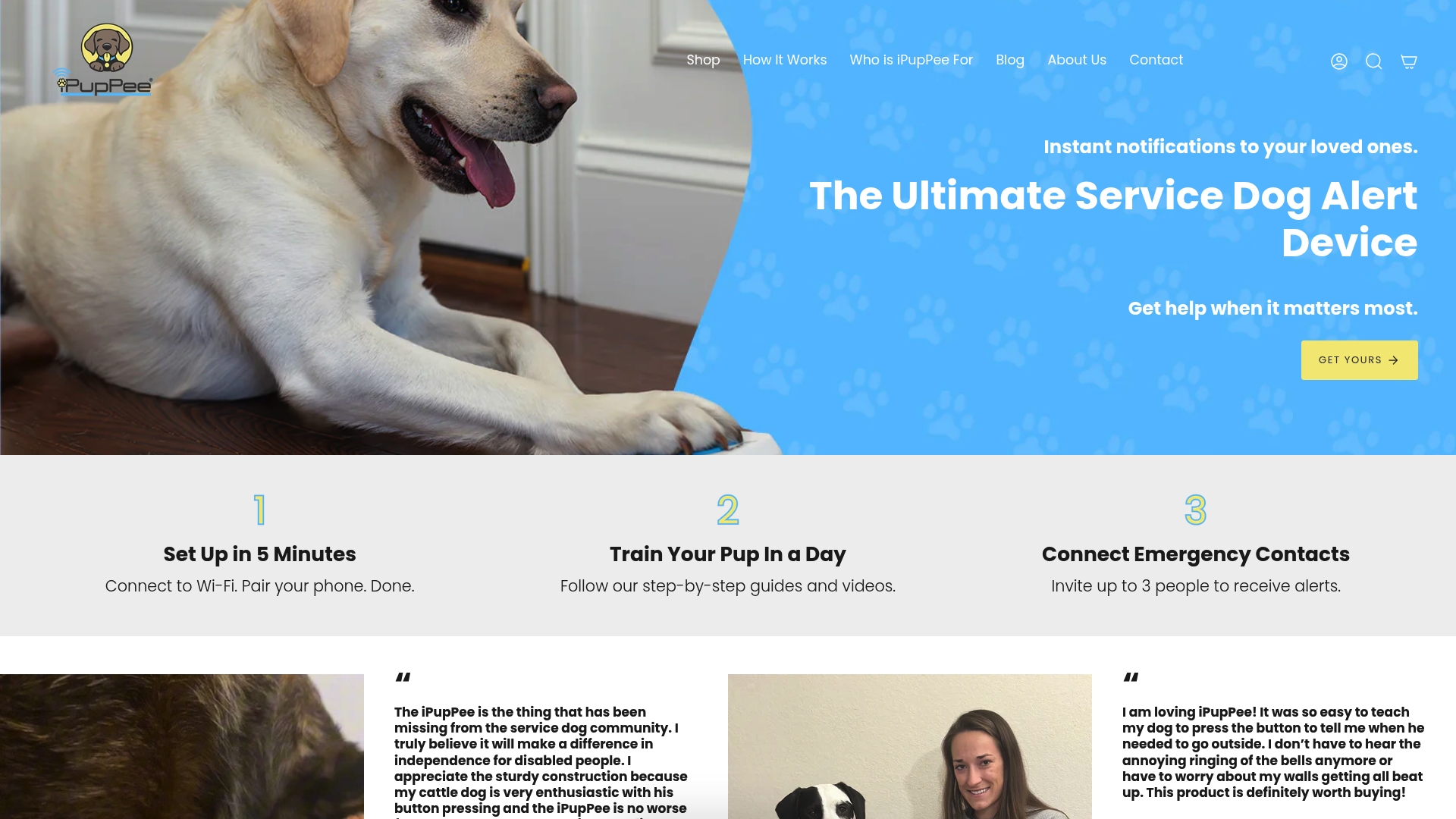
Bookmark our dog emergency resource for downloadable checklists, seasonal updates, and step-by-step guides you can share with family or backup caregivers. If someone you know has a pet and no emergency plan, send them this article. The best time to prepare was yesterday. The second best time is right now.
Frequently asked questions
What should be in my pet’s emergency kit?
Your kit should include 7 to 10 days of pet food and water, medications, medical records, ID tags, a carrier or leash, first aid supplies, sanitation items, and a photo of your pet with you.
Should I ever leave my pet behind during an evacuation?
Never leave your pet behind. Most cannot survive alone, and abandoned animals also put rescue workers at unnecessary risk.
How can I find a pet-friendly emergency shelter?
Check local emergency management websites and keep a list of pet-friendly shelters and hotels along your evacuation routes, updating that list every year.
What special steps should owners of service animals take?
Prepare service-specific ID tags and task documents, pack comfort gear in the go-bag, and practice evacuation drills together so both handler and animal are ready for stress.
Why is microchipping important for emergency preparedness?
Microchipping ensures your pet can be identified and reunited with you even if ID tags are lost, but only if the registration contact information is kept current.