

The core pet safety devices fall into six categories: pet cameras, GPS/location trackers, layered identification (microchip plus ID tag), visibility and wearable gear, containment systems, and a home emergency kit. No single device covers every risk. The most effective strategy layers tech with low-tech basics.
Three things to do right now:
- Update your pet’s ID tag with your current cell number, and verify your microchip registration at Petmicrochiplookup to confirm your contact details are live.
- Test the microchip lookup yourself: enter your chip number and check that your name and phone number appear correctly.
- Put water and shade in place before any outing, and commit to one firm rule: never leave your pet unattended in a parked car, even for a few minutes.
Layer devices and low-tech basics together. That combination outperforms any single gadget.
Key Takeaways
The most effective pet safety strategy layers GPS trackers, pet cameras, and current ID with physical home proofing and vet-recommended emergency practices.
| Point | Details |
|---|---|
| Layered ID is non-negotiable | Combine a current ID tag, registered microchip, and verified registry entry for the best reunification odds. |
| GPS trackers aid recovery, not prevention | Live cellular tracking helps find a lost pet; it does not stop an escape without physical barriers and training. |
| Heat kills fast | Car interiors can exceed 100°F in minutes; cool gradually with water and a fan, never ice, and get to a vet immediately. |
| Home proofing beats device dependency | Locked cabinets, latched gates, and secured screens prevent the incidents cameras can only record after the fact. |
| Ipuppee for communication needs | Ipuppee’s alert device gives dogs a trainable way to signal handlers, useful for service dog owners and seniors living alone. |
Table of Contents
- What do pet cameras actually do, and how do you pick one?
- How do GPS trackers work, and what should you realistically expect?
- Why does layered identification matter more than a microchip alone?
- Reflective gear, LED collars, and life jackets: small devices with real impact
- How to proof your home room by room
- How hot is too hot, and what do you do when a pet overheats?
- What goes in a pet first-aid kit, and how do you plan for emergencies?
- How do you choose the right safety device for your pet?
- What do vets actually recommend for heatstroke and ID failures?
- What laws and regulations apply to GPS collars and containment systems?
- The part most guides skip: devices require training, not just unboxing
- Sources
What do pet cameras actually do, and how do you pick one?
Pet cameras are primarily supervision tools. They let you watch your pet remotely, catch separation anxiety behaviors on video, and receive motion alerts when something moves in the frame. The best ones add two-way audio so you can speak to your pet, a treat dispenser for positive reinforcement, and person or pet detection that filters out false alerts from shadows or ceiling fans.
Key features worth comparing before you buy:
- Video quality and field of view: 1080p is the practical floor; a wide-angle lens (130° or more) covers more of a room without repositioning.
- Night vision: infrared night vision matters if your pet is active after dark or if rooms go dim during the day.
- Two-way audio: useful for reassurance, but not every pet responds well to a disembodied voice from a speaker.
- Treat dispensers: effective for training reinforcement, but some pets learn to camp in front of the camera waiting for a snack.
- Storage: local SD card storage avoids monthly cloud fees; cloud storage typically offers longer clip history and remote access from anywhere.
- Privacy and security: look for end-to-end encryption and two-factor authentication. CNET’s pet cam guide recommends checking a camera’s privacy policy before connecting it to your home network.
The honest limit of a pet camera: it shows you what’s happening, but it cannot stop an escape or prevent an accident. A camera that alerts you to a knocked-over trash can is useful. A camera that alerts you after your dog has eaten the contents is less so.
Pro Tip: Before relying on two-way audio, play a short recording of your own voice through your phone’s speaker while you’re in the room and watch your pet’s reaction. Some dogs find a disembodied voice calming; others find it distressing. Know which category your pet falls into before you leave for the day.
How do GPS trackers work, and what should you realistically expect?
GPS trackers use satellite positioning combined with a cellular or radio connection to report your pet’s location to your phone in near real time. The distinction between fence-only and fence-plus-track systems matters more than most buyers realize.
- Fence-only systems (often Bluetooth-based) alert you when a pet crosses a virtual boundary but cannot show you where the pet went after crossing it.
- Fence-plus-track systems use cellular data to give live location updates, which is what you actually need to recover a lost pet quickly.
- Accuracy: consumer GPS trackers typically place a pet within a range that varies by environment, signal quality, and the number of satellite constellations the device can access. Dense tree cover, tall buildings, and indoor use all degrade accuracy. Physical buffer zones around virtual fences are necessary because no GPS boundary is a hard line.
- Battery life vs. tracking frequency: the more often a device pings for location, the faster the battery drains. Most live-tracking collars need daily or every-other-day charging when used actively.
- Subscriptions: live cellular tracking requires a data plan. Containment-only Bluetooth systems generally do not, but their range is limited to roughly the distance of a Bluetooth connection.
Statistic callout: Consumer GPS trackers typically achieve positioning accuracy in the range of 3–15 feet under open-sky conditions, according to general GNSS performance standards. Accuracy degrades significantly in urban canyons or under heavy tree canopy, which is why buffer zones around virtual fences are not optional.
GPS-based virtual fences are not physical barriers. A dog that bolts through one still gets out. The device’s value is in recovery speed, not prevention. Pair any GPS collar with physical fencing, a latched gate, and structured training so your pet learns the feedback cues.
Why does layered identification matter more than a microchip alone?
A microchip is not a GPS device and it does not broadcast your pet’s location. It stores a unique number that a shelter or vet can scan and then look up in a registry. That lookup only works if the chip is registered and the contact information is current. Millions of microchipped pets go unreturned every year because the registry entry has an old phone number or was never completed after adoption.
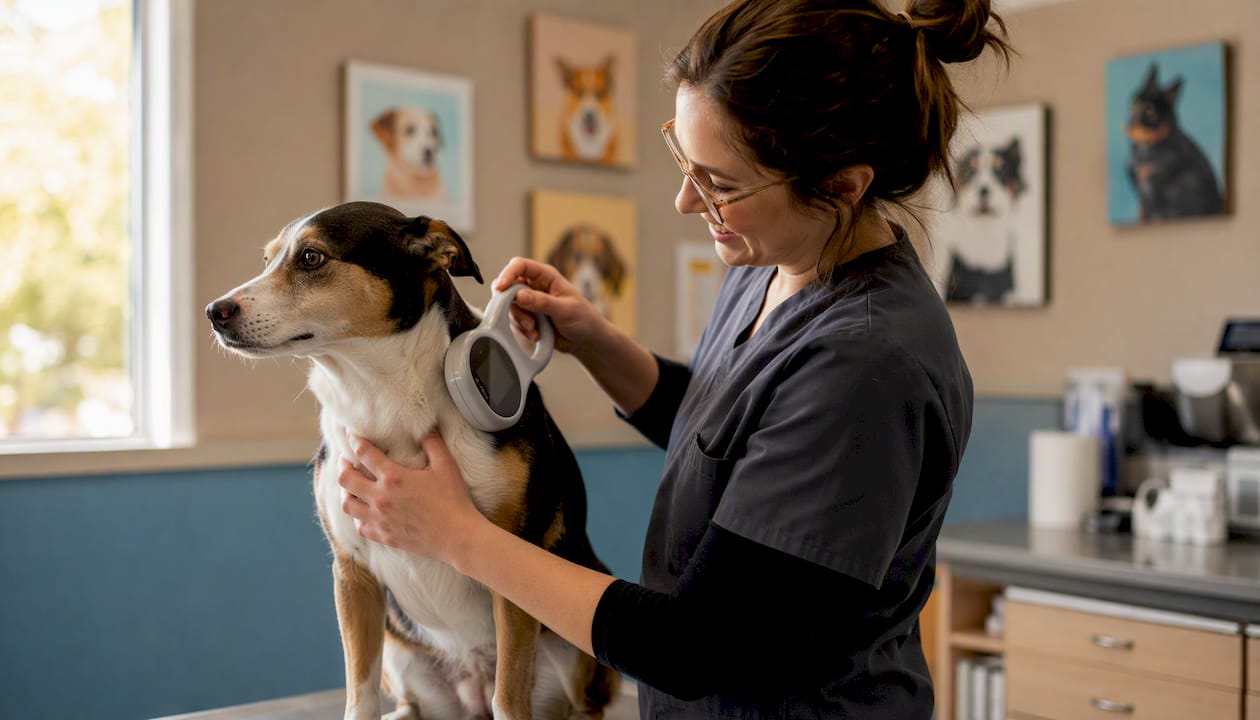
NC State’s Veterinary Hospital recommends combining visible ID tags with a registered microchip and keeping contact information updated as the most reliable reunification strategy.
The layered approach:
- Collar with a current ID tag: first thing a stranger reads when they find your pet. Include your cell number, not a landline.
- Microchip: permanent backup that survives a lost collar. Registered with your current address and phone.
- Online registry entry: verified and updated after every move or phone number change.
- Backup registry: some owners register with multiple databases. Use petmicrochiplookup.org to confirm which registry holds your chip number and that the contact details are correct.
Pro Tip: Check your microchip registration the day you adopt a new pet and again after every move. Shelters sometimes register chips in their own name, and that entry never gets transferred to the new owner. A five-minute lookup can prevent weeks of searching.
Reflective gear, LED collars, and life jackets: small devices with real impact
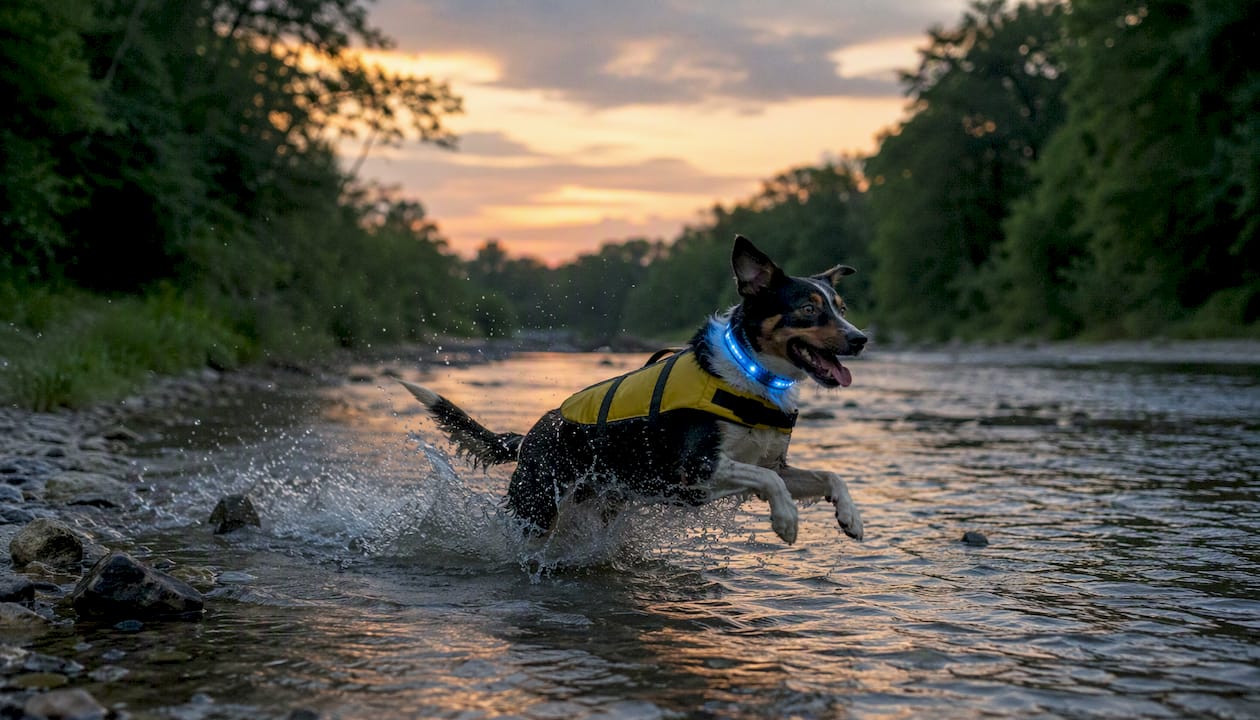
Visibility gear does not get the attention GPS collars do, but it prevents a category of accidents that trackers cannot: a driver who simply does not see your dog on a dark road.
Types of visibility gear worth owning:
- Reflective collars and leashes: passive, no batteries, effective at catching headlights up to several hundred feet away.
- LED clip-on lights: attach to any collar or harness, visible from a distance, and useful for off-leash dogs in low-light yards.
- Reflective vests: cover more surface area than a collar alone; useful for dogs on early-morning or evening walks near traffic.
Life jackets belong in a separate category. UW Veterinary Care recommends life jackets for pets who are weak swimmers or who are on boats, kayaks, or near fast-moving water. Fit matters more than brand: the jacket should have a handle on the back (for lifting a dog out of water), a secure neck support, and a buoyancy rating appropriate for your pet’s weight. A jacket that slips off or restricts breathing defeats its purpose.
None of these devices replace supervision. A life jacket keeps a dog afloat longer; it does not prevent a dog from jumping into a current. Visibility gear makes your pet easier to see; it does not stop a distracted driver. Use them as risk reducers, not risk eliminators.
How to proof your home room by room
Devices catch problems. Home proofing prevents them. Walk through each area with this checklist:
Kitchen
- Secure trash cans with a locking lid or store them inside a latched cabinet.
- Lock cabinets containing cleaning products, medications, and supplements.
- Keep counters clear of foods toxic to pets (grapes, raisins, xylitol, onions, chocolate).
- Check the ASPCA’s toxic plant list before adding any new plant to your home or yard.
Living areas and stairs
- Install baby gates at the top and bottom of stairs for puppies, senior dogs, or cats recovering from surgery.
- Secure window screens; a screen that pops out under pressure is a fall hazard on any floor above ground level.
- Anchor heavy furniture that a curious pet could tip.
Garage and yard
- Store antifreeze, pesticides, and fertilizers in locked cabinets. Antifreeze has a sweet taste that attracts dogs and cats.
- Latch all yard gates with a mechanism that requires two steps to open (a carabiner through the latch works).
- Plan buffer zones around pools and road edges; a GPS fence alone is not sufficient near water or traffic.
Entryways
- Use a double-door tactic: close the interior door before opening the exterior one, especially with dogs that bolt.
- Keep a leash station near the exit so leashing up is automatic, not an afterthought.
The ASPCA’s summer safety guidance also flags cookout hazards specifically: lighter fluid, skewers, and human food left at pet height during outdoor gatherings are common poisoning triggers.
How hot is too hot, and what do you do when a pet overheats?
Heatstroke is one of the most preventable pet emergencies, and one of the fastest-moving. Merck Veterinary Manual notes that car interiors can exceed 100°F within minutes on a warm day, even with windows cracked. That temperature range is fatal for dogs and cats.
Signs of heat stress to watch for:
- Excessive panting or drooling that does not slow down
- Bright red or pale gums
- Lethargy, stumbling, or collapse
- Vomiting or diarrhea
If you see these signs, act immediately: move the pet to shade or air conditioning, apply cool (not ice cold) water to the paws, groin, and neck, and use a fan to accelerate cooling. Do not use ice baths. Rapid temperature drops can cause blood vessels to constrict, which slows core cooling. Get to a vet as fast as possible.
Statistic callout: Veterinarians report predictable spikes in heat-related emergencies during heat waves, with cases arriving in clusters on the hottest days of the year, according to USA Today’s reporting on vet-approved heat safety. Prevention, not treatment, is the only reliable answer.
Tufts University’s summer pet safety tips recommend checking pavement temperature before walks: press the back of your hand to the asphalt for a few seconds. If it’s too hot for your hand, it’s too hot for paws. Walk during early morning or evening hours when temperatures drop.
Cold-weather hazards are less dramatic but real. Watch for shivering, reluctance to walk, or lifting paws repeatedly (a sign of paw pain from ice or salt). Booties protect paws from road salt and ice-melt chemicals, which are toxic if licked.
What goes in a pet first-aid kit, and how do you plan for emergencies?
A first-aid kit does not replace a vet. It buys time. Ready recommends building an evacuation plan that covers where you’ll go, who can take your pet if you cannot, and what to grab in under two minutes.
Core kit items:
- Sterile gauze pads and self-adhesive bandage wrap
- Digital rectal thermometer (normal range for dogs and cats: 100–102.5°F)
- Blunt-tipped scissors and tweezers
- Saline wound wash
- Soft muzzle or strips of cloth (for an injured animal in pain)
- Bottled water and a collapsible bowl
- Printed copies of vaccine records and your microchip number
- Your vet’s number and the nearest 24-hour emergency clinic address
For evacuation planning, pair your tech (tracker, camera) with a printed grab bag. A laminated card with your pet’s microchip number, a recent photo, and your vet’s contact speeds reunification if you get separated. See the iPupPee emergency response plan guide for a household template.
| Item | Why it’s useful | Storage tip |
|---|---|---|
| Gauze and bandage wrap | Controls bleeding, supports sprains | Waterproof zip bag, replace annually |
| Digital thermometer | Confirms fever or hypothermia | Kit pouch; check battery every 6 months |
| Vaccine records copy | Required at shelters and boarding | Laminated; keep one in car, one at home |
| Microchip number card | Speeds shelter lookup | Laminated; wallet and grab bag |
| Bottled water (1 liter) | Hydration, wound rinsing | Rotate every 6 months |
| Emergency vet address | Saves critical minutes in a crisis | Printed and saved in phone contacts |
How do you choose the right safety device for your pet?
Start with the primary risk, not the most popular gadget. A dog that escapes the yard needs a GPS tracker and a better fence latch before it needs a treat-tossing camera.
Buying checklist:
- Match device to risk: escape artist → GPS tracker + physical containment; home-alone anxiety → pet camera with two-way audio; night walks → LED collar or reflective vest; water outings → life jacket.
- Check battery life and charging: a tracker that needs daily charging gets forgotten. Look for at least 3–5 days of standby life for GPS collars used intermittently.
- Water resistance: any device used outdoors needs an IP67 rating or better. Rain, puddles, and dog baths happen.
- Signal type: Bluetooth-only devices have a range of roughly 30–100 feet. Cellular GPS works anywhere with a signal. Know which you need before you pay for a subscription.
- Ongoing costs: subscriptions for cellular GPS typically run $5–$15/month. Factor that into the total cost of ownership.
- Firmware and support: a device with no firmware updates after six months of release is a security and reliability risk. Check the manufacturer’s update history.
Pro Tip: Before committing to any device, run a 48-hour in-home test. Put the collar on your pet, activate the app, and check whether the alerts, battery life, and fit match what the product page promised. Most reputable brands offer a return window. Use it.
For specialized needs, the iPupPee guide to safety devices for service dogs covers device selection for working dogs and owners with mobility or communication needs.
What do vets actually recommend for heatstroke and ID failures?
Both heatstroke and lost-pet situations are preventable with the same principle: layered action taken before the emergency, not during it.
Step-by-step heatstroke response:
- Move the pet to shade or air conditioning immediately.
- Apply cool water to the neck, armpits, groin, and paw pads.
- Use a fan to increase evaporative cooling.
- Offer small sips of cool water if the pet is conscious and able to swallow.
- Transport to a veterinarian without delay, even if the pet appears to recover.
For identification, NC State Veterinary Hospital and UW Veterinary Care both emphasize that a microchip without a current registry entry provides almost no benefit. Verify microchip registration in three steps:
- Locate your chip number on adoption paperwork or ask your vet to scan the chip.
- Enter the number at petmicrochiplookup.org and confirm which registry holds it.
- Log into that registry and verify your name, address, and phone number are current.
Overheating and ID failures are both preventable. The difference between a pet that comes home and one that doesn’t often comes down to a phone number that was never updated and a car window that stayed closed.
What laws and regulations apply to GPS collars and containment systems?
Most pet safety devices sold in the United States are not federally regulated as safety products in the way car seats or smoke detectors are. That said, a few legal considerations apply depending on the device and your location.
GPS collars and trackers: devices that use cellular networks must comply with FCC regulations, which manufacturers handle before sale. As an owner, you are not required to register or license a GPS collar. However, some local ordinances require pets to wear a visible license tag at all times, which means a GPS collar does not replace a tag in those jurisdictions. Check your city or county animal control rules.
Electronic containment systems (underground fences): legal in all 50 states for private residential use, but some homeowner associations and rental agreements prohibit underground wire installation. Wales and some European countries have banned shock-based containment collars, but no U.S. state has enacted a comparable ban as of 2026. If you rent, confirm with your landlord before installing any underground system.
Shock collars and e-collars: legal in the United States at the federal level. Several cities and counties have proposed restrictions, and the regulatory picture can shift. Check your local ordinances before purchasing.
Breed-specific legislation (BSL): some municipalities require specific breeds to wear GPS or tracking devices as a condition of ownership. If your pet falls under a BSL ordinance, confirm the device requirements with your local animal control office.
This is general information, not legal advice. Confirm current local rules with your municipality or a qualified attorney before purchasing a containment system or e-collar.
The part most guides skip: devices require training, not just unboxing
Most pet owners buy a GPS collar or a containment system, set it up, and assume the device does the work. It does not. A GPS virtual fence is a feedback tool. The pet has to learn what the feedback means, and that takes structured, patient training over days or weeks. Skip the training and the collar is just an expensive accessory.
The same logic applies to pet cameras with two-way audio. A dog that already has separation anxiety may find a disembodied voice from a speaker more alarming than reassuring. Test the device in your presence first. Watch the reaction. Adjust before you rely on it remotely.
The most effective pet safety setup combines one or two well-chosen devices with physical proofing, current ID, and vet-recommended practices for your pet’s specific risks. No gadget replaces a latched gate, a current phone number on the tag, or knowing the signs of heatstroke before they appear. Tech amplifies good habits. It does not substitute for them.
Ipuppee: a practical next step for pet owners who want communication built in
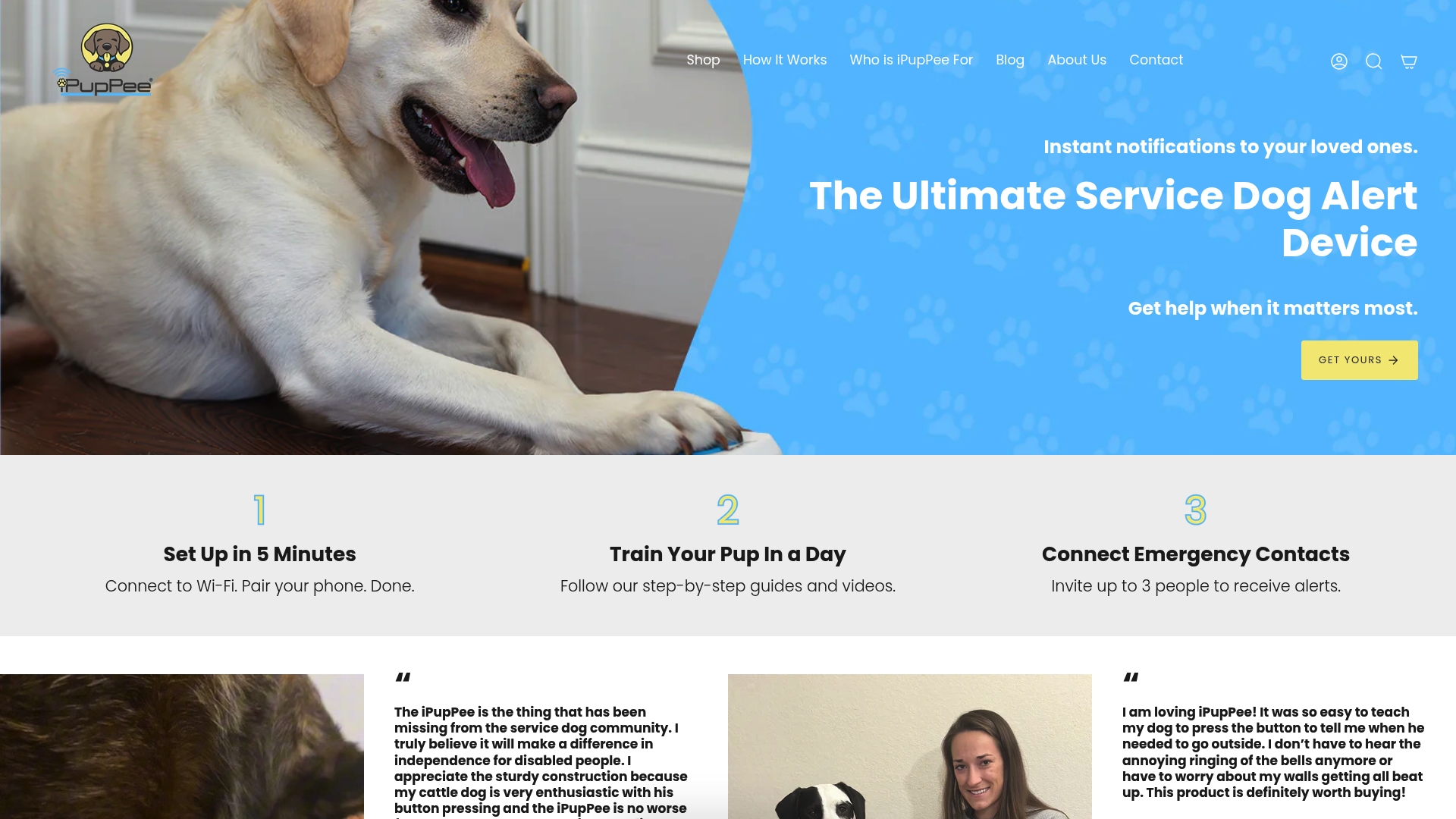
Ipuppee builds pet communication and safety devices designed for dog owners, service dog handlers, and anyone who needs a reliable alert system between their dog and the people around them. The iPupPee device gives dogs a simple, trainable way to signal their handler through a button press, which is particularly useful for owners with mobility limitations, seniors living alone, or new puppy owners building communication habits early. If the device category this guide covers is relevant to your situation, visit Ipuppee to see how the alert system works and whether it fits your setup.
Sources
- Ten Summer Tips for Pet Owners
- Animal Safety Tips | Veterinary Hospital
- Summer pet safety: 6 things owners should know - UW Veterinary Care
- Toxic and Non-Toxic Plants - ASPCA
- Ready
- Petmicrochiplookup
- Your Complete Guide to Pet Cam Use and Safety Tips - CNET