

Nearly one out of four American seniors with mobility challenges relies on a service dog for daily independence. Keeping these walks safe and effective means more than just picking a route. Making sure your dog is truly ready and protected on every outing matters for both confidence and comfort. Discover practical steps and expert tips to improve communication and find the right safety solutions for a smoother, safer walking experience.
Table of Contents
- Step 1: Assess Your Dog’s Readiness for Safe Walks
- Step 2: Select and Fit Safety Gear Properly
- Step 3: Train Your Dog for Reliable Communication
- Step 4: Test Safety Devices and Walking Equipment
- Step 5: Monitor and Adjust for Continued Safe Walks
Quick Summary
| Key Insight | Description |
|---|---|
| 1. Assess Your Dog’s Health First | Check for mobility, energy, and any signs of discomfort before walks. Regular vet visits may be necessary. |
| 2. Choose Proper Safety Gear | Fit a collar or harness based on your dog’s behavior; ensure it allows comfort and movement while preventing injury. |
| 3. Train for Effective Communication | Teach basic commands and understand your dog’s body language for safer walks and a better bond. |
| 4. Regularly Test Equipment | Perform monthly checks on safety devices and equipment for wear and proper fit to ensure ongoing safety. |
| 5. Monitor Changes During Walks | Keep an eye on your dog’s behavior and health to adjust walk routines as needed for their well-being. |
Step 1: Assess Your Dog’s Readiness for Safe Walks
Assessing your dog’s readiness for safe walks requires careful observation and understanding of their physical condition and behavior. Before stepping outside, you need to evaluate several key indicators that signal your canine companion is prepared for outdoor exercise.
Start by checking your dog’s overall health and mobility. Dogs require consistent exercise tailored to their age, breed, and physical capabilities. Pay attention to how they move around the house or yard. Are they walking smoothly without limping? Do they seem energetic and responsive? Watch for signs of discomfort like hesitation when moving, reluctance to put weight on certain legs, or visible stiffness. If your dog shows any signs of limping or difficulty walking, schedule a veterinary checkup before starting regular walks.
Consider your dog’s age and physical condition when planning walks. Puppies and senior dogs have different exercise needs compared to adult dogs in their prime. Younger dogs might have boundless energy but require shorter, more controlled walks, while older dogs might need gentler, shorter outings. Always start with brief walks and gradually increase duration as you observe your dog’s comfort and stamina.
Below is a summary of key age-based walking considerations for your dog:
| Dog Age Stage | Walk Duration | Exercise Type |
|---|---|---|
| Puppy | Short, frequent | Gentle, playful |
| Adult | Moderate-long | Endurance, varied |
| Senior | Short, gentle | Slow-paced, restful |
Pro tip: Keep a daily log of your dog’s mobility and energy levels to track any changes or potential health concerns before and during your walking routine.
Step 2: Select and Fit Safety Gear Properly
Selecting and fitting the right safety gear is crucial for ensuring your dog’s comfort and protection during walks. The appropriate equipment can make a significant difference in your dog’s walking experience and overall safety.
Choosing between a collar and harness requires careful consideration of your dog’s specific needs. Collars work well for well-trained dogs with minimal pulling, while harnesses provide better control and distribute pressure more evenly for dogs that tend to pull or have respiratory issues. When fitting a collar, ensure it’s snug enough to prevent slipping but loose enough to fit two fingers between the collar and your dog’s neck. For harnesses, look for designs that allow full range of motion without chafing or restricting movement. Safety certified harnesses offer additional protection and have been rigorously tested to ensure maximum security during walks and potential travel situations.
Consider your dog’s size, breed, and walking behavior when selecting gear. Smaller dogs might need lightweight, adjustable harnesses, while larger breeds require more robust options with strong attachment points. Pay attention to the material comfort, ensuring the gear doesn’t cause skin irritation or restrict breathing. Regularly check the fit of your dog’s safety gear, as weight changes and wear can impact its effectiveness.
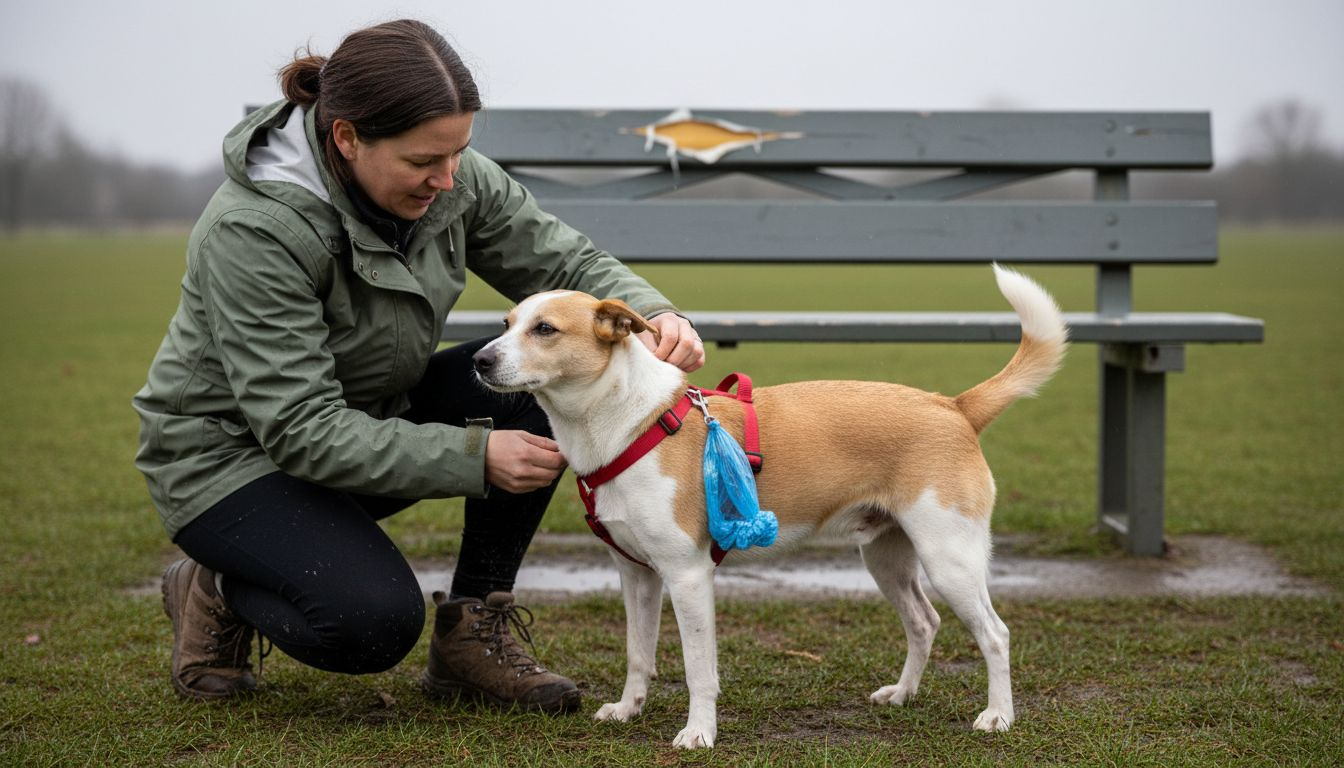
Here’s a comparison of collars and harnesses to help you choose the best gear for your dog’s needs:
| Feature | Collar | Harness |
|---|---|---|
| Control | Adequate for trained dogs | Superior for pullers or seniors |
| Pressure Distribution | Focused on neck | Evenly across chest and body |
| Suitability | Calm, non-pulling dogs | Energetic or fragile dogs |
| Risk of Injury | Higher for dogs with issues | Reduced, especially for trachea |
| Adjustment Frequency | Periodically as dog grows | Regularly for comfort and safety |
Pro tip: Bring your dog with you when purchasing safety gear to ensure a perfect fit and allow them to get comfortable with the new equipment before your first walk.
Step 3: Train Your Dog for Reliable Communication
Training your dog for reliable communication is essential for safe and enjoyable walks, creating a strong bond between you and your furry companion. Mastering communication helps ensure your dog responds quickly and accurately to your commands in various environments.
Effective dog training relies on consistent communication through clear commands, positive reinforcement, and understanding canine behavior. Start by teaching fundamental obedience commands like sit, stay, come, and heel. Use short, consistent verbal cues paired with hand signals to help your dog understand what you want. Reward successful responses immediately with treats, praise, or play to reinforce good behavior. Practice these commands in different settings with increasing levels of distraction to build your dog’s reliability.
Understanding dog body language is equally important for two way communication. Learn to read your dog’s signals such as ear position, tail movement, and overall posture. These non verbal cues can help you anticipate your dog’s reactions and prevent potential issues during walks. Pay attention to your own body language too, keeping movements calm and signals clear. Consistent practice and patience will help you develop a nuanced communication system that keeps both you and your dog safe and confident.
Pro tip: Practice training sessions in short 5-10 minute intervals to keep your dog engaged and prevent mental fatigue during communication skill building.
Step 4: Test Safety Devices and Walking Equipment
Testing your safety devices and walking equipment is a critical step in ensuring your dog’s protection and comfort during outdoor adventures. This process helps you identify potential issues and verify that your gear meets the highest safety standards before heading out for walks.
Safety devices like dog harnesses should be tested by independent organizations to ensure maximum protection. Start by checking the fit of your harness or collar by performing a series of mobility tests. Ensure that the equipment allows full range of motion without chafing or restricting movement. Gently tug on the leash attachment points to verify strength and security. Check for any signs of wear such as fraying, loose stitching, or metal fatigue that could compromise safety during walks.
Proper equipment testing includes verifying fit and control capabilities for different walking scenarios. Avoid retractable leashes, which can reduce your control and create potential safety risks. Practice walking with your dog in a controlled environment to assess how well the equipment performs. Pay attention to how your dog responds to different movements and potential distractions. Look for equipment that provides a secure connection while allowing comfortable movement and quick communication between you and your dog.
Pro tip: Perform a monthly equipment inspection to catch potential wear and tear before it becomes a safety issue during walks.
Step 5: Monitor and Adjust for Continued Safe Walks
Safe dog walking is an ongoing process that requires constant attention and adaptability. Your ability to monitor and adjust your walking routine will ensure your dog remains healthy, comfortable, and protected during every outdoor adventure.
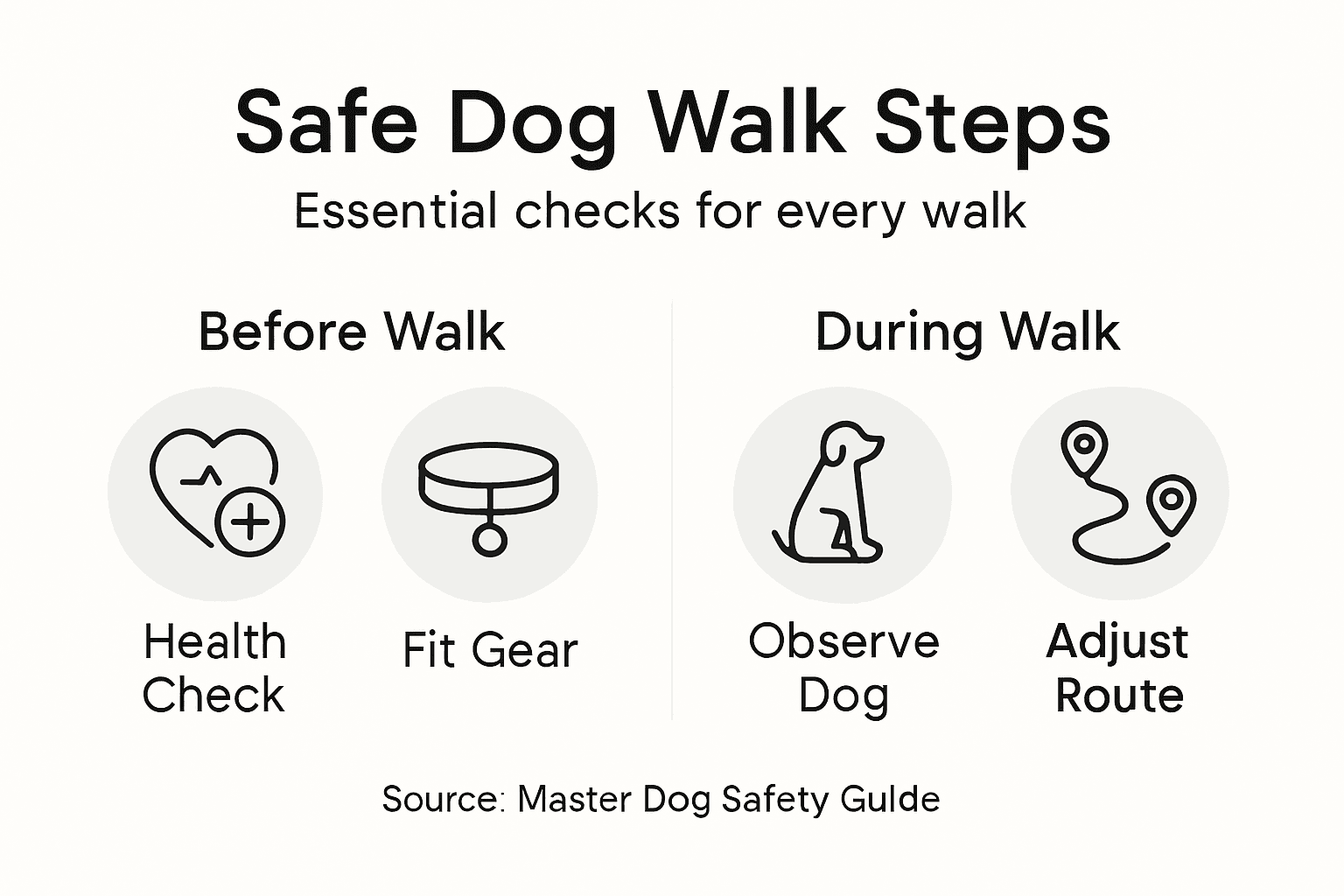
Continual monitoring of a dog’s behavior and health is essential for maintaining safety during walks. Watch for subtle changes in your dog’s body language such as ear position, tail movement, and overall energy levels. These signals can indicate fatigue, stress, or potential discomfort that might require an immediate route adjustment or rest break. Pay close attention to how your dog responds to different environmental factors like temperature, terrain, and potential distractions that could impact their walking experience.
Walking routines should adapt to your dog’s changing needs over time. As your dog ages or experiences shifts in health, your walking approach must evolve accordingly. Younger dogs might require more intense exercise, while senior dogs need gentler, shorter outings. Consider factors like weather conditions, your dog’s current fitness level, and any recent health changes when planning walks. Regular veterinary check-ups can provide valuable insights into adjusting your walking strategy to support your dog’s ongoing well-being.
Pro tip: Create a walking journal to track your dog’s energy levels, behavior patterns, and any notable changes in performance or comfort during outdoor activities.
Enhance Your Dog’s Safety and Communication on Every Walk
Walking your dog safely involves more than just the right gear and training techniques. As highlighted in the article, challenges like selecting suitable safety equipment, ensuring reliable communication, and continuously monitoring your dog’s well-being can feel overwhelming. You want peace of mind knowing that your dog can alert you quickly in any situation, especially during outdoor activities where distractions or emergencies might arise.
Discover how the innovative iPupPee device empowers both you and your dog by bridging the communication gap with simple button presses. This unique safety solution complements your efforts in assessing readiness and fitting gear properly, allowing your dog to signal needs or alerts instantly. Don’t wait until a walk becomes stressful or risky — take proactive steps now to create a safer, more connected walking experience by exploring https://ipuppee.com.
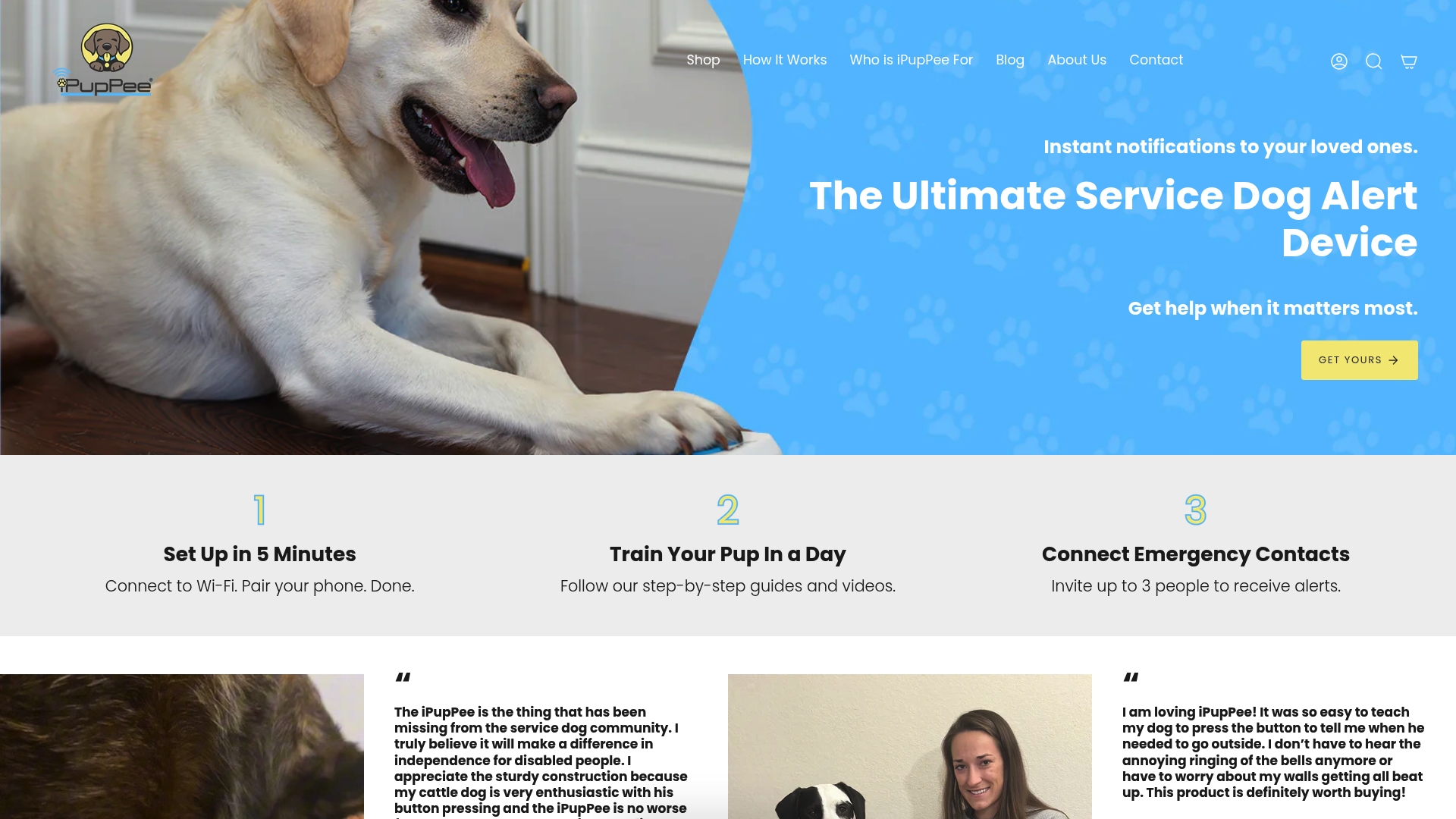
Ready to master dog safety during walks with confidence? Visit ipuppee.com and equip yourself and your dog with tools that foster independence, trust, and peace of mind on every stroll. Your dog’s safety and your reassurance start here.
Frequently Asked Questions
How can I assess my dog’s readiness for walks?
To assess your dog’s readiness for walks, observe their health and mobility. Look for signs of energy and comfort in their movements, and consult a veterinarian if you notice any limping or reluctance to walk.
What safety gear should I use for my dog during walks?
Use a well-fitted collar or harness based on your dog’s behavior. For dogs that pull or have respiratory issues, a harness is recommended for better control and comfort.
How can I train my dog to respond well during walks?
Train your dog using clear commands and positive reinforcement. Begin with basic commands like sit, stay, and come, practicing in varied environments to encourage reliable responses.
What should I check before using my dog’s walking equipment?
Before using your dog’s walking equipment, check the fit and condition of the harness or collar. Look for signs of wear and ensure the gear allows for full movement without chafing.
How do I monitor my dog’s behavior during walks?
Monitor your dog’s behavior by paying attention to their body language throughout the walk. Note any signs of fatigue or discomfort, and be ready to adjust your route or take breaks as needed.
How often should I adjust my dog walking routine?
Adjust your dog walking routine based on their age, health, and fitness level. As a general guideline, evaluate your dog’s needs regularly and modify your approach every few months or as their health changes.
Recommended
- Top Safety Tips for Dog Owners: Essential Guidance for 2025 – iPupPee
- Dog Safety Outdoors: Essential Tips for 2025 – iPupPee
- How to Improve Dog Safety at Home and Outdoors 2025 – iPupPee
- Urban Dog Safety Tips 2025: Protect Your Pet in the City – iPupPee
- Reisen mit Hund – Tierfreundliche Hotels bei Helmchen & Reichert Reiseexperten.de
- Engagement Photos With Dog Tips And Ideas | Candid Studios | Candid Studios
- Pet Friendly Car Service for Travelers - Ascend in Motion