

TL;DR:
- Senior dogs can learn new behaviors with adapted techniques and positive reinforcement.
- Training sessions should be short, gentle, and tailored to physical and sensory limitations.
- Smart devices like the iPupPee enhance communication and safety in senior dog training.
The old saying that you can’t teach an old dog new tricks has been keeping senior dog owners from trying. The truth is, senior dogs can learn new behaviors with the right approach. Your elderly dog still wants to connect with you, still craves routine, and still responds to kindness. What changes is how you train, not whether you can. With adapted techniques, the right tools, and smart devices like the iPupPee, you can build a training routine that improves both communication and safety for your senior companion every single day.
Table of Contents
- Understanding your elderly dog’s needs and limitations
- Preparing for training: What you need
- Step-by-step training techniques for elderly dogs
- Enhancing communication and safety: Smart devices like the iPupPee
- Our perspective: Why patience, not just tech, transforms senior dog training
- Next steps: Smart solutions to keep your senior dog safe and connected
- Frequently asked questions
Key Takeaways
| Point | Details |
|---|---|
| Senior dogs can learn | Older dogs can pick up new behaviors using patience and positive methods. |
| Short, positive sessions | Limit training to 5–10 minutes to avoid fatigue and boost retention. |
| Safety is a top priority | Teach practical safety cues and consider smart devices for communication. |
| Tech supplements training | Devices like iPupPee enhance, but do not replace, human-led interaction. |
| Patience drives success | Consistency and gentle routines outperform punishment, especially with seniors. |
Understanding your elderly dog’s needs and limitations
Before you start any new training routine, it helps to understand what’s actually happening inside your senior dog’s body and mind. Aging brings real physical and cognitive shifts that affect how dogs learn, respond, and engage.
Arthritis is one of the most common issues in older dogs, making it painful to sit, lie down, or hold certain positions on command. Sensory loss is also common. Many senior dogs experience reduced hearing and vision, which means they may not respond to cues the way they used to. Canine cognitive dysfunction, sometimes called dog dementia, can cause confusion, forgetfulness, and slower response times. None of these changes mean training is impossible. They just mean your approach needs to shift.
Always consult your vet before starting a new training program. A quick checkup can reveal pain points you weren’t aware of, and your vet may recommend specific adjustments. For example, if your dog has hip pain, asking them to sit repeatedly could make training feel like a punishment.
Here’s a quick comparison of training needs across age groups:
| Factor | Young dogs | Elderly dogs |
|---|---|---|
| Session length | 15-20 minutes | 5-10 minutes |
| Energy level | High | Low to moderate |
| Sensory ability | Full | Often reduced |
| Motivation | Play and treats | Soft treats and praise |
| Recovery time | Short | Longer |
Watch for signs that your dog needs a break. Yawning, looking away, lying down mid-session, or moving slowly are all signals that your dog is fatigued or uncomfortable. Sessions should be short and adapted for hearing, vision loss, or arthritis to keep training safe and productive.
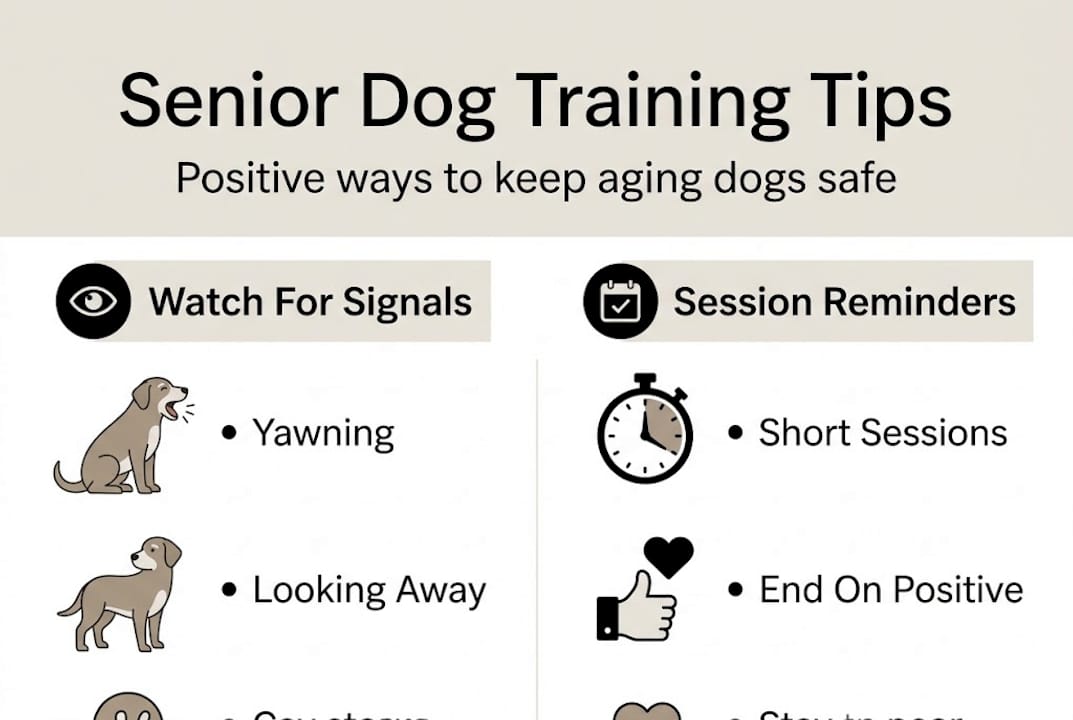
For owners dealing with training elderly dogs with mobility issues, small adjustments like training on soft surfaces or skipping commands that require physical strain can make a big difference. You can also find practical senior pet owner safety tips that cover daily routines beyond formal training.
Key signs your training session needs adjustment:
- Your dog is panting without physical exertion
- They stop making eye contact
- They walk away or lie down
- They seem confused by familiar cues
- They flinch or hesitate before moving
Pro Tip: End every session before your dog shows fatigue. Stopping on a positive moment builds enthusiasm for the next session.
Preparing for training: What you need
Once you understand your dog’s needs, assembling the right tools is your next step. The good news is that effective senior dog training doesn’t require expensive equipment. It requires the right equipment.
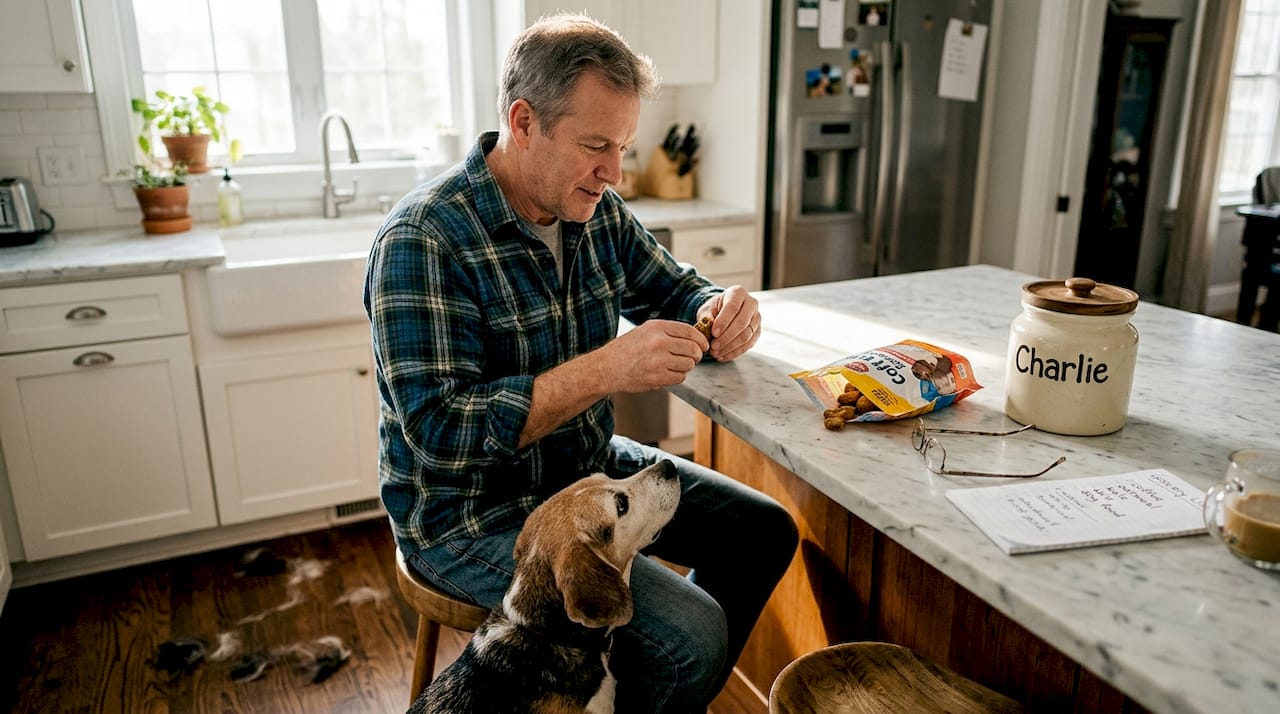
Start with soft treats. Older dogs often have sensitive teeth and gums, so hard biscuits can be uncomfortable. Small, soft treats that can be eaten quickly keep the session moving without interrupting focus. Positive reinforcement with soft treats and praise is especially valued by senior dogs, who tend to be more emotionally attuned than younger pups.
Here’s a comparison of conventional tools versus smart devices:
| Tool type | Conventional | Smart device (e.g., iPupPee) |
|---|---|---|
| Communication method | Verbal/visual cues | Paw-activated button alert |
| Owner response required | Immediate observation | Alert notification |
| Ideal for | General commands | Bathroom needs, safety alerts |
| Learning curve | Moderate | Low with positive training |
For dog communication devices for seniors, the iPupPee stands out as a practical addition to any training toolkit. It allows your dog to press a button when they need to go outside or need attention, bridging the communication gap in a way traditional training alone can’t. You can read more about introducing communication devices to your dog before you begin.
For a detailed product breakdown, the iPupPee device overview covers features, sizing, and real-world use cases.
Steps for setting up your training area:
- Choose a quiet, familiar room with minimal distractions
- Place a non-slip mat where your dog will stand or sit
- Set a timer for 5 to 10 minutes maximum
- Have soft treats in a pouch or pocket for quick access
- Position any devices like the iPupPee at your dog’s paw level
- Keep water nearby for your dog after the session
The 5 to 10 minute session window is not just a suggestion. It’s the optimal range for keeping senior dogs engaged without triggering fatigue or frustration. Short, consistent sessions build stronger habits over time than long, occasional ones.
Step-by-step training techniques for elderly dogs
Now that you’re prepared, you can get into the heart of training. The structure below works for most senior dogs and can be adapted based on your dog’s specific limitations.
Training steps for elderly dogs:
- Start with a bonding routine. Spend two to three minutes with calm petting and soft talking before any commands. This signals safety and readiness.
- Choose one focus cue per session. Don’t try to teach multiple commands at once. Pick one: “wait,” “stay,” or “come.”
- Reinforce immediately. The moment your dog responds correctly, reward with a treat and verbal praise within two seconds.
- Keep the session under 10 minutes. End while your dog is still engaged and happy.
- Repeat daily. Consistency matters more than intensity for senior dogs.
Practical cues like “wait,” “stay,” and “leave it” are especially important for senior dog safety. These commands can prevent falls, stop your dog from eating something harmful, or keep them calm during vet visits.
For dogs with hearing loss, replace verbal cues with clear hand signals. A flat palm facing the dog means “stay.” A beckoning motion means “come.” For vision-impaired dogs, keep the training area consistent so your dog can navigate by memory and scent. You can also explore senior dog activities that are low-impact and mentally stimulating.
Enrichment matters too. Scent work, where you hide a treat and let your dog sniff it out, is excellent mental exercise that doesn’t strain joints. Food puzzles slow down eating and keep the brain active. Low-impact play like gentle tug or short fetch sessions can maintain muscle tone.
“Patience is critical. Punishment breaks trust, and trust is the only real foundation for learning at any age.”
For more ideas on how to improve safety and companionship for seniors, the iPupPee blog covers real-world scenarios from owners just like you. You’ll also find essential safety training tips that go beyond basic commands.
Pro Tip: Never use punishment or a sharp tone with elderly dogs. Older dogs are more sensitive to stress, and negative experiences can cause them to shut down entirely.
Enhancing communication and safety: Smart devices like the iPupPee
With foundational techniques in place, you can now add smart technology to bridge communication gaps. The iPupPee is a paw-activated alert button designed to help dogs signal their needs to their owners.
iPupPee allows elderly dogs to signal needs like bathroom breaks or assistance through a simple button press. This is especially valuable for dogs who can no longer bark loudly or owners who may not always be in the same room.
Here’s a quick look at what the device offers:
| Feature | Detail | |—|—|—| | Activation method | Paw press | | Alert type | Sound or notification | | Suitable for | Dogs 4 lbs and up | | Best use cases | Bathroom alerts, safety signals | | Training required | Yes, with positive reinforcement |
Steps to introduce the iPupPee to your senior dog:
- Place the device on the floor at paw level during a calm moment
- Let your dog sniff and investigate it freely
- Gently guide your dog’s paw to press the button, then reward immediately
- Repeat this several times per session until your dog associates pressing with reward
- Gradually connect the press to a real-world outcome, like going outside
For more guidance on training with smart alert systems, the step-by-step process is straightforward once your dog understands the basic association. You can also explore how dog communication for safety works for different living situations.
Common troubleshooting scenarios:
- Dog ignores the button: Go back to basics. Reward any paw contact with the device, even accidental.
- Dog presses too often: Only reinforce presses that lead to a real need, like a bathroom trip.
- Dog seems confused: Slow down. One step per session is enough.
- Dog is hesitant: Never force the paw. Let curiosity lead the interaction.
Pro Tip: Always pair device training with the same positive reinforcement you use for all other commands. Consistency across all training keeps your dog from getting confused.
Our perspective: Why patience, not just tech, transforms senior dog training
Here’s something most brands won’t tell you: the iPupPee and tools like it are genuinely useful, but they don’t do the heavy lifting. You do.
We’ve seen owners invest in smart devices and then feel frustrated when their dog doesn’t “get it” in a week. The device isn’t the problem. The expectation is. Senior dogs operate on a different timeline. They’ve spent years building habits, and new ones take longer to form. That’s not failure. That’s biology.
What actually moves the needle is showing up every day with calm energy, a soft treat, and zero pressure. Devices are useful tools but can’t replace daily positive human interaction for senior dogs. The iPupPee works best when it’s layered onto a foundation of trust, not used as a shortcut to build one.
Progress in senior dog training looks like a dog who relaxes when you pick up the treat pouch. It looks like a tail wag when you sit on the floor. It looks like your dog pressing a button because they trust that you’ll respond. That’s the real goal.
For owners navigating training challenges and solutions, the most important shift is measuring success in connection, not commands.
Next steps: Smart solutions to keep your senior dog safe and connected
You’ve covered a lot of ground in this guide, from understanding your senior dog’s physical needs to building a training routine and adding smart communication tools. The next step is putting it all into practice.
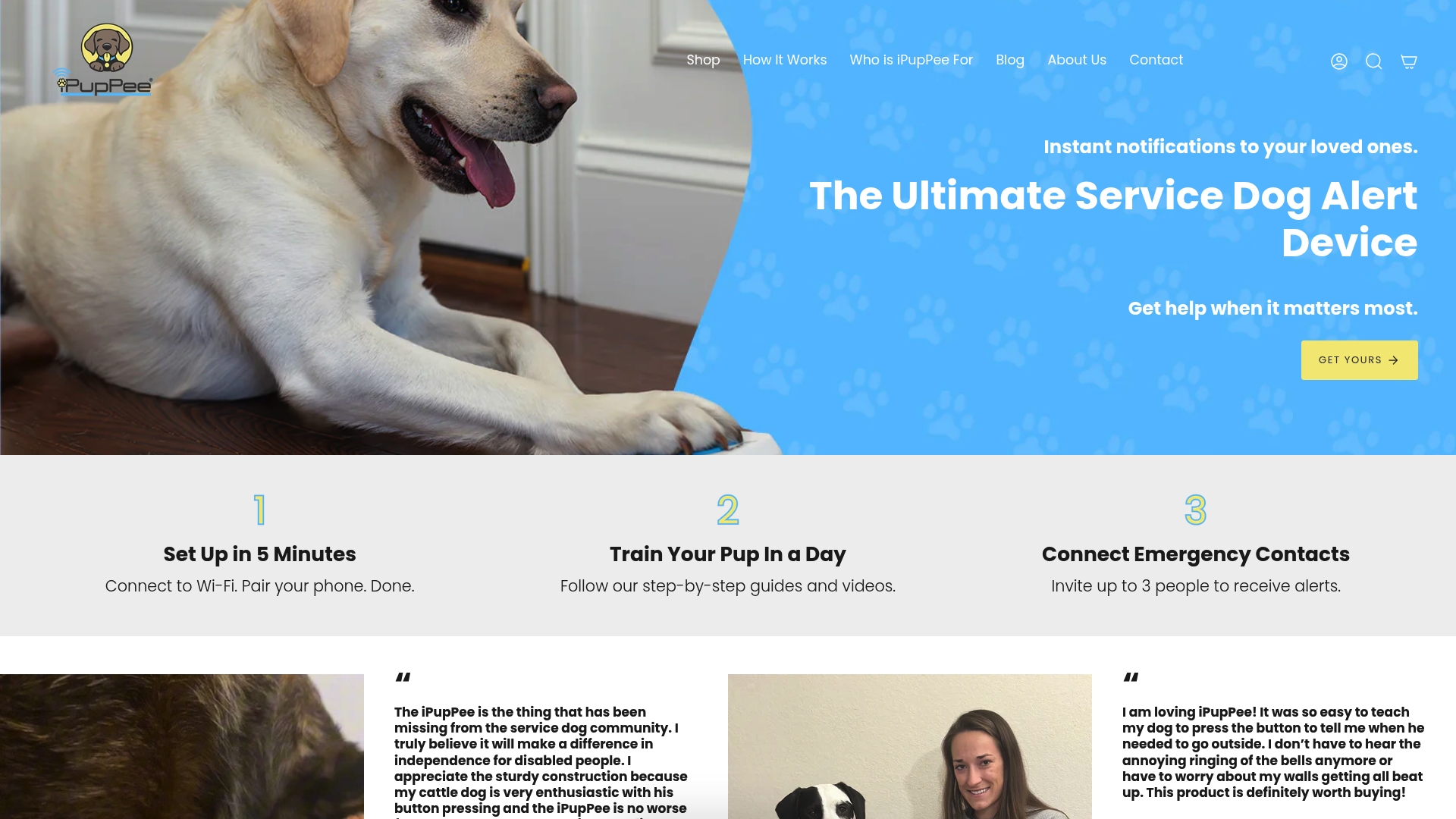
At iPupPee, we’ve built a platform specifically for pet owners who want to keep their senior dogs safe, understood, and connected. Whether you’re just starting out or looking to refine your approach, our resources and smart alert devices are designed to grow with your dog’s needs. You can also learn more training techniques tailored to senior dogs and real-life safety situations. Your dog has given you years of loyalty. Give them the tools to keep communicating with you.
Frequently asked questions
Can older dogs really learn new tricks or commands?
Yes, senior dogs can learn new tricks using adapted methods like positive reinforcement, shorter sessions, and sensory-adjusted cues. Age slows the process but does not stop it.
How long should training sessions last for elderly dogs?
Shorter training sessions of 5 to 10 minutes help prevent fatigue and keep your senior dog focused and motivated throughout the session.
What are the best treats for training older dogs?
Soft treats are ideal for elderly dogs because they are gentle on aging teeth and can be eaten quickly without breaking the training rhythm.
What if my elderly dog has hearing or vision loss?
Hand signals and consistent cues work well for hearing-impaired dogs, while keeping the training environment familiar and predictable helps vision-impaired dogs navigate confidently.
Is the iPupPee smart button useful for all senior dogs?
The iPupPee is a paw-activated device best suited for dogs 4 lbs and up who can physically press a button, making it a practical communication tool for most senior dogs.