

TL;DR:
- Dogs communicate primarily through subtle body language and calming signals to de-escalate tension. Teaching owners to interpret these cues and establish consistent verbal and nonverbal signals enhances understanding and reduces behavioral issues. Combining body language literacy with tools like communication buttons, AI collars, and customized signals creates a comprehensive approach to better dog-human communication.
Most dog owners assume their dog is “just being a dog” when something feels off. The reality is that dogs send clear, readable signals constantly. Gaps in dog communication solutions come not from dogs failing to communicate, but from owners not yet having the tools or knowledge to receive those messages accurately. Whether you’re dealing with a dog who snaps without warning, a rescue who shuts down socially, or a pup you simply want to understand better, the options available today range from basic body language literacy to wearable AI collars. Here’s what actually works.
Table of Contents
- Key takeaways
- 1. Dog communication solutions start with reading body language
- 2. Teaching dogs to use communication buttons
- 3. Wearable AI collars and real-time translation devices
- 4. Consistent verbal and nonverbal cue training
- 5. Dog communication apps and digital training aids
- 6. Creating custom communication signals for daily routines
- 7. Comparing solutions: a practical overview
- 8. Practical tips for introducing new communication tools safely
- My honest take on where dog communication is heading
- Ready to take your dog’s communication further?
- FAQ
Key takeaways
| Point | Details |
|---|---|
| Body language comes first | Reading calming signals and stress cues is the highest-leverage skill you can develop as a dog owner. |
| Buttons capture functional requests | Communication buttons work best for specific needs like “outside” or “water,” not complex emotional expression. |
| AI collars show promise but have limits | Sound-based translation is probabilistic; body posture and context must be factored in alongside any device output. |
| Consistency beats variety | Dogs track tone, timing, and gesture far more than word choice, so keeping your signals predictable matters most. |
| Combine approaches for best results | No single tool covers everything. Pairing body language knowledge with training aids or tech gives you the clearest picture. |
1. Dog communication solutions start with reading body language
Before you add any device or training tool, you need to understand how dogs communicate at the most fundamental level. Dogs speak almost entirely through posture, movement, and subtle physical cues. Most owners focus on the obvious stuff: tail wagging, barking, jumping. But the signals that matter most for safety and bonding are far quieter.
Canine communication specialists call these calming signals, a set of appeasement behaviors dogs use to de-escalate tension before it builds into something bigger. You’ve probably seen them without knowing what they were:
- Lip licking when no food is present
- Yawning outside of obvious tiredness
- Turning the head or full body away
- “Whale eye” (showing the whites of the eyes)
- Ears pinned back or flattened
- Paw lifting or freezing mid-movement
- Trembling in a context that doesn’t warrant excitement
Dogs signal discomfort through these cues long before they escalate to growling or biting. That escalation is gradual, not sudden, which means you have a window to act if you recognize what you’re seeing.
Pro Tip: Never punish growling. Growling is a warning, and if you suppress it through punishment, you remove the signal without addressing what’s causing it. That leads to biting with no visible buildup.
Reading body language as a whole picture matters too. A wagging tail means very different things depending on whether the dog’s weight is shifted forward, its ears are up, and its mouth is tight versus relaxed. Isolated cues mislead you. The whole posture tells the real story.
2. Teaching dogs to use communication buttons
Recordable soundboard buttons have become one of the most talked-about dog communication tools of the last few years, and the research behind them is more nuanced than the viral videos suggest.
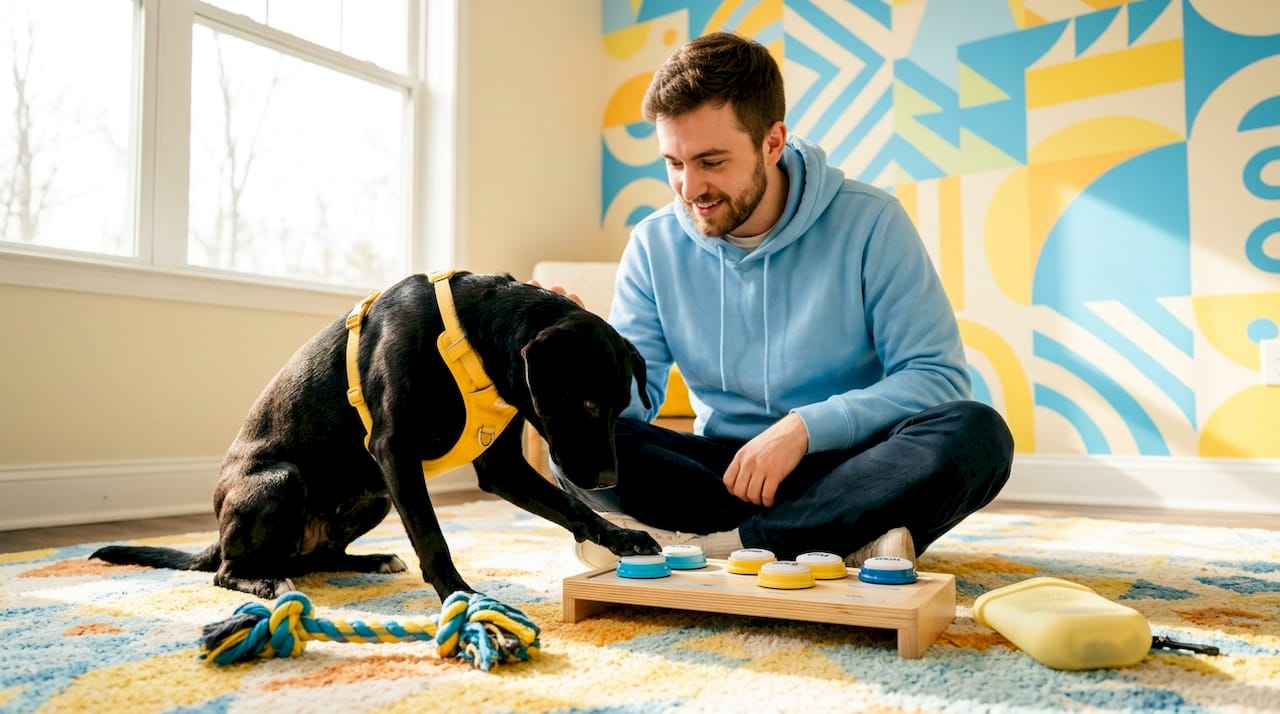
The concept is straightforward: you record words onto buttons (“outside,” “water,” “play”), teach your dog to associate pressing each button with the corresponding outcome, and over time the dog can string presses together to signal needs. UCSD research shows that some dogs do use multiple words in sequence at rates higher than chance, though adoption varies widely and most dogs gravitate toward just a handful of buttons.
The practical steps for getting started:
- Choose 2 to 3 high-value words tied to daily routines (not abstract concepts)
- Place buttons where the relevant activity happens (the “outside” button near the door)
- Model button use yourself before expecting the dog to try it
- Pair every button press with the actual event immediately and consistently
- Add new buttons only after current ones are reliably understood
Timing is the critical variable that most owners underestimate. If you press “walk” and then spend three minutes finding your shoes, the dog’s brain doesn’t connect the button to the walk. It connects the button to whatever followed immediately. The real benefit of button training is capturing functional requests, not teaching dogs to hold conversations.
Pro Tip: If your dog starts pressing buttons randomly or in rapid succession without any apparent trigger, they may have learned that button pressing produces attention rather than a specific outcome. Step back, strip the board to one button, and rebuild the association from scratch.
Check out Ipuppee’s guide on training communication buttons for a step-by-step approach grounded in current research.
3. Wearable AI collars and real-time translation devices
This is where dog communication solutions get genuinely exciting, though also where skepticism is warranted.
Devices like PettiChat represent a new category: wearable collars that listen to your dog’s vocalizations and use AI models to translate them into human-readable emotional states in near-real time. PettiChat claims 94.6% translation accuracy using a model trained on over one million vocal and behavioral samples, with results delivered in 1.2 seconds from a collar weighing just 27 grams.
The practical upsides are real:
- Passive monitoring means you catch emotional states you might miss visually
- Location tracking features add a safety layer, particularly for dogs who wander
- Over time, pattern data can reveal stress triggers you hadn’t noticed
- Lightweight, wearable form factor doesn’t disrupt normal behavior
But AI sound translation is probabilistic, not definitive. A bark labeled “anxious” by an algorithm might be accurate or might reflect ambient noise, a specific breed’s vocal patterns, or a situation the model wasn’t trained on. Dog communication is multi-modal and context-dependent, meaning sound alone never tells the full story. Ear position, tail height, body weight distribution, and environmental context all shift meaning. No collar reads all of that simultaneously, at least not yet.
Use AI collar data as a prompt for observation, not a conclusion. When the device flags distress, look at your dog and confirm with what you see.
4. Consistent verbal and nonverbal cue training
Here’s something most owners get wrong: dogs don’t understand English. They understand patterns, tone, and physical cues. Research confirms that dogs respond better to ostensive communication, meaning cues that combine attention-getting gestures with consistent verbal and visual signals.
What this looks like in practice is pairing the same hand signal with every verbal command every time, using a distinct tone that shifts between instruction and praise, and making eye contact a deliberate part of your communication rather than something that just happens. Breed matters here too. Breed selection affects communication, as herding breeds typically read human body language with extraordinary sensitivity while some scent-driven breeds prioritize nose input over visual cues from you.
The most common error owners make is sending mixed signals without realizing it. You say “sit” in a calm voice on Monday and in a frustrated, rushed tone on Friday. Your dog isn’t ignoring you. They’re receiving a genuinely different signal and responding to it accordingly.
Pair verbal cues with hand signals from day one. Keep your tone range consistent: a lower, even tone for commands and a higher pitch for genuine praise. Use your dog’s name only to get attention, not as part of the command itself, because “Buddy, sit” eventually blurs into one long sound if used every time.
5. Dog communication apps and digital training aids
Beyond physical devices, a growing category of dog communication apps offers training guidance, behavioral tracking, and owner education through your phone. These tools don’t directly translate dog signals, but they help you build the literacy to interpret them yourself.
The most useful apps in this category offer behavioral journals (where you log what triggered certain responses and track patterns over time), video libraries for identifying specific body language cues, and positive reinforcement training programs with timed prompts. Some connect with wearable devices to overlay behavioral data with activity logs.
The limitation is that apps require owner discipline to update consistently. A behavioral journal is only as useful as the data you put into it. If you log sporadically, you miss the patterns that reveal your dog’s real stress triggers and preferences.
6. Creating custom communication signals for daily routines
One underused dog communication solution is deliberately designing a signal vocabulary specific to your household and your dog’s daily life. This goes beyond standard commands like “sit” or “stay” and into the territory of creating dog communication signals for every routine interaction: feeding time, vet visits, car rides, greetings with strangers.
The process is simple but requires follow-through. Pick a unique signal (a specific hand shape, a soft word, a particular whistle pattern) for each situation you want your dog to recognize. Introduce it consistently before the event, not during. Reward calm response to the signal with attention and praise. Over time, your dog builds a mental map of what each signal predicts.
Dogs who have a rich signal vocabulary show measurably lower anxiety during potentially stressful events because they know what is coming. Predictability is a core element of canine emotional safety.
7. Comparing solutions: a practical overview
Different dog communication solutions suit different owners, dogs, and situations. Here’s a side-by-side look at the main options:
| Solution | Effectiveness | Learning curve | Approximate cost | Best for |
|---|---|---|---|---|
| Body language literacy | Very high | Moderate | Free to low | All owners, foundational skill |
| Communication buttons | Moderate to high | Moderate | $20 to $150 | Routine needs, curious breeds |
| AI wearable collars | Promising but unverified | Low | $80 to $200+ | Tech-comfortable owners, safety monitoring |
| Verbal and nonverbal cue training | High | Low to moderate | Free with consistency | Every owner and every dog |
| Custom signal vocabulary | High | Moderate | Free | Households with structured routines |
| Digital training apps | Moderate | Low | Free to $30/month | Visual learners, data-driven owners |
No single row in that table outperforms everything else in every situation. Body language literacy sits at the top because it’s free, always available, and applicable in every moment. Everything else builds on top of it.
8. Practical tips for introducing new communication tools safely
New tools can create stress if introduced too fast. Follow this approach to keep things positive:
Start with observation before intervention. Spend one week simply watching your dog and logging when they show calming signals or unusual behavior, without changing anything. You will spot patterns that tell you which communication gap to address first.
Introduce one tool at a time. Adding buttons, a new collar, and a training app simultaneously overwhelms both you and your dog. Pick the tool most relevant to your biggest communication challenge and work with it for at least three to four weeks before adding anything else.
Pro Tip: Watch for stress signals while introducing any new device. If your dog sniffs a new collar and immediately licks their lips or turns away, that’s a stress signal to respect, not push through. Give them time to investigate at their own pace before putting it on.
Balance technology with old-fashioned presence. The best dog communication happens when you’re fully attentive, not glancing at an app while your dog tries to tell you something. Tech tools support your attention; they don’t replace it.
My honest take on where dog communication is heading
I’ve spent years looking at the tools people use to connect with their dogs, and the pattern I keep seeing is this: owners reach for gadgets before they’ve mastered the basics, and they end up disappointed when the gadget doesn’t solve the underlying gap.
The single highest-return skill you can develop is recognizing early stress signals. Not because it’s easy, but because it changes everything. Once you can read a lip lick or a whale eye in real time and adjust your behavior accordingly, your dog’s entire demeanor toward you shifts. You become predictable. You become safe.
That said, I’m genuinely optimistic about AI-assisted communication tools. Not because I trust every accuracy claim made in a Kickstarter campaign, but because the direction of the technology is right. Passive, wearable monitoring that catches what we miss visually is a real contribution to dog welfare. My caution is only that we hold these tools to honest standards and resist treating a probabilistic output as a verdict on what our dog is feeling.
Combine solid body language knowledge with whatever tools make sense for your lifestyle. Your dog is already talking. The goal is learning to listen.
— Andrew
Ready to take your dog’s communication further?
If this article got you thinking about where your own communication gaps are, Ipuppee has resources to help you close them. Whether you’re curious about introducing communication devices to a hesitant dog or want to understand the technology behind modern pet communication tools, the Ipuppee blog covers it with practical, research-backed guidance.
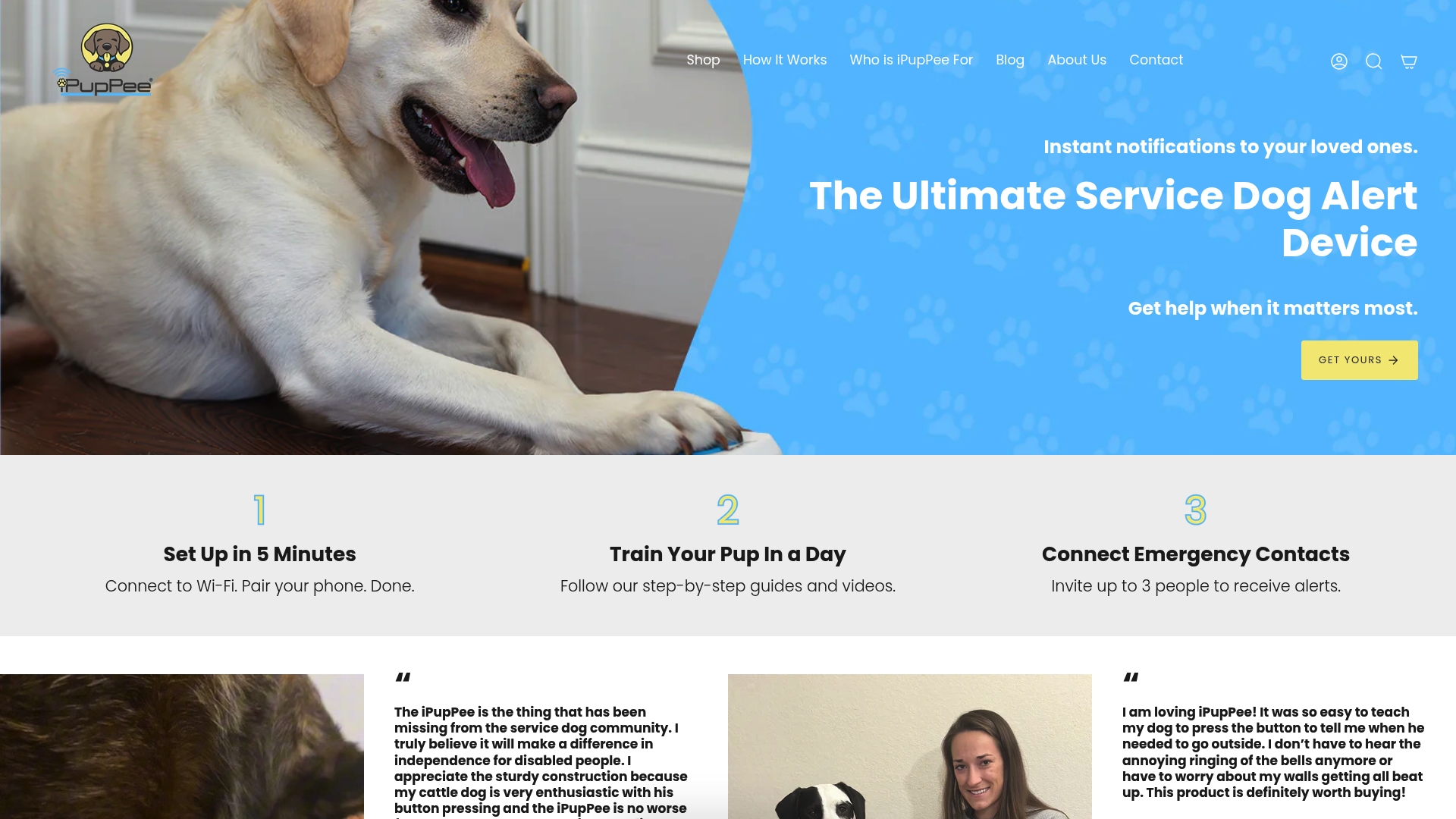
Ipuppee also offers the iPupPee alert device, built specifically to give dogs a simple, reliable way to signal needs through a button press. It’s designed for service dog handlers, seniors living alone, and anyone who wants a dependable communication layer between them and their dog. Visit ipuppee.com to see how it works and explore training resources tailored to your situation.
FAQ
What are the most effective dog communication solutions?
Body language literacy is the most effective starting point because it applies in every interaction with zero cost. Combining it with consistent verbal and nonverbal cue training and, where relevant, communication buttons or wearable tech gives you the most complete picture.
How do dogs signal needs before barking or growling?
Dogs display calming signals like lip licking, yawning, head turning, and paw lifting as early stress indicators. Recognizing these cues before they escalate to vocalization lets you adjust the situation proactively.
Do communication buttons actually work for dogs?
Some dogs do learn to use buttons meaningfully, particularly for functional requests like “outside” or “water.” UCSD research confirms variable adoption, with most dogs using a small number of buttons consistently. Success depends heavily on timing and training consistency.
Are AI dog translation collars reliable?
Current devices like PettiChat show promising accuracy claims, but AI translation is probabilistic, not definitive. Use device outputs as a prompt for observation rather than a final read on what your dog is feeling.
How can I improve communication with a rescue dog?
Start by reading their calming signals without reacting or correcting, which builds trust gradually. Introduce consistent daily signals for routines before adding any technology, giving the dog time to learn what your cues predict.