

Dog communication systems are structured methods that let dogs reliably signal needs to humans. They range from reading natural body-language channels to deploying talking-button kits, and they work as operant signals when owners respond consistently. The key word is operant: your dog learns that pressing a button or offering a specific posture produces a predictable outcome, not that they are forming sentences. Authorities like VCA Animal Hospitals and the Merck Veterinary Manual ground this distinction clearly, and Ipuppee builds its alert-button devices around exactly that principle.
Three things to know before you read further:
- Dogs communicate across at least four natural channels simultaneously; no single cue tells the whole story.
- Talking-button systems teach operant associations, not language. Realistic expectations matter.
- Consistent human response is the variable that determines whether any system succeeds.
Table of Contents
- What are the main dog communication systems?
- How do talking-button systems actually work?
- What does the research actually say about dog communication?
- A practical training plan with timeline and costs
- Common mistakes that stall button training
- How Ipuppee approaches dog communication
- Key Takeaways
- Why consistency matters more than the system you choose
- Ready to start with Ipuppee’s alert-button system?
- Useful sources for further reading
What are the main dog communication systems?
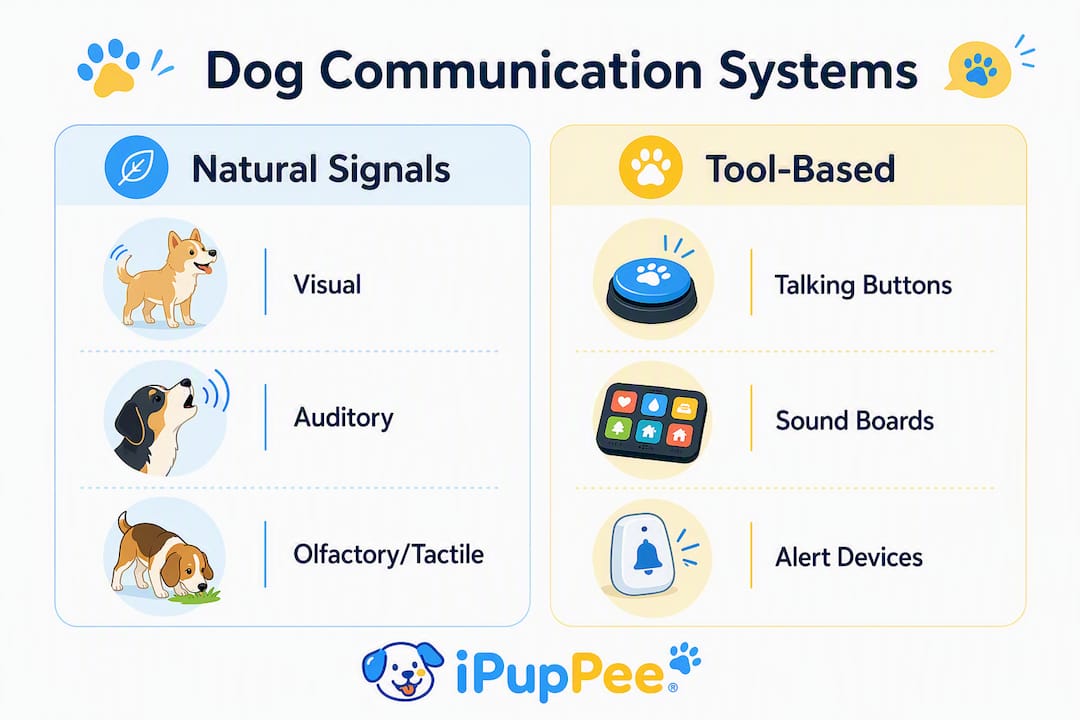
Dogs use multiple channels at once: visual signals, vocalizations, scent marking, tactile contact, and, increasingly, tool-based systems designed to bridge the gap between canine intent and human understanding. Each channel serves different purposes and suits different training goals.
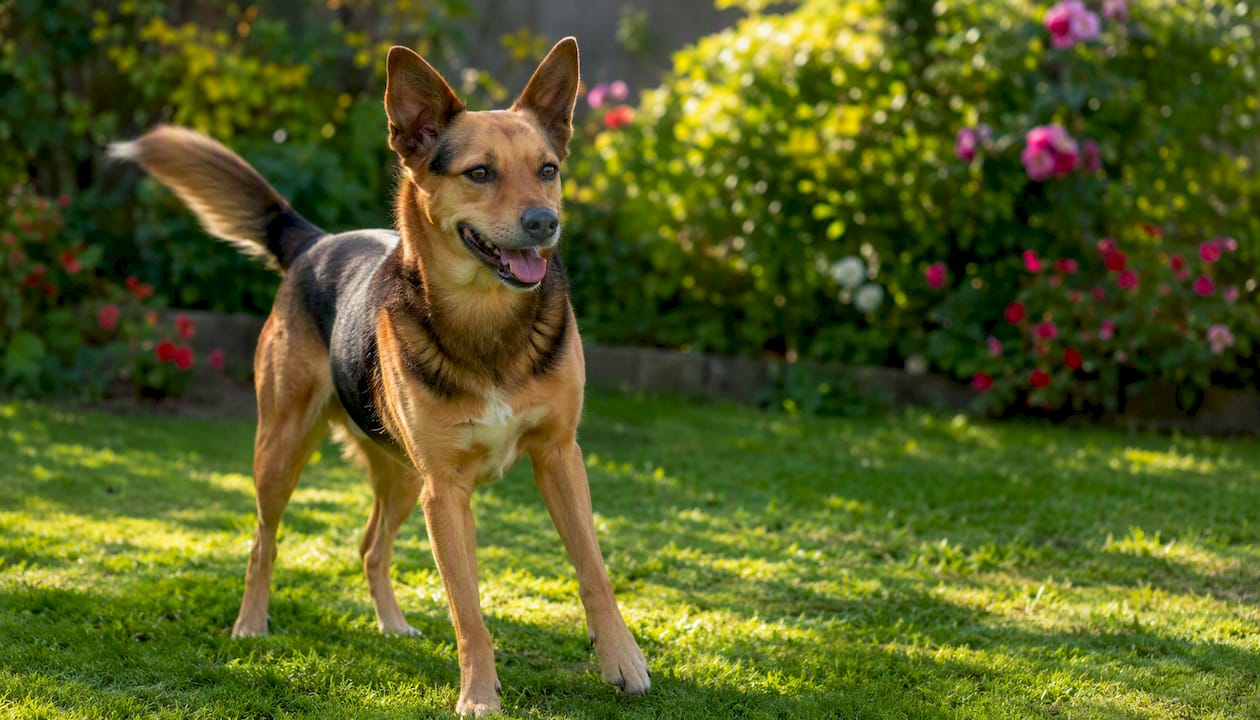
Visual/body language is the richest channel. Tail position, ear orientation, muscle tension, eye shape, and overall body posture combine into a single synchronized message. A wagging tail in isolation tells you almost nothing. The Tufts Collaborative for Shelter Dogs emphasizes whole-body assessment for exactly this reason: a tail wag can appear in both relaxed and tense contexts, and misreading one element produces false conclusions.
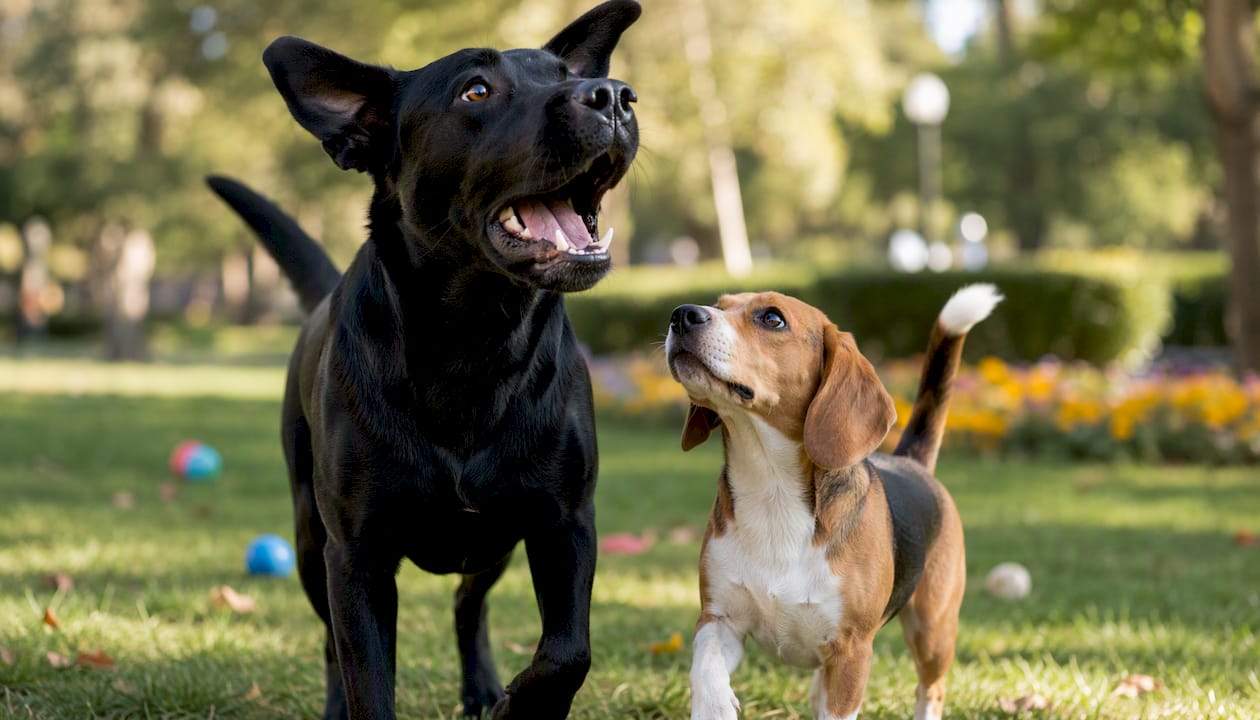
Auditory signals include barks, growls, whines, howls, and sighs. Pitch, duration, and repetition rate all carry meaning. A high-pitched, rapid bark signals excitement or alarm; a low, sustained growl is a warning. Context shifts the interpretation every time.
Olfactory and tactile signals matter more in dog-to-dog communication than in dog-to-human interaction, but they still inform the picture. Scent marking establishes territory and identity. Tactile contact, like a nose nudge or a paw placed on your knee, is a direct request for attention or reassurance.
Tool-based systems are the newest category. Talking buttons, sound boards, and alert devices like the Ipuppee let dogs trigger a recorded word or alert sound by pressing a button. These extend natural signaling by giving dogs a mechanism to produce a human-interpretable output on demand.
| System type | Best for / typical use cases | Training difficulty | Scientific support | Typical cost shape |
|---|---|---|---|---|
| Body-language reading | All dogs; baseline for any other system | Low (owner skill-building) | Strong peer-reviewed base | Free to low (books, courses) |
| Talking buttons / sound boards | Routine requests, enrichment, vocabulary building | Moderate; weeks to months | Operant conditioning well-supported; language claims not | $20–$150 for starter kits |
| Alert/signal buttons (single-purpose) | Service signals, seniors, special-needs owners | Low to moderate | Operant conditioning; practical safety outcomes | $20–$50 per device |
| Scent/tactile devices | Detection work, service cueing | High; requires specialist guidance | Moderate; mostly applied in service-dog contexts | Varies widely |
How do talking-button systems actually work?
The hardware is simple: a recordable button stores a short voice clip (“outside,” “water,” “play”) and plays it back when pressed. Placement matters. Buttons should sit in accessible, consistent locations your dog already frequents, like near the back door for an “outside” button or beside the water bowl for “water.”
The training principle is operant conditioning. Your dog presses the button, hears the word, and you deliver the associated outcome immediately. Over repetitions, the dog learns: press this button → that word plays → that thing happens. The VCA Animal Hospitals framing is useful here: dogs recognize ostensive cues like eye contact and directed speech, which is why your verbal and physical response to a button press reinforces the association faster than the button alone.
The button training process follows a clear progression:
- Choose one word. Start with a high-value, concrete concept your dog already understands (“outside” or “play”). Abstract words like “love” teach nothing at this stage.
- Record a clear, consistent voice clip. Use the same voice and same word every time. Inconsistent recordings confuse the association.
- Place the button where the behavior naturally occurs. Near the door for “outside,” near the toy bin for “play.”
- Model the press. Press the button yourself, say the word aloud, and immediately deliver the outcome. Repeat this several times before expecting the dog to press independently.
- Reward the first intentional press immediately. The window between press and reward should be under three seconds.
- Ignore accidental presses. No reward, no reaction. Only respond when the press is deliberate and contextually appropriate.
- Add a second button only after the first is reliable. “Reliable” means the dog presses intentionally and in context at least 80% of observed opportunities over several days.
- Generalize across settings. Move practice to different rooms and times of day so the behavior is not location-locked.
Pro Tip: Distinguish accidental presses from intentional ones by requiring a clear, deliberate press force. If your dog brushes the button while walking past, do not respond. Only mark and reward presses where the dog stops, orients toward the button, and presses with apparent intent. This single habit prevents the most common plateau in button training.
What does the research actually say about dog communication?
The science is more nuanced than the viral videos suggest, and it is worth knowing where the evidence is solid and where it gets thin.
The strongest finding is that dogs are genuinely skilled at reading human ostensive cues: eye contact, directed speech, pointing gestures. Research published in PMC shows dogs use gaze alternation to direct human attention to objects, a behavior that looks intentional and referential. This is the cognitive foundation that makes button systems plausible. Dogs already attend to human communicative acts; buttons give them a way to initiate one.
“Dogs employ the same communicative signals in dog–dog and dog–human interactions, but meanings shift with context and ostensive cues. Consistent human responses are what make tool-based signals reliable.” — Communication in Dogs, PMC
What the research does not support is the claim that dogs using buttons understand words semantically the way humans do. The Merck Veterinary Manual notes that domestication altered dogs’ facial musculature specifically to facilitate communication with humans, including eyebrow movements that trigger oxytocin responses in owners. That is a real, measurable adaptation. But it is a social-bonding mechanism, not evidence of linguistic comprehension.
The honest summary: button presses are operant associations. A dog pressing “outside” has learned that this action produces a walk, not that the word “outside” refers to a geographic concept. That is still genuinely useful. It is just not what the most enthusiastic social-media accounts claim.
Where evidence is thin: No peer-reviewed study has demonstrated that dogs using talking buttons develop anything resembling a productive vocabulary in the linguistic sense. Most published research on canine communication focuses on natural signaling channels, not button systems specifically. Treat button training as enrichment and practical cueing, not language acquisition.
VCA also flags a pattern worth watching: humans are verbal listeners, dogs are visual observers. Owners who focus on button presses can miss the appeasement signals happening simultaneously. Lip-licking, yawning, and looking away are intentional behaviors that reduce tension. Ignoring them pushes dogs toward louder signals like growling or snapping.
A practical training plan with timeline and costs
Most dogs reach single-button competence within two to four weeks of consistent daily practice. “Competence” means intentional, context-appropriate presses at least 80% of observed opportunities.
| Phase | Timeframe | Milestone | Daily practice |
|---|---|---|---|
| Introduction | Days 1–5 | Dog observes and sniffs button; owner models press | 3–5 sessions, 2–3 minutes each |
| First intentional press | Days 6–8 | Dog presses independently at least once per session | 4–6 sessions, 3 minutes each |
| Single-word mastery | Weeks 3–4 | Consistent, context-appropriate presses; 80% rate | 3–4 sessions, 3–5 minutes each |
| Second button introduction | Weeks 5–7 | Dog distinguishes between two buttons reliably | 3–4 sessions, 5 minutes each |
| Vocabulary expansion | Weeks 8–12 | 3–5 buttons in active use; generalization across rooms | 2–3 sessions, 5 minutes each |
Typical costs for a starter setup:
- Entry-level kit (2–4 buttons): $20–$50
- Midrange sound board (8–12 buttons with mat): $60–$150
- Optional training guide or video course: $15–$50
- Professional behavior consultation (if needed): $75–$200 per session
Short, frequent sessions outperform long, infrequent ones. Shelter behavior guidance consistently recommends repeated, context-varied exposures in small windows. Three two-minute sessions spread across a day beat one twenty-minute block.
Practical integration tips:
- Tie button practice to existing routines: press “outside” before every walk, press “water” before refilling the bowl.
- Keep buttons in fixed locations for at least the first eight weeks. Moving them resets the spatial association.
- Log presses in a simple notebook or phone note. Patterns in when and how often your dog presses reveal whether the association is genuine or random.
- If progress stalls, reduce the vocabulary to one button and rebuild the contingency from scratch.
Common mistakes that stall button training
Most button-training failures trace back to a handful of predictable errors. Knowing them in advance saves weeks of frustration.
- Inconsistent reinforcement. Responding to a press sometimes and ignoring it other times destroys the contingency. If you cannot respond immediately, move the button out of reach temporarily rather than ignore a press.
- Too many buttons too soon. Adding a second or third button before the first is solid dilutes the learning. Each new button competes for attention and slows mastery of all of them.
- Rewarding accidental presses. A dog that brushes a button while walking past and gets a treat has learned to brush buttons. Require deliberate, oriented presses before responding.
- Ignoring body language context. A press of “play” during a thunderstorm, when the dog is visibly tense, is probably not a play request. Read the whole dog. PetMD’s body-language guide provides practical clusters of relaxed, alert, stressed, and fearful postures that help owners make this call quickly.
- Skipping the modeling phase. Dogs learn faster when they watch the behavior demonstrated first. Owners who place a button and wait for spontaneous discovery often wait a long time.
Red flags that need professional attention:
- The dog presses compulsively, dozens of times in a row, regardless of outcome. This suggests anxiety, not communication.
- Escalating stress signals (panting, pacing, whale eye) appear during or after button sessions. The system is adding pressure, not reducing it.
- The dog shows appeasement behaviors (lip-licking, yawning, turning away) when you approach the button area. The training context has become aversive.
The Merck Veterinary Manual notes that subtle appeasement signals consistently precede louder warnings. If you see them during button training, stop the session and consult a certified applied animal behaviorist or veterinary behaviorist before continuing.
How Ipuppee approaches dog communication
Ipuppee’s alert-button device is designed around a specific, practical premise: a dog should be able to signal a need to a human who may not be watching. That makes it especially useful for service-dog handlers, seniors living alone, and owners of rescue dogs who are still building a communication vocabulary.
The device works on the same operant principle as any button system. The dog presses, the alert fires, the owner responds. What distinguishes the Ipuppee approach is the emphasis on safety and independence as the primary outcomes, rather than vocabulary size. A single reliable signal that a dog uses consistently to alert a mobility-impaired owner is worth more than a twelve-button board used inconsistently.
Ipuppee’s training resources walk owners through a bootcamp-style protocol: start with one button, one outcome, and a tight reward contingency. The training philosophy prioritizes the owner’s response habits as much as the dog’s press behavior, which aligns directly with the research finding that consistent human response is the variable that determines system success.
Use cases where Ipuppee’s design is particularly well-matched:
- Service-dog signaling: A dog trained to alert a handler with mobility limitations needs a reliable, low-effort press mechanism. Ipuppee’s button is built for repeated, durable use.
- Senior owners: A dog that can press an alert when it needs to go outside reduces accidents and supports the owner’s independence.
- Rescue dogs: Dogs with limited prior training history often respond well to a single, clear signal system before expanding to a broader vocabulary.
Pro Tip: For rescue dogs especially, start with one button tied to the highest-value routine in their day, typically outdoor access. A dog that learns one reliable signal in the first two weeks builds confidence faster than one introduced to multiple buttons simultaneously.
Key Takeaways
Dog communication systems work best when owners treat them as operant-conditioning tools, not language lessons, and respond to signals with immediate, consistent outcomes.
| Point | Details |
|---|---|
| Systems require consistent response | The human’s response consistency determines whether any signal system succeeds, more than the dog’s “understanding.” |
| Start with one button or signal | Single-word mastery before expansion prevents confusion and builds reliable associations faster. |
| Read the whole dog | Tail, ears, muscle tension, and eye shape together form the message; single cues like tail wagging are misleading without context. |
| Operant, not linguistic | Button presses are learned associations between action and outcome, not evidence of semantic language comprehension. |
| Ipuppee for safety-focused signaling | Ipuppee’s alert-button device suits service-dog handlers, seniors, and rescue dogs needing one reliable, durable signal. |
Why consistency matters more than the system you choose
The owners who get the most out of communication systems are rarely the ones with the most buttons. They are the ones who respond the same way, every time, for weeks on end. That is the unsexy truth the viral button-dog videos skip over.
What strikes me about the research is how much it reframes the training challenge. You are not teaching your dog a new skill in isolation. You are building a shared protocol, and your half of it is harder to maintain than theirs. Dogs are remarkably consistent once an association is formed. Humans drift: they respond sometimes, ignore the button when they are busy, laugh at an accidental press and accidentally reinforce it. The system breaks at the human end far more often than the canine end.
The other thing worth saying plainly: body language is the system that was always there. Buttons and alert devices are genuinely useful, particularly for owners with mobility limitations or dogs that need a low-effort signaling mechanism. But they work best when layered on top of solid body-language literacy, not as a replacement for it. A dog pressing “outside” while also showing a stiff posture and whale eye is telling you two things at once. The button is the easy part to read.
Ready to start with Ipuppee’s alert-button system?
Owners who want a single, reliable signal rather than a full vocabulary board will find Ipuppee’s alert-button device a practical starting point. It is built for durability and designed for the use cases where one clear signal matters most: service-dog handlers, seniors, and rescue dogs building their first communication habit.
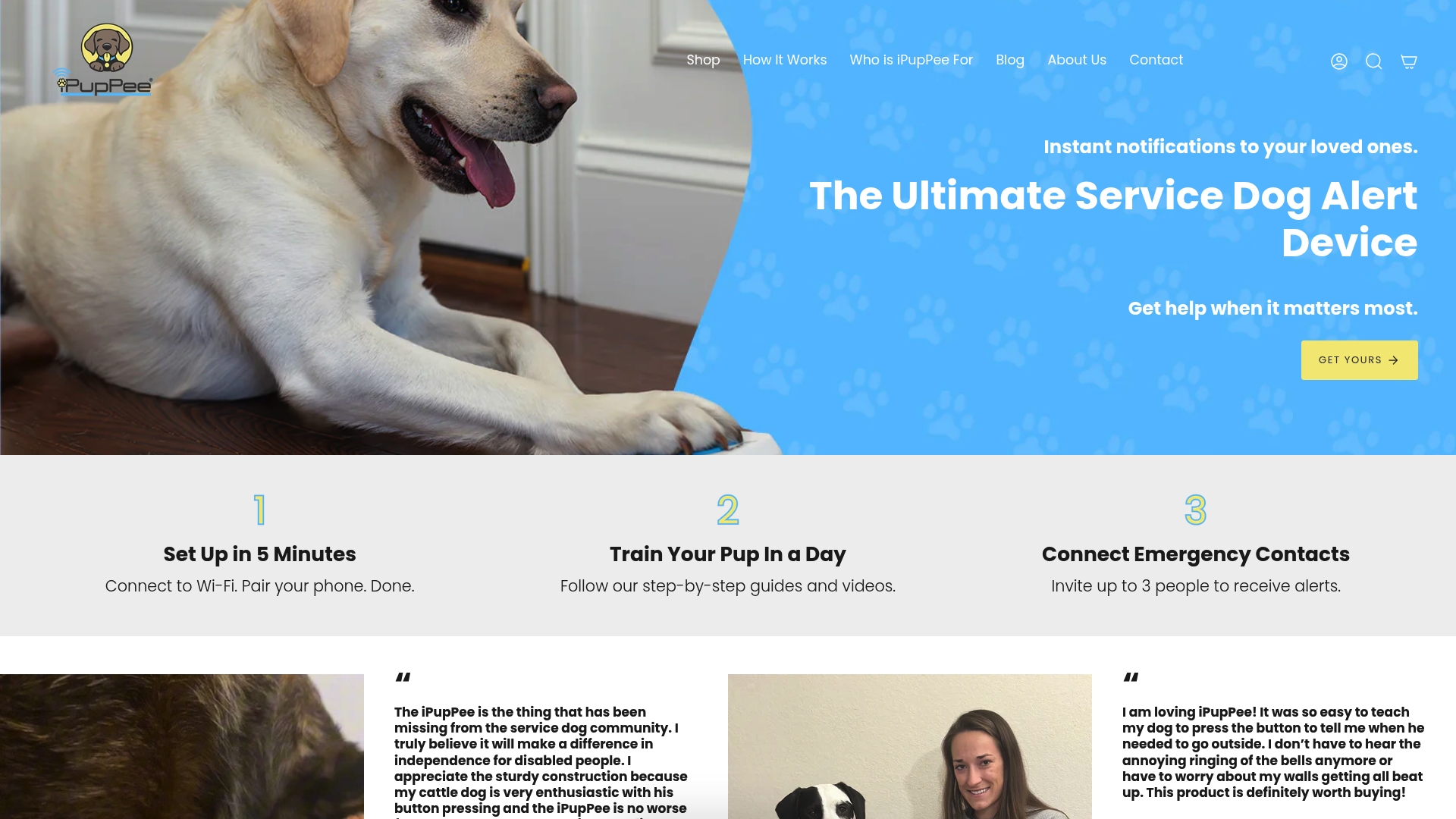
After purchase, Ipuppee provides a structured training guide that walks you through the bootcamp protocol step by step. You get a recommended timeline, a reinforcement checklist, and access to educational resources covering both button training and body-language fundamentals. The starting point is always the same: one button, one outcome, consistent response.
What to expect after you start:
- A starter checklist covering button placement, voice recording, and the modeling phase
- A recommended four-week training timeline with weekly milestones
- Access to Ipuppee’s blog library covering dog communication signals and body-language guides
Visit ipuppee.com to see the device, review the training resources, and place your first order.
Useful sources for further reading
These are the primary references behind this guide, selected for authority and practical relevance:
- Communication in Dogs, PMC — Peer-reviewed review covering multi-channel signaling, ostensive cues, and the evidence base for dog-human communication. The strongest academic starting point.
- Canine Communication, VCA Animal Hospitals — Veterinary-clinical overview of body-language channels, appeasement signals, and the operant basis of button systems. Practical and well-sourced.
- Social Behavior of Dogs, Merck Veterinary Manual — Clinical reference covering escalation sequences, appeasement-to-aggression progressions, and domestication-related facial adaptations.
- Dog Communication and Body Language, Tufts Collaborative for Shelter Dogs — Applied guidance on whole-body assessment and short-session training practices. Especially useful for rescue-dog contexts.
- How to Read Your Dog’s Body Language, PetMD — Field-friendly descriptions of relaxed, alert, stressed, and fearful posture clusters. Good quick-reference for owners learning to read signals alongside button training.
- Dog Button Communication Guide, Ipuppee — Ipuppee’s in-depth training guide covering button mechanics, behavioral theory, and step-by-step protocols for owners and trainers.
- Dog Communication Training for Independence and Safety, Ipuppee — Ipuppee’s resource covering safety-focused use cases, including service-dog signaling and senior-owner applications.