

TL;DR:
- Most dogs need about 51 minutes of daily exercise, adjusted for age, breed, and health.
- Proper, balanced activity improves physical health, behavior, and prevents obesity and disease.
- Tailoring exercise routines to individual dogs and monitoring their response ensures safety and effectiveness.
Most dog owners believe a quick lap around the block is plenty. It is not. Regular physical activity in dogs averages 51 minutes per day, and that number shifts dramatically based on age, breed, and health status. Whether you have a high-energy rescue, a working service dog, or a senior companion, getting exercise right is one of the most powerful things you can do for your dog’s long-term wellbeing. This guide breaks down the science, the benchmarks, and the practical techniques that actually move the needle.
Table of Contents
- Why exercise is essential for every dog
- How much exercise does your dog really need?
- The science of safe and effective canine exercise techniques
- Special considerations: Seniors, chronic illness, and working dogs
- A new perspective: Exercise is not one-size-fits-all
- Support your dog’s wellbeing with expert resources
- Frequently asked questions
Key Takeaways
| Point | Details |
|---|---|
| Daily activity benchmarks | Dogs generally need 30-60 minutes of tailored exercise each day to support health and happiness. |
| Tailored routines matter | Breed, age, and health mean every dog benefits most from personalized exercise plans. |
| Use progressive techniques | Gradually increasing exercise challenge prevents injury and improves results across all dog types. |
| Special cases need care | Seniors, working dogs, and those with chronic conditions require modified, low-impact routines. |
Why exercise is essential for every dog
Exercise is not just about burning calories. It is a full-body intervention that touches nearly every system in your dog’s body, from the cardiovascular system to the brain. When dogs move consistently, they build stronger muscles, maintain a healthy weight, and develop better joint stability. That matters whether your dog is a two-year-old border collie or a ten-year-old golden retriever.
The behavioral benefits are just as significant. Dogs that do not get enough activity often develop habits that frustrate owners: excessive barking, chewing furniture, pacing, and anxiety-driven behaviors. These are not personality flaws. They are symptoms of unmet physical needs. A tired dog is a calm dog, and that calmness carries over into training, socialization, and daily life.
Here is what consistent exercise actually delivers:
- Weight control: Obesity affects roughly 56% of dogs in the U.S., and regular movement is the most direct way to prevent it
- Heart health: Aerobic activity strengthens the cardiac muscle and improves circulation
- Injury resilience: Stronger muscles protect joints and reduce the risk of ligament tears
- Mental stimulation: Physical activity reduces cortisol and supports cognitive function
- Disease prevention: Active dogs show slower progression of metabolic and degenerative conditions
For service dogs and rescue dogs especially, exercise is not optional. These animals carry physical and emotional loads that sedentary pets do not. Service dogs need conditioning to perform reliably. Rescue dogs often arrive with pent-up energy and stress that only structured movement can address.
By the numbers: Adult dogs need 30 to 60 minutes of moderate exercise daily. Without it, obesity and behavioral issues become significantly more likely.
Following dog exercise guidelines tailored to your dog’s profile is the foundation of a healthy routine. With the importance established, it is critical to understand the precise requirements for optimal canine exercise.
How much exercise does your dog really need?
Not every dog needs the same thing. A border collie and a basset hound are both dogs, but their exercise needs are worlds apart. The same goes for a six-month-old puppy versus a twelve-year-old arthritic lab. Getting the dosage right matters as much as the activity itself.
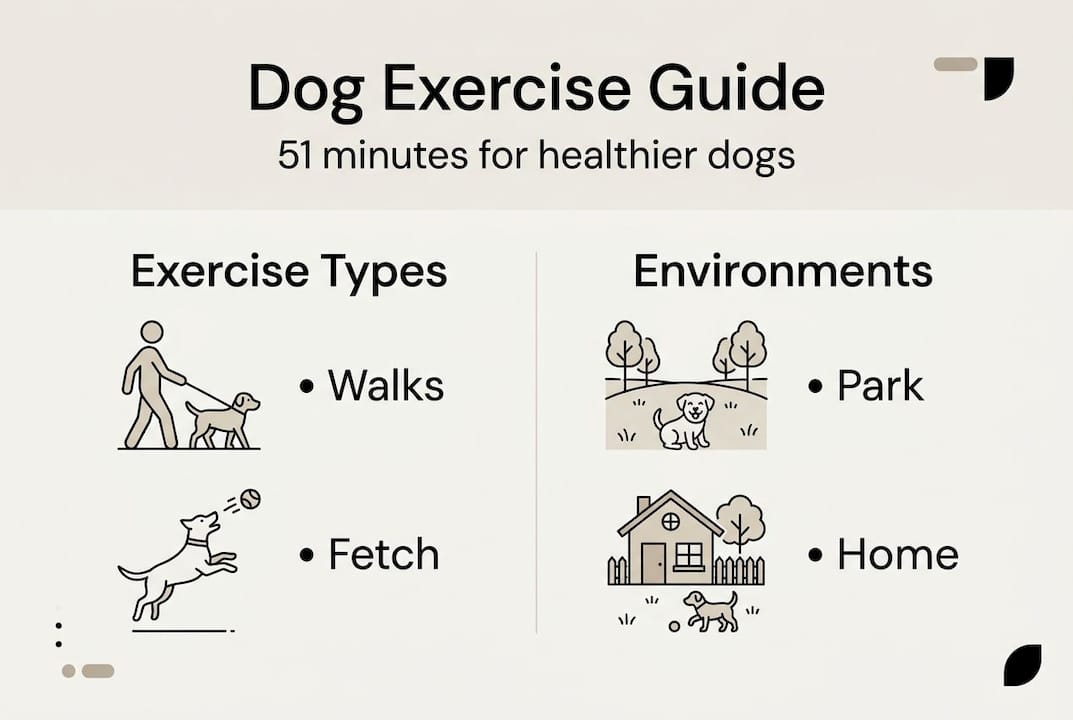
Large-scale accelerometer research confirms that average activity sits around 51 minutes per day, but high-energy breeds and younger dogs regularly need more. Some working breeds need upward of two hours of structured movement to stay balanced.
Here is a practical reference to help you calibrate:
| Dog type | Daily exercise target | Recommended activities |
|---|---|---|
| Puppy (under 6 months) | 5 min per month of age, twice daily | Short walks, gentle play |
| Adult dog (1 to 7 years) | 30 to 90 minutes | Walks, fetch, swimming, agility |
| Senior dog (7+ years) | 20 to 40 minutes | Low-impact walks, light play |
| High-energy breeds | 60 to 120+ minutes | Running, hiking, structured training |
| Service or rescue dogs | 45 to 90 minutes | Strength work, cardio, mental tasks |
Environment matters too. A dog living in a small apartment needs intentional outdoor time more than one with a large yard. Health status can shift these numbers overnight. A dog recovering from surgery or managing arthritis needs modified activity, not a full stop.
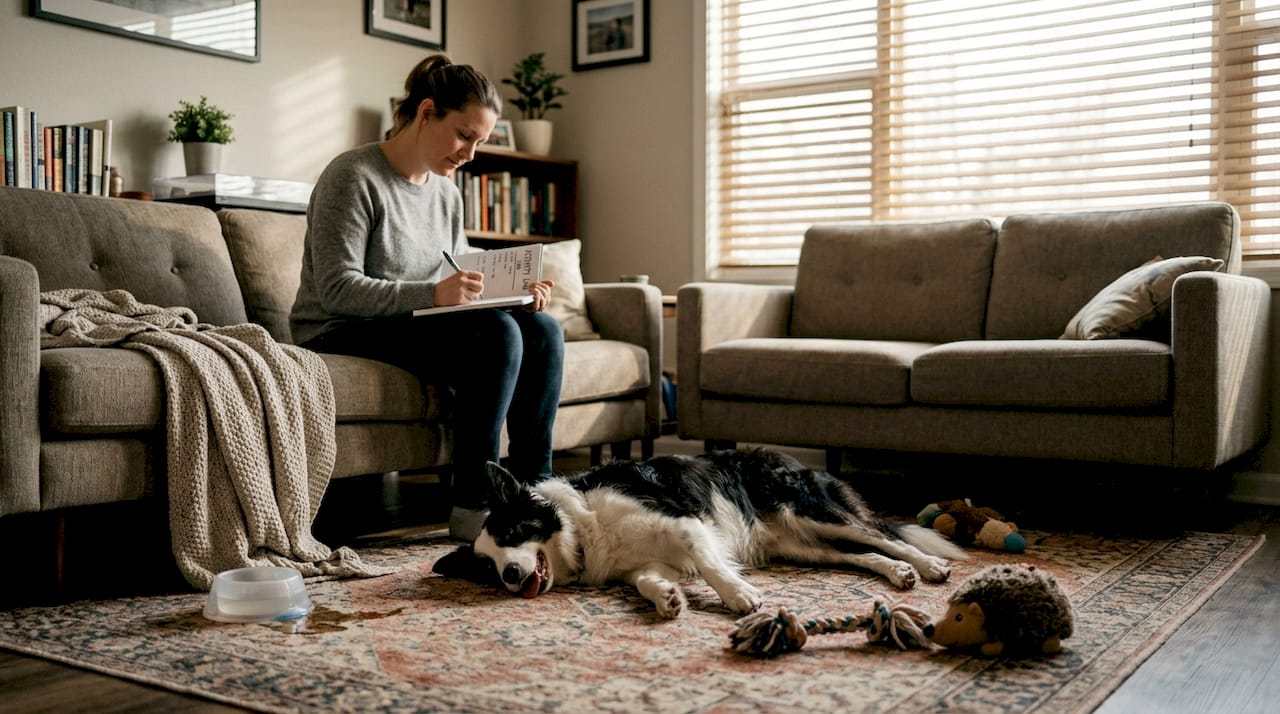
Pro Tip: Watch for signs your dog needs more activity: restlessness at night, destructive chewing, excessive barking, or weight gain. Signs of too much: limping, reluctance to move, or unusual fatigue after normal sessions. Check out these daily exercise tips to fine-tune your approach, and if you have an older companion, the senior dog exercise guide offers targeted adjustments.
Once you know why exercise is important, tailoring activity to your specific dog is the next step.
The science of safe and effective canine exercise techniques
Exercise for dogs is not just walking. A well-rounded routine covers four domains: cardio, strength, balance, and flexibility. Hitting all four produces better results and significantly lowers injury risk compared to doing one thing repeatedly.
The four domains:
- Cardio: Brisk walks, jogging, swimming, and fetch build endurance and support heart health
- Strength: Hill climbs, sit-to-stand repetitions, and resistance movements build muscle and protect joints
- Balance: Wobble boards, balance discs, and uneven terrain improve proprioception (the body’s sense of position)
- Flexibility: Gentle stretches, cavaletti poles, and controlled range-of-motion movements reduce stiffness
Progressive overload and method variety including walks, hills, sit-stands, and balance drills produce better outcomes and minimize injury risk. That means you do not jump straight to a five-mile hike. You build up gradually, week by week, letting your dog’s body adapt.
Here is how to structure a safe weekly plan:
| Exercise type | Effort level | Injury risk | Best for |
|---|---|---|---|
| Leash walking | Low | Very low | All dogs |
| Hill climbing | Moderate | Low to moderate | Adult, working dogs |
| Sit-to-stand drills | Moderate | Low | Seniors, rehab dogs |
| Balance board work | Moderate | Low if supervised | Service, sport dogs |
| Swimming | Moderate to high | Very low | Arthritic, senior dogs |
Always start with a three to five minute warm-up (slow walking, gentle movement) and end with a cool-down of similar length. This is not optional. Skipping it is the fastest route to soft tissue injury.
Pro Tip: For exercise for rescue dogs, start with shorter, lower-intensity sessions. Rescue dogs often carry stress in their bodies and need time to build both physical and emotional tolerance for activity.
Knowing your dog’s needs, you can now focus on exercises that deliver the best results safely.
Special considerations: Seniors, chronic illness, and working dogs
This is where generic advice falls apart. A routine that works beautifully for a healthy three-year-old lab can cause real harm for a dog with heart disease or severe arthritis. Adjusting for your dog’s specific situation is not optional, it is essential.
For senior dogs: Seniors lose 1 to 3% of muscle mass per year, and that decline accelerates without resistance and low-impact exercise. The goal shifts from performance to maintenance: preserving muscle, protecting joints, and supporting comfort. Shorter sessions, softer surfaces, and strength-focused movements make the biggest difference. Explore senior dog care tips for a full breakdown.
For dogs with chronic illness:
- Heart failure: Gentle aerobic activity slows disease progression. Avoid high-intensity bursts
- Diabetes: Aerobic exercise lowers blood glucose in diabetic dogs and improves insulin sensitivity
- Arthritis: Swimming and short walks on soft ground reduce pain without stressing inflamed joints
- Obesity: Start slow, prioritize consistency over intensity, and monitor breathing
For service and working dogs: These dogs need more than cardio. Their jobs demand strength, focus, and physical precision. Adding sit-to-stand drills, balance work, and controlled hill walking builds the functional fitness they need. Resources on training older dogs also apply here when working dogs age into their senior years.
“Balanced, progressive training that accounts for the individual dog’s health history and current condition is the safest and most effective approach across all life stages.”
Watch for these warning signs during any session: excessive panting, lagging behind, limping, or reluctance to continue. These are your dog’s way of saying the session needs to stop. With effective exercises in hand, let’s address special cases that require unique attention.
A new perspective: Exercise is not one-size-fits-all
Here is something most exercise guides skip entirely: the biggest mistake owners make is not under-exercising their dogs. It is applying a generic routine and never adjusting it. A 30-minute walk worked great at age two. By age nine, with early arthritis setting in, that same walk may be doing more harm than good.
Every dog is shaped by their breed history, medical background, and daily lifestyle. A rescue dog that spent months in a kennel has a different baseline than a dog raised with daily runs. Treating them the same is not just ineffective, it is a missed opportunity.
Monitor for fatigue and stiffness to avoid overtraining, especially in older or compromised dogs. That monitoring only works if you are paying attention over time, not just in the moment.
Pro Tip: Keep a simple weekly log. Note duration, activity type, and how your dog looked and behaved afterward. Within a month, patterns emerge that tell you far more than any generic chart. This is especially valuable for dogs with health conditions or those in the elderly dog care stage of life.
Customizing activity and adjusting it over time yields a healthier, happier companion and prevents the injuries that sideline dogs for weeks.
Support your dog’s wellbeing with expert resources
You now have the framework. The next step is putting it into practice with tools and resources built specifically for dog owners who want to go beyond the basics. At iPupPee, we create resources and products designed for real dog owners navigating real challenges, from service dog care to rescue rehabilitation to senior dog wellness.

Whether you are just starting to build a routine or refining one that has been in place for years, the right guidance makes a meaningful difference. Explore our exercise needs explained guide for a deeper look at how to match activity to your dog’s unique profile. Your dog’s best years are ahead, and consistent, smart exercise is how you get there.
Frequently asked questions
How can I tell if my dog is getting enough exercise?
A well-exercised dog is calm at home, maintains a healthy weight, and shows minimal destructive behavior. If your dog seems restless or is chewing things up, proper exercise is likely the missing piece.
What is progressive overload in dog exercise?
It means gradually increasing duration or intensity over time so your dog’s body adapts safely. Progressive overload builds strength and endurance without pushing the body past its limits too quickly.
Are there risks to over-exercising my dog?
Yes. Over-exercising causes fatigue, joint damage, and can worsen existing conditions. Progressive routines and monitoring for pain or unusual tiredness are the best safeguards.
How should I exercise my senior dog safely?
Stick to low-impact activities like walking or swimming, keep sessions shorter, and include gentle strength and flexibility work. Seniors lose muscle rapidly, so consistency with appropriate intensity matters more than duration.
Can exercise help with my dog’s chronic illnesses?
Absolutely. Structured routines slow disease progression in heart failure, lower blood glucose in diabetic dogs, and reduce pain in arthritic dogs when tailored correctly to the condition.