

TL;DR:
- Pet AI tools help owners monitor and understand their pets through data analysis and real-time alerts. Validated devices like classifiers and interactive communicators improve communication and early illness detection, saving costs and enhancing safety. Owners should seek peer-reviewed evidence before choosing AI tools for reliable, effective pet care.
Pet AI tools are technologies that help pet owners monitor, understand, and care for their animals through data analysis, behavioral recognition, and real-time alerts. The category covers everything from wearable health trackers to button-based communication devices, and the evidence behind several of these tools is now strong enough to take seriously. A peer-reviewed study on the Petpuls collar analyzed 10,000 bark samples and found 80% accuracy in classifying dog emotional states. That kind of validation changes the conversation from novelty to genuine utility. If you’ve been wondering why consider pet AI tools at all, the short answer is this: they shift pet care from guesswork to data.
Why consider pet AI tools for communication and behavior
Pet owners have always tried to read their animals. AI tools now give that effort a measurable foundation. The technology falls into three distinct categories: classifiers, translators, and interactive communicators. Each works differently and carries a different level of scientific support.
AI communication devices fall into these three categories, and confusing them leads to disappointment. A classifier like the Petpuls collar analyzes vocalizations and maps them to known emotional states using a trained model. A translator claims to convert animal sounds into human language, often without peer-reviewed backing. An interactive communicator, like the FluentPet button system, teaches pets to press labeled buttons to signal needs.
The FluentPet system produces genuinely variable results. User data from 2026 testing shows pets learning anywhere from 0 to 5 words in 10 weeks, depending on the individual animal and training consistency. That range is not a failure of the technology. It reflects the reality that interactive communication requires sustained owner effort, not just a device purchase.
The practical benefit of better communication tools is clearer than the technology itself. When you can identify that your dog is anxious rather than bored, you respond differently. That distinction improves training outcomes and strengthens the bond between you and your pet. Validated classifiers give you that distinction with documented accuracy.
Pro Tip: Before buying any AI communication device, search for peer-reviewed studies attached to the product. If the company cites only internal testing or user reviews, treat the accuracy claims with skepticism.
- AI classifiers use trained models on large datasets and carry peer-reviewed accuracy scores.
- AI translators often rely on large language models without scientific validation.
- Interactive communicators require consistent training from the owner to show results.
- The strongest use case for communication AI is emotional state recognition, not word-for-word translation.
How AI health monitoring catches problems early
AI health monitoring is the area where the evidence is most compelling and the financial case is clearest. Wearable sensors, smart litter boxes, and behavior tracking apps all collect data continuously. The key advantage over a single vet visit is time. A vet sees your pet for minutes. An AI wearable watches your pet for hours every day.

Pet biometric data is uniquely free from self-reporting bias, making it ideal for objective early illness detection. Pets cannot describe symptoms. Their behavior and physiology carry the signal, and AI reads that signal without the distortion that comes from owner interpretation.
The clinical value multiplies when multiple data streams combine. Fusing activity levels, heart rate, and litter box usage into a single diagnostic picture produces results that are 40% more cost-effective for early treatment than single-point monitoring. That figure reflects the difference between catching kidney disease in stage one versus stage three.
Early AI detection of conditions like kidney disease reduces veterinary treatment costs by over 40%. For pet owners managing tight budgets, that number matters as much as the health outcome itself.
| Monitoring method | Data collected | Key benefit |
|---|---|---|
| AI wearable collar | Heart rate, activity, sleep | Detects behavioral and physiological shifts early |
| Smart litter box | Elimination frequency, weight | Flags kidney and urinary issues before symptoms appear |
| Behavior tracking app | Daily routines, mood patterns | Identifies anxiety, pain, or illness through pattern changes |
| Multi-sensor fusion | Combined physiological streams | Produces the most cost-effective diagnostic signal |
Remote vet consultations also benefit directly from AI monitoring data. When you arrive at a telehealth appointment with two weeks of continuous activity and heart rate data, your vet makes better decisions faster. AI does not replace veterinary expertise. It gives that expertise better raw material to work with.
Pro Tip: Look for wearable tech options that export data in a format your vet can read. A device that only shows you a colored mood emoji is not giving you or your vet anything clinically useful.
How AI tools improve pet safety and daily routines
Safety is where AI tools deliver value that is hardest to replicate with traditional methods. A pet owner who works an eight-hour day cannot watch their animal continuously. AI monitoring fills that gap with real-time alerts that distinguish minor behavioral shifts from genuine emergencies.
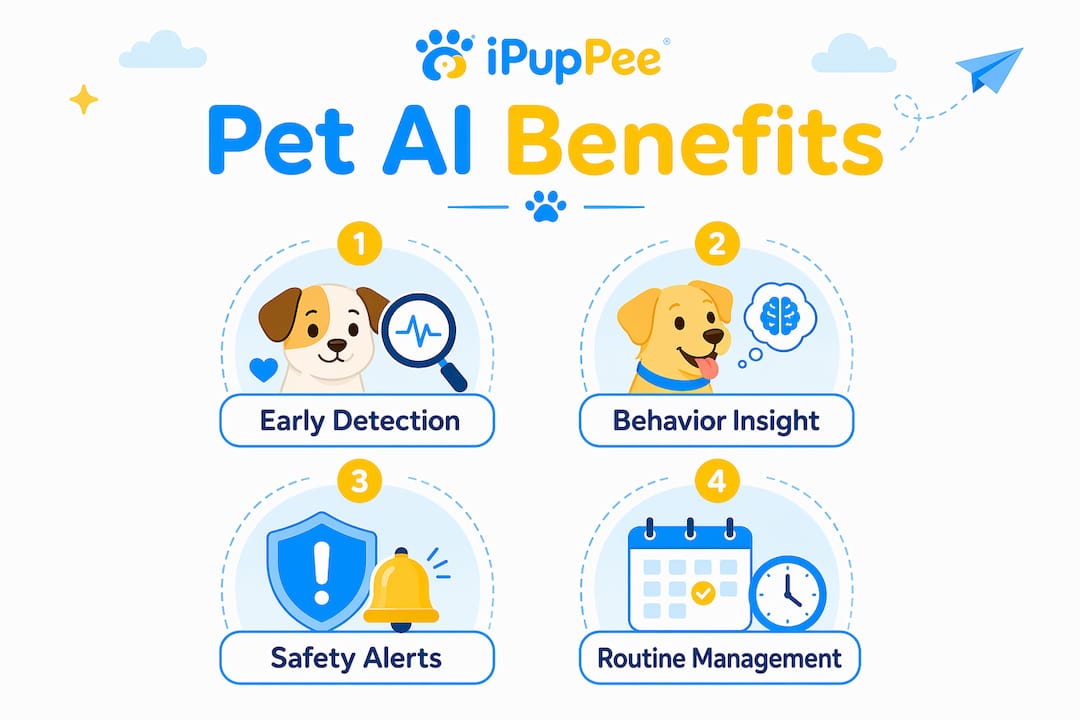
The most useful safety feature in current AI tools is intelligent triage. Proactive triage algorithms reduce owner stress by filtering false alarms and prioritizing real emergencies. Without triage, every alert feels urgent. With it, you respond to the alerts that actually require action.
AI tools also manage daily routines in ways that reduce caregiver burden. Automated feeding schedules, exercise tracking, and environment monitoring for temperature or air quality all run without manual input. For seniors, disabled owners, or anyone managing a service dog, that automation is not a convenience. It is a practical necessity.
Interactive devices also contribute to cognitive health, giving pets mental engagement that reduces destructive behavior and anxiety. A dog that presses a button to signal “outside” is a dog that has a communication channel. That channel reduces frustration on both sides.
Traditional tools remain part of the picture. Hands-on care and reliability still require human presence, and AI works best as a complement to that presence rather than a substitute. The combination of AI monitoring and attentive ownership produces better outcomes than either alone.
- Real-time alerts notify you of unusual activity, temperature spikes, or behavioral changes.
- Triage algorithms separate minor fluctuations from patterns that need veterinary attention.
- Automated feeding and exercise tracking reduce the daily management load for caregivers.
- Environment sensors monitor air quality and temperature, flagging conditions that stress pets.
- Communication devices give pets a way to signal needs, reducing anxiety and behavioral problems.
How to choose the right AI tools for your pet
Choosing an AI pet tool requires the same critical thinking you would apply to any health product. The market includes both validated technologies and products that borrow AI terminology without the science to back it up. Knowing the difference protects your money and your pet.
A 2026 systematic review in MDPI found that AI holds real potential for companion animal care but is constrained by limited datasets and incomplete validation. The review’s conclusion is direct: AI should support, not replace, veterinary diagnostics. That framing is the right one for every purchase decision you make.
Many AI pet translators claiming very high accuracy lack peer-reviewed evidence. Buyers should verify scientific validation before purchase. The presence of a published study with a named dataset is the minimum bar. Marketing copy about “advanced neural networks” without a citation is not evidence.
The effort required also varies significantly by tool type. A wearable health tracker runs passively once set up. An interactive button communicator requires weeks of consistent training sessions. If your schedule does not support that training commitment, the interactive device will underperform regardless of its quality.
Matching the tool to your pet’s individual temperament matters too. Some dogs engage enthusiastically with button systems. Others ignore them entirely. Starting with a lower-cost entry point before committing to a full system is a practical approach. The research on AI-enabled communication shows that success depends heavily on the match between the tool, the pet, and the owner’s consistency.
Key takeaways
Pet AI tools deliver the most value when matched to validated technology, individual pet needs, and consistent owner involvement.
| Point | Details |
|---|---|
| Verify scientific validation | Only buy AI tools backed by peer-reviewed studies with named datasets, not marketing claims alone. |
| Multi-sensor monitoring pays off | Combining activity, heart rate, and elimination data cuts early treatment costs by over 40%. |
| Communication tools require effort | Interactive button devices show results ranging from 0 to 5 words in 10 weeks based on training consistency. |
| Triage matters for safety | AI alert systems with built-in triage reduce false alarms and help you respond to real emergencies faster. |
| AI supports, not replaces, vets | Use AI monitoring data to improve vet consultations, not to skip them. |
What I’ve learned from watching pet AI move from hype to evidence
The shift I’ve noticed over the past few years is not in the technology itself. It’s in the expectations pet owners bring to it. Early adopters bought AI pet tools expecting translation. What they got was classification, and many felt let down. The tools that actually work do something more modest and more useful: they surface patterns that humans miss.
A dog that is slightly less active for three days running is easy to overlook. An AI wearable flags it. That flag prompts a vet call. The vet finds early-stage kidney disease. That sequence is not dramatic, but it is the real value proposition of pet AI, and it is well within what current technology can deliver.
What concerns me is the gap between validated tools and the broader market. The peer-reviewed work on classifiers like Petpuls is genuinely encouraging. The claims attached to many translator products are not. Pet owners who buy the wrong category of tool and get poor results often dismiss the entire field. That’s a loss, because the tools that work really do work.
My advice is to treat AI as a monitoring layer, not a replacement for your own observation or your vet’s judgment. Use it to catch what you would otherwise miss. Pair it with hands-on care. And always ask for the study before you buy.
— Andrew
Ipuppee’s approach to pet communication and safety
Pet owners who want tools grounded in real communication and safety research have a clear starting point.
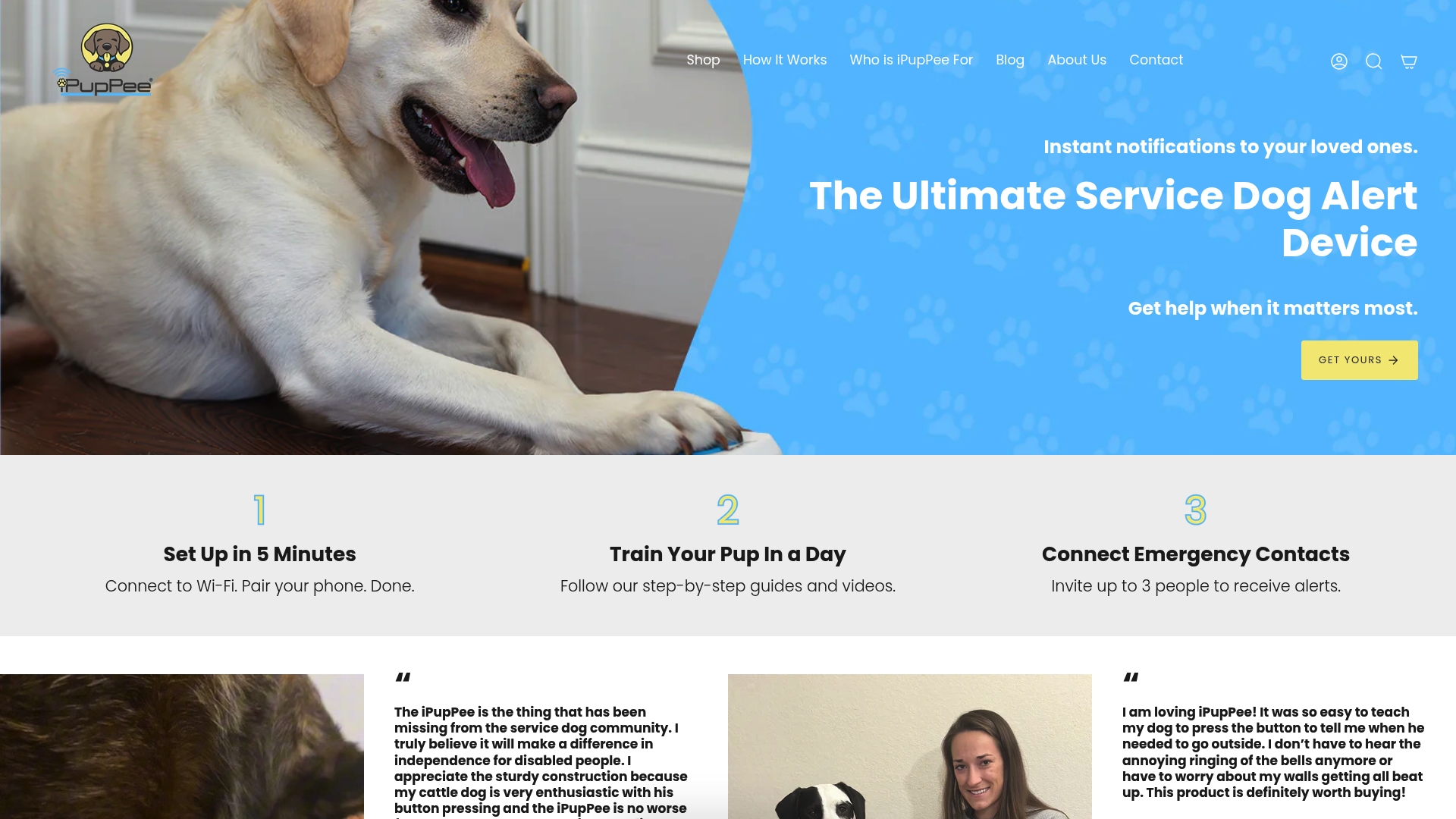
Ipuppee builds products around the idea that pets deserve a reliable way to signal their needs, and that owners deserve tools that actually work under real conditions. The iPupPee device gives dogs a simple button-press mechanism to communicate, designed specifically for service dog handlers, seniors, and owners with disabilities. It combines the communication principles validated by behavioral research with practical safety features for daily life. Pet owners ready to move beyond passive observation can explore Ipuppee’s solutions and find tools built for the situations that matter most.
FAQ
What are pet AI tools?
Pet AI tools are technologies that use artificial intelligence to monitor, analyze, and improve pet health, behavior, and communication. They include wearable health trackers, emotional state classifiers, and interactive communication devices.
Are pet AI tools worth it for everyday pet owners?
Yes, particularly AI health monitors, which can reduce early treatment costs by over 40% by detecting conditions like kidney disease before symptoms appear. The value depends on choosing validated tools over unproven translator claims.
How does AI help with pet communication?
AI classifiers analyze vocalizations or behavior patterns and map them to known emotional states with documented accuracy. Interactive systems like button communicators teach pets to signal specific needs through consistent training.
What should I look for before buying an AI pet tool?
Look for peer-reviewed studies with named datasets attached to the product. Tools that cite only internal testing or user testimonials have not met the scientific bar needed to trust their accuracy claims.
Can AI tools replace a veterinarian?
No. A 2026 MDPI systematic review confirms that AI should support veterinary diagnostics, not replace them. AI monitoring data is most valuable when shared with a vet who can interpret it in clinical context.