

Feed most adult dogs twice a day, roughly 12 hours apart, and build the rest of your routine around that anchor. According to VCA Animal Hospitals, a consistent schedule gives dogs predictability and security, which makes this the fastest fix for a chaotic household. Here’s the whole workflow in one place:
- Anchors: two meals spaced evenly for most adults; puppies and some seniors need several smaller meals throughout the day.
- Portions: start with the food label’s feeding chart, confirm with a kitchen scale, not a scoop.
- Treats: cap them at 10% or less of daily calories.
- Tracking: log meals, water, stool, and energy for two weeks before changing anything.
- Handoff: use a shared card or app so no caregiver double-feeds or skips a meal.
Everything below explains why this works and how to adapt it to your dog’s life stage and your household’s realities.
Key Takeaways
A reliable dog feeding routine works because consistent timing, measured portions, and a shared caregiver log together prevent the most common feeding failures: overfeeding, missed meals, and undetected health changes.
| Point | Details |
|---|---|
| Set fixed anchor times | Feed adult dogs twice daily about 12 hours apart, with tighter windows for puppies and medicated dogs. |
| Measure, don’t eyeball | Start with the food label’s chart and confirm portions with a kitchen scale, not a scoop. |
| Cap treats at 10% | Keep treats at or below 10% of daily calories and audit them every two weeks to catch creep. |
| Log four daily fields | Track appetite, water, stool, and energy so patterns and problems surface early. |
| Use a simple handoff rule | A fridge card or shared note with exact wording like “Fed, AM, initials” prevents double-feeding. |
| Back up handoffs with alerts | iPupPee’s real-time alerts give caregivers a direct signal when a feeding or check-in is missed. |
Table of Contents
- Why a Consistent Feeding Routine Matters for Health and Behavior
- How to Build Your Dog Feeding Routine Workflow
- How Do You Prevent Double-Feeding With Multiple Caregivers?
- Fixing Treat Creep, Missed Meals, and Abrupt Food Switches
- Getting the Feeding Area Ready Before You Serve a Meal
- Cleaning and Maintaining Your Dog’s Feeding Bowls and Area
- When Should Your Dog Drink Water Around Mealtime?
- Adjusting the Routine for Special Diets and Medical Conditions
- What I’ve Learned Watching Feeding Routines Succeed or Fail
- Where iPupPee Fits Into Your Feeding Workflow
- Frequently Asked Questions
- Sources
Why a Consistent Feeding Routine Matters for Health and Behavior
Dogs don’t read clocks, but their bodies track patterns closely. A predictable feeding schedule does more than prevent hangry pacing at 5:45 PM. It reduces stress, and VCA Animal Hospitals notes that consistent mealtimes help dogs manage anxiety during transitions and support house training by making digestion, and therefore potty timing, predictable.
There’s a diagnostic upside too. When you measure meals instead of eyeballing them, you notice things fast: the half-eaten bowl on Tuesday, the greasy stool on Thursday. Vets rely on owners catching these small shifts early, and a routine makes the baseline obvious enough that deviations stand out immediately.
Consistency, not exact timing, is what actually matters. A dog fed at 7:00 AM and 7:00 PM every day adjusts just as well as one fed at 8:00 and 6:00, as long as the gap stays roughly the same. Your schedule should fit your life, not a chart.
A few concrete payoffs owners notice within two to three weeks of locking in a routine:
- Fewer accidents, because digestion becomes predictable.
- Easier vet visits, because you can answer “any appetite changes?” with actual data instead of a guess.
- Less begging and counter surfing, because the dog stops treating every human meal as a possible feeding opportunity.
- Simpler medication management for dogs on drugs that must be given with food.
The goal isn’t rigid perfection. It’s a rhythm your household can actually keep up on a Tuesday in February and a Saturday during a family visit.
How to Build Your Dog Feeding Routine Workflow
Building the actual workflow takes five moves, done once and then repeated daily until they’re automatic.
1. Pick your anchor meals with a feeding plan. Most adult dogs do well on two meals spaced about 12 hours apart, morning and evening. Puppies typically need 3 to 4 meals a day, and some seniors or dogs with medical conditions do better on smaller, more frequent portions, according to Dogster. Give yourself a window, not a fixed minute. Plus or minus 60 minutes is fine for adults; tighter windows help puppies and dogs on medication.
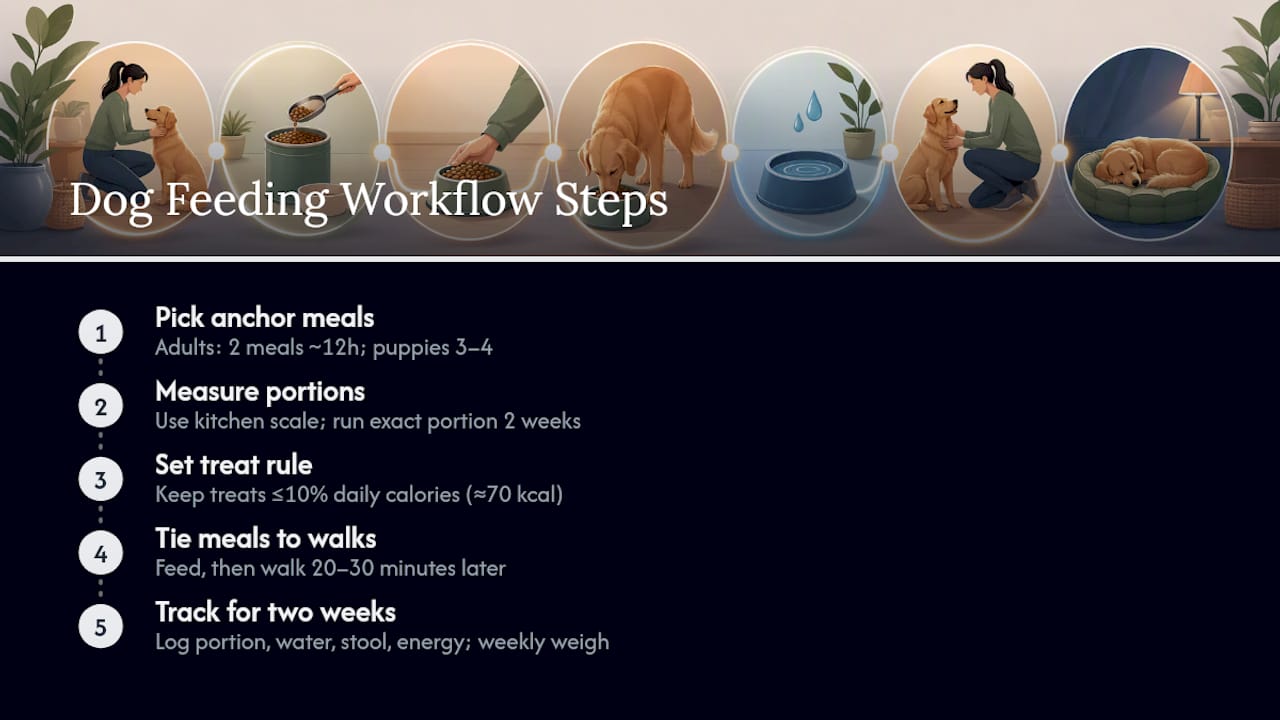
2. Measure, don’t estimate. Start with the feeding chart on your dog’s food packaging, since PetMD points out that calorie calculators are only estimates and individual dogs vary. Confirm the amount with a kitchen scale rather than the scoop that came in the bag, which can be off by 20% or more depending on how tightly you pack it. Run this exact portion for two weeks before adjusting anything.
3. Set your treat rule. Keep treats at 10% or less of total daily calories, per UC Davis Veterinary Medicine. For a 30 pound dog eating around 700 calories a day, that’s roughly 70 calories in treats. Small training treats often run 3 to 5 calories each, so that budget covers more than you’d think if you count them.
4. Tie meals to walks and potty breaks. Feed, then walk 20 to 30 minutes later. This single pairing does more to reduce indoor accidents than almost anything else in the workflow.
5. Track for two weeks. Note four things daily: did they eat the full portion, water intake, stool quality, and energy level. Add a weekly weight check.
Pro Tip: Keep the log on your phone’s notes app or a magnet pad on the fridge. The format matters less than doing it every single day for the full two weeks, since one skipped entry breaks the pattern you’re trying to spot.
How Do You Prevent Double-Feeding With Multiple Caregivers?
Double-feeding is one of the most common, and most avoidable, breakdowns in a household with more than one person or pet sitter involved. The fix isn’t complicated. It just has to be enforced every single time.
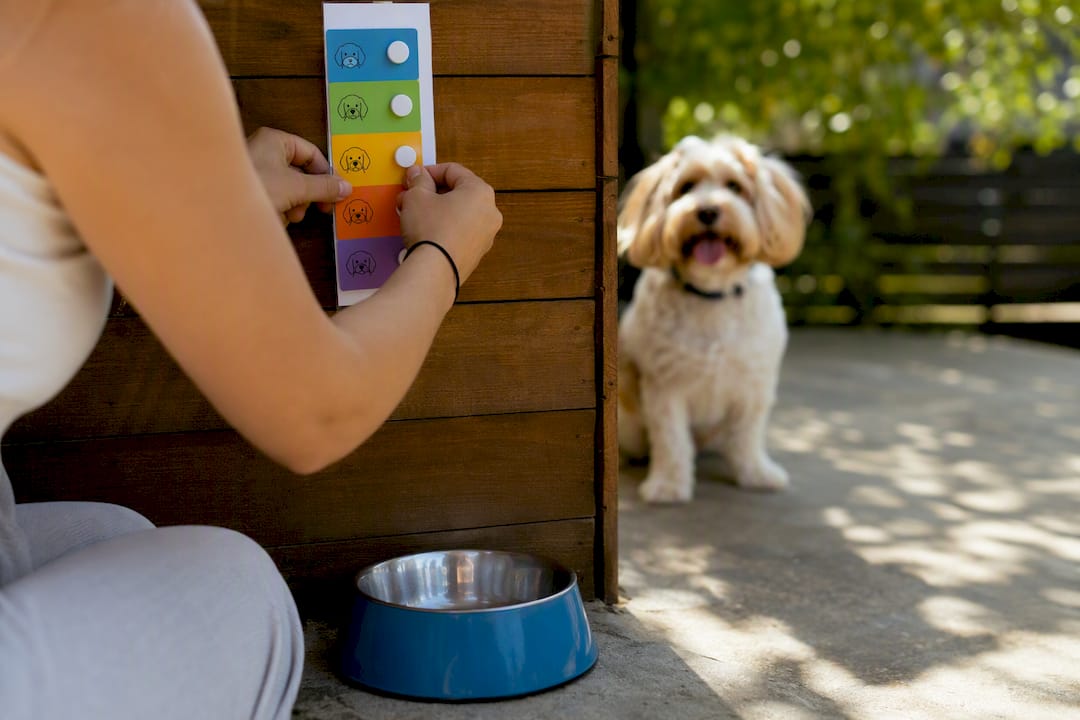
A color-coded card on the fridge works as well as any app. Whoever feeds the dog flips the card, checks a box, or writes “Fed, AM, initials” the moment it happens, not twenty minutes later when they might forget. A shared Google Sheet or a notes app thread does the same job for tech-comfortable households, and it travels with sitters and boarding staff who need the same information without a phone call.
Keep the daily log to four fields so nobody skips it out of fatigue: ate (yes/partial/no), water, stool, and any meds given. Add a notes field for anything unusual.
Pro Tip: Agree on exact wording as a household rule, not a suggestion. “Fed” alone is ambiguous. “Fed, PM, initials” is not.
Watch for these signs that a routine has broken down enough to call the vet:
- Three or more missed meals in a week.
- Persistent soft stool lasting more than two or three days.
- Repeated vomiting, even if the dog seems otherwise fine.
- Noticeable weight loss between weekly checks.
Fixing Treat Creep, Missed Meals, and Abrupt Food Switches
Most feeding routines don’t fail all at once. They erode a treat at a time.
Treat creep happens when training rewards, table scraps, and “just one more” biscuits quietly push a dog past that 10% calorie ceiling from UC Davis. Most owners are surprised by how fast small treats add up, since documenting extras for two weeks reliably exposes treat creep that would otherwise go unnoticed.
Switching foods too fast is the other common mistake. Vets recommend a gradual transition over several days rather than an overnight swap, according to WebVet. A simple 7 to 10 day mix works well: start at roughly 75% old food and 25% new, shift to half and half by day four or five, then 25% old and 75% new, finishing fully switched by day seven to ten.
For missed meals, resist the urge to double up later. Set a fallback window in advance, say, feed within two hours of the missed time, or skip to the next scheduled meal at the normal portion. Doubling up trains a dog toward bloat risk and confuses the routine you’re trying to build.
Watch weight and stool as your two clearest signals. Steady weight drift, ongoing loose stool, or a real drop in appetite over several days all warrant a call to the vet rather than a wait-and-see approach.
Getting the Feeding Area Ready Before You Serve a Meal
A few seconds of prep before every meal prevents most of the mess and confusion that derails a routine. Wash your hands before handling food, especially raw diets, and again after touching bowls or scoops. This matters more than most owners assume, since dog food handling carries the same basic hygiene risks as handling raw meat in your own kitchen.
Set the feeding area up the same way every time. Pick one consistent spot, away from high foot traffic and separate from any other pets’ bowls if you have more than one dog in the house. Dogs that compete or feel rushed near food tend to eat faster and are more prone to digestive upset, so a calm, dedicated spot does real work here.
Before serving, check that the bowl is clean and dry, that the portion is measured (not guessed), and that water is available nearby. If you’re mixing in a supplement or medication, do that right before serving rather than hours ahead, since some medications lose effectiveness or taste different once they sit in wet food.
For multi-dog households, feed at the same time in separate spaces if there’s any history of food guarding or fast eating. This single change resolves more mealtime tension than any amount of training in the moment.
A calm setup routine also signals to an anxious dog that mealtime is predictable and safe, which pairs directly with the consistency benefits covered earlier. If your dog struggles with mealtime anxiety specifically, a calming routine workflow built around the same predictability principles can help settle that stress before it becomes a bigger behavior issue.
Cleaning and Maintaining Your Dog’s Feeding Bowls and Area
Bowls need a real wash daily, not just a rinse. Food residue left in a bowl for even a few hours becomes a breeding ground for bacteria, and plastic bowls in particular develop micro scratches over time that trap grime no rinse will remove. Stainless steel or ceramic bowls hold up better long term and clean more thoroughly.
Wash bowls with hot, soapy water after every meal, or run them through the dishwasher if they’re labeled dishwasher safe. Water bowls need daily washing too, even though they look clean, since bacteria builds up in standing water faster than most owners expect.
Wipe down the feeding area itself, the floor, any placemat, and nearby surfaces, at least once a day. Kibble crumbs and stray bits of wet food attract pests and create the kind of low-level mess that makes a feeding station feel neglected rather than routine.
Replace worn bowls before they become a hygiene problem. Cracked ceramic, scratched plastic, or rusted metal edges are all signs it’s time for a new bowl rather than one more wash cycle.
Pro Tip: Keep a small designated towel or mat under the water bowl. It catches splashes, and swapping it into the laundry weekly is faster than mopping the floor daily.
When Should Your Dog Drink Water Around Mealtime?
Water access should be constant, not scheduled around meals the way food is. Restricting water before or after eating doesn’t offer any real benefit for most healthy dogs and can actually discourage the drinking habits that support good digestion.
That said, some practical timing habits help. Offer fresh water alongside every meal, refreshed at the same time you serve food, so the bowl doesn’t sit stagnant for 12 hours between servings. Dogs on dry kibble diets in particular tend to drink more right after eating, since kibble pulls moisture during digestion.
For puppies still working on house training, managing water timing loosely in the evening (not cutting it off entirely, just not topping off a full bowl right before bed) can reduce overnight accidents without compromising hydration. This is a training adjustment, not a restriction rule, and it should ease up once house training is solid.
Dogs on certain medications or with kidney or urinary conditions may have specific hydration requirements set by a vet, sometimes including encouraging more water intake rather than less. Always follow a vet’s specific hydration guidance over general advice if your dog has a diagnosed condition.
Watch water bowl levels the same way you watch food bowls. A sudden increase or decrease in drinking is often one of the earliest signs of a health issue, sometimes showing up before appetite or stool changes do.
Adjusting the Routine for Special Diets and Medical Conditions
A standard two-meal routine is a starting point, not a rule that applies to every dog. Diabetic dogs often need feeding times locked to insulin administration, sometimes down to a consistent window rather than a loose one, since blood sugar management depends on meal timing as much as the insulin dose itself.
Dogs on medications that must be given with food need that same tight consistency, since routine feeding makes medication timing far easier to manage for conditions that require strict dosing schedules. Skipping or shifting a meal on these dogs isn’t just inconvenient, it can affect how well the medication works.
For dogs with sensitive stomachs or diagnosed food allergies, smaller, more frequent meals sometimes reduce symptoms better than two larger ones. Any dietary change for a medical condition should still follow the gradual transition approach, mixing new food in slowly over a week or more rather than switching overnight.
Senior dogs often benefit from adjusted portions and sometimes an extra small meal as metabolism and activity change with age. Weight trends matter more here than at any other life stage, since a senior dog losing weight can signal something more serious than a diet issue.
If your dog has a diagnosed condition, treat your vet’s specific instructions as the routine, and build your tracking log around whatever markers they’ve asked you to watch, whether that’s blood sugar, weight, or stool consistency.
What I’ve Learned Watching Feeding Routines Succeed or Fail
The households that stick with a feeding routine aren’t the ones with the fanciest tracking app. They’re the ones who wrote down one simple rule everyone in the house actually follows… I’ve seen a two-week tracking log turn a vague “he seems off lately” into a specific, useful conversation with a vet… If your routine feels shaky right now, the two-week workflow above is worth trying before you assume something’s wrong with your dog. For more on why dogs respond so strongly to structure, see why dogs thrive with routines.
Where iPupPee Fits Into Your Feeding Workflow
A feeding routine only works if every caregiver actually follows the handoff protocol, and that’s where most households quietly fall apart, especially when one person is out of the house, a sitter is covering a shift, or a caregiver has a disability that makes checking a paper card difficult. The iPupPee device gives a dog a direct way to signal, sending a real-time alert with live video and two-way audio to whoever’s on duty, so a missed meal or an anxious dog waiting by an empty bowl doesn’t go unnoticed until someone happens to walk by.
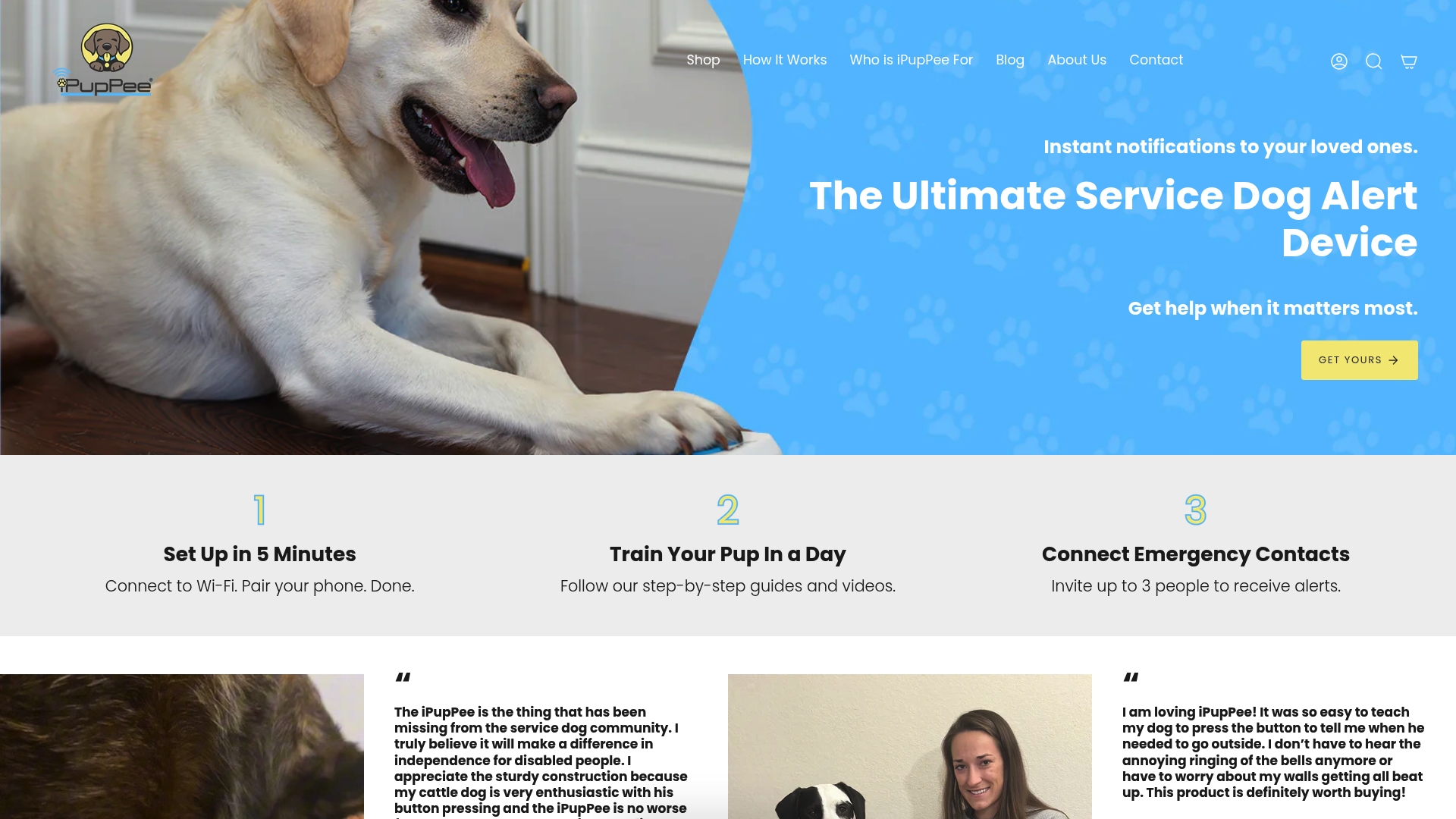
For seniors living alone, disabled handlers, or homes juggling multiple caregivers and pet sitters, that direct line of communication removes a lot of the guesswork built into paper logs and shared spreadsheets. It’s not a replacement for the tracking habits covered above. It’s a backup that closes the gap when a caregiver isn’t physically present to check a card or confirm a feeding by hand. If a more reliable handoff is the missing piece in your routine, take a look at the iPupPee device and see how it fits into the workflow you’re already building.
Frequently Asked Questions
What is the best time to feed dogs? There’s no universal best time. What matters is spacing meals evenly, typically about 12 hours apart for adult dogs, and keeping that gap consistent day to day.
How do I create a dog feeding plan from scratch? Pick your anchor meal times, measure portions using the food label as a starting point, set a treat budget at 10% or less of daily calories, and track appetite, stool, and energy for two weeks before making changes.
How many meals a day does my dog actually need? Most adults do well on two meals, while puppies typically need 3 to 4 and some seniors or medically managed dogs need smaller, more frequent portions, according to Dogster.
How long should a food transition take? Plan on 7 to 10 days, gradually increasing the new food’s share of each meal, rather than switching overnight, which risks gastrointestinal upset.
What should I do if a caregiver forgets to log a feeding? Fall back on your predefined window, feed at the next scheduled time or within a short grace period, and never double a portion to make up for a missed one.
Sources
- Treat guidelines for dogs | UC Davis Veterinary Medicine
- Feeding times and frequency for your dog | VCA Animal Hospitals
- How many times a day should a dog eat? | Dogster
- Are you feeding your dog the right amount? | PetMD
- Dog feeding schedule | WebVet