

TL;DR:
- Pet-tech now includes advanced devices like GPS trackers, health monitors, and communication tools that enhance safety and wellbeing. These innovations provide real-time data and remote management, especially benefiting service dog handlers and senior dogs. Effective use requires understanding device integration, privacy considerations, and balancing costs with reliable functionality.
Most pet owners still picture “pet technology” as a fancy water fountain or an automatic feeder. The reality has moved so far past that. What is pet-tech today is a question worth taking seriously, because the answer touches GPS systems that prevent a service dog from getting lost, wearable monitors that detect heart irregularities before symptoms appear, and button-based communication devices that let a dog signal distress to a handler who may not be able to hear them call. The global pet tech market is projected to reach USD 51.1 billion by 2035, and the innovation driving that number is real, practical, and already in living rooms.
Table of Contents
- Understanding pet-tech: what it includes and how it helps
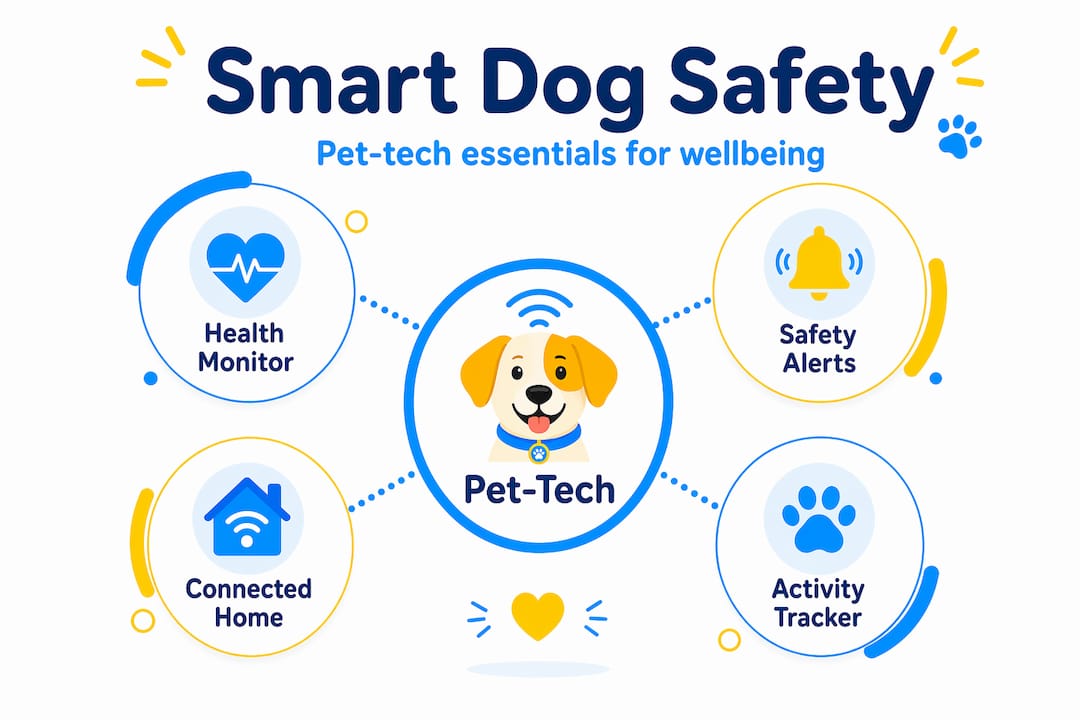
- Core types of pet-tech devices and their functions
- Pet-tech benefits for communication and safety in special needs and senior dogs
- Health monitoring innovations including chronic condition detection
- Privacy, costs, and practical tips for using pet-tech effectively
- Why pet-tech’s promise depends on thoughtful use and integration
- Explore pet-tech solutions designed for your dog’s safety and wellbeing
- Frequently asked questions
Key Takeaways
| Point | Details |
|---|---|
| Pet-tech is broad | Pet-tech covers a wide range of devices and services aimed at improving pet health, safety, and communication. |
| Smart devices monitor health | Wearable collars and sensors track vital signs and behaviors to catch early signs of illness. |
| Benefits for special needs | Technology uniquely supports service dog handlers, seniors, and pets with special needs through safety and communication features. |
| Privacy and cost matter | Owners must consider subscription fees and data security when selecting pet-tech products. |
| Thoughtful use maximizes value | Integrating pet-tech with regular vet care and personal attention achieves the best outcomes. |
Understanding pet-tech: what it includes and how it helps
Pet-tech is a broad umbrella term. It covers everything from consumer gadgets you can buy at a pet store to software platforms used by veterinary clinics to cloud-connected ecosystems that monitor a dog’s health around the clock. The pet-tech definition captures it well: any product or service designed to improve pet health and wellbeing, including GPS trackers, smart feeders, and connected health tools.
What matters for you as a dog owner, especially if your dog serves a functional role in your daily life, is understanding which categories of pet-tech actually do something useful.
Here is what pet-tech broadly includes:
- Smart collars and wearables that track biometric data and physical activity
- GPS trackers that monitor location in real time and trigger geofence alerts
- Automated feeders and dispensers with scheduling and remote control via apps
- Health monitoring platforms that collect data and flag changes in baseline behavior
- Communication devices that allow pets to signal specific needs to their owners
- Veterinary software that integrates wearable data directly into clinical records
- Home cameras and treat dispensers for remote interaction while away
You can think of pet-tech in two layers: the device that sits on or near your dog, and the software ecosystem that makes sense of what the device collects. Understanding monitoring dog health with tech helps clarify how these two layers work together.
The communication layer is where pet-tech becomes especially valuable for service dog handlers and owners with limited mobility. A dog cannot speak, but with the right device, it absolutely can send a signal.
Core types of pet-tech devices and their functions
With a solid understanding of what pet-tech is, let’s explore the core devices that bring these technologies to life.
The main device categories each serve a different purpose. Here is how to think about them:
- Smart collars measure biometric data including body temperature, heart rate variability, respiratory rate, sleep cycles, and daily activity. According to research into smart collar functions, these devices enable early detection of health issues by tracking trends over time rather than relying on a single snapshot.
- GPS trackers provide real-time location data, set geofenced safe zones, and send alerts when a dog leaves a defined boundary. Some models work offline.
- Health monitors focus specifically on vital signs and behavioral patterns, often feeding data into a veterinary-connected app.
- Home automation devices include cameras, automated feeders, motion sensors, and environmental monitors that let you observe and interact with your dog remotely.
- Communication devices are the category most relevant to service dog handlers. These tools let a trained dog trigger a specific signal, whether that is an alert button, a sound, or a connected notification to a caregiver’s phone.
| Device type | Primary function | Best for |
|---|---|---|
| Smart collar | Biometric tracking and activity monitoring | Health-conscious owners, early illness detection |
| GPS tracker | Real-time location and geofencing | Free-roaming dogs, service dog handlers outdoors |
| Health monitor | Vital sign tracking and trend alerts | Senior dogs, dogs with chronic conditions |
| Home automation | Remote feeding, viewing, and interaction | Owners away from home regularly |
| Communication device | Letting the dog signal a specific need | Service dog handlers, seniors, special needs owners |
Pro Tip: When evaluating wearable tech for dog safety, look for devices that store data locally in addition to syncing to the cloud. If your internet goes down, you do not want to lose continuity in your dog’s health record.
The communication device category is the one that tends to surprise people the most. Most owners do not realize their dog can be trained to press a button that sends an emergency alert to a phone. That is not science fiction. It is commercially available right now.
Pet-tech benefits for communication and safety in special needs and senior dogs
Understanding device types, let’s focus now on how pet-tech uniquely benefits special needs and senior dogs.
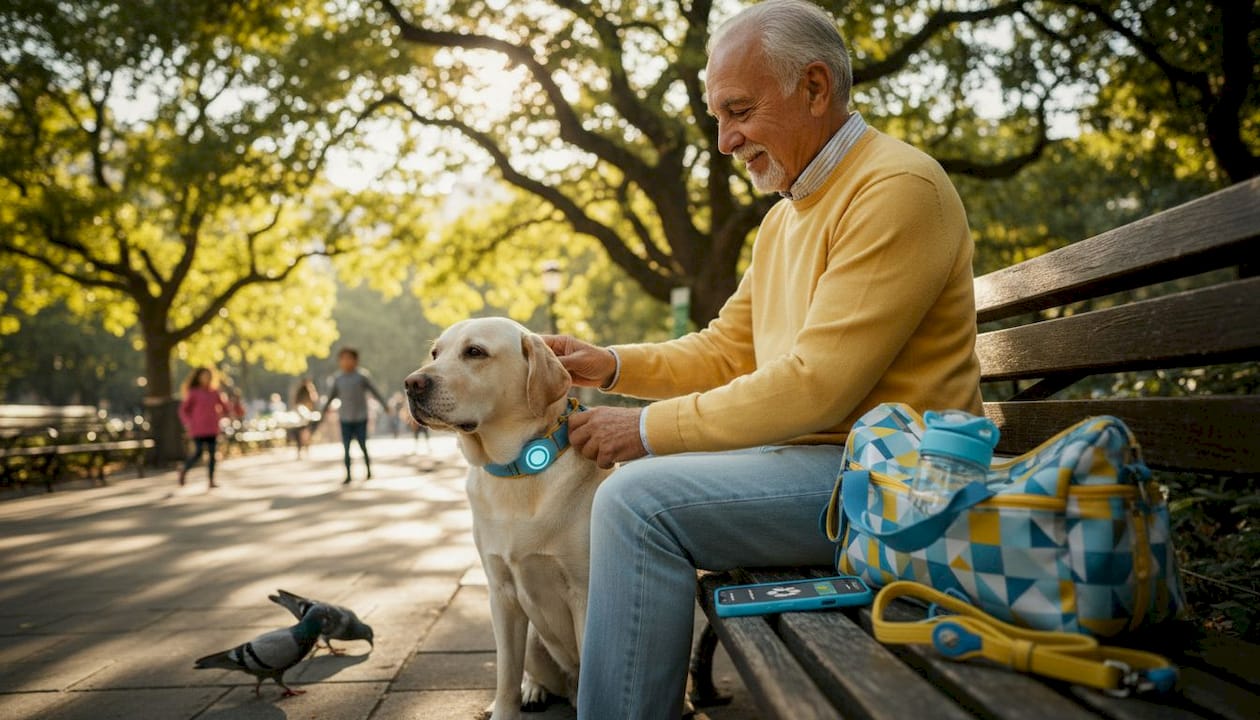
For the average dog owner, pet-tech is a convenience. For a service dog handler, a senior living alone, or someone with a mobility limitation, it is something closer to infrastructure. The stakes are different, and the technology responds to that difference.
Here is where pet-tech delivers specific value for these groups:
- Remote monitoring via cameras and two-way audio allows a caregiver or family member to check on both the owner and the dog in real time
- Safety alert systems notify a handler’s phone if the dog leaves a defined zone, shows unusual stillness, or triggers a trained alert button
- Treat dispensers with remote activation let owners reinforce trained behaviors during telehealth appointments or when physical interaction is limited
- Emergency alert buttons can be trained as a signal from the dog to the owner, rather than the other way around, which flips the traditional dynamic entirely
- AI-powered companions are emerging as a new category. The Roomba pioneer’s AI pet robot is designed specifically to offer personalized emotional support and assistance, with seniors and service dog users as a core audience
The benefit that rarely gets discussed is stress reduction for the handler. When a senior dog owner knows they will receive an immediate phone alert if their dog stops moving for an unusual period, that is not just safety. That is the difference between sleeping through the night and lying awake worrying.
Pro Tip: Before committing to a pet safety tech system, test it in offline mode. Some devices lose all alert functionality when Wi-Fi drops. For service dog handlers, that gap is unacceptable.
The connected pet home model, where multiple devices feed into a single app or dashboard, is where assistive pet tech becomes genuinely powerful for people who depend on it.
Health monitoring innovations including chronic condition detection
Beyond communication and safety, pet-tech is changing health monitoring in ways most vets did not expect five years ago.
Continuous passive monitoring is the key concept here. Instead of taking your dog to a clinic once a year and hoping the snapshot captures something useful, a wearable device collects data every hour of every day. Changes in baseline become visible weeks before clinical symptoms appear.
Here is what modern health monitoring devices can track in dogs:
- Resting heart rate and heart rate variability
- Respiratory rate during sleep
- Daily step count and activity patterns
- Sleep quality and duration
- Body temperature fluctuations
- Caloric burn estimates
| Health signal | What a normal trend looks like | What a change might indicate |
|---|---|---|
| Resting heart rate | Stable within breed norms | Cardiac stress or early infection |
| Nighttime respiratory rate | Consistent, low effort | Early congestive heart failure |
| Daily activity level | Consistent weekly baseline | Pain, illness, or early joint disease |
| Sleep disruption | Minimal overnight waking | Anxiety, pain, or hormonal change |
The clearest proof of this concept comes from feline research. A smart litter box study demonstrated that 24/7 passive behavioral monitoring can detect early chronic kidney disease with over 89% accuracy. The same data-collection logic now applies to dog health wearables, where continuous monitoring over weeks catches what a single vet visit simply cannot.
Pro Tip: Use your wearable dog health monitor for at least 30 days before your next vet appointment. Bring the trend report with you. A vet who can see four weeks of resting heart rate data makes a much better clinical decision than one working from a 10-minute exam alone.
For senior dogs or breeds predisposed to cardiac or joint conditions, this kind of data is not optional. It is the most useful information you can bring to a veterinary conversation.
Privacy, costs, and practical tips for using pet-tech effectively
While pet-tech offers many benefits, navigating privacy, cost, and effective use wisely is not optional. It is where many owners run into problems.
The cost issue is real. Many pet tech devices require ongoing subscription fees to unlock core features, including GPS history, health trend analysis, and alert notifications. A $150 device with a $15 monthly subscription costs over $330 in year one. Know that number before you buy.
Some devices sidestep this entirely. No-subscription GPS options exist and work well for service dog handlers who need reliability without recurring billing. Always verify whether the features you actually need require a subscription before committing.
For privacy, follow this checklist:
- Audit app permissions before installation. Location-enabled pet apps sometimes request access to contacts or microphone unnecessarily.
- Enable two-factor authentication on every pet-tech account. Location data for a service dog is sensitive information.
- Use a guest Wi-Fi network for all pet devices, separate from your primary home network.
- Update firmware on collars and trackers regularly. Manufacturers push security patches that close known vulnerabilities.
- Read the data sharing policy for any health monitoring platform. Some sell anonymized health data to third parties.
Explore innovative pet solutions that prioritize both security and functionality together, rather than treating them as trade-offs.
Pro Tip: The best pet-tech strategy is a layered one. Devices give you data. Data informs decisions. But your own daily observation and regular vet care remain the foundation. Technology extends your reach. It does not replace your judgment.
Why pet-tech’s promise depends on thoughtful use and integration
Here is the honest take that most pet-tech coverage skips: the technology is genuinely impressive, but a device on your dog’s collar does not make you a better owner unless you know how to interpret what it tells you.
The expert debate around pet fitness trackers illustrates this clearly. Some veterinarians see real clinical value in the data. Others worry that owners become so focused on app alerts that they stop trusting their own direct observations. Both concerns are valid.
The risk of over-reliance is real, particularly for senior owners or first-time service dog handlers who are already managing a steep learning curve. A GPS alert that fires because the dog moved to a different room is not an emergency. But if every notification triggers anxiety, the device is working against you.
What actually works is integration. Wearable data reviewed alongside dog tech benefits and a vet’s clinical assessment produces something no single source can on its own: a complete picture of a dog’s health and behavior. That combination is where the real value lives.
The owners who get the most from pet-tech are the ones who treat it as an input, not an authority. They use data to ask better questions at vet appointments. They use communication devices to strengthen a trained behavior, not replace one. They use GPS trackers to build confidence outdoors, not to avoid teaching recall.
Emerging AI tools are raising the ceiling on what pet-tech can do. But the ceiling only matters if the foundation is solid.
Explore pet-tech solutions designed for your dog’s safety and wellbeing
You now understand what pet-tech can genuinely do, and more importantly, where it makes the biggest difference for dogs with specific communication and safety needs. The next step is finding products built with those needs in mind rather than adapted from general consumer gadgets.
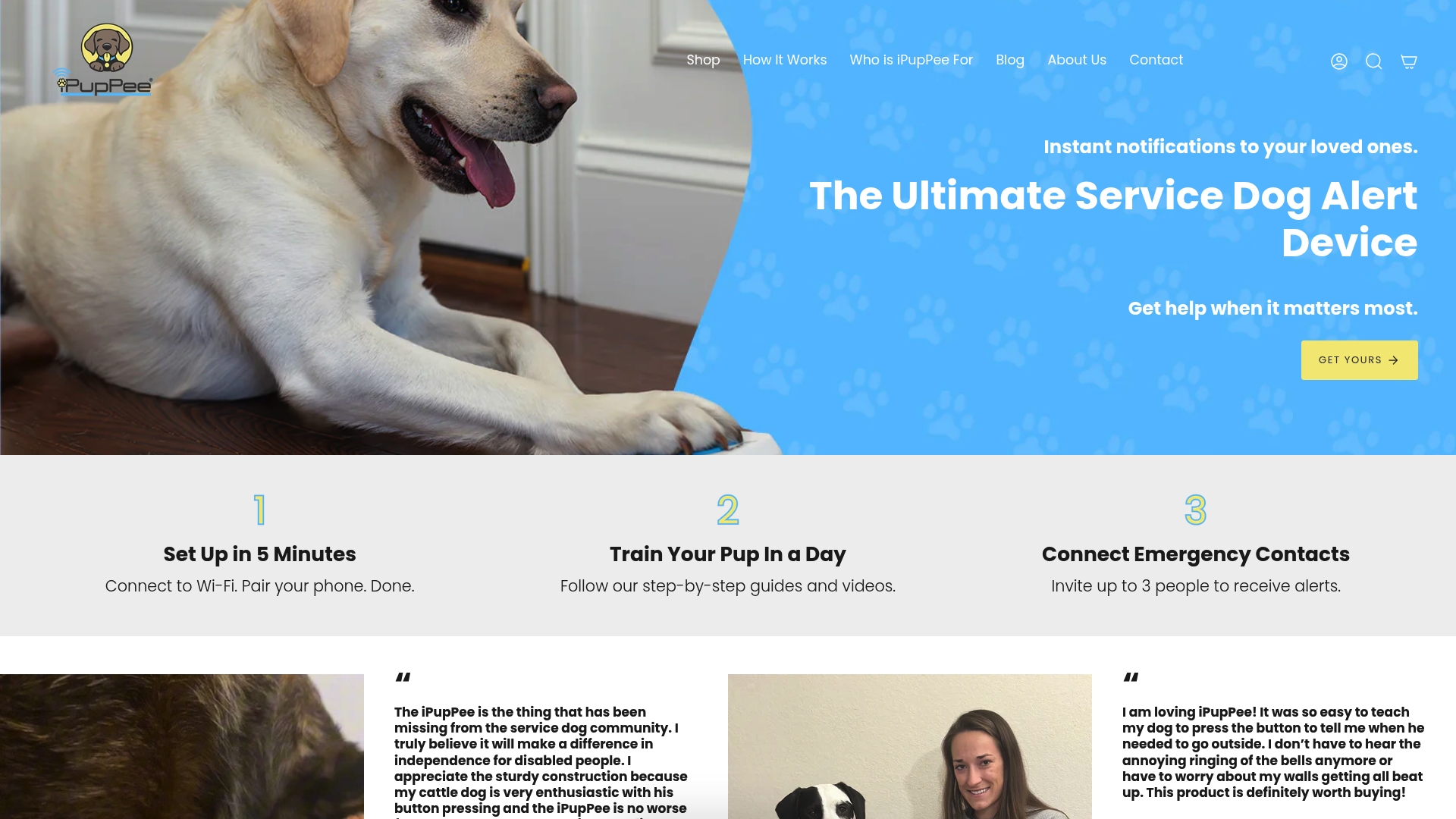
At iPupPee, every product and resource is developed specifically for service dog handlers, seniors, and owners who need real reliability, not marketing claims. Whether you are exploring wearables for the first time or looking to expand a system already in place, you will find practical dog health monitoring tools and service dog safety guides written for your actual situation. The blog covers new research, honest product breakdowns, and training guidance to help you use pet-tech effectively from day one.
Frequently asked questions
What devices are typically included in pet-tech?
Pet-tech usually includes smart collars, GPS trackers, automated feeders, health monitors, and connected home devices designed to improve pet safety and wellbeing. As the consumer guide to pet technology confirms, any gadget or service that improves pet health falls under this term.
How does pet-tech help service dog handlers and seniors?
Pet-tech enhances communication, provides safety alerts, and supports independence through features like remote monitoring and emergency notifications tailored for special needs and senior pets. AI-powered devices now offer personalized assistance specifically designed for these groups.
Are there privacy risks with pet-tech devices?
Yes. Pet-tech devices may collect location and health data, so auditing permissions, enabling two-factor authentication, and using secure networks is essential. Choosing devices with strong encryption and privacy controls reduces your exposure significantly.
Can pet-tech detect chronic diseases in pets?
Certain technologies like smart litter box monitors can continuously track behavioral changes to detect diseases such as chronic kidney disease early, enabling better management. The same continuous monitoring principle now applies broadly to dog health wearables.
What should I consider about costs when buying pet-tech?
Check for subscription fees required for full device functionality and compare models with no-subscription options. Some GPS devices offer full functionality without monthly fees, which matters significantly for long-term value.