

The fastest way to fix recall in distracting environments is simple to state and slower to build: make coming back to you more rewarding than whatever is pulling your dog’s attention away, then prove that reliability gradually in tougher settings. Skipping the progression is why so many recalls fall apart the moment a squirrel shows up.
Three things carry the whole plan:
- Motivation: high-value rewards and oversized “jackpot” payoffs when your dog chooses you over a distraction
- Progressive proofing: build distance, duration, and distraction level in small, deliberate steps
- Safety: a long line and controlled locations until reliability is proven
Never let your dog off leash near roads, parking lots, or other hazards until you’ve tested recall extensively on a long line first.
Key Takeaways
Reliable recall comes from stacking motivation, gradual proofing, and safety equipment in the right order, never skipping a stage to save time.
| Point | Details |
|---|---|
| Make yourself the reward | Use high-value treats, games, and jackpot payoffs so returning beats any distraction. |
| Proof gradually | Advance distance, duration, and distraction level only after 9 out of 10 successful recalls. |
| Use a long line | Work with 15 to 25 feet of line until recall is proven reliable in real distractions. |
| Never repeat the cue | Reset with movement or reward value instead, so the first call always matters. |
| Prioritize safety | Stay off leash only in fenced areas, never near roads, until testing is thorough. |
Table of Contents
- What Can I Do Today to Improve Recall in Distractions?
- How Do You Build Recall Step by Step Under Distraction?
- Which Games Make You More Interesting Than a Distraction?
- What Equipment Keeps Recall Training Safe?
- Why Won’t My Dog Come Back, and How Do I Fix It?
- What Tools and Support Help Beyond Basic Training?
- Why Does This Training Method Actually Work?
- Where Can You Learn More About Recall Training?
- Teaching Recall in Distractions: What Actually Matters
- Frequently Asked Questions
- Sources
What Can I Do Today to Improve Recall in Distractions?
You don’t need special gear to start. Pick one cue word (just one, said the same way every time) and stick with it permanently. Gather a stash of high-value rewards your dog rarely gets otherwise, think diced chicken, squeeze cheese, or a favorite squeaky toy.
Start indoors, in a quiet room with zero competing noise or smells.
- Say the cue once, then reward heavily the instant your dog arrives
- Practice 3 to 5 times a day, in bursts of 2 to 3 minutes each
- Stop before your dog gets bored or distracted
- Keep sessions short and frequent rather than one long drill
Pro Tip: If your dog ignores the cue once, don’t repeat it. Repeating a cue that gets ignored teaches your dog the first call is optional. Instead, change your body language, jog backward a few steps, or raise the reward’s value next time.
How Do You Build Recall Step by Step Under Distraction?
Reliable recall is built in layers, not taught in one afternoon. Each stage has a clear finish line before you move to the next.
-
Charge the cue indoors. Say your cue word, mark the moment your dog arrives (a clicker or a cheerful “yes!” works), and reward immediately. Repeat dozens of times across several days until your dog spins toward you the instant they hear it.
-
Short-distance backyard recalls. Move outside with no other distractions. Call from a few feet away, then gradually increase distance. Advance only once your dog succeeds at least 9 out of 10 times at a given distance.
-
Introduce a long line. Once backyard recall is solid, add a 15 to 25 foot long line in a low-risk outdoor space, like an empty park or quiet trail. The AKC recommends a long line of 15 to 20 feet specifically because it lets your dog roam and explore while you retain physical control if the cue is ignored. Never yank the line to correct a missed recall. Guide gently, then reward generously the moment your dog reaches you.
-
Build a distraction ladder. Choose distractions that match your dog’s real life, other dogs, joggers, food smells, kids playing. Start with mild versions at a distance your dog can handle, and whenever you raise the distraction level, shorten the distance back down. Difficulty stacks; only increase one variable at a time.
-
Shift to intermittent reinforcement. Once your dog is reliable, stop rewarding every single recall. Mix in “life rewards” (permission to keep sniffing, go back to play) alongside food. Never call your dog only to end fun or clip on the leash and go home. Doing that repeatedly poisons the cue, and your dog learns “come” predicts something they’d rather avoid.
If your dog starts failing at a stage they’d previously mastered, that’s not stubbornness. It usually means you advanced too fast. Drop back a stage and rebuild before pushing forward again.
Which Games Make You More Interesting Than a Distraction?
Recall training built entirely around drilling gets stale fast, for you and your dog. Games inject the energy and unpredictability that keep a dog checking in voluntarily rather than out of obligation.
- Run-away-and-call: sprint a few steps away while calling your dog, turning recall into a chase they win
- Round-robin recalls: two or more people call the dog back and forth, rewarding each arrival
- Hide-and-seek: duck behind a tree or piece of furniture, call once, and celebrate when your dog finds you
- Find-me by scent: drop a trail of treats leading back to your hiding spot for dogs with a strong nose drive
Rotate rewards so your dog never knows exactly what’s coming: sometimes it’s chicken, sometimes it’s a tug session, sometimes it’s just an enthusiastic release back to play.
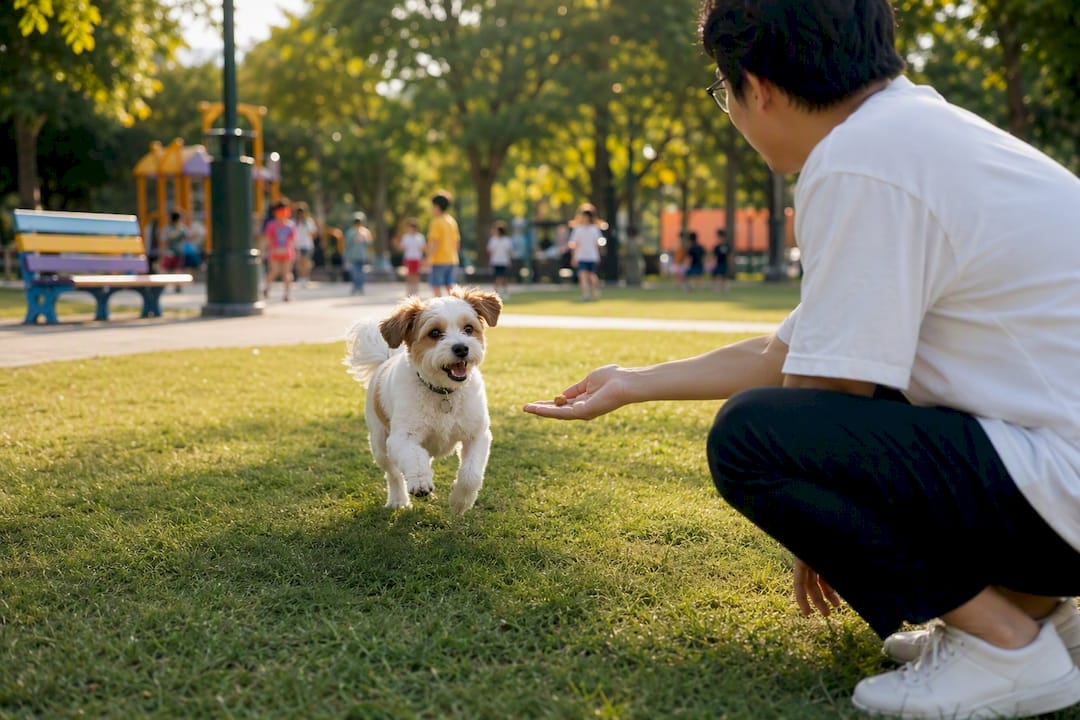
Pro Tip: Save your absolute best reward for the moments your dog returns against real temptation, another dog, a dropped sandwich, a squirrel mid-chase. That oversized “jackpot” payoff, a technique the RSPCA specifically recommends, teaches your dog that ignoring a distraction pays off bigger than giving into it.
What Equipment Keeps Recall Training Safe?
Proofing recall around real distractions means accepting some risk, and managing it deliberately. The right gear does most of that work for you.
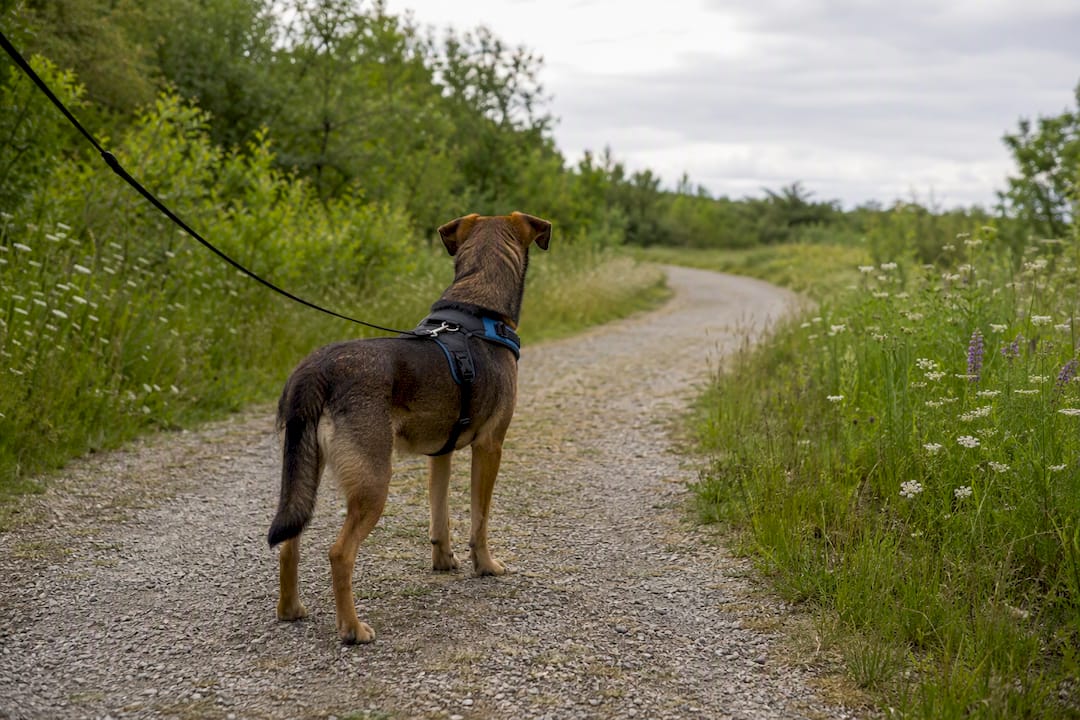
- A 15 to 25 foot long line attached to a well-fitted harness, not a collar, to avoid neck strain if your dog hits the end of the line
- Slip-resistant shoes for you, especially on wet grass or trails, since long-line handling means quick footwork
- A securely fenced area for any off-leash practice, checked for gaps or gates before you start
The rules matter as much as the gear:
- Never go off leash near roads, parking lots, or open water until your dog has passed extensive long-line testing
- If your dog ignores the first call, stop and reset rather than repeating the cue
- Never call your dog only to end play or leave the park
- Always reward arrival, every single time, even if the recall took longer than you’d like
A long line isn’t a leash you’re waiting to remove. It’s what lets you build real distance and real distractions without ever letting your dog practice ignoring you. Trainers recommend at least 20 feet of working room during this phase, enough freedom to feel real, short enough to intervene before anything goes wrong.
Why Won’t My Dog Come Back, and How Do I Fix It?
Most recall failures trace back to one of a handful of patterns, and each has a specific fix.
- Dodging or zoomies instead of arriving: teach an automatic sit on arrival, then release, so “coming to you” has a clear finish line
- Selective hearing: don’t repeat the cue. Change your position, jog away, or raise your reward value instead
- Strong prey or scent drive: shorten the distance you’re working at and switch to a whistle or higher-value reward that cuts through the distraction
- Fear-based refusal: slow down. Work on desensitizing your dog to whatever’s worrying them before asking for recall in that context
Chasing a dog that won’t come almost always backfires. It turns “away from you” into a game your dog wins, and it can even feel like play to them. Stay calm, crouch down, and use an excited tone instead.
If fear or aggression is driving the refusal, or recall keeps getting worse despite stepping back to easier settings, that’s a signal to bring in a professional trainer or certified behaviorist rather than pushing through alone.
What Tools and Support Help Beyond Basic Training?
A long line, a well-fitted harness, and a stash of high-value treats cover most of what you need. A whistle adds a cue that carries farther and cuts through wind or noise better than your voice. A clicker helps some dogs, though it’s optional.
Technology has a role too, but it supports recall training rather than replacing it. A device like iPupPee’s communication and safety tools can give service dog handlers, seniors, or people training alone an added layer of safety and documentation while recall skills are still developing. It’s a backup, not a shortcut around the fundamentals.
If problems keep worsening despite consistent practice, or safety is ever in question, working hands-on with a certified trainer is worth the investment.
Why Does This Training Method Actually Work?
Recall training succeeds or fails based on attention, and attention is a limited resource. Stanford Medicine researchers note that removing or out-valuing distractions works better than expecting willpower alone to win, a principle that applies just as directly to dogs as it does to people.
Short, frequent sessions aren’t just convenient. Research on spaced, effortful retrieval practice shows it builds more durable, transferable learning than long, infrequent drilling, which is exactly why five two-minute sessions beat one twenty-minute session.
Recall training is attention management dressed up as obedience. The dog that comes every time isn’t the most obedient one. It’s the one for whom you’re consistently the best option in the room.
Where Can You Learn More About Recall Training?
- RSPCA Knowledgebase: positive-reinforcement recall guidance, including jackpot rewards
- AKC Expert Advice: long-line technique and proofing progression
- Dogs Queensland Total Recall: staged indoor-to-outdoor training approach
- Stanford Medicine: attention research behind distraction management
- Make It Stick research review: why spaced practice builds durable learning
These sources shaped the training progression, safety rules, and reward strategy throughout this guide.
Teaching Recall in Distractions: What Actually Matters
Most recall advice treats distraction training like an obedience problem. It isn’t. It’s an attention problem, and the dogs that struggle most usually have owners who skipped the boring middle stages, backyard recalls, long-line proofing, in favor of jumping straight to the dog park.
The conventional wisdom oversells verbal cues and undersells reward economics. A dog that knows “come” perfectly in your kitchen has learned nothing transferable to a beach full of other dogs. What transfers is the pattern: showing up pays better than not showing up, no matter where “showing up” happens.
If I had to pick the single most skipped step, it’s the long line. Owners rush off leash because leashes feel like training wheels they’re embarrassed to still need. But every unsupervised failure teaches a dog that ignoring you is a viable option. That lesson is hard to undo.
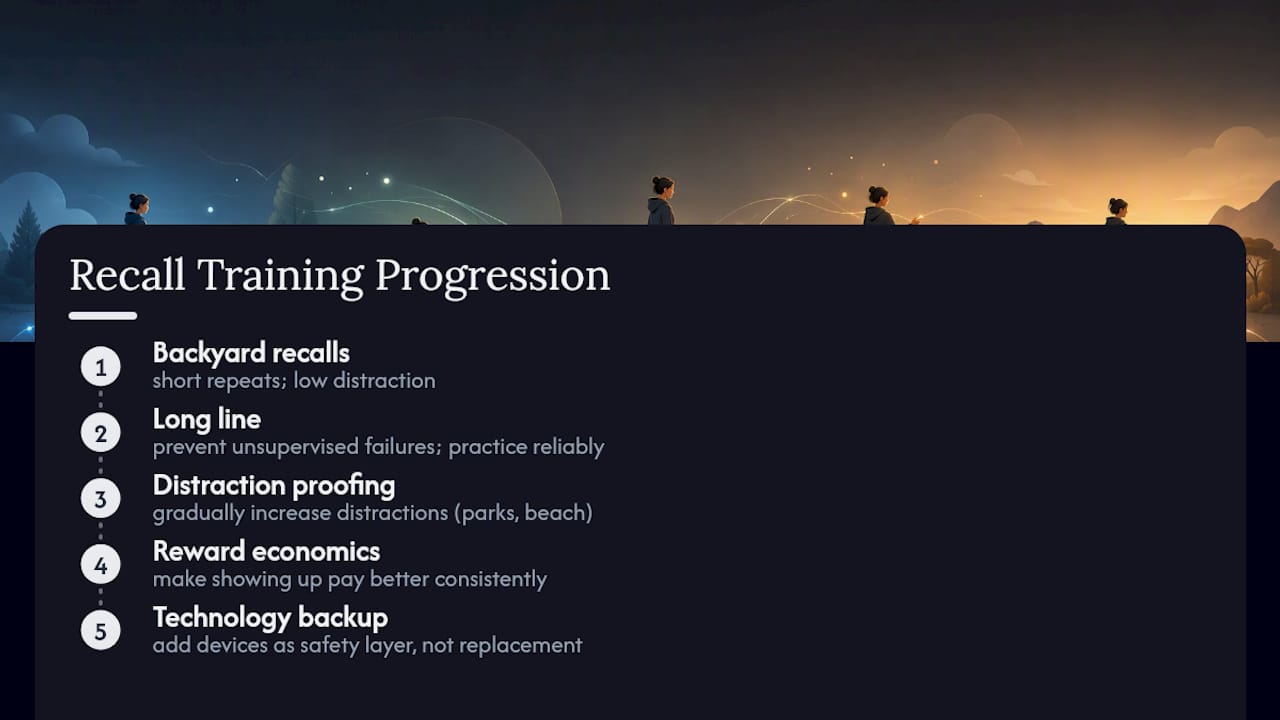
Technology like iPupPee’s alert devices has a real place here, particularly for handlers who need backup communication for safety reasons. But it works best as a layer added onto solid fundamentals, not a replacement for the slow, repetitive work of building trust and motivation.
Frequently Asked Questions
How long does it take to teach reliable recall in distracting environments? Most dogs show noticeable improvement within 2 to 4 weeks of daily short sessions, though full reliability around high-value distractions like other dogs or wildlife can take several months of consistent proofing.
What’s the best reward for recall training? Whatever your dog values most and rarely gets otherwise, often small pieces of real meat, cheese, or a favorite toy reserved only for recall practice. Rotate rewards to keep motivation high.
Should I ever punish my dog for not coming? No. Punishing a dog after it eventually comes teaches it that returning to you leads to something unpleasant, which makes future recalls worse, not better.
When can I let my dog off leash safely? Only after extensive long-line testing across multiple distraction levels and locations, and only in securely fenced areas or open spaces with no roads, water, or other serious hazards nearby.
Can a communication device replace recall training? No. Devices like iPupPee’s alert system support safety and communication for at-risk handlers, but they work alongside foundational recall training, not instead of it.
Sources
- How can I teach my dog recall (to come when called)? - RSPCA Knowledgebase
- Reliable Recall: Teaching Your Dog to Always Come When Called
- How to concentrate in an ever-distracted world — five things to know (Stanford Medicine)
- Make It Stick — research review on learning strategies
- Total Recall - Train your dog to come every time you call