

If you live with a service dog or a pet with special health needs, you already know that traditional pet cameras and basic monitoring fall short when the stakes are high. What is smart pet alerting? It’s the difference between a passive camera recording footage you never check and a connected system that contacts you the moment something goes wrong. For pet owners managing seizure-alert dogs, mobility assistance animals, or medically complex pets, real-time automated notifications aren’t a convenience. They’re a safety net that makes genuine independence possible.
Table of Contents
- What is smart pet alerting and how does it work?
- Core types of smart pet alerts: events, location, and health
- Choosing smart pet alerts for service and special needs pets: key factors
- Integrating smart pet alerting into your daily routine
- Why combining smart pet alerting technologies is critical for special needs pets
- Discover smart pet alert solutions to protect your furry family
- Frequently asked questions
Key Takeaways
| Point | Details |
|---|---|
| Smart pet alerting defined | Smart pet alerting uses AI-enabled devices to detect pet events and send real-time notifications to owners. |
| Three main alert types | Event detection, GPS safe-zone tracking, and health monitoring are the core smart alert categories. |
| Choose alerts by need | Select alerts that match your pet’s behavior and safety risks for best protection. |
| Combine technologies | Using multiple alert types together provides more comprehensive monitoring and fewer blind spots. |
| Customize alerts | Adjust notification preferences to minimize false alarms and focus on vital events. |
What is smart pet alerting and how does it work?
Smart pet alerting is a category of connected technology that monitors your pet in real time and sends you an automatic notification the moment a specific event occurs. No waiting. No scrolling through hours of footage. The system detects the event and tells you about it immediately.
At its core, smart pet alerting uses connected devices like cameras, wearables, and GPS trackers to detect pet-related events and send notifications directly to your phone or smart home system. The three most common hardware types are AI-enabled cameras, GPS/LTE collar trackers, and biometric wearable collars. Each one monitors a different slice of your pet’s life.
Here’s what distinguishes smart alerting from ordinary monitoring:
- AI-powered cameras analyze live video to detect specific events like barking, unusual movement, or the presence of an unfamiliar person near your pet
- GPS trackers draw a virtual boundary around a safe zone and alert you the moment your pet crosses it
- Health wearables continuously read vital signs and flag abnormal patterns that may signal distress or a medical episode
- Push notifications deliver all of this to your phone in seconds, not minutes
For a fuller breakdown of how these systems work together, the pet alert system overview at iPupPee explains how different device types complement each other in practice.
What makes modern smart alerting genuinely useful is the AI layer. Earlier pet cameras simply recorded. Today’s systems learn what’s normal for your pet and flag deviations. That distinction matters enormously when your dog’s specific behavior is what makes them medically or functionally valuable to you.
Core types of smart pet alerts: events, location, and health
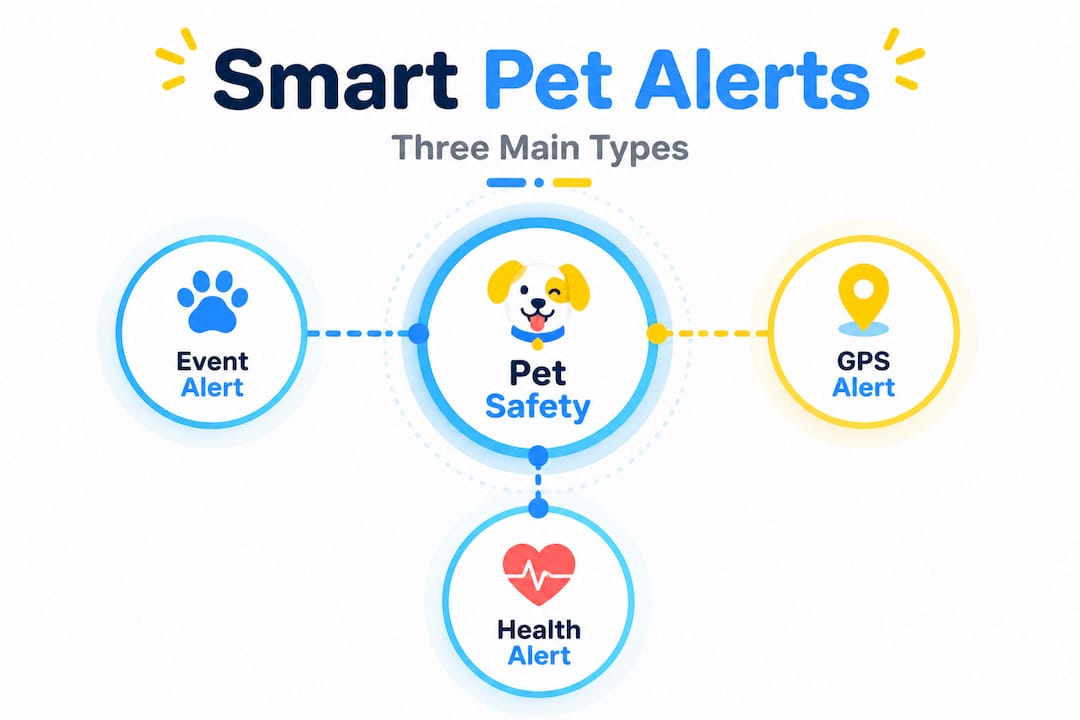
Smart pet alerts break into three distinct categories. Each addresses a different risk, and each becomes critical depending on your pet’s role and your lifestyle.
Event alerts
Event alerts detect sounds and visual cues inside your home or yard. Petcube triggers alerts for barking, meowing, pets or people in view using AI-powered recognition. For service dog handlers who are deaf or hard of hearing, this type of alert can notify them when their dog is signaling. For owners of pets with anxiety disorders, it captures the moment distress behaviors begin so you can intervene remotely.
Safe-zone and GPS alerts
GPS alerts answer the question “where is my pet right now?” PawSentry sends instant alerts the moment a pet leaves a safe zone and offers global LTE/GPS tracking independent of a nearby phone. This matters enormously for dogs prone to bolting, escape artists, or any pet whose handler cannot physically give chase. LTE-based tracking is also more reliable in areas with weak Wi-Fi, which camera-based systems can’t cover.
Health alerts
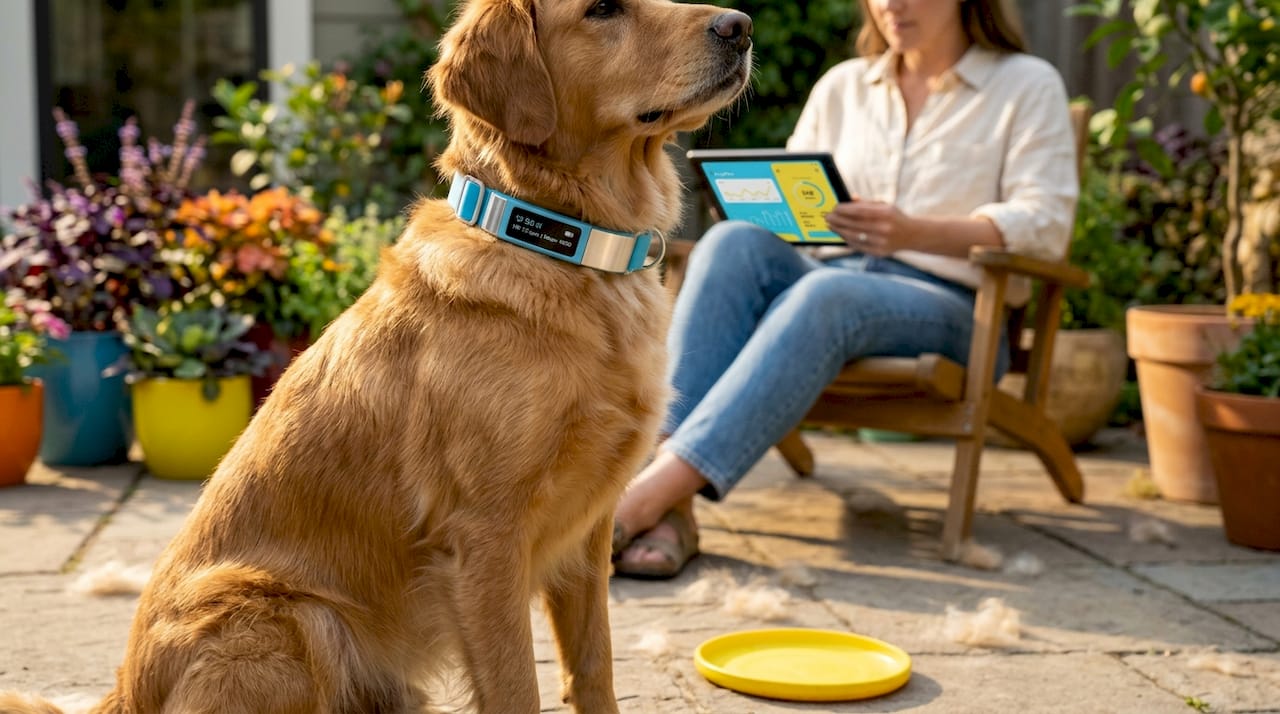
Health alerts come from wearable collars that continuously read biometric data. PetPace’s smart collar monitors vital signs and can alert owners of seizures within an hour. For pets with epilepsy, heart conditions, or chronic pain, this kind of alert changes the entire care model. You stop reacting after a crisis and start anticipating it.
| Alert type | What it detects | Best use case | Technology |
|---|---|---|---|
| Event alert | Sounds, movement, visual cues | At-home behavior, anxiety, signaling | AI camera |
| Safe-zone/GPS | Location, boundary crossing | Wandering risk, outdoor access | LTE/GPS tracker |
| Health alert | Vitals, seizures, pain score | Epilepsy, cardiac, chronic conditions | Smart wearable collar |
Pro Tip: Don’t assume one alert type covers everything. A dog with epilepsy who also has outdoor access needs both health monitoring and GPS tracking. These systems are designed to work alongside each other, not replace each other.
You can learn more about the evolving role of wearables in dog health monitoring to understand what current technology can and can’t detect.
Choosing smart pet alerts for service and special needs pets: key factors
Understanding the types of smart alerts is just the start. Here’s how to select the best alerts suited for your special needs or service dog.
The most common mistake owners make is buying a device based on price or brand recognition rather than their specific pet’s risk profile. A well-trained seizure-alert dog who lives indoors needs a completely different setup than a mobility assistance dog who travels with you daily.
Match the device to the primary risk:
- Primarily at home? An AI camera with event alerts covers most daily risks
- Wandering or outdoor access? GPS/LTE tracking is non-negotiable
- Medical condition with acute episodes? A health-monitoring wearable is the priority
- Complex needs? You will likely need more than one device type
Key technical factors to evaluate:
| Factor | Why it matters | What to look for |
|---|---|---|
| Alert latency | For seizures, every minute counts | Under 60-minute detection for health alerts |
| Coverage type | Wi-Fi dies; LTE doesn’t | LTE-enabled devices for GPS tracking |
| AI accuracy | Reduces false alarms | Devices with customizable AI sensitivity |
| Battery life | Gaps in coverage are dangerous | 24+ hours minimum for wearables |
Camera AI excels at at-home event detection while GPS is essential for tracking pets that might wander or escape. Those two technologies serve different failure modes, and you need to know which failure mode worries you most.
PetPace provides low-latency seizure alerts within an hour, which is a meaningful benchmark for emergency planning. If your pet has epilepsy, ask any health-monitoring device manufacturer specifically what their average detection-to-notification time is. That number tells you more than any marketing copy.
Pro Tip: Run a 30-day alert log when you first set up any smart alerting device. Review it weekly. You’ll quickly identify which alerts are genuinely useful and which are noise. Tuning your preferences early saves you from alert fatigue later.
For a side-by-side look at specific devices, the best dog alert device comparison at iPupPee is a useful starting point. If you’re working with a trained service dog, also check the training dogs for alerts resource to understand how technology and natural alert behaviors can reinforce each other.
Integrating smart pet alerting into your daily routine
Knowing how to pick the right alerts is vital, but successful smart pet alerting depends on how you integrate these tools into everyday care.
Setting up hardware is the easy part. The harder part is building habits around the data these devices generate so that notifications lead to action rather than noise.
Getting started:
- Install your monitoring app and enable only the alert types that are relevant to your pet’s specific risks
- Set your safe zone in GPS apps using your pet’s actual daily boundaries, not just your property line
- Connect health monitoring alerts to your vet’s contact details so you can act immediately on flagged vitals
- Schedule a weekly review of your alert history to look for patterns, such as a dog that barks repeatedly at the same hour each day
- Adjust alert sensitivity after the first two weeks based on your real-world experience with the device
Petcube owners can customize which alert types to receive, which reduces alarm fatigue and improves the relevance of every notification you get. This is underused. Most people accept default settings and then turn off notifications entirely when they get too many. The better path is to spend 20 minutes refining what you actually want to hear about.
Daily habits that make alerts more useful:
- Check your alert log each morning for overnight events
- Recharge wearables and trackers on a consistent daily schedule so coverage never lapses
- Share alert access with a trusted second contact, like a family member or dog handler, for backup response
- After any medical episode, review the health alert timeline to give your vet precise data
Pro Tip: Treat your alert history the same way you’d treat a health journal. Over time, the pattern of when alerts fire and what was happening tells you more than any single notification ever could.
For a practical guide to making sense of your device’s outputs, dog alerts explained walks through common alert scenarios and what your appropriate response should be.
Why combining smart pet alerting technologies is critical for special needs pets
Here’s the part most articles skip: any single alerting technology has a blind spot, and for special needs pets, blind spots are where emergencies happen.
A camera tells you what’s happening inside your home. It tells you nothing when your dog pushes through a gate and is three blocks away. A GPS tracker tells you where your dog is. It cannot tell you that her heart rate has been elevated for two hours. A health wearable catches a seizure. It doesn’t know if someone left the backyard door open.
This is not a hypothetical. Combining location tracking with event detection captures a fuller risk profile, which is essential for service or special needs pets’ safety. Single-modality alerting creates confident blind spots. You think you’re covered because you have a device, but the device only covers one category of risk.
The counterintuitive truth about smart pet technology is that more devices don’t automatically mean better protection. What matters is whether your devices cover the actual failure modes relevant to your specific pet. A healthy, indoor cat needs almost nothing from this category. A dog with epilepsy who assists a handler living alone needs health alerts, event alerts, and very likely GPS, working in parallel.
There’s also a community layer that technology alone cannot replace. Services like AKC Reunite broadcast your pet’s information to a network of shelters and community members when the tech reaches its limits. No GPS or camera can find a pet who has been picked up and transported far from your safe zone. Human networks fill that gap.
The owners who get the most from smart pet alerting are the ones who stop thinking of it as a gadget and start treating it as a care system with multiple components, each one addressing a different risk. For a deeper look at what device-based alerting actually does well, the dog alert device advantages resource makes the case clearly.
Discover smart pet alert solutions to protect your furry family
Smart pet alerting works best when your technology matches your pet’s actual needs, and when you have the right support to set it all up correctly.
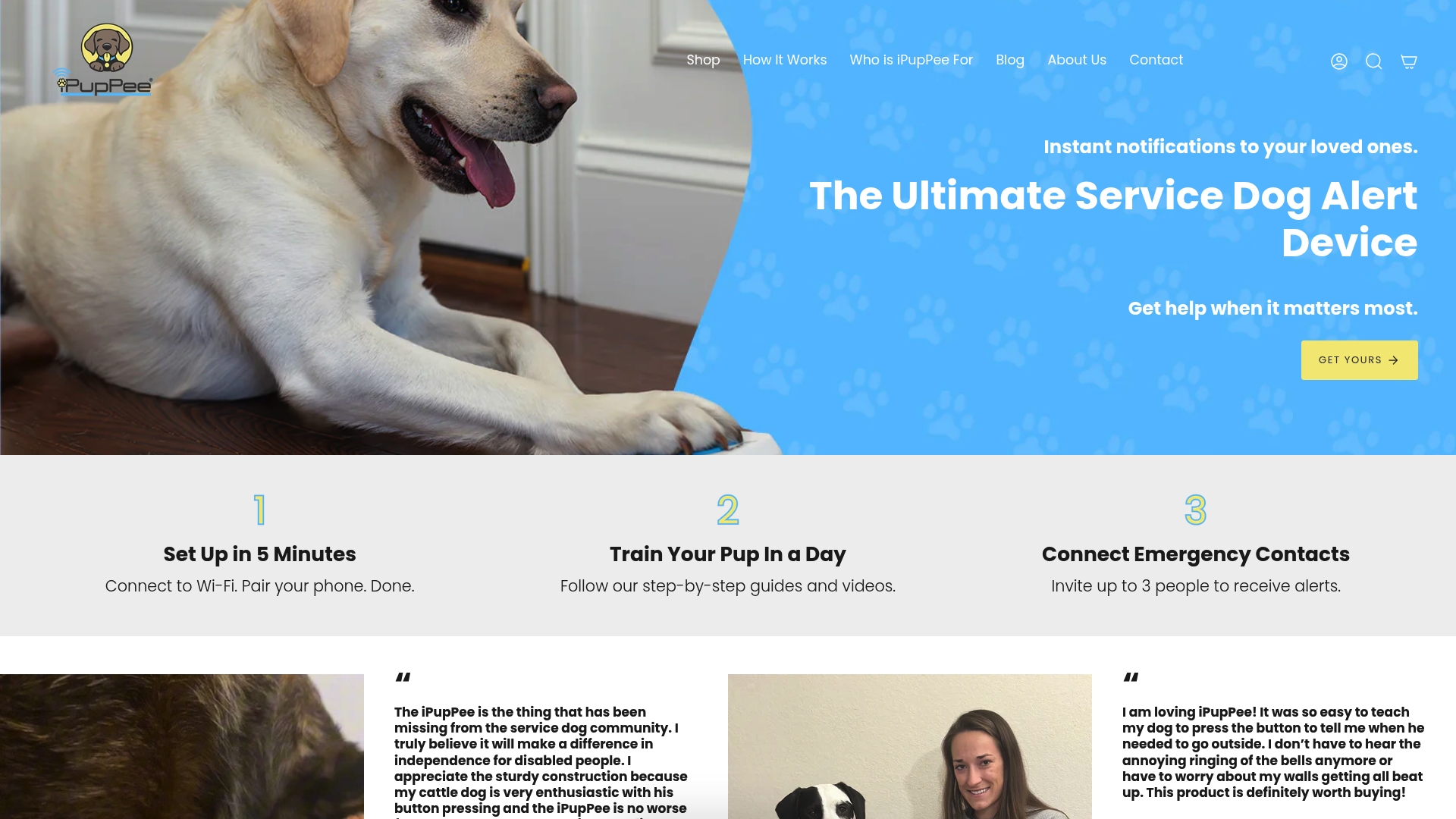
At iPupPee, we’ve built a range of smart pet alert solutions designed specifically for pet owners who need more than a basic camera. Whether you’re managing a service dog’s health, supporting an elderly pet with mobility challenges, or simply living alone and wanting real-time communication with your animal, our devices and resources are built for exactly that. Browse our product range, read our setup guides, and connect with a team that understands what’s really at stake when your pet’s safety depends on reliable, intelligent alerting.
Frequently asked questions
What devices are commonly used for smart pet alerting?
Common devices include AI-enabled cameras, GPS trackers, and health-monitoring smart collars that detect sounds, locations, and vital signs.
How do GPS safe-zone alerts work for pet safety?
GPS safe-zone alerts notify you immediately if your pet leaves a designated boundary. PawSentry’s geofence alerts offer global coverage independent of nearby phones, letting you track and find your pet quickly.
Can smart pet alerting help manage medical conditions in pets?
Yes. PetPace’s smart collar alerts pet parents within an hour of seizure detection by continuously monitoring vital signs, giving you time to coordinate emergency veterinary care.
What can I do if my pet goes missing beyond device tracking range?
AKC Reunite broadcasts pet info to a network within 5 miles of the last seen location to aid in recovery when devices have reached their coverage limits.
How can I reduce false alerts from smart pet devices?
Customize your alert preferences to focus on the most important event types, and keep device software updated. Petcube’s customizable AI alerts allow owners to choose which notifications they receive, cutting down on false positives and alarm fatigue.