

TL;DR:
- Crate training guides puppies to see their crate as a safe, comfortable space through positive reinforcement.
- Following a structured schedule of gradual steps helps puppies become calm and confident in their crate within two weeks.
A crate training workflow for puppies is a structured, positive process that teaches your puppy to see its crate as a safe, comfortable den rather than a place of confinement. The American Kennel Club and the American Animal Hospital Association (AAHA) both endorse reward-based training as the gold standard for building positive behavior in young dogs. Done correctly, crate training supports house-training, reduces destructive behavior, and gives your puppy a reliable place to rest and decompress. This guide walks you through every phase of the process, from choosing the right crate to managing overnight routines.
What is the crate training workflow for puppies?
Crate training is the practice of gradually introducing a puppy to a crate using positive reinforcement so the space becomes associated with comfort and safety. The process follows a clear sequence: introduce the crate, build positive associations with food and rewards, increase closed-door time slowly, and extend alone time over days. Most puppies calm within 5–7 days when owners use a structured, reward-based approach. That timeline assumes no rushing and no punishment. The workflow is not about locking a puppy away. It is about teaching the puppy that the crate is its own space, the same way a child learns to feel safe in their bedroom.
How do you choose and set up the right crate?
Crate size is the single most important setup decision you will make. The crate must allow your puppy to stand, turn around, and lie down comfortably. It should not be so large that the puppy can sleep in one corner and eliminate in another. That extra space removes the natural instinct dogs have to keep their sleeping area clean, which is the biological engine behind crate-based house-training.
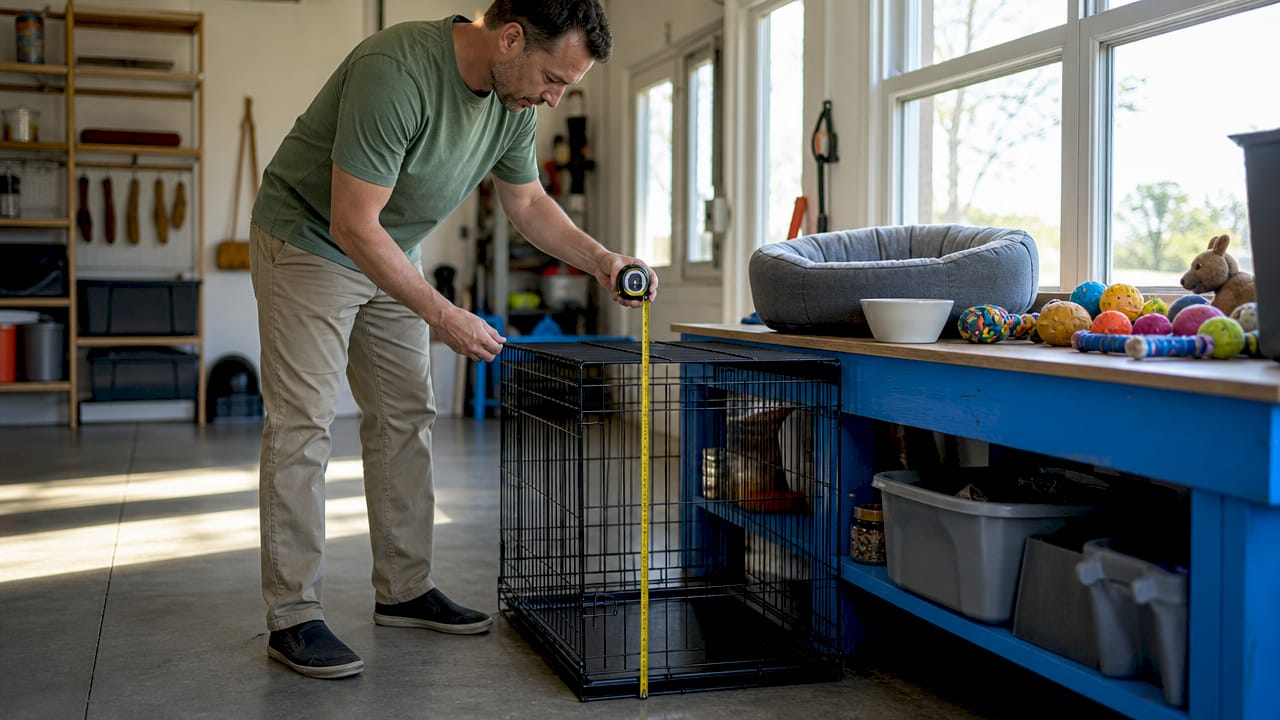
Buy a crate sized for your puppy’s adult dimensions, then use a divider panel to reduce the usable space now. As your puppy grows, move the divider back. This approach saves money and keeps the space appropriately sized at every stage.
For setup, keep these points in mind:
- Place soft, washable bedding inside along with one or two safe chew toys.
- Avoid loose fabric that a young puppy can bunch up and eliminate on.
- Position the crate in a lived-in room, close to family activity, so the puppy does not feel isolated.
- Cover three sides of the crate with a blanket to create a den effect. This simple step cuts settle time significantly by reducing visual stimulation.
- Avoid placing the crate near heating vents, direct sunlight, or drafty windows.
Pro Tip: Place a worn T-shirt or a piece of your clothing inside the crate during the first week. Your scent signals safety to a puppy that is still adjusting to a new home.
What does a step-by-step puppy crate training schedule look like?
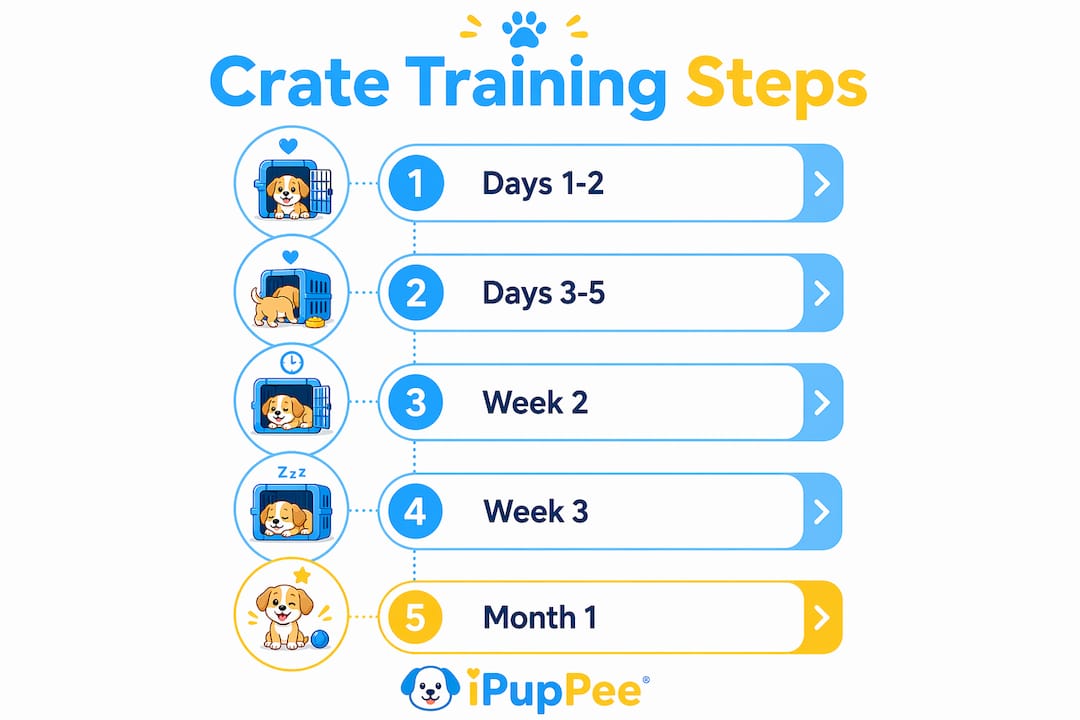
A 14-day schedule gives most puppies enough time to build genuine comfort with the crate. Rushing any phase creates anxiety that can take weeks to undo. Introducing the crate wrong can turn a short project into a multi-month problem, so treat each day as a building block, not a deadline.
- Days 1–2: Leave the crate door open. Toss treats and toys inside and let your puppy explore freely. Never push or lure the puppy in by force. The goal is curiosity, not compliance.
- Days 3–4: Begin feeding meals inside the crate. Place the bowl just inside the door at first, then move it to the back as comfort grows. After the puppy finishes eating, quietly close the door for 30–60 seconds, then open it before any whining starts.
- Days 5–7: Increase closed-door time to 5–10 minutes. Stay in the room. Offer a chew toy or stuffed food toy to keep the puppy occupied. Reward calm, quiet behavior with praise.
- Days 8–10: Leave the room for short periods while the puppy is crated. Start with 2–3 minutes and build up to 15–20 minutes. Return before the puppy becomes distressed.
- Days 11–14: Extend crated periods to 30–60 minutes. Begin using the crate at bedtime, placed next to your bed. Gradually work toward longer alone times as the puppy demonstrates calm tolerance.
| Phase | Duration goal | Key action |
|---|---|---|
| Days 1–2 | 0 minutes closed | Open exploration with treats |
| Days 3–4 | 1–2 minutes closed | Meals inside, brief door closing |
| Days 5–7 | 5–10 minutes closed | Chew toys, owner present |
| Days 8–10 | 15–20 minutes closed | Owner leaves room briefly |
| Days 11–14 | 30–60 minutes closed | Bedtime use, longer alone time |
Pro Tip: Work one dimension at a time. Increase duration first, then add distance. Trying to extend both at once overwhelms most puppies and stalls progress.
What are the most common crate training mistakes?
Most crate training failures trace back to a handful of predictable errors. Knowing them in advance saves weeks of frustration.
- Opening the door during whining. Responding to whining by opening the crate teaches the puppy that noise produces results. Always wait for a quiet moment, even a brief pause, before opening the door.
- Using a crate that is too large. Extra space lets a puppy eliminate in one corner and sleep in another. This defeats the house-training benefit entirely.
- Using the crate as punishment. Sending a puppy to the crate after bad behavior creates a negative association. The crate must always be a neutral or positive place.
- Rushing the schedule. Slow progression is necessary because rushing leads to prolonged anxiety and negative associations that are hard to reverse.
- Ignoring distress signals. Whining, panting, and pawing at the door are signs the puppy is not ready for the current step. Regress to the last successful phase and proceed more slowly.
Check the Ipuppee guide on common dog training mistakes for a broader look at pitfalls that affect all types of puppy training, not just crate work.
How do you handle nighttime crate routines and potty breaks?
Nighttime is where many new puppy owners hit a wall. The key is placement and expectation management.
Place the crate next to your bed for the first two weeks. Nighttime placement near the owner’s bed reduces anxiety and lets you respond quickly when the puppy signals a bathroom need. A puppy that can see or smell you settles faster and sleeps longer between outings.
Follow these nighttime practices:
- Establish a consistent bedtime routine: last potty trip, water removed 1–2 hours before bed, and a calm wind-down period.
- When the puppy whines, wait for a brief quiet moment before responding. If the whining is persistent and urgent, take the puppy outside immediately for a quick, boring potty trip. No play, no praise beyond a quiet “good dog.”
- Share nighttime potty duties with a partner or household member. Sleep deprivation is real, and rotating responsibility keeps everyone functional.
- After two to three weeks, begin moving the crate a few feet farther from the bed each night until it reaches its permanent location.
Pro Tip: Set an alarm for 3–4 hours after bedtime during the first week rather than waiting for the puppy to wake you. Proactive outings prevent accidents and keep the crate clean.
How do you build longer crate time and keep it positive?
Once your puppy handles 30–60 minutes calmly, the goal shifts to building duration and making the crate a natural part of daily life. The puppy training checklist from Ipuppee covers this phase in detail alongside other routine habits worth building at the same time.
Keep these principles in mind as you extend crate time:
- Increase time only when the puppy is consistently quiet and relaxed. A single calm session does not mean the puppy is ready for a jump in duration.
- Continue using food rewards inside the crate. A stuffed food toy given at crate entry keeps the association positive and gives the puppy something to do.
- Use the crate for naps, quiet time after meals, and travel. Routine use prevents the crate from feeling like an event, which reduces resistance.
- Never crate a puppy beyond age-appropriate limits. A rough guide: puppies can hold their bladder for roughly one hour per month of age, up to a maximum of four to five hours during the day.
- Never use the crate as punishment, even once. One negative association can undo weeks of positive work.
Pro Tip: Feed every meal inside the crate indefinitely during the first month. It costs you nothing extra and reinforces the positive association every single day.
Key Takeaways
A consistent, reward-based crate training workflow built on correct sizing, gradual progression, and positive reinforcement produces a calm, crate-comfortable puppy within two weeks.
| Point | Details |
|---|---|
| Size the crate correctly | Use divider panels so the puppy cannot eliminate in one corner and sleep in another. |
| Follow a 14-day schedule | Progress from open exploration to overnight use in gradual, daily steps. |
| Never open the door during whining | Wait for a quiet moment before releasing the puppy to avoid reinforcing noise. |
| Place the crate next to your bed at night | Proximity reduces anxiety and lets you respond quickly to potty signals. |
| Keep the crate positive always | Never use it for punishment; one negative event can reverse weeks of progress. |
What I’ve learned from watching owners rush this process
Most owners who struggle with crate training share one trait: they treat the crate as a management tool first and a training project second. They put the puppy in, close the door, and expect the puppy to figure it out. What follows is whining, scratching, and an owner who feels guilty enough to open the door. That single moment teaches the puppy that noise works, and the cycle begins.
The owners who succeed treat the first two weeks as an investment. They sit near the crate. They toss treats in without asking the puppy to enter. They feed every meal inside. They look boring and calm when the puppy is crated, because excitement signals that something better is happening outside the crate.
The detail that surprises most people is how much covering the crate matters. Three sides covered with a blanket changes the feel of the space from a wire box to a den. Puppies that pace and whine in an uncovered crate often settle within minutes once it is covered. That is not a trick. It is biology. Dogs are den animals, and visual calm produces behavioral calm.
Patience is not passive here. It is the active choice to not rush, not react to whining, and not skip steps because the puppy seemed fine yesterday. The gradual crate training approach is not slow because trainers are being cautious. It is slow because puppies learn in layers, and each layer needs time to set before you add the next one.
— Andrew
Ipuppee’s resources for new puppy owners
Crate training is one piece of a larger puzzle. Ipuppee offers a full library of puppy training guides covering everything from basic safety training to communication tools designed for new dog owners and service dog handlers.

The Ipuppee blog covers topics like potty training timelines, managing separation anxiety, and building communication between dogs and their owners. For puppy owners who want structured, expert-backed guidance in one place, visit Ipuppee to explore training resources and the iPupPee alert device, which helps dogs signal their needs clearly to owners and caregivers.
FAQ
How long does crate training a puppy take?
Most puppies reach basic crate comfort within 7–14 days using a structured, reward-based schedule. Rushing the process extends the timeline significantly.
What size crate does a puppy need?
The crate should allow the puppy to stand, turn around, and lie down without extra room for elimination. Use divider panels in an adult-sized crate and adjust as the puppy grows.
Should I ignore my puppy crying in the crate at night?
Wait for a brief quiet moment before opening the crate door, since responding to whining reinforces the behavior. If the crying is urgent and persistent, take the puppy outside for a quick, calm potty trip.
Can I use the crate as punishment?
Never use the crate as punishment. One negative association can undo weeks of positive training and make the puppy resistant to entering the crate voluntarily.
How many hours can a puppy stay in a crate?
A general rule is one hour per month of age, up to a maximum of four to five hours during the day. Overnight crating with nighttime potty breaks is appropriate from the first week.