

TL;DR:
- The canine-human interface is a reciprocal communication system where both dogs and humans actively adjust signals to build understanding. Recognizing body language, vocalizations, and signals in context enhances safety, trust, and effective bonding.
The canine-human interface is defined as the two-way communication system through which dogs and humans exchange information, adjust behaviors, and build shared understanding. This is not a one-sided process where owners issue commands and dogs comply. Both species actively shape the interaction through multi-modal signals including posture, gaze, vocalization, scent, and spatial positioning. Research from NCCR Evolving Language confirms that humans even modify their own speech patterns to be better understood by dogs, a phenomenon called dog-directed speech. That finding alone reframes the relationship: you are not just training your dog. Your dog is also training you.
What is canine-human interface and how does it work?
The canine-human interface functions as a reciprocal signaling system, not a command-and-response loop. Humans slow speech and exaggerate expressions when talking to dogs, demonstrating that co-evolution has shaped both species to communicate more effectively with each other. This mutual adjustment is the core of the interface. Neither party is passive.

Dogs use a multi-modal system to send messages. Visual signals include ear position, tail carriage, and eye softness or hardness. Auditory signals range from barks and whines to growls and sighs. Olfactory signals carry emotional and physiological state information that humans largely cannot detect. Spatial signals, such as approach angle and body orientation, also carry meaning. A direct approach reads as confrontational to most dogs, while a curved approach signals calm intent.
The term “canine user interface” sometimes appears in tech contexts, referring to devices dogs operate directly, such as alert buttons. That usage is narrower. The broader scientific term, canine-human interface, covers the entire communication relationship between the two species.
How do dogs communicate through signals and body language?
Dogs communicate through clusters of simultaneous signals, not single isolated cues. Reading one signal in isolation produces frequent misreads. A wagging tail is the classic example: tail position and speed mean very different things depending on whether the body is loose and low or stiff and forward. Context determines meaning.
The signals dogs use fall into four main categories:
- Visual signals: ear set, tail height and movement, body posture, facial muscle tension, and eye shape
- Auditory signals: pitch, duration, and rhythm of barks, whines, growls, and howls
- Olfactory signals: scent marking, anal gland secretions, and pheromone release tied to emotional state
- Spatial signals: distance regulation, body blocking, turning away, and approach angle
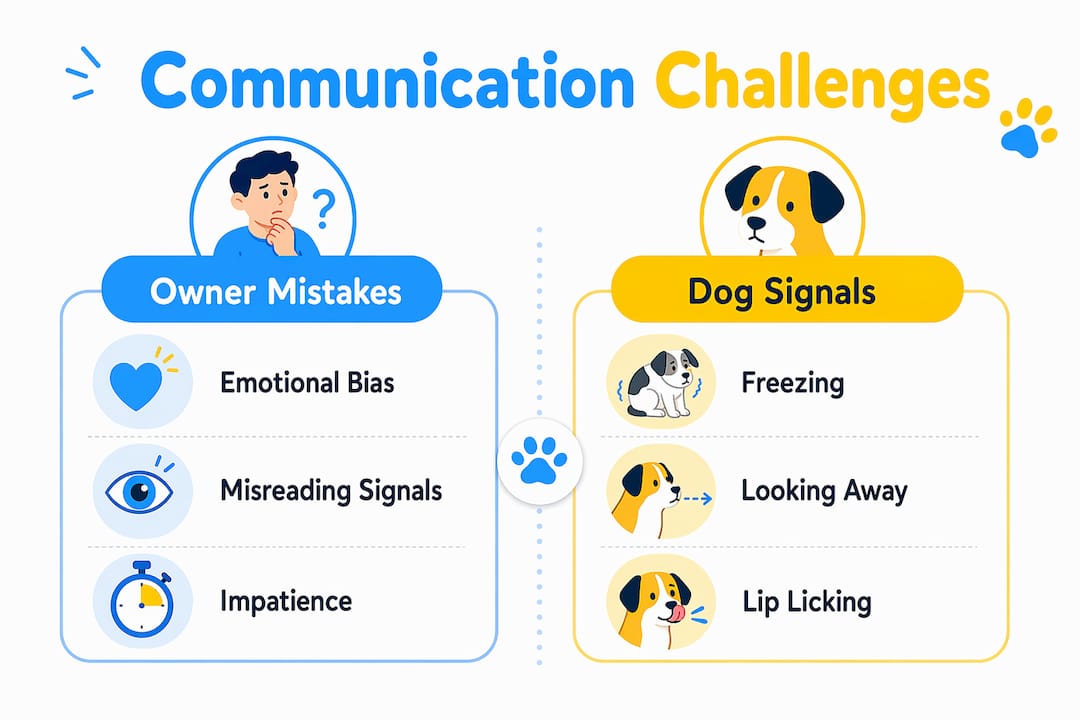
Misreading these signals is the most common source of conflict between dogs and owners. A dog that freezes, looks away, or licks its lips is signaling discomfort. Owners who miss those early cues often push the interaction further until the dog escalates to growling or snapping.
Pro Tip: Watch the whole dog, not just the tail. Observe ears, eyes, mouth, body weight distribution, and tail together as one picture. A single signal tells you almost nothing. The cluster tells you everything.
What does science say about the canine-human interface?
The most useful scientific framework for understanding the canine-human interface is Self-Determination Theory, or SDT. SDT identifies three core psychological needs: autonomy, competence, and relatedness. SDT applies to both dog and owner in a dyadic relationship, meaning both parties need to feel capable, connected, and able to exercise some control over their experience.
This framework reframes what good dog ownership looks like. An owner who gives a dog no choices undermines the dog’s sense of autonomy. A dog that cannot predict its owner’s behavior loses its sense of competence. Both outcomes damage the relationship and produce behavioral problems.
The scientific term for how this plays out in real interactions is dyadic co-construction. Co-construction is a dynamic process where both dog and owner continuously adjust their behaviors based on each other’s responses. It is not a fixed state. It evolves every day.
| SDT Need | What it means for the owner | What it means for the dog |
|---|---|---|
| Autonomy | Owner feels confident making decisions for the dog | Dog has some choice in daily interactions |
| Competence | Owner develops real skill in reading dog signals | Dog can predict outcomes and respond effectively |
| Relatedness | Owner feels emotionally connected to the dog | Dog experiences safety and social belonging |
Interactions grounded in these three needs produce well-adjusted dogs and satisfied owners. Interactions that ignore them produce anxiety, aggression, and communication breakdown.
What are the most common canine communication challenges?
The biggest barrier to a clear canine-human interface is emotional bias. Owners project human emotions onto dog behavior and interpret signals through that lens. A dog that growls when approached while eating is not being “dominant” or “bad.” It is communicating a clear boundary using the only language it has.
Punishing warning signals like growling removes the dog’s ability to communicate distress before it escalates. The growl disappears. The bite does not. This is one of the most dangerous misunderstandings in dog ownership.
Other common barriers include:
- Ignoring context when reading signals
- Sending conflicting body cues through tense posture or abrupt movements
- Expecting verbal commands to override physical discomfort or fear
- Failing to recognize breed-specific signal variations
To build a clearer interface, owners can follow these steps:
- Learn baseline behavior. Know what your dog looks like when calm, so you recognize deviation quickly.
- Observe before reacting. Give your dog three to five seconds to complete a signal sequence before responding.
- Reduce conflicting cues. Slow your movements, lower your voice, and face slightly sideways when your dog shows stress signals.
- Respect warning signals. Treat a growl as information, not defiance. Remove the stressor rather than correcting the dog.
- Build a consistent signal system. Use the same words, tones, and gestures every time for the same request.
Pro Tip: Patience is not passive. Waiting for your dog to offer a calm behavior before proceeding teaches the dog that calm communication gets results. That lesson compounds over time.
How does the canine-human interface improve safety, training, and bonding?
Understanding the canine-human interface has direct, practical consequences for safety. Abrupt or conflicting body cues make communication difficult for dogs even when the owner’s intentions are good. Dogs that cannot read their owner’s signals clearly become anxious and reactive. Clear, legible communication reduces that anxiety and the bite risk that comes with it.
Cooperative training, grounded in interface principles, treats the dog as a participant rather than a subject. The dog learns what behaviors produce good outcomes. The owner learns which signals the dog offers before and after each behavior. Both parties become more fluent over time. This is the practical expression of mutual behavioral adaptation described in the co-construction framework.
The emotional benefits of a clear interface are equally real:
- Dogs in well-communicated relationships show lower cortisol levels and fewer stress behaviors
- Owners who can read their dogs accurately report higher satisfaction and lower frustration
- Clear communication reduces the guesswork that leads to punishment-based responses
- A dog that feels understood is more likely to seek human contact and cooperation
For service dog handlers, seniors living alone, and owners with disabilities, the stakes are even higher. Devices like the iPupPee alert button from Ipuppee extend the canine-human interface into a practical safety tool. The dog presses a button to signal a need, and the owner receives an alert. That is the canine user interface concept applied directly to daily life. Owners can learn more about accessible dog communication approaches that support this kind of practical application.
The bond that forms through consistent, clear communication is not sentimental. It is functional. Dogs that trust their owners’ signals respond faster, stress less, and generalize training more effectively across new environments.
Key Takeaways
The canine-human interface is a bidirectional, co-constructed communication system where both dog and owner must actively adapt to build safety, trust, and a lasting bond.
| Point | Details |
|---|---|
| Two-way communication | Both dogs and humans adjust signals and behaviors to be understood by the other. |
| Multi-modal signals | Dogs communicate through posture, gaze, vocalization, scent, and spatial positioning simultaneously. |
| Read signal clusters | Interpret groups of signals in context, never single cues in isolation, to avoid dangerous misreads. |
| Respect warning signals | Punishing growling removes communication and increases bite risk. Treat it as information. |
| Co-construction drives bonding | Mutual adaptation grounded in autonomy, competence, and relatedness produces well-adjusted dogs and satisfied owners. |
Why most owners get this backward
Most owners I talk to think of dog training as something they do to their dog. That framing is the root of most communication failures I see. The dog is not a passive recipient of your instructions. It is an active participant in a shared system, and it has been adapting to you since the day it arrived.
The owners who develop the strongest bonds are the ones who treat every interaction as a dialog. They notice when their dog offers a signal. They respond to it. They adjust their own behavior based on what they observe. That is not softness. That is fluency.
The hardest thing to accept is that your dog’s “bad behavior” is almost always a communication failure, not a character flaw. A dog that snaps, bolts, or shuts down is telling you something you missed earlier. Going back to find that missed signal is more productive than any correction.
Empathy in this context is not anthropomorphism. It is the practical skill of recognizing that your dog has a perspective, and that perspective shapes every interaction you have together. The owners who build that skill see results that training alone never produces.
— Andrew
Tools and resources to strengthen your dog-owner connection
Building a stronger canine-human interface takes more than good intentions. It takes the right information and, sometimes, the right tools.
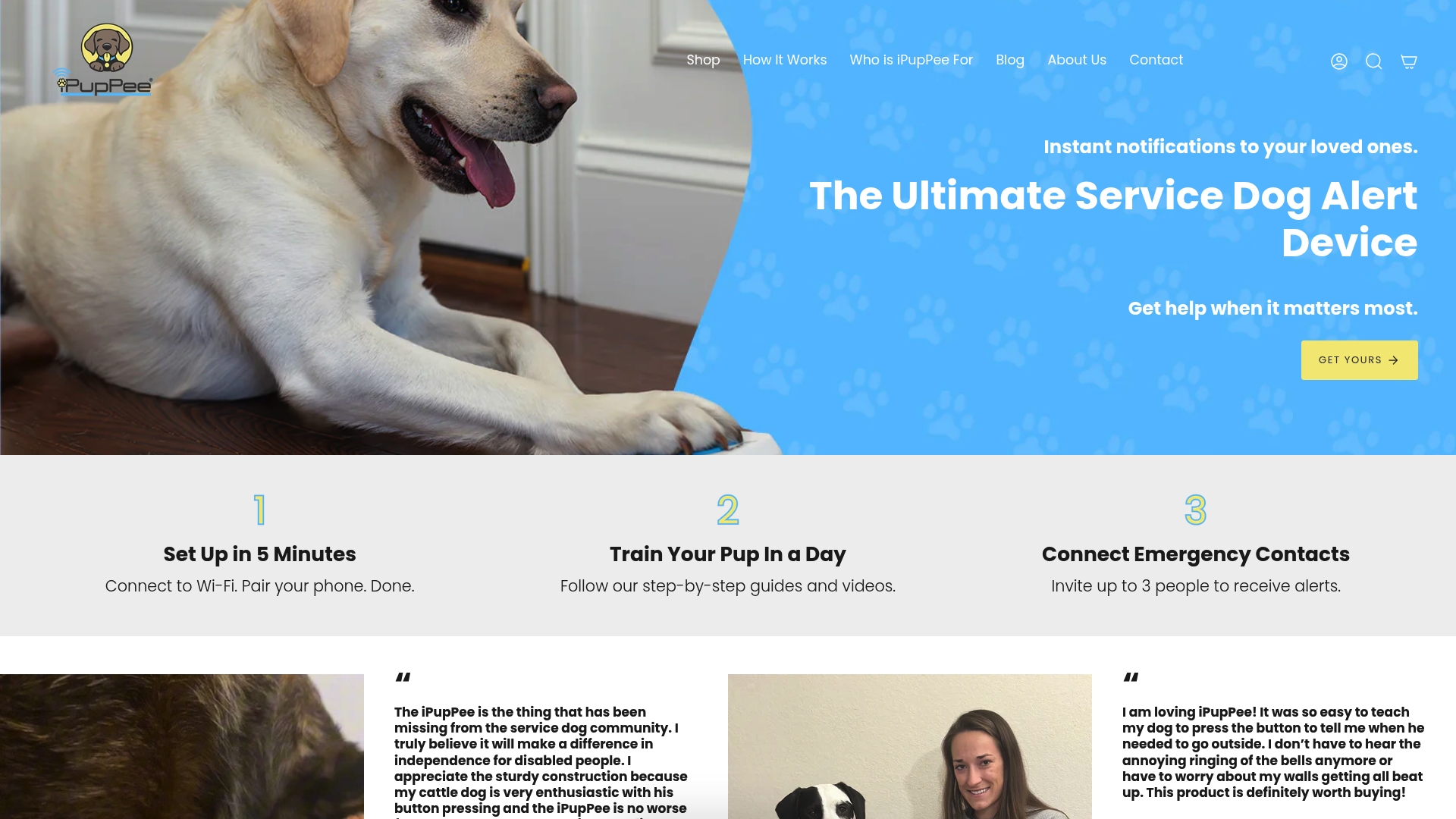
Ipuppee offers educational resources and practical communication aids designed for dog owners at every stage, from new puppy owners learning the basics to service dog handlers managing complex daily needs. The iPupPee alert device gives dogs a direct way to signal their needs with a single button press, extending the natural canine-human interface into a reliable safety system. For owners who want to go deeper on the communication side, Ipuppee’s blog covers dog communication with humans in detail, with guides built around real-world safety and connection. Whether you are working on basic signal recognition or building a full communication system with your dog, Ipuppee has resources to support that work.
FAQ
What is the canine-human interface in simple terms?
The canine-human interface is the two-way communication system between dogs and humans, involving body language, vocalizations, spatial signals, and mutual behavioral adjustment. Both species actively shape the interaction, not just the human.
How do dogs signal stress or discomfort?
Dogs signal stress through lip licking, yawning, looking away, freezing, lowered body posture, and tucked tails. These are early warning signals that appear before growling or snapping.
Why should you never punish a dog for growling?
Growling is an honest warning signal that communicates discomfort before a situation escalates. Punishing growling removes that warning without removing the underlying stress, which increases bite risk.
What is dog-directed speech?
Dog-directed speech is the modified way humans talk to dogs, using slower rhythm, higher pitch, and exaggerated facial expressions. Research from NCCR Evolving Language shows this adaptation demonstrates the two-way nature of canine-human communication.
How does understanding dog signals improve safety?
Owners who recognize early stress signals can remove a stressor before a dog escalates to aggression. Clear, legible human body cues also reduce dog anxiety, making interactions safer for both parties.