

TL;DR:
- Rescue organizations and pet tech now work together to improve animal welfare by utilizing AI, smart tracking, and interconnected shelter management systems. These technologies help increase adoption rates, reduce returns, and facilitate faster, safer reuniting through measures like compatibility scoring and GPS tracking. Implementing these innovations requires proper training, data privacy vigilance, and clear goals to maximize their positive impact on shelter operations.
Rescue organizations and pet tech are now inseparable forces in modern animal welfare, with AI platforms, shelter management software, and smart tracking devices reshaping how shelters save lives. Nearly one pet is euthanized every 90 seconds in U.S. shelters due to lack of homes. That number is not inevitable. A 6% shift toward shelter adoptions could achieve no-kill status nationwide. The tools to make that shift real already exist. Platforms like PawPlacer, AnimalsFirst, and Fi are proving it at scale, right now.
What key technologies drive innovation in rescue organizations and pet tech?
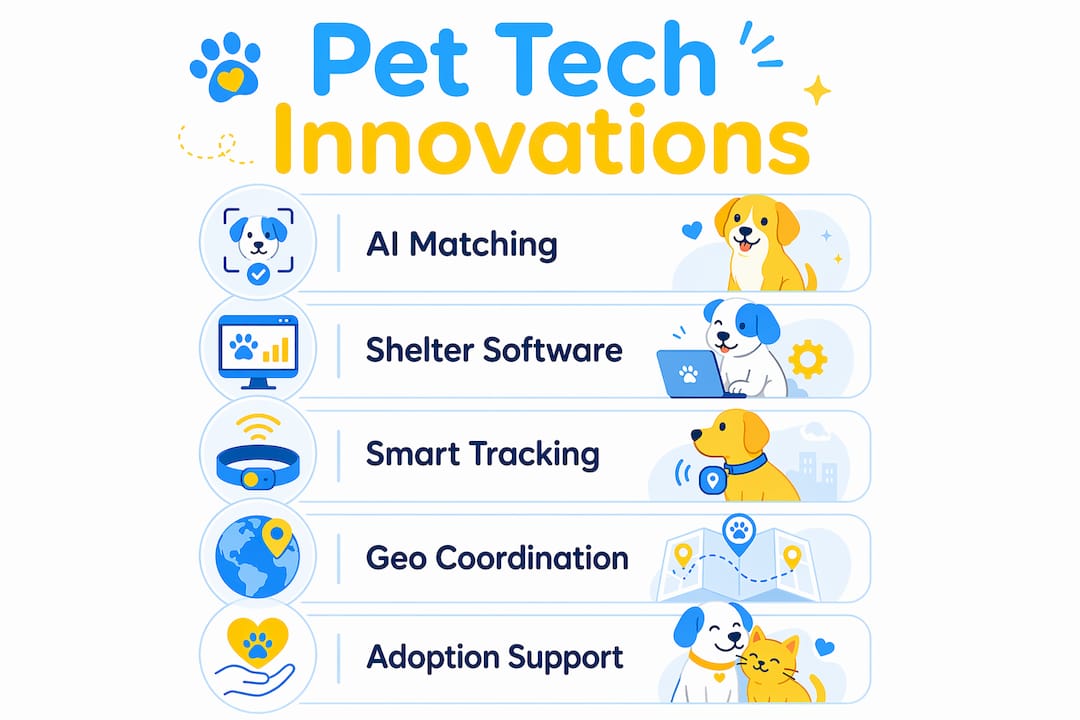
Animal rescue technology has moved well past spreadsheets and paper intake forms. Today’s shelters operate with interconnected software ecosystems that track every animal from intake to adoption.

AI-Powered Adoption Matching
PawPlacer’s AI matching engine uses semantic vectors plus deterministic guardrails to prevent mismatched placements. Raw similarity scores alone are not enough. Without guardrails, an AI might match an energetic border collie with a sedentary apartment dweller. PawPlacer layers hard rules on top of the AI output to block those errors before they happen. The system also redacts PII before processing and automatically disables certain features for GDPR regions, making it one of the more privacy-aware tools in the space.
Amazon Ads partnered with PetArmor to build an AI adoption hub that uses a “North Star” question: how do we help more pets find homes? The platform applies AI matching and generative video to showcase individual pet personalities rather than static shelter photos. Glen Rose Animal Control used a tech-enabled adoption event on Valentine’s Day and quadrupled its previous adoption records. That result shows what happens when technology removes friction from the adopter’s decision.
Shelter Management Software
AnimalsFirst supports medical tracking, adoption coordination, foster management, and field services for approximately 120 animal welfare organizations. DocuPet’s integration with AnimalsFirst enables seamless pet registration across national registries, which reduces administrative burden and improves reunification rates when pets go missing. That kind of registry connectivity turns isolated shelter databases into a national safety net.
PawMates Pro, launched by Artemira Technologies, adds AI-powered modules for medical tracking, bite incident reporting, and adoption compatibility scoring. It has 50+ partner organizations in the Bay Area as of april 2026. Automated bite reporting alone reduces the staff hours spent on incident documentation by a significant margin.
Smart Tracking and Microchip Programs
The Fi Gives Back program provides shelters with free microchips and tracking devices to maintain continuity of identification through rescue, foster, and adoption transitions. Adopters receive a free 6-month Fi membership after adoption, which keeps GPS tracking active during the highest-risk period for a new pet. PetPlace invested $15 million into tech innovation and offers free microchips to shelters, cutting adoption costs by $5–$15 per pet. For high-volume shelters processing hundreds of animals monthly, that adds up fast.
Pro Tip: Start with tools that offer free tiers or subsidized hardware. PawPlacer and PetPlace both provide entry points that let smaller rescues test the technology before committing budget.
Geo-Aware Rescue Coordination
The Pet Partner routes urgent rescue signals directly to verified NGOs, vets, and volunteers using geo-aware technology. It eliminates the noisy group chat problem, where critical alerts get buried under low-priority messages. Speed is the defining variable in field rescue. Technology that filters and routes alerts by location and urgency directly saves animal lives.
How does pet tech improve adoption outcomes and reduce shelter stress?
Technology improves adoption outcomes through three distinct mechanisms: better matching, better presentation, and better post-adoption continuity.
-
Compatibility scoring reduces returns. AI matching platforms analyze adopter lifestyle data against animal behavioral profiles. A dog with high prey drive does not get matched with a family that has cats. That kind of filtering, done at scale, reduces the adoption return rate that strains shelter resources and stresses animals.
-
Video and interactive showcasing changes first impressions. Static kennel photos rarely capture a dog’s personality. Generative video tools and interactive digital profiles let potential adopters see how an animal actually behaves. Amazon’s AI adoption hub uses this approach specifically because the “North Star” goal is connection, not just transaction.
-
Digital ownership transfer maintains safety continuity. Successful rescue tech bridges static databases with real-time pet movement by enabling digital ownership transfers across rescue, foster, and adopter stages. Fi’s tracking system keeps a GPS record active through every transition. That means if a newly adopted dog escapes in the first week, the owner has real-time location data rather than a lost-pet flyer.
-
Automated reporting reduces staff burden. PawMates Pro automates medical records and bite incident documentation. Staff who previously spent hours on paperwork can redirect that time toward animal care and volunteer coordination.
-
Cloud and mobile platforms improve volunteer coordination. When shelter management software is mobile-accessible, volunteers at off-site adoption events can update records in real time. That eliminates the data lag that causes double-adoptions, missed medical flags, and lost transfer paperwork.
About 7 million households are expected to add pets in the coming year. That demand represents a genuine opportunity for shelters equipped with digital tools to capture adopters who would otherwise go to breeders or pet stores.
What are the challenges of adopting pet technology in shelters?
Technology adoption in rescue organizations is not frictionless. The barriers are real, and ignoring them leads to failed implementations.
-
Privacy and data handling. AI adoption platforms process sensitive information about both animals and adopters. PawPlacer’s multi-layered PII redaction before AI processing sets the standard, but not every platform matches it. Shelters must audit any tool’s data practices before deployment.
-
AI guardrails are non-negotiable. Semantic similarity alone produces bad matches. A shelter that deploys an AI matching tool without deterministic guardrails will see adoption returns climb, not fall. Ask vendors specifically how their system handles hard incompatibilities.
-
Alert fatigue in rescue coordination. Geo-aware platforms like The Pet Partner solve this by routing only verified, urgent signals to responders. Shelters building their own notification systems need to apply the same filtering logic or volunteers will start ignoring alerts.
-
Staff and volunteer training. New software fails when the people using it do not understand it. AnimalsFirst and similar platforms require structured onboarding, not just a login link. Budget training time as seriously as you budget the software cost.
-
Interoperability matters more than features. A shelter management platform that cannot connect to national registries, field officer apps, or microchip databases creates data silos. The DocuPet and AnimalsFirst integration exists precisely because isolated systems fail animals at the moment of reunification.
Pro Tip: When evaluating shelter management software, ask vendors for a live demonstration of their registry integration. If they cannot show real-time data flow to a national microchip database, that gap will cost you during a lost-pet emergency.
The cost argument for technology is straightforward. PetPlace’s free microchip program saves $5–$15 per adoption. A shelter processing 1,000 adoptions per year saves up to $15,000 annually on microchipping alone, before counting staff time recovered from automated reporting.
How are data and AI shaping the future of animal welfare?
The next phase of animal rescue technology moves from individual shelter tools to ecosystem-wide intelligence.
| Trend | Current Example | Expected Impact |
|---|---|---|
| AI adoption matching | PawPlacer semantic vectors | Fewer returns, better long-term placements |
| Generative video profiles | Amazon Ads AI adoption hub | Higher adopter engagement and conversion |
| National registry integration | DocuPet + AnimalsFirst | Faster reunification, reduced admin burden |
| Free hardware programs | Fi Gives Back, PetPlace microchips | Lower cost barriers for under-resourced shelters |
| Geo-aware rescue routing | The Pet Partner | Faster field response, fewer lost rescues |
Large-scale shelter data is already being used to model no-kill goals. When platforms aggregate intake, adoption, return, and euthanasia data across hundreds of organizations, patterns emerge that individual shelters cannot see on their own. Those patterns inform resource allocation, transfer decisions, and policy advocacy.
“Aligning AI development around the goal of finding more adoptable pets good homes drives impactful features like personalized matching and pet narrative videos.” — Amazon Ads, PetArmor AI Adoption Hub
Generative AI is also changing how shelters tell individual animal stories. A written bio drafted by a volunteer in five minutes competes poorly with a short video that shows a dog’s actual play style and temperament. As generative video tools become cheaper and easier to use, every shelter will have access to professional-quality pet profiles.
The ethical dimension matters too. AI systems trained on biased data can disadvantage certain breeds or animals with medical histories. Shelters deploying AI tools need to audit outputs regularly and maintain human review for edge cases. Technology accelerates decisions. It does not replace judgment.
Key takeaways
Rescue organizations that integrate pet tech systematically, from AI matching to GPS tracking to registry-connected shelter software, achieve measurably better adoption outcomes and lower operational costs.
| Point | Details |
|---|---|
| AI matching reduces returns | Tools like PawPlacer use guardrails to block incompatible placements before they happen. |
| Free hardware lowers barriers | Fi and PetPlace offer free microchips and trackers, cutting per-adoption costs by $5–$15. |
| Registry integration is critical | DocuPet and AnimalsFirst connectivity turns isolated databases into a national reunification network. |
| Alert filtering saves lives | Geo-aware platforms like The Pet Partner route only urgent, verified signals to reduce response delays. |
| Training drives adoption success | Software fails without structured onboarding for staff and volunteers at every level. |
What i’ve learned watching pet tech evolve in rescue settings
The tools described in this article are genuinely impressive. But after watching technology implementations succeed and fail in animal welfare settings, the pattern is clear: the technology is rarely the problem. The implementation is.
Shelters that succeed with pet tech share one trait. They define the outcome they want before they choose the tool. “We want to reduce adoption returns by 20%” is a goal that leads to the right software. “We want to modernize our operations” leads to expensive platforms that nobody uses six months later.
The free hardware programs from Fi and PetPlace are worth prioritizing specifically because they remove the budget objection that kills most tech conversations in under-resourced rescues. Once staff see GPS tracking working in real time during a foster transition, the case for broader tech investment writes itself.
The no-kill goal is achievable. The data says a 6% shift in adoption behavior gets us there. Technology is the most scalable lever available to make that shift happen. But it requires rescue organizations to treat tech adoption as a core operational competency, not a side project for the volunteer who happens to like computers.
The rescue dog rehabilitation process and the technology supporting it are two sides of the same coin. Neither works without the other.
— Andrew
How Ipuppee supports rescue organizations with pet safety tech
Rescue dogs face unique communication and safety challenges that standard pet products do not address. Ipuppee builds tools specifically for dogs that need to signal their needs clearly, including rescue dogs transitioning into new homes where trust is still being established.
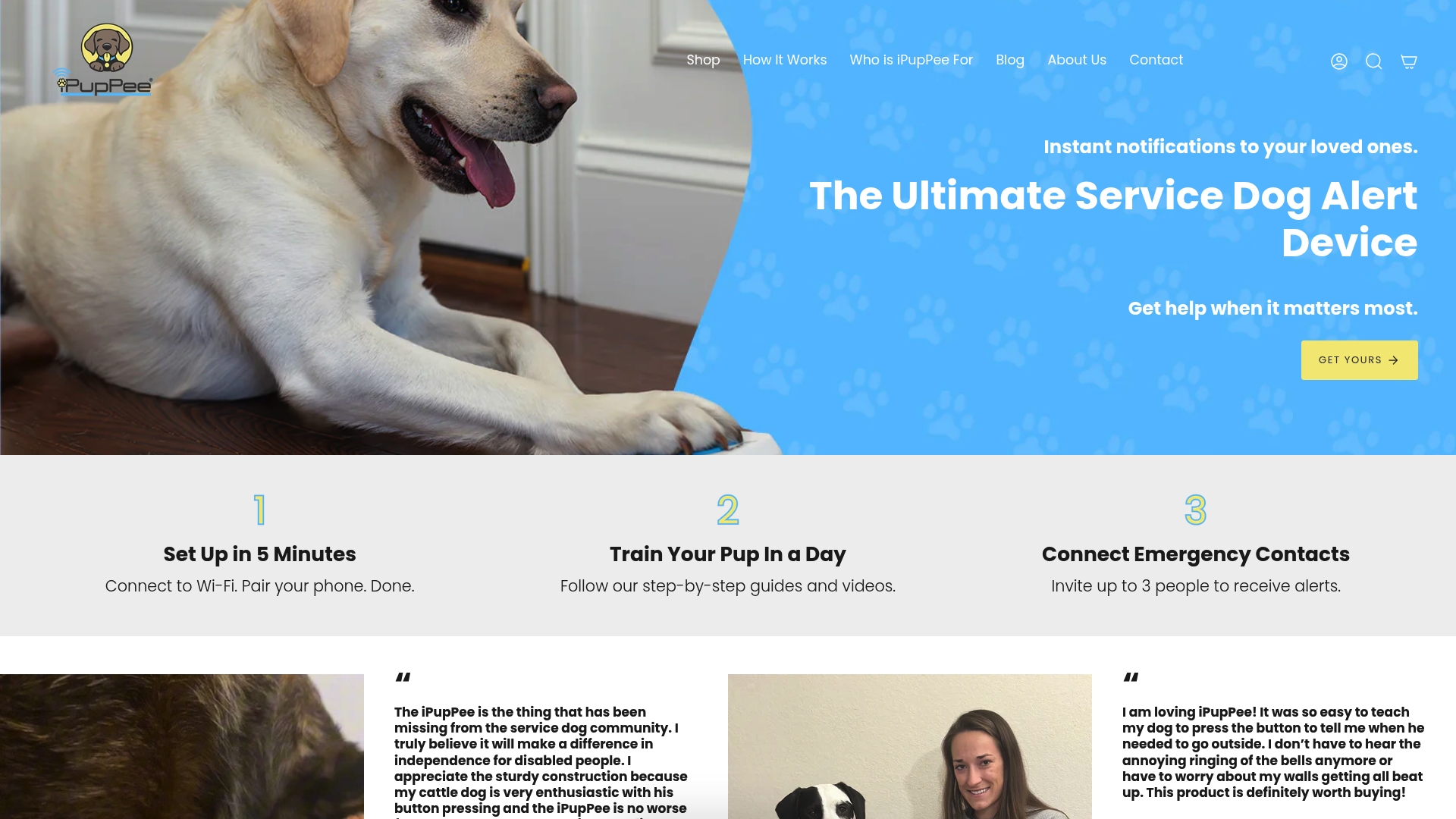
The iPupPee alert device gives dogs a way to communicate directly with their owners through a simple button press. For rescue dogs, seniors with pets, and disabled individuals living alone, that communication layer adds a real safety margin during the adjustment period. Ipuppee also publishes practical resources on dog communication for rescue and smart dog safety tech to help adopters and rescue organizations get the most from every placement. Visit Ipuppee to explore the full range of tools built for rescue-ready pet care.
FAQ
What is shelter management software?
Shelter management software is a digital platform that tracks animal intake, medical records, adoption status, and foster placements in one system. AnimalsFirst and PawMates Pro are current examples used by animal welfare organizations across the U.S.
How does AI improve pet adoption matching?
AI adoption matching analyzes behavioral profiles and adopter lifestyle data to recommend compatible placements. Platforms like PawPlacer add deterministic guardrails on top of AI scoring to block hard incompatibilities that raw similarity scores would miss.
Are smart collars and microchips worth it for rescue pets?
Yes. Programs like Fi Gives Back provide free GPS tracking devices and microchips to shelters, maintaining location continuity through rescue, foster, and adoption transitions. That continuity is most critical in the first weeks after adoption when escape risk is highest.
What does a no-kill shelter goal require technologically?
Reaching no-kill status requires connected data systems that share intake and adoption data across organizations, AI matching to reduce returns, and geo-aware transfer coordination to move animals to higher-demand regions. A 6% increase in shelter adoptions nationally would be sufficient to achieve no-kill outcomes.
How do rescue organizations protect adopter privacy in AI systems?
Privacy-first platforms like PawPlacer redact personally identifiable information before it enters AI processing pipelines and automatically disable certain features in GDPR-regulated regions. Shelters should request a data handling audit from any AI vendor before deployment.