

TL;DR:
- A pet emergency protocol prepares owners to act quickly during a crisis with your pet. Regular updates and practicing evacuation drills improve response times and reduce panic. Having a current, well-organized plan can mean the difference between life and death for your pet.
A pet emergency protocol is a structured plan that prepares you to act quickly and correctly when your pet faces a life-threatening crisis. Without one, panic takes over, and panic costs time. Time is the one resource you cannot recover in a veterinary emergency. This guide covers what a pet emergency protocol includes, how to build one, how to recognize when you need it, and how to keep it current as your pet’s life changes.
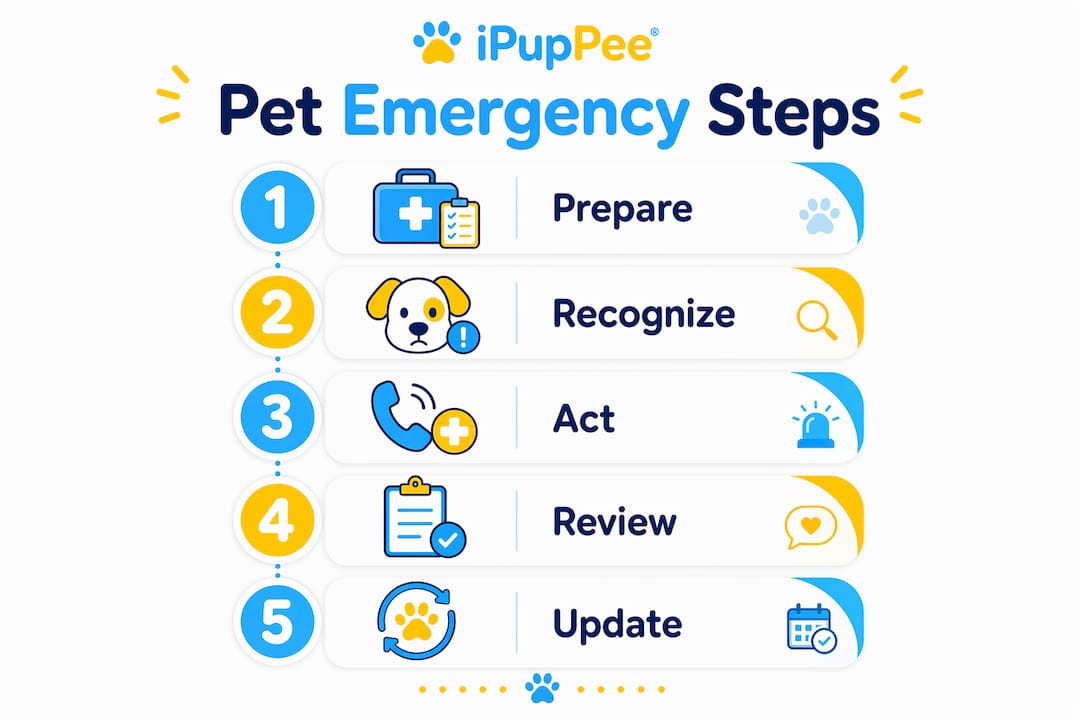
What is a pet emergency protocol and what does it include?
A pet emergency protocol is a documented set of actions, contacts, supplies, and procedures that you activate the moment your pet shows signs of a health crisis. Think of it as the pet equivalent of a household fire escape plan. The American Animal Hospital Association and veterinary emergency specialists agree that the protocol must cover identification, communication, supplies, and evacuation before a crisis ever happens.
The core components of a solid protocol are:
- Emergency contact list. Include your primary vet, the nearest 24-hour emergency clinic, and the ASPCA Animal Poison Control Center hotline. Store these in your phone and on paper.
- Pet identification and records. Microchip registration, a current collar tag, and a recent clear photo of your pet are non-negotiable. Keep vaccination records and medical history in a waterproof folder.
- Emergency supply kit. A well-stocked pet kit should include a 3–7 day supply of food and water, current medications with dosing instructions, and copies of all medical records.
- Evacuation plan. Identify at least two pet-friendly shelters or hotels along your evacuation route. Know which friends or family members can take your pet if you cannot.
- Backup caregiver. Designate a trusted person who has a key to your home, knows your pet’s routine, and can act on your behalf.
Pro Tip: Laminate your pet’s emergency contact sheet and attach one copy to the inside of your pet’s carrier and another to your refrigerator door. First responders are trained to check both locations.
Regular review matters as much as the initial setup. Update the kit every six months, check medication expiration dates, and confirm that your vet’s contact information is still current.

How can pet owners recognize emergency signs and act promptly?
Recognizing an emergency starts with knowing your pet’s normal baseline. Changes in eating, walking, or grooming can signal serious underlying problems before more obvious symptoms appear. A dog that normally greets you at the door but suddenly cannot stand up is showing you something is wrong, even if there is no visible wound.
The conditions that require immediate veterinary attention include:
- Severe trauma from a car accident, fall, or animal attack
- Uncontrolled bleeding that does not stop within two minutes of direct pressure
- Difficulty breathing, including labored breathing, blue-tinged gums, or open-mouth breathing in cats
- Seizures lasting more than two minutes or occurring in clusters
- Suspected poisoning from plants, medications, or household chemicals
- Heat stroke, especially after time in a hot car or during summer exercise
- Shock signs such as rapid heart rate, pale gums, and weak pulses
Shock is one of the most misread emergencies. Pale or white gums, a heart rate that feels too fast or too faint, and low blood pressure together indicate circulatory collapse. Treatment focuses on oxygen delivery, bleeding control, and intravenous fluids, none of which you can provide at home. Get to a clinic immediately.
Veterinary emergency medicine follows a clear priority order: airway, breathing, and circulation first. Therapeutic failures most often happen when owners or responders skip this sequence or delay acting. If your pet is unconscious and not breathing, a single rescuer should perform CPR at a 30:2 compression-to-ventilation ratio until professional help arrives.
One fact that surprises most pet owners: clinical conditions can worsen 24–48 hours after an incident, even when the pet initially appears stable. A dog that walks away from a car accident looking fine may develop internal bleeding or organ damage the next day. Always follow up with a vet after any significant trauma, even if your pet seems recovered.
Pro Tip: Learn to check your pet’s capillary refill time. Press your finger on your pet’s gum until it turns white, then release. Color should return within two seconds. A delay signals poor circulation and is a reason to call an emergency clinic right now.
What practical steps should owners take to prepare for emergencies?
Preparation is the difference between a controlled response and a chaotic one. A pre-established emergency plan reduces owner panic and improves decision-making when stress is highest. Pets depend entirely on you in a crisis, which makes your psychological readiness as important as your physical supplies.
Start with these concrete steps:
- Run evacuation drills. Walk your pet through the exit route at least twice a year. Practice loading your pet into the carrier calmly, not just during vet visits.
- Keep supplies accessible. Store your emergency kit near the front door or in your car, not in a basement storage room you cannot reach quickly.
- Designate a backup caregiver. Give this person a written copy of your pet’s medical history, feeding schedule, and behavioral notes. Verbal instructions are forgotten under stress.
- Adjust for your pet’s specific needs. Senior pets, animals with chronic conditions, and exotic species need customized supply lists and may require temperature-controlled transport.
- Integrate your pet plan into your family emergency plan. Assign one household member as the designated “pet lead” so roles are clear when everyone is moving fast.
- Maintain both hard-copy and digital records. Waterproofed hard-copy documentation is critical during disasters when power outages or signal loss make digital files inaccessible.
For owners of dogs with special communication needs or medical alert requirements, understanding dog emergency signals adds another layer of preparedness. Knowing how your dog communicates distress means you catch problems earlier.
Pro Tip: Take a 30-minute pet first aid course through the American Red Cross or a local veterinary school. Hands-on practice with bandaging and CPR technique is worth more than reading about it.
How to maintain and update your pet emergency protocol over time?
A protocol you built two years ago and never touched is not a protocol. It is a false sense of security. Effective emergency care for pets requires that your plan stays current with your pet’s health, your household, and your location.
Build these habits into your routine:
- Check supply expiration dates every six months. Food, medications, and even some first aid supplies have shelf lives. Rotate them the same way you rotate smoke detector batteries.
- Update medical records after every vet visit. A protocol with outdated vaccination records or an old medication list creates confusion at the emergency clinic.
- Re-evaluate your evacuation route annually. New construction, road changes, or a move to a new city can make your original plan useless.
- Practice carrier and leash comfort year-round. Training pets to stay calm with carriers and leashes outside of emergencies makes loading them during a real crisis far faster and safer.
- Involve every household member. A plan that only one person knows fails the moment that person is unavailable.
- Revise after life changes. A new pet, a new address, a new medical diagnosis, or a new family member all require a protocol review.
Pro Tip: Set a recurring calendar reminder every six months labeled “Pet Emergency Kit Review.” Treat it like a bill payment. It takes 20 minutes and could save your pet’s life.
Key Takeaways
A pet emergency protocol is the single most effective tool for protecting your pet’s life when seconds matter.
| Point | Details |
|---|---|
| Define your protocol now | A written plan with contacts, supplies, and evacuation routes prevents panic-driven mistakes. |
| Know the warning signs | Pale gums, weak pulses, seizures, and breathing difficulty all require immediate veterinary care. |
| Build and stock a kit | Keep a 3–7 day supply of food, water, medications, and waterproofed records ready at all times. |
| Practice regularly | Run evacuation drills, train your pet with carriers, and involve every household member. |
| Update every six months | Check expiration dates, refresh medical records, and revise the plan after any life change. |
Why preparedness is the real act of love for your pet
Most pet owners I talk to assume they will “figure it out” when something goes wrong. That assumption is the most dangerous thing in pet ownership. When your dog collapses or your cat stops breathing, your brain does not shift into calm, logical mode. It floods with adrenaline. Without a rehearsed plan, you freeze, you forget your vet’s number, and you waste the minutes that matter most.
The psychological benefit of having a written protocol is real and measurable. Owners with established plans think more clearly and act faster during high-stress situations. That is not a soft benefit. That is the difference between a pet that survives and one that does not.
The most common mistake I see is treating the emergency kit as a one-time project. Owners buy the supplies, feel good about it, and never touch the kit again. Three years later, the medications are expired, the vet’s phone number has changed, and the evacuation route goes through a road that no longer exists. A protocol is a living document, not a box you check.
Start small if the full plan feels like too much. Write down your vet’s number and the nearest emergency clinic. Put your pet’s medical records in one folder. That is your foundation. Build from there. The goal is not perfection on day one. The goal is having something real to act on when your pet needs you most.
— Andrew
Ipuppee’s resources for pet safety and emergency preparedness
Pet safety does not stop at a written plan. Ipuppee publishes practical, vet-informed guides that help you go deeper on every part of your emergency protocol, from building your first kit to understanding how your dog communicates distress.

The Ipuppee blog covers emergency response steps in plain language, with guidance built for real pet owners rather than veterinary professionals. Whether you are setting up your first protocol or refining one you already have, the Ipuppee resource library gives you the tools to act with confidence when your pet needs you most.
FAQ
What is a pet emergency protocol?
A pet emergency protocol is a written plan that includes emergency contacts, a supply kit, evacuation routes, and medical records so you can respond quickly and correctly during a pet health crisis.
What should go in a pet emergency kit?
A pet emergency kit should include a 3–7 day supply of food and water, current medications with instructions, vaccination records, a recent photo, and microchip information, all stored in a waterproof container.
How do I know if my pet is having an emergency?
Signs that require immediate veterinary care include uncontrolled bleeding, difficulty breathing, seizures, pale or white gums, weak pulses, suspected poisoning, and loss of consciousness.
What is the correct CPR ratio for pets?
For a single rescuer performing CPR on a dog or cat, the recommended compression-to-ventilation ratio is 30:2, continued until professional veterinary help is available.
How often should I update my pet emergency plan?
Review and update your pet emergency plan every six months, and revise it immediately after any significant life change such as a new pet, a move, or a change in your pet’s medical condition.