

TL;DR:
- Research confirms that contact with dogs releases oxytocin and reduces stress hormones, effectively countering loneliness. Owning a dog enhances life satisfaction, provides daily routines, and fosters social interactions, especially for solo individuals. However, over-reliance on pets as human substitutes and lack of preparedness can hinder long-term well-being benefits.
Loneliness can feel like a wall with no door. You might have a full schedule, a phone full of contacts, and still feel profoundly disconnected from the people around you. Research now confirms what many dog owners have suspected for years: oxytocin release during dog-human contact directly counters the biological markers of loneliness. But the story goes deeper than warm feelings. This guide walks you through the actual science, the real benefits, the risks of getting it wrong, and how to know if bringing a dog into your life is the right move for you.
Table of Contents
- How pets help loneliness: the science explained
- Top ways dogs ease loneliness and boost your well-being
- Therapy dogs and structured programs: what the research shows
- Are there limits? Mixed evidence and over-reliance risks
- What most people get wrong about pets and loneliness
- Ready to invite a dog into your life? Next steps
- Frequently asked questions
Key Takeaways
| Point | Details |
|---|---|
| Dogs create real bonds | Dogs, especially, use biochemical processes to build trust and connection, reducing feelings of isolation. |
| Well-being improves noticeably | Owning a pet boosts life satisfaction, especially for those living alone. |
| Therapy can fast-track relief | Therapy dog programs produce quick, measurable reductions in loneliness for many people. |
| Balance is crucial | Relying only on pets for emotional support can backfire—human connections still matter. |
How pets help loneliness: the science explained
Now that we’ve set the stage for how pets can help, it’s key to understand the underlying science that makes these relationships so effective, especially with dogs.
When you pet a dog or hold eye contact with one, your brain releases oxytocin, commonly called the bonding hormone. At the same time, your body reduces cortisol, which is the main stress hormone responsible for that tight, anxious feeling in your chest. Research confirms that dogs reduce loneliness through exactly these physiological mechanisms, lowering cortisol and raising oxytocin during simple interactions like petting and eye contact. This isn’t just emotional comfort. It’s chemistry.

But why do dogs specifically perform better here than other pets or even some human interactions? The answer is largely about consistency. A dog greets you the same way whether you’re in a great mood or a terrible one. That predictable, nonjudgmental presence creates a unique emotional safety net. It allows your nervous system to genuinely relax rather than stay alert for social cues.
The connection you build through bonding with your dog also reinforces your sense of being needed. Caring for another living creature activates reward pathways in your brain, similar to the satisfaction of a good friendship. In fact, dog training for emotional bonding has been shown to strengthen the human-dog relationship in ways that go well beyond basic obedience.
Here are the key ways pets directly address loneliness:
- Companionship: A physical, present being that responds to you
- Daily routine: Morning walks and feeding schedules provide structure
- Physical touch: Petting and cuddling reduce blood pressure and muscle tension
- Nonjudgmental presence: No social performance required, just showing up
- Sense of purpose: Being responsible for another creature counters feelings of worthlessness
The research on dogs reducing anxiety paints a clear picture: even short interactions with dogs measurably lower stress markers in a matter of minutes.
Pro Tip: Build short, mindful dog interaction routines into your day. Five minutes of intentional eye contact and petting in the morning isn’t just good for bonding. It actively resets your stress hormones before the day even starts.
Top ways dogs ease loneliness and boost your well-being
Understanding the science behind a dog’s impact lays the groundwork. Next, let’s focus on concrete ways dogs can fit into your life to address loneliness and boost well-being.
One of the most striking findings in recent research is just how much pet ownership moves the needle on life satisfaction. Pet ownership increases life satisfaction by 3 to 4 points on a 1 to 7 scale, an improvement researchers equate to significant annual financial gains, largely by reducing loneliness. That’s not a marginal change. That’s a measurable shift in how you experience your day-to-day life.
For people living alone, the effect is even more pronounced. Solo pet owners report lower loneliness than people living alone without pets, and loneliness itself appears to mediate much of the well-being boost that comes from owning an animal. In simpler terms, the dog doesn’t just make you feel better directly. It makes you feel less alone, and feeling less alone makes nearly everything better.
“Pet ownership significantly reduces loneliness, particularly for those living solo, and this reduction in loneliness is a key mechanism driving improvements in overall life satisfaction and mental well-being.”
Here’s what that looks like in practice on an average day:
- Social icebreaker: Dogs are natural conversation starters. Strangers approach you at the park, on the sidewalk, in the elevator. Each of these micro-interactions chips away at isolation without requiring you to “put yourself out there” in a high-pressure way.
- Structured routine: Feeding times, walks, and play sessions give your day a rhythm. Routine is a powerful antidepressant in its own right because it reduces decision fatigue and creates forward momentum.
- Sense of purpose: Knowing that a living being depends on you is one of the most grounding feelings available. It makes getting out of bed feel necessary rather than optional.
- Increased physical activity: Daily walks get you moving, and physical activity directly elevates mood through endorphin release. It’s a compound benefit.
The pet ownership benefits extend well beyond the emotional. Improved pet ownership quality of life scores show up in cardiovascular health, sleep quality, and self-reported happiness. These aren’t soft metrics. They’re tracked in longitudinal studies across thousands of participants.
Pro Tip: Seek out group dog walks or local dog meetups in your area. The social multiplier effect is real. You’ll start recognizing faces, sharing stories, and building the kind of low-key community connections that are incredibly effective at fighting isolation.
Therapy dogs and structured programs: what the research shows
While everyday dog ownership creates steady benefits, some approaches use structured therapy, offering a useful perspective for those curious about measurable results.
Randomized controlled trials (RCTs, the gold standard of research design) show that therapy dog interventions reduce loneliness significantly more than human-only visits or standard care. This has been studied in psychiatric inpatients, older adults in care facilities, and community settings. The results are consistent: dogs deliver a uniquely powerful emotional signal that humans, even well-meaning, trained caregivers, simply cannot replicate in the same way.
What’s especially interesting is that these benefits apply to both dog owners and people who have never owned a pet. You don’t need a prior attachment to animals for a therapy dog interaction to move your emotional dial. That tells us something important. The mechanism isn’t nostalgia or prior bonding. It’s something more primal and immediate.
| Intervention type | Loneliness reduction | Evidence level |
|---|---|---|
| Therapy dog visit | Significant reduction | RCT (high quality) |
| Human-only visit | Modest reduction | RCT comparison |
| Usual care (no visit) | Minimal to no change | RCT control |
| Personal dog ownership | Moderate, sustained reduction | Longitudinal studies |
The dog ownership benefits that show up in structured clinical settings point to something important for everyday life too: the quality and intentionality of dog interaction matters as much as simply having a dog. A dog you engage with daily in meaningful ways will deliver far more benefit than one that lives primarily in the backyard.
Structured programs also demonstrate that even brief interventions, sometimes as short as 20 to 30 minutes, can shift loneliness scores measurably. For people considering pet ownership, this is encouraging. You don’t need years of shared history to start feeling the difference.
Are there limits? Mixed evidence and over-reliance risks
While the evidence for dogs countering loneliness is strong, it’s important to address situations where companionship isn’t enough, or could even backfire, especially for those most vulnerable.
Not all loneliness is the same. Situational loneliness, the kind that comes from a recent move or job change, responds well to pet companionship. But chronic loneliness rooted in deeper attachment issues or social anxiety may not resolve through a dog alone. In fact, some studies find no universal pet effect on loneliness, noting that benefits may not persist long-term or apply uniformly across all populations, particularly during periods of high stress.
The more serious concern is what researchers call interpersonal substitution. This is when a person begins relying on their pet as a replacement for human relationships rather than a bridge to them. The data here is surprisingly clear. Over-reliance on pets as human substitutes actually increases loneliness and lowers well-being over time. The very thing you’re using to cope can deepen the problem if it’s used to avoid human connection entirely.
Here are the key risks to watch for:
- Emotional dependency: Feeling unable to cope with any separation from the pet
- Social withdrawal: Using the pet as a reason to skip human gatherings or relationships
- Unmet expectations: Expecting a dog to fill emotional gaps only humans can fill, such as deep conversation or shared memory
- Grief vulnerability: Over-investment means pet loss can trigger severe, prolonged grief
| Benefit | Potential drawback if over-relied on |
|---|---|
| Constant companionship | Can discourage seeking human connection |
| Routine and structure | Can become rigid or anxiety-provoking |
| Physical touch and comfort | May reduce motivation for human physical affection |
| Nonjudgmental presence | Can normalize avoiding social vulnerability |
| Sense of purpose | May become the only source of purpose |
The innovative pet support solutions that work best treat the dog as one part of a broader support system, not the whole system. That framing keeps the relationship healthy and sustainable for both you and your dog.
What most people get wrong about pets and loneliness
Given the evidence on both benefits and limits, it’s time for a nuanced take on what actually works, and what doesn’t, when it comes to pets and loneliness.
Here’s the uncomfortable truth most articles skip: getting a dog because you’re lonely is not the same as being ready to get a dog. People who approach pet ownership primarily as a solution to a personal problem often struggle. They’re asking the dog to do a job it was never designed to do on its own.
The individuals who benefit most from dog ownership are those who enter it with what researchers call secure attachment. They want a genuine relationship with an animal. They’re prepared for the demands, the costs, the difficult days when the dog gets sick or chews the furniture. Research confirms that benefits are strongest with secure attachments, and that the ability to care for a dog well, both practically and emotionally, is a prerequisite for those benefits to materialize.
“A dog is a bridge to a fuller life, not the destination. When you treat pet ownership as a partnership rather than a prescription, everything works better, for you and the dog.”
That framing matters enormously. A dog can get you out of the house, start conversations with strangers, give your day structure, and make you feel deeply valued. But it works best when it’s pulling you toward life, not becoming the substitute for it.
The guide on independent living with pets makes this point well: the practical side of pet ownership, safety, communication, routines, is just as important as the emotional side. You need to be ready for both.
Ask yourself honestly: Do you have the time, space, and financial stability a dog needs? Are you prepared to build routines around another creature’s schedule? Are you looking for a companion to share your life with, or are you hoping a dog will fix a problem that actually requires human support too? If you can answer those questions honestly, you’re already approaching this the right way.
Ready to invite a dog into your life? Next steps
If everything you’ve just read resonates, you’re in the right place. The evidence is strong, the benefits are real, and with the right mindset and preparation, a dog can genuinely transform your daily experience of connection and well-being.
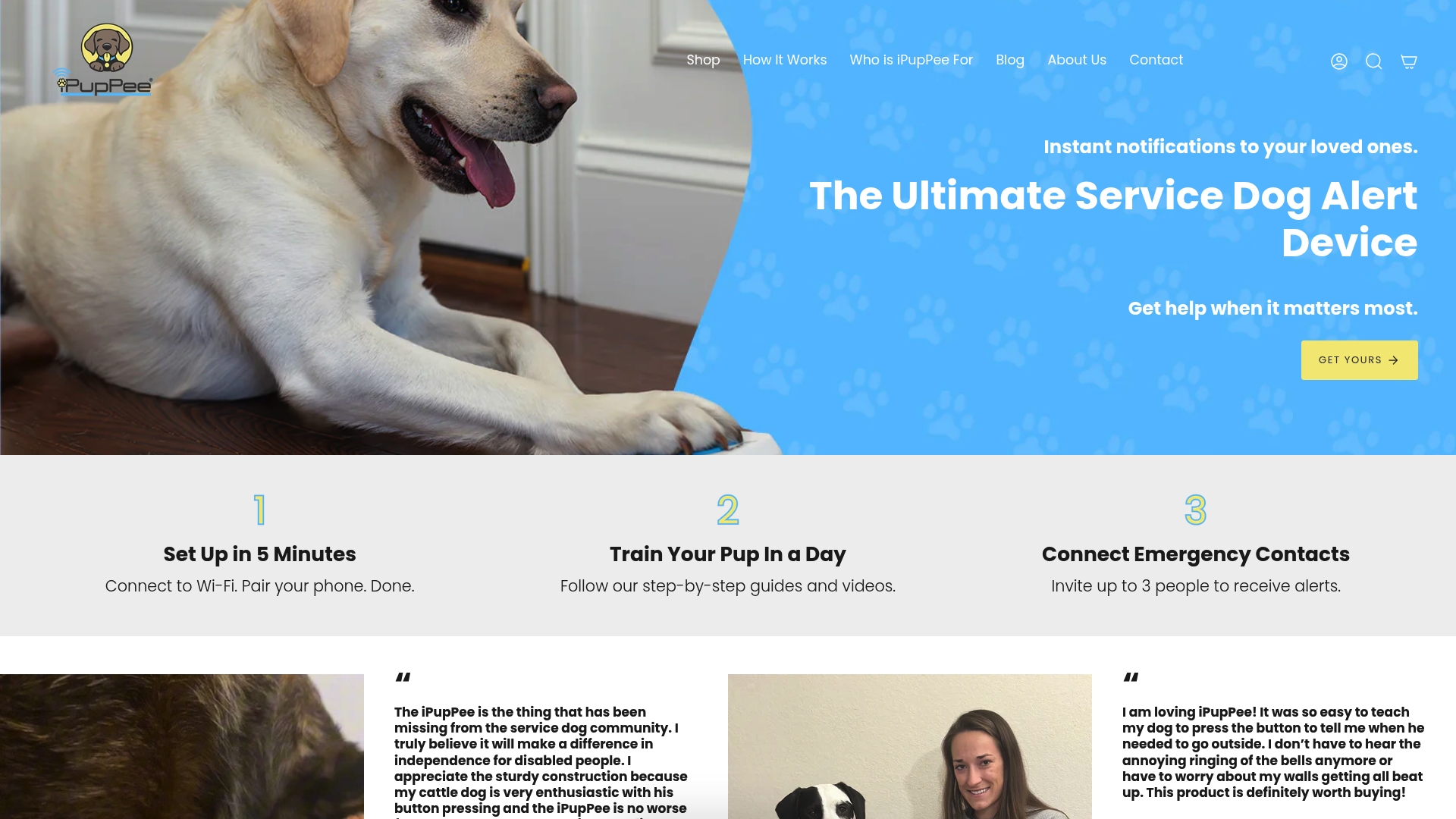
At iPupPee, we support dog owners at every stage, from first-time adopters figuring out routines to experienced owners looking for smarter ways to communicate with their dogs and stay safe. Our blog is packed with practical resources, and our flagship device helps dogs signal their needs clearly, a feature that matters especially for people living alone or with limited mobility. Explore learn more about pets and quality of life to understand exactly what research-backed dog ownership can look like in your daily life, and what tools can make the journey smoother from day one.
Frequently asked questions
Do all pets reduce loneliness equally?
No. Research shows dogs offer stronger benefits for reducing loneliness than other pets. One meta-analysis on pet ownership found dogs were associated with lower depression risk while cat ownership was not, suggesting the interactive, responsive nature of dogs plays a key role.
How quickly can owning a pet help with loneliness?
Therapy dog interventions show measurable improvements in loneliness after a single session, while building a personal bond with your own dog typically takes several weeks to months before the full emotional benefit becomes consistent.
Is pet ownership a replacement for human friendship?
No. Pets are best understood as a supplement to your emotional support network. Over-relying on pets as substitutes for human relationships has been shown to increase loneliness over time, not reduce it.
What should I consider before adopting a dog for loneliness?
Assess your living situation, daily schedule, financial readiness, and emotional expectations honestly. The strongest benefits come to people who enter pet ownership seeking a genuine partnership, not just a solution to isolation.
Recommended
- How to Bond With Dogs: Proven Ways for Lasting Connection – iPupPee
- Dog-Owner Connectivity: How Tech Strengthens Your Bond – iPupPee
- Why Pets Improve Quality of Life for Owners – iPupPee
- How Dogs Reduce Anxiety – Real Support and Science – iPupPee
- How Veterinarians Guide a Healthy Dog Adoption Journey – greenfield