

TL;DR:
- Senior dogs, defined as those aged 7 and older, require proactive health management and home safety adjustments to enhance their quality of life. Regular veterinary checkups every six months, age-appropriate nutrition, and low-impact daily exercise are crucial to address age-related conditions. Prioritizing non-slip flooring and gradual routine transitions can significantly improve mobility, comfort, and longevity for aging dogs.
Senior dogs are defined as dogs aged 7 years and older, and they require a fundamentally different care approach than younger pets. The best dog care tips for seniors center on proactive health management, safe home modifications, age-appropriate nutrition, and gentle daily exercise. Organizations like the American Animal Hospital Association (AAHA), PetMD, and Sploot Vets all confirm that small, consistent adjustments to your dog’s routine can dramatically extend both lifespan and quality of life. This guide delivers those adjustments in plain, practical terms for seniors and caregivers who want to do right by their aging companions.
1. Essential veterinary checkups for senior dogs
The single most important dog care tip for seniors is scheduling vet visits twice per year once your dog turns 7. AAHA and dvm360 recommend exams every six months for pets in this age group. Six months is a long time in a senior dog’s life. Age-related changes can develop and progress significantly within that window, which is exactly why annual visits are no longer enough.
Each senior wellness exam should cover a specific set of screenings. Liberty Veterinary Hospital lists these as the core components:
- Complete blood count (CBC)
- Chemistry panel to assess organ function
- Urinalysis for kidney and bladder health
- Blood pressure measurement
- Thyroid hormone testing
- Dental examination
What makes these screenings especially valuable is that many serious diseases in older dogs, including kidney disease, heart conditions, and hypertension, progress silently without obvious symptoms. Catching them early gives you and your vet time to act before your dog is in real discomfort. Consistent lab data over time is also more informative than a single snapshot, so keeping records from every visit helps your vet spot trends.
Pro Tip: Ask your vet to create a printed health summary after each visit. Tracking weight, blood pressure, and lab values across appointments makes it far easier to notice gradual changes.
2. How to adjust nutrition and diet for an aging dog
Senior dogs have different metabolic needs than younger dogs, and the right food makes a measurable difference in energy, joint health, and digestion. Start by choosing a commercial dog food that carries an AAFCO (Association of American Feed Control Officials) nutritional adequacy statement for “adult maintenance” or “all life stages.” This label confirms the food meets minimum nutritional standards.
Key nutrients to prioritize in a senior dog’s diet include:
- Protein: Supports muscle mass, which naturally declines with age
- Omega-3 fatty acids: Reduce joint inflammation and support brain health
- Fiber: Aids digestion and helps manage weight
- Antioxidants: Vitamins E and C help counter cellular aging
Glucosamine and chondroitin supplements are widely used for joint support in older dogs. Check with your vet before adding any supplement, since some interact with medications. When switching foods, PetMD recommends a gradual transition over about one week, mixing increasing amounts of the new food with the old. This prevents the digestive upset that a sudden switch almost always causes in sensitive senior stomachs.
Pro Tip: Avoid changing food, supplements, and medications at the same time. Changing one variable at a time lets you isolate the cause if your dog has a reaction, instead of guessing which change triggered it.
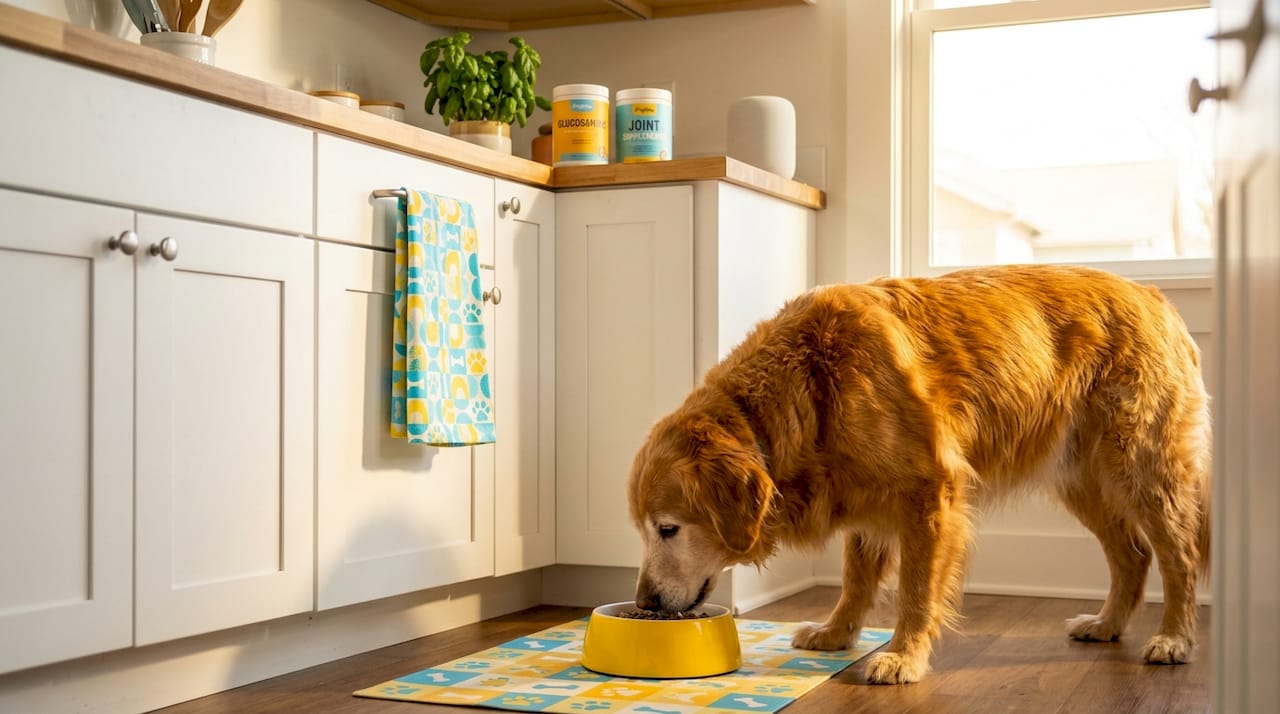
Also avoid high-sodium treats, foods with artificial preservatives, and table scraps high in fat. These can worsen conditions like kidney disease and pancreatitis that are common in older dogs.
3. Home safety modifications that protect senior dogs
Slipping is not just inconvenient for an arthritic dog. PetCareLab explains that slipping causes pain and fear, which leads to reduced activity, which accelerates muscle loss, which worsens arthritis. Breaking that cycle starts with your floors.
Home care for senior dog arthritis is most effective when you prioritize traction first, ramps second, and warmth and exercise third. Here is a practical comparison of the most common home adaptations:
| Modification | Best for | Cost range |
|---|---|---|
| Runner rugs or yoga mats | Hardwood and tile floors | Low |
| Foam interlocking tiles | Large open areas | Low to moderate |
| Dog ramps | Furniture and car access | Moderate |
| Orthopedic dog bed | Joint pressure relief | Moderate |
| Toe grips or booties | Dogs with severe traction loss | Low |
The most overlooked detail in senior dog home care is continuity. Implement a continuous traction path from your dog’s sleeping area to their food bowl, water bowl, and the door they use to go outside. Test this path before spending money on larger renovations. Many owners discover that a few strategically placed rugs solve 80% of their dog’s mobility struggles.
Watch for subtle warning signs that your current setup is failing your dog. Toe scuffing on smooth floors, hesitation at doorway thresholds, and a noticeably wide stance are early indicators of traction or pain problems, not simply “getting old.” Catching these signs early gives you the chance to adapt before your dog develops a fear of moving around the house.
Pro Tip: Place a non-slip bath mat directly in front of your dog’s water bowl. Wet paws on tile are a leading cause of slipping incidents in senior dogs.
4. Exercise and grooming routines for older dogs
Exercise remains important for senior dogs, but the approach changes significantly. Sploot Vets recommends 30 to 60 minutes of daily activity divided into shorter sessions rather than one long walk. Two or three 15-minute walks spread across the day are far gentler on aging joints than a single 45-minute outing. Low-impact activities like leash walks on grass, gentle fetch, and swimming are ideal.
Signs that you have pushed your dog too hard include excessive panting after activity ends, limping that appears hours later, or reluctance to move the following morning. If you notice any of these, shorten the next session and consult your vet. The goal is consistent, comfortable movement, not athletic performance.
Grooming is equally important and often underestimated as a health tool. Sploot Vets advises brushing senior dogs one to three times per week and using veterinary-approved dental treats to reduce periodontal disease risk. Periodontal disease in older dogs is linked to heart and kidney complications, so dental hygiene is not cosmetic. It is clinical.
For dogs with arthritis, grooming sessions may need to be shorter and done with your dog lying down rather than standing. Keep nail trims frequent since overgrown nails force dogs to shift their weight awkwardly, which strains joints and worsens mobility. Mental stimulation through scent games, puzzle feeders, or simple training exercises also helps keep senior dogs engaged without physical strain. Cognitive decline is real in aging dogs, and regular mental activity slows its progression.
Key takeaways
Effective senior dog care requires twice-yearly vet visits, traction-focused home modifications, age-appropriate nutrition, and consistent low-impact exercise to maintain comfort and longevity.
| Point | Details |
|---|---|
| Twice-yearly vet exams | Schedule checkups every six months from age 7 to catch silent disease progression early. |
| Traction before anything else | Lay non-slip rugs from bed to food, water, and exit points before investing in other modifications. |
| Gradual diet transitions | Switch foods over one week to prevent digestive upset and isolate any adverse reactions. |
| Low-impact daily exercise | Split 30 to 60 minutes of activity into shorter sessions to protect joints without causing soreness. |
| Dental care is clinical | Brush or use vet-approved dental treats weekly to reduce risk of heart and kidney complications. |
What I’ve learned from years of watching seniors care for aging dogs
The advice in most senior dog care guides is technically correct but practically incomplete. Telling someone to “schedule twice-yearly vet visits” without addressing the anxiety of getting a stiff 70-pound dog into a car, or the cost of two full senior wellness panels per year, misses the real challenge. The caregivers I respect most are the ones who build systems, not intentions.
What I have found actually works is starting with the floor. Not the vet schedule, not the food, not the supplements. The floor. When a senior dog stops slipping, their whole personality changes. They move more, they rest better, and they stop flinching when they stand up. That single change, a few runner rugs and a yoga mat by the water bowl, often does more for a dog’s daily comfort than any supplement protocol.
I also think the “change one thing at a time” rule from PetMD is one of the most underrated pieces of advice in senior pet health. Caregivers often want to fix everything at once, which is completely understandable. But when you change food, add glucosamine, and start a new medication in the same week and your dog develops diarrhea, you have no idea what caused it. Patience here is not passive. It is diagnostic.
The other thing I would tell any senior or caregiver directly: your dog does not need a perfect routine. They need a consistent one. Short walks at the same time each day, meals at predictable hours, and a warm spot to sleep that they can reach without jumping. Consistency reduces anxiety in aging dogs, and reduced anxiety means less cortisol, less inflammation, and better sleep. That is not sentiment. That is physiology.
— Andrew
How Ipuppee supports seniors and their dogs
Caring for an aging dog is easier when you have the right tools and information in one place. Ipuppee was built with seniors and caregivers in mind, offering products and resources designed to improve safety, communication, and daily comfort for older dogs and their owners.

The Ipuppee blog covers senior pet safety in depth, from traction solutions to mobility aids, with practical guides written for real caregivers. If you are looking for arthritis relief options or want to explore the full range of products designed to keep aging dogs comfortable and safe, visit ipuppee.com to see what fits your dog’s needs and your daily routine.
FAQ
What age is a dog considered senior?
Dogs are generally considered senior at age 7, though larger breeds may reach senior status closer to age 5 or 6. AAHA recommends twice-yearly wellness exams starting at this threshold.
How often should a senior dog see the vet?
Senior dogs should visit the vet every six months. This frequency allows early detection of conditions like kidney disease, hypertension, and thyroid disorders that often show no visible symptoms in early stages.
What foods should senior dogs avoid?
Senior dogs should avoid high-sodium treats, fatty table scraps, and foods with artificial preservatives. These can worsen kidney disease, pancreatitis, and other conditions common in older dogs.
How much exercise does a senior dog need daily?
Sploot Vets recommends 30 to 60 minutes of low-impact activity per day, divided into two or three shorter sessions. Shorter, more frequent walks protect joints better than a single long outing.
What is the first home change to make for an arthritic senior dog?
The first priority is traction. Lay non-slip rugs or foam tiles along the path your dog travels most, from their bed to their food, water, and exit door, before making any other modifications.