

TL;DR:
- Assistance dogs provide life-changing physical, emotional, and cognitive support beyond technology alone.
- Combining dogs with smart devices creates a reliable, nuanced safety and communication system.
- Responsible service dog use requires commitment, proper training, ethical care, and understanding limitations.
Most people assume that independence for seniors and individuals with disabilities comes down to the right wheelchair, the right app, or the right home modification. That assumption sells short one of the most powerful living aids available: a well-trained dog. Assistance dogs act as caregivers, not just companions, reading emotional states, anticipating physical needs, and responding to situations no smartphone can fully handle. When you combine that natural ability with today’s emerging technology, the result is a level of daily support that genuinely changes lives.
Table of Contents
- Why dogs are uniquely suited as daily living aids
- Types of support: Tasks, emotional, and cognitive benefits
- How service dogs and tech devices work together
- Limits and ethics: What to consider before relying on a service dog
- Our perspective: What most people and even tech still miss about service dogs
- Looking for support? Begin your journey
- Frequently asked questions
Key Takeaways
| Point | Details |
|---|---|
| Dogs enable independence | Well-trained dogs help with daily tasks and boost emotional confidence for seniors and people with disabilities. |
| Tech enhances safety | Devices like sensor collars and haptic vests empower dogs and handlers for improved emergency alerts and communication. |
| Ethical care is vital | Balancing a dog’s well-being is necessary for sustainable, safe daily support. |
| Tasks are highly customizable | Service dogs are trained to assist in ways that match their handler’s lifestyle and personal needs. |
| Dogs offer what tech can’t | Empathy, non-verbal understanding, and comfort from dogs remain irreplaceable by machines alone. |
Why dogs are uniquely suited as daily living aids
With the misconception addressed, let’s look at why dogs occupy a unique role as daily living aids.
Dogs are not simply well-behaved pets with a few extra skills. They are trained professionals in the truest sense. Service dogs perform tasks that cover mobility assistance, alerting to medical events like seizures or drops in blood sugar, and even psychiatric support for conditions like PTSD and anxiety disorders. These are not tricks. These are life-saving functions carried out consistently, day after day, in real environments.
What separates a dog from a device is adaptability. A fall detection sensor on your wrist can alert a call center. A service dog can brace your body before you fall, guide you to a chair, and stay close until you feel stable. That is a fundamentally different kind of support. Assistance dogs enhance independence and emotional well-being in ways that technology simply cannot replicate on its own.
Here is a quick breakdown of what makes dogs uniquely effective:
- Physical tasks: Retrieving dropped items, opening and closing doors, turning light switches on and off, pulling wheelchairs up ramps
- Medical alerts: Detecting seizures, diabetic episodes, or cardiac events before symptoms become visible
- Emotional grounding: Providing pressure therapy during panic attacks, reducing cortisol levels through physical contact
- Social facilitation: Helping handlers engage more confidently in public spaces and social settings
- Proactive observation: Noticing changes in gait, breathing, or behavior and responding before a crisis develops
“The bond between a handler and their service dog is built on trust, repetition, and mutual understanding. It’s not a tool you pick up and put down. It’s a relationship that grows stronger over time.” — Experienced service dog trainer
Pro Tip: If you are considering a service dog for yourself or a loved one, look for programs that allow handler involvement during training. Dogs that bond with their handler during the training process tend to perform more reliably in real-world situations.
Exploring dogs and disability independence further can help you understand the full scope of what these animals make possible for people living with physical and cognitive challenges.
Types of support: Tasks, emotional, and cognitive benefits
Now that we’ve established why dogs are essential, let’s break down the concrete types of assistance they provide.
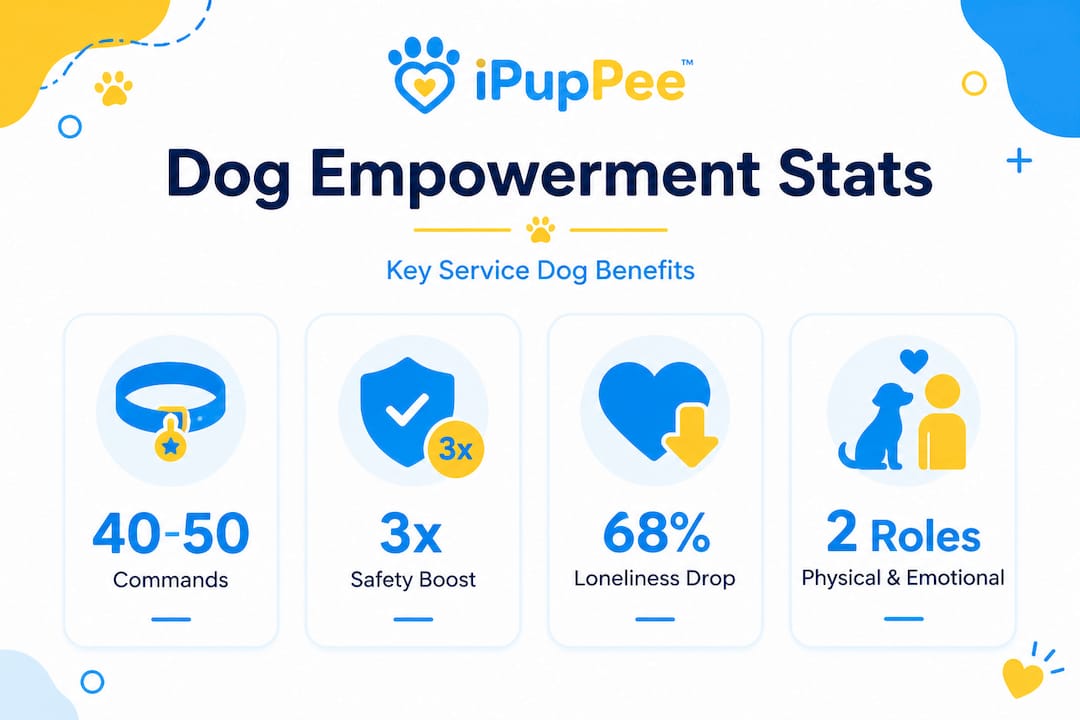
Service dogs cover a remarkable range of functions. A trained dog can execute 40 to 50 commands, spanning everything from basic mobility support to nuanced safety tasks. That breadth is important because daily life is not predictable. A person with multiple sclerosis might need balance support in the morning, item retrieval in the afternoon, and emotional grounding during a stressful phone call in the evening. One dog can address all three.
| Support Type | Examples | Who Benefits Most |
|---|---|---|
| Physical | Balance, door opening, item retrieval | Seniors, mobility-impaired individuals |
| Medical alert | Seizure detection, diabetic alerts | Epilepsy, diabetes patients |
| Emotional | Anxiety reduction, PTSD grounding | Veterans, trauma survivors |
| Cognitive | Routine reminders, wandering prevention | Dementia, Alzheimer’s patients |
| Social | Confidence in public, reduced isolation | Seniors living alone, those with social anxiety |
The emotional and cognitive categories deserve special attention because they are often overlooked. Assistance dogs reduce PTSD symptoms meaningfully through focused therapy programs, providing a sense of routine, safety, and unconditional presence that medication alone rarely achieves. For veterans or trauma survivors, a dog that wakes them from nightmares or creates a physical buffer in crowded spaces is not a luxury. It is a clinical tool.
For people living with dementia, dogs serve a different but equally important role. They can be trained to guide a person back to a safe area when wandering begins, alert a caregiver through a button or device, and provide the kind of calm, consistent presence that reduces agitation. Technology can track location. A dog can redirect behavior gently and without alarm.
Key emotional and cognitive benefits include:
- Reduced feelings of loneliness and social isolation
- Lower anxiety levels through routine physical contact
- Improved sleep quality due to nighttime alerting and calming behaviors
- Stronger sense of purpose and daily structure
- Increased motivation to stay active and engaged
Understanding how dogs help senior independence goes beyond reading a list. The real impact shows up in the daily moments: the morning when a dog retrieves a phone that slipped under the bed, or the afternoon when it senses rising distress and presses close before a panic attack peaks.
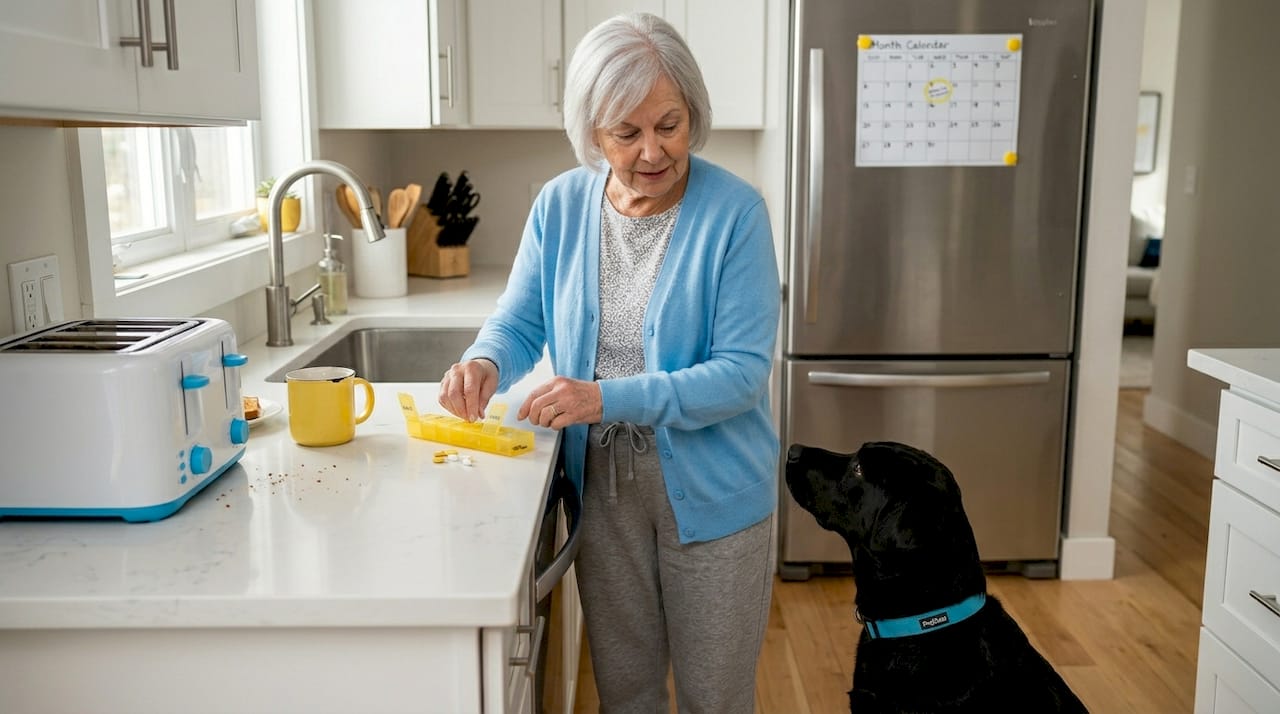
The ways dogs impact safety are both measurable and deeply personal, which is exactly why they remain irreplaceable in the daily living toolkit.
How service dogs and tech devices work together
While dogs can do a lot on their own, advances in tech are expanding their abilities. Let’s see how these innovations work together for even stronger daily living support.
The most exciting development in service dog support right now is not choosing between a dog and a device. It is using both together intelligently. IMU sensor collars and haptic vests allow dogs to send alerts and receive commands with reliability rates exceeding 90 percent. That means when your dog performs a trained alert spin indicating a seizure, a connected collar can simultaneously notify your emergency contact, log the event, and confirm the alert was genuine.
Here is how these tools compare:
| Tool | Function | Benefit |
|---|---|---|
| IMU sensor collar | Detects trained alert behaviors | Accuracy up to 92.4%, automatic emergency notification |
| Haptic vest | Delivers vibration cues to the dog | Silent communication for privacy and safety |
| Machine learning software | Validates alert patterns over time | Personalized, reduces false alarms |
| Button communication device | Dog presses to signal a need | Simple, reliable, no tech expertise required |
Steps to integrate tech tools into your daily routine with a service dog:
- Start with one device. Introduce a single piece of technology at a time so your dog can adjust without confusion.
- Use positive reinforcement. Reward your dog for interacting correctly with any new collar, vest, or button device.
- Test in low-stress environments first. Practice alert sequences at home before relying on them in public.
- Involve your trainer. Any tech integration should be reviewed by your service dog trainer to ensure it does not interfere with existing trained behaviors.
- Monitor your dog’s comfort. Watch for signs of stress or discomfort when wearing new devices, and consult your vet if needed.
Dogs’ ability to interpret non-verbal cues and anticipate needs makes them active caregivers in ways machines cannot replicate. Technology does not replace that. It amplifies it. A button device that lets your dog signal when you need help, paired with your dog’s own trained instincts, creates a two-layer safety net that is far more reliable than either alone.
Pro Tip: If you are exploring dog communication tech options, look for devices that are simple enough for both you and your dog to use without frustration. The best tools are the ones that get used consistently, not the ones with the most features.
Limits and ethics: What to consider before relying on a service dog
With so many benefits, it is important to acknowledge the limits and responsibilities that come with using dogs as daily living aids.
A service dog is not the right solution for every person or every situation. Not everyone can or should rely on an assistance dog due to the care demands involved, the handler’s own behavior patterns, and the welfare needs of the dog itself. This is an honest reality that deserves direct discussion.
Before committing to a service dog, consider the following:
- Time commitment: Training, daily exercise, grooming, and veterinary care require consistent time and energy.
- Financial cost: Professionally trained service dogs can cost between $15,000 and $30,000. Ongoing care adds to that figure annually.
- Living situation: Your home environment must be suitable for a dog, including space, safety, and the absence of allergens that affect others in the household.
- Handler behavior: Dogs respond to calm, consistent handling. If stress, unpredictability, or physical limitations make handling difficult, the dog’s performance may suffer.
- Dog welfare: A service dog must have downtime, play, and the ability to express its own needs. Overworking a dog is both unethical and counterproductive.
“A service dog’s welfare is not secondary to its job. A dog that is stressed, undertrained, or poorly cared for cannot perform reliably. The handler’s wellbeing and the dog’s wellbeing are inseparable.” — Assistance dog welfare advocate
Force-free training methods are the gold standard. Dogs trained through punishment-based methods may comply in controlled settings but often show increased stress and reduced reliability in real-world situations. When evaluating a program, ask directly about the training philosophy and observe how trainers interact with the animals.
Early behavioral challenges are not always disqualifying. Some dogs that struggle initially respond well to tailored training adjustments. Others may genuinely not be suited for service work, and recognizing that early protects both the dog and the handler.
Resources like dog training tips for seniors and dog-friendly senior living tips can help you think through whether your current living situation and daily routine are a realistic match for a service dog partnership.
Our perspective: What most people and even tech still miss about service dogs
After weighing the pros and cons, here is our candid view, refined by real experience and deep industry knowledge.
The conversation around service dogs and technology tends to drift toward one of two extremes. Either people romanticize the dog as a magical solution, or they get excited about sensor collars and machine learning and start treating the dog as a biological component in a tech system. Both miss the point.
Dogs act as proactive caregivers, perceiving human emotion and adapting in real time. That is not a feature you can replicate with an algorithm. The dog that notices your breathing has changed before you realize you are anxious, or that presses against your leg during a difficult phone call, is doing something that no sensor has yet learned to do with the same nuance and warmth.
The hard-won lesson from years of working in this space is this: the most effective support comes from respecting each dog as an individual. A dog that is treated as a machine will eventually behave like one, performing tasks mechanically without the attentiveness that makes service dogs genuinely life-changing. The handler-dog relationship requires investment, patience, and genuine care flowing in both directions.
There is also a real risk in over-automating. When handlers rely too heavily on tech alerts and stop reading their dog’s natural signals, they weaken the bond that makes the partnership work. The collar should support your awareness of your dog, not replace it.
The future we believe in is not dog versus machine. It is thoughtful integration that keeps the canine-human bond at the center. Technology should make it easier for you to understand your dog, not harder. Devices that let your dog communicate a need, like a simple button press, honor that relationship. They give your dog a voice without replacing its instincts.
If you are thinking seriously about what can dogs provide independence means for your specific situation, start by asking what kind of support you need most and whether you are ready to meet a dog’s needs in return. That honest self-assessment is where every successful partnership begins.
Looking for support? Begin your journey
If you’re ready for the next step toward greater independence, here’s where to start.
At iPuppee, we believe that every person who could benefit from a service dog or a dog communication device deserves clear, practical information and tools that actually work. Whether you are a senior living alone, a caregiver supporting a loved one with a disability, or a handler looking to strengthen your dog’s ability to communicate, you do not have to figure it out alone.
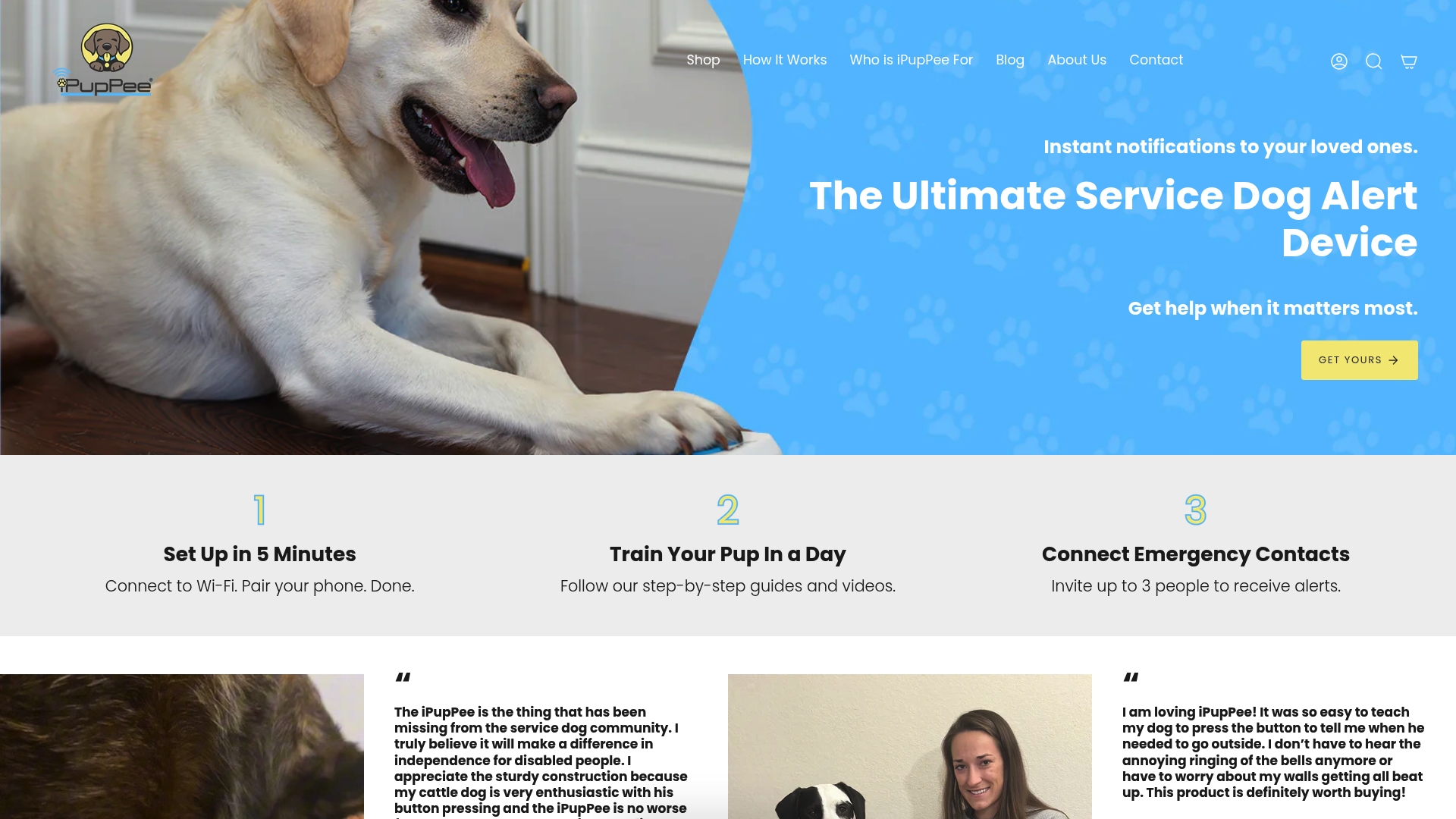
Our resources, guides, and innovative communication devices are designed with real handlers in mind. The iPuppee alert device gives your dog a simple, reliable way to signal when you need help, bridging the gap between canine instinct and human safety. Explore service dog resources on our site to find training guides, product information, and community support that can help you build a safer, more independent daily life. The journey toward greater independence starts with one informed step, and we are here to help you take it.
Frequently asked questions
What are the main daily tasks service dogs can perform for seniors with disabilities?
Service dogs can retrieve objects, open and close doors, provide balance support, alert to medical events, and remind medication schedules. Service dogs perform tasks covering mobility, medical alerting, and psychiatric support under ADA guidelines.
How do tech devices like sensor collars help service dogs?
Tech like IMU sensor collars detect trained alert behaviors and boost the reliability and safety of service dog alerts for emergencies. IMU sensor collars achieve accuracy up to 92.4% for trained alert behaviors, making emergency notifications far more dependable.
Are service dogs suitable for everyone needing assistance?
Not everyone is suited for a service dog, as they require dedicated training, ongoing care, and handler commitment. Assistance dog welfare risks include care demands and handler behavior patterns that must be honestly assessed before committing.
What emotional or mental health benefits do assistance dogs provide?
Assistance dogs reduce PTSD symptoms and lessen loneliness, offering routine, grounding, and emotional stability. Assistance dogs reduce PTSD symptoms through structured therapy programs that improve overall quality of life.
Do dogs need special training to work with tech aids?
Yes, dogs require specific training to use devices like sensor collars or haptic vests so they can respond effectively and safely. Programs that train dogs as caregivers incorporate structured device introduction alongside core service tasks.
Recommended
- Dogs and Disability Independence: Enhancing Daily Life – iPupPee
- Understanding How Service Dogs Assist Seniors – iPupPee
- 7 Ways Dogs Impact Lives for Safety and Independence – iPupPee
- How Dogs Help Seniors: Health, Happiness, and Independence 2025 – iPupPee
- How Nutrition Helps Senior Dog Immune Health