

Over three million American adults rely on service dogs to help them live more independently every day. For people with disabilities, the difference between managing on their own and constant dependence can come down to the skills of a well-trained animal. Service dogs open doors to education, careers, and social experiences that might otherwise remain out of reach. This guide explains how these remarkable animals transform disability independence and highlights the unique advantages they bring.
Table of Contents
- Defining Dogs And Disability Independence
- Service Dog Types And Key Distinctions
- Training, Communication, And Daily Benefits
- Legal Rights And Owner Responsibilities
- Common Challenges And Safety Innovations
Key Takeaways
| Point | Details |
|---|---|
| Service Dogs Enhance Independence | Service dogs significantly improve the independence of individuals with disabilities by assisting with daily tasks and mobility. |
| Distinction Among Support Animals | There are clear legal and functional differences between service dogs, therapy dogs, and emotional support animals that affect access rights. |
| Legal Protections and Responsibilities | Service dog handlers must understand their legal rights and responsibilities to ensure proper access and care for their service animals. |
| Innovations in Disability Assistance | Technological advancements are emerging to complement traditional service dogs, aimed at enhancing mobility and safety for individuals with disabilities. |
Defining Dogs and Disability Independence
Service dogs represent far more than traditional companion animals - they are highly specialized partners providing critical support for individuals with disabilities. Research demonstrates that service dogs significantly enhance independence by assisting with daily tasks and improving mobility, transforming how people with disabilities navigate their personal and professional worlds.
These remarkable animals undergo extensive training to perform specific tasks tailored to their handler’s unique needs. Whether helping someone with physical mobility challenges, providing psychiatric support, or offering sensory assistance, service dogs are carefully selected and trained to become adaptive support systems. Employment research confirms their profound impact, recognizing service dogs as reasonable accommodations that help individuals with disabilities gain and maintain professional opportunities.
Disability independence through service dogs encompasses multiple dimensions beyond physical assistance. These dogs provide emotional support, increase confidence, reduce isolation, and create opportunities for social interaction. By mitigating barriers and offering practical help, service dogs empower individuals to pursue education, careers, and personal goals with greater autonomy and dignity.
Pro Tip: Before obtaining a service dog, thoroughly research specific training requirements, legal protections, and potential support organizations to ensure the best match for your individual needs.
Service Dog Types and Key Distinctions
Service dogs represent a specialized category of working animals with distinct legal and functional classifications. Critically, service dogs differ from other support animals through their specific task-based training designed to mitigate an individual’s disability, creating a unique support relationship that goes far beyond typical animal companionship.
Three primary categories of support animals emerge in contemporary disability assistance: service dogs, therapy dogs, and emotional support animals. Research indicates clear distinctions between these roles, with service dogs undergoing extensive training to perform precise tasks for individuals with disabilities, while therapy dogs provide comfort in settings like hospitals, and emotional support animals offer companionship without specialized task training.
The legal and functional differences between these animal types are significant. Service dogs possess broad access rights, can accompany their handlers in public spaces, and are protected under disability accommodation laws. Therapy and emotional support animals, by contrast, have more limited access and do not receive the same legal protections. This distinction stems from their specialized training and direct role in supporting an individual’s specific disability-related needs.

Here’s a summary comparing types of support animals and their primary roles:
| Animal Type | Primary Role | Training Required | Legal Public Access |
|---|---|---|---|
| Service Dog | Performs specific disability tasks | Extensive, task-specific | Broad (most public places) |
| Therapy Dog | Provides comfort in institutions | Moderate, for behavior | Limited (institutions only) |
| Emotional Support Animal | Offers companionship and emotional support | Minimal, general behavior | Limited (housing, not public) |
Pro Tip: When considering a support animal, consult disability support organizations to understand the precise legal classifications and training requirements for different types of assistance animals.
Training, Communication, and Daily Benefits
Service dogs undergo intensive training to develop specialized skills that transform daily functioning for individuals with disabilities. These remarkable animals learn complex task sequences that directly support their handler’s unique needs, ranging from mobility assistance to medical alert responses, creating a profound partnership that extends far beyond traditional pet relationships.

The communication between service dogs and their handlers represents a sophisticated language of trust and precise coordination. Through rigorous training, these dogs learn to interpret subtle physical cues, recognize medical warning signs, and respond with remarkable accuracy. Their presence can significantly enhance professional opportunities by reducing workplace barriers, supporting travel to work, and minimizing employment-related challenges.
Daily benefits of service dog partnerships extend across multiple life domains. These animals provide physical support, emotional stability, increased social interaction, and a sense of independence that dramatically improves quality of life. They act as adaptive assistants, problem solvers, and compassionate companions who enable their handlers to navigate complex environments with greater confidence and autonomy.
Pro Tip: Create a consistent daily training routine that reinforces your service dog’s skills and strengthens your mutual communication, focusing on positive reinforcement and mutual trust.
Legal Rights and Owner Responsibilities
Service dogs are protected under specific legal frameworks that define their unique status and access rights in public spaces. These legal protections distinguish service animals from pets, ensuring individuals with disabilities can navigate society with greater independence and access to essential spaces such as restaurants, stores, workplaces, and public transportation.
Disability accommodation laws establish clear guidelines for service dog handlers. These regulations mandate that service dogs be permitted in most public areas, with only rare exceptions for strict health and safety concerns. Academic institutions, in particular, have specific protocols ensuring service animals can accompany students in classroom and campus environments, provided the animal remains under control and does not disrupt the educational setting.
Owner responsibilities are equally critical in maintaining these legal protections. Service dog handlers must ensure their animals are well-trained, behave appropriately in public, remain focused on their assistance tasks, and do not create safety risks or disruptions. This includes managing the dog’s behavior, maintaining proper hygiene, providing necessary veterinary care, and understanding the nuanced legal boundaries of service animal access.
Pro Tip: Always carry documentation about your service dog’s training and certification, which can help quickly resolve any potential access disputes in public spaces.
Common Challenges and Safety Innovations
The development of advanced mobility assistance technologies presents complex challenges in creating reliable support systems for individuals with disabilities. Traditional service dog models are increasingly complemented by innovative technological solutions that aim to address limitations in navigation, safety, and independent movement.
Technological innovations are transforming disability assistance through sophisticated approaches to mobility and navigation. Emerging research explores robotic guide dog prototypes that can potentially enhance autonomy for visually impaired individuals by integrating advanced gait controllers and intelligent navigation behaviors. These innovations focus on designing human-centered technologies that can adapt to complex environmental challenges while maintaining user trust and safety.
Key safety challenges include developing systems that can accurately interpret dynamic environments, respond to unexpected obstacles, and provide seamless, intuitive assistance. The goal is not to replace traditional service dogs but to create complementary technologies that expand independence options. This requires intricate design considerations around user experience, technological reliability, and the nuanced emotional connections that define assistance relationships.
Below is a comparison of traditional service dogs and new robotic mobility technologies:
| Attribute | Service Dogs | Robotic Assistance Technologies |
|---|---|---|
| Source of Support | Living, trained animal | Artificial intelligence, hardware |
| Emotional Bond | Strong, empathetic | Limited, technology-mediated |
| Adaptability | Highly responsive to handler | Dependent on programming and sensors |
| Maintenance Needs | Food, exercise, medical care | Charging, technical repairs |
Pro Tip: When exploring assistive technologies, prioritize solutions that offer personalized customization and maintain the emotional connection fundamental to effective disability support.
Enhance Independence and Safety with iPupPee
Living with a service dog offers incredible support but communication challenges can limit the full potential of your partnership. This article highlights how service dogs enhance independence through specialized training and daily assistance tasks. However, key obstacles remain in ensuring clear, timely communication especially for handlers managing mobility or sensory disabilities. Addressing these challenges can boost confidence, safety, and autonomy for both handler and dog.
Experience the benefits of seamless communication with the innovative iPupPee device, designed specifically to bridge this gap. This simple alert system empowers service dog handlers to send clear signals through an easy-to-use button press, enhancing your dog’s ability to respond promptly to your needs. The device supports critical safety and independence improvements for disabled individuals, seniors, and pet owners alike.
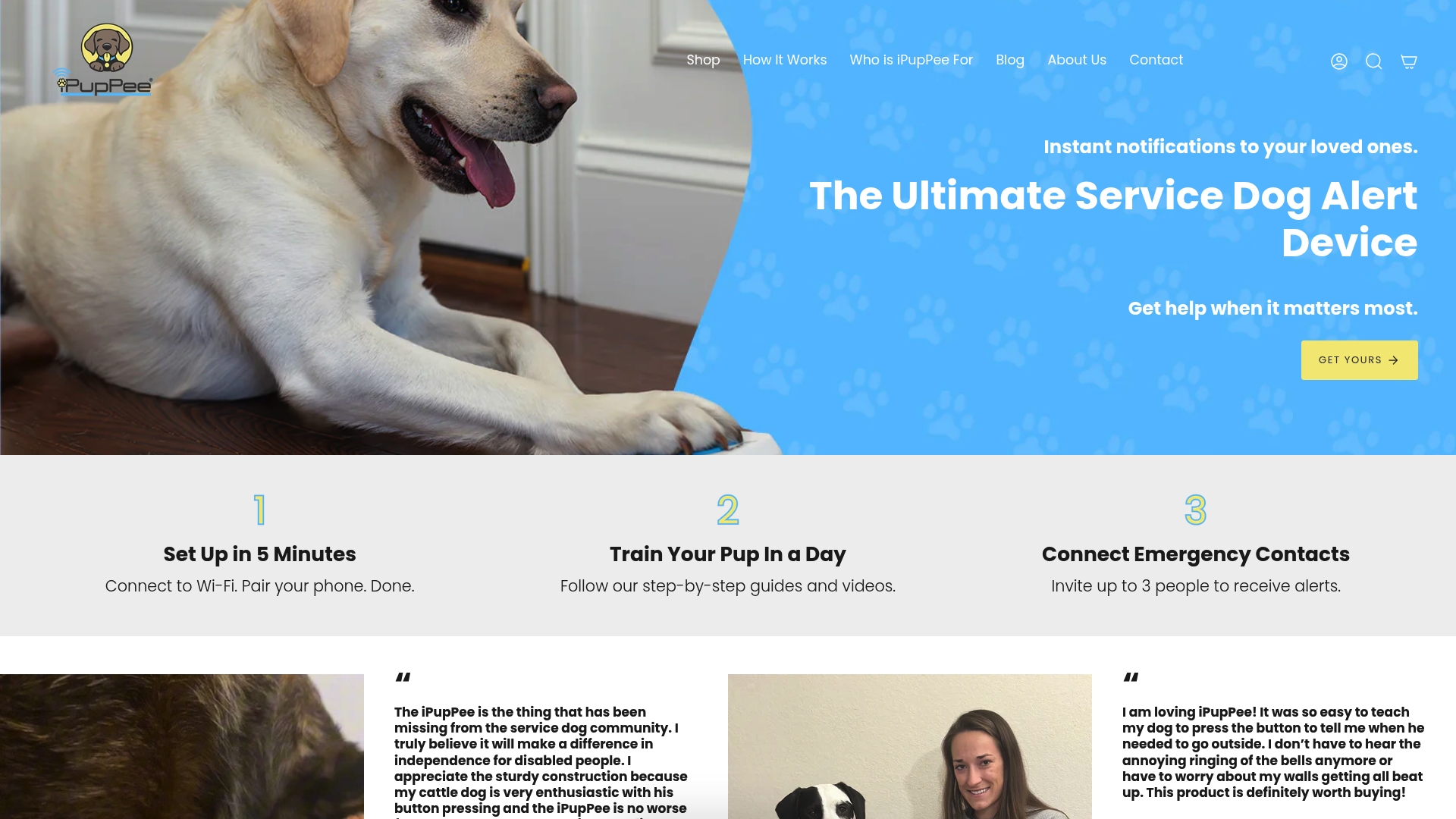
Take control of your daily life and strengthen the unique bond with your service dog today. Visit iPupPee.com to discover how this technology complements specialized dog training and boosts your autonomy. Explore training tips, customer testimonials, and shop now to enhance your service dog’s effectiveness and your personal freedom.
Frequently Asked Questions
What are the primary roles of service dogs in enhancing independence for individuals with disabilities?
Service dogs are trained to perform specific tasks that assist individuals with disabilities, thereby enhancing their independence. These tasks can include mobility support, medical alert responses, and psychiatric assistance, allowing handlers to navigate personal and professional environments more effectively.
How do service dogs differ from therapy dogs and emotional support animals?
Service dogs are trained to perform specific tasks for individuals with disabilities and have broad access rights under disability laws. Therapy dogs provide comfort in institutional settings, while emotional support animals offer companionship without specialized training. This distinction is crucial for understanding their roles and legal protections.
What legal rights do service dog handlers have in public spaces?
Service dog handlers have the right to take their trained service animals into most public areas, including restaurants and workplaces, due to disability accommodation laws. These laws protect the rights of individuals with disabilities and ensure their access to essential services while accompanied by their service dogs.
What responsibilities do service dog owners have regarding their animals?
Service dog owners are responsible for ensuring their dogs are well-trained, behave appropriately in public, maintain good hygiene, and do not create safety risks. They should also carry documentation of the dog’s training and certification to resolve any potential access disputes quickly.