

Staying safe and independent at home becomes much harder when you face health challenges or mobility issues. Even simple daily risks, unexpected emergencies, or feelings of loneliness can seem overwhelming without the right support. Your service dog can make all the difference, offering more than comfort—they have skills that directly improve your safety, confidence, and daily well-being.
Get ready to discover how properly trained dogs not only provide timely alert behaviors that increase your safety but also serve as reliable communication tools and support systems. Each insight on this list is designed to help you use your dog’s training for real, practical results that protect your health and boost your independence. The tips ahead will show you exactly how your service dog can transform both your safety and quality of life at home.
Table of Contents
- 1. Increasing Daily Safety Through Alert Behaviors
- 2. Building Independence With Reliable Communication Tools
- 3. Reducing Loneliness and Emotional Stress Every Day
- 4. Improving Emergency Response for Disabled Individuals
- 5. Supporting Mobility and Physical Assistance at Home
- 6. Enhancing Home Security With Trained Dog Alerts
- 7. Boosting Confidence and Social Interaction for Seniors
Quick Summary
| Takeaway | Explanation |
|---|---|
| 1. Train Your Dog for Alert Behaviors | Specific trained signals can warn you of health and safety issues before they escalate. |
| 2. Establish Reliable Communication Tools | Clear signals empower independence by ensuring your dog responds effectively to your needs. |
| 3. Foster Emotional Connections Through Companionship | Daily interactions with your dog can significantly reduce loneliness and stress levels. |
| 4. Prepare Your Dog for Emergency Situations | Proper training allows your dog to assist you and communicate with emergency responders efficiently. |
| 5. Enhance Home Security with Alert Training | Train your dog to detect unusual activities, providing an effective layer of home security. |
1. Increasing Daily Safety Through Alert Behaviors
Your service dog’s ability to alert you to potential dangers is one of the most powerful safety features you can have at home. Alert behaviors are specific trained responses your dog uses to communicate when something requires your immediate attention, whether that’s an oncoming health event, an environmental hazard, or a change in your surroundings. These alerts function as an early warning system that gives you precious seconds or minutes to prepare, seek help, or take preventive action before a situation becomes critical.
Research shows that trained alert behaviors can significantly increase daily safety for individuals with health vulnerabilities by detecting changes such as oncoming seizures or hazardous situations. When your dog recognizes specific patterns in your body, movement, or behavior, they communicate this through focused attention, pawing, whining, or other distinctive signals you’ve trained them to perform. This direct communication creates a bridge between your dog’s sensory abilities and your need for timely warnings. The power of these alerts lies in their consistency and reliability. Unlike technology that might fail or require charging, your dog is always present and always monitoring, making them an invaluable layer of protection in your daily life. For seniors living alone or disabled individuals managing multiple health conditions, these alert behaviors can mean the difference between a managed situation and a medical emergency.
The practical benefit extends beyond just recognizing problems. When your dog alerts you, you gain control over your response. You can call for help proactively, move to a safe location, take medication, or notify family members before something serious occurs. This transforms you from a passive participant in your own safety to an active decision maker. Some of the most effective alert behaviors are simple but powerful: a specific bark pattern for blood sugar drops, persistent paw contact for balance loss, or jumping to get your attention during certain health episodes. The key is training your dog to recognize consistent patterns and respond with behaviors you can reliably interpret. Your dog learns through repetition what signals they need to watch for, and you learn to respond immediately to their communication. This partnership creates a safety net woven from trust, training, and your dog’s natural desire to protect you.
Pro tip Work with your service dog handler to establish clear, distinct alert behaviors for different situations so you can respond appropriately without confusion.
2. Building Independence With Reliable Communication Tools
When you rely on your service dog for safety and support, communication becomes everything. Your ability to understand what your dog needs and your dog’s ability to understand what you need creates a partnership that extends far beyond companionship. Reliable communication tools transform this partnership into a practical system that gives you genuine independence in your daily life, whether you’re managing a medical condition, navigating mobility challenges, or simply trying to maintain control over your own schedule and decisions.
Service dogs provide reliable communication through trained responses that help handlers with disabilities engage more fully in social and work environments. Your dog learns to respond consistently to your commands, signals, and needs, creating a predictable pattern you can depend on. This reliability is crucial because it means you’re not guessing whether your dog will respond when you need them most. Consider a scenario where you need your dog to alert you to a visitor at the door, remind you to take medication at specific times, or signal when your balance is becoming unstable. Each of these scenarios depends on your dog understanding what you’re asking and communicating back that they’ve understood. The research on human-dog communication systems shows that dogs interpret emotional states and commands with remarkable accuracy, which means your dog isn’t just following orders but actively engaging with your needs. This two-way communication means you can rely on your dog as a genuine tool for independence rather than treating them as a pet you must manage around.
What makes communication tools so powerful is how they translate into real freedom. When your dog reliably alerts you to danger, reminds you of tasks, or provides physical support, you no longer need constant supervision from family members or caregivers. You can spend time alone without fear. You can pursue work, hobbies, or social activities because you trust your dog will communicate with you if something changes. You become the decision maker rather than someone waiting to be told what’s happening. The key is investing time in training these communication patterns until they become automatic for both you and your dog. Clear, consistent signals work better than complicated commands. Your dog learns faster when the communication is straightforward and the rewards are immediate. Some handlers use visual signals, others rely on sounds or physical cues. The best approach is whatever allows you and your dog to understand each other quickly and reliably in any situation you might encounter at home or in the community.
Pro tip Establish three to five core communication signals and practice them daily until both you and your dog can perform them without thinking, creating rock solid reliability when you need it most.
3. Reducing Loneliness and Emotional Stress Every Day
Loneliness and stress can feel overwhelming when you spend significant time at home or have limited mobility to engage with others. Your service dog changes this dynamic completely by providing a constant, non-judgmental presence that combats isolation at its core. Unlike human interaction, which requires energy and planning, your dog’s companionship is immediate and always available. Simply having your dog nearby during difficult moments creates a buffer against the emotional weight of loneliness. Your dog doesn’t care if you’re having a bad day, if you look different today, or if you’re struggling with your emotions. That unconditional presence is remarkably powerful for your mental health.
The biological impact of dog companionship goes deeper than feeling less alone. When you interact with your service dog, your body experiences measurable changes that reduce stress and improve your overall wellness. Dog companionship can reduce cortisol levels, lower blood pressure, and enhance mood through their attentive presence and the physical contact you share. Petting your dog triggers the release of calming hormones, which means even simple moments like brushing your dog’s coat or sitting with your hand on their back provide genuine stress relief. For seniors and disabled individuals managing chronic health conditions, this daily stress reduction can significantly improve quality of life and even support better physical healing. Your dog becomes a living stress management tool that works 24 hours a day. Beyond the physical benefits, your dog’s presence encourages social interaction. When you’re with your service dog in public or even when friends and family visit, your dog naturally creates conversation and connection. People respond positively to service dogs, which often makes social situations feel less intimidating and more natural. This social facilitation helps combat the isolation that can become dangerous for your mental and physical health.
The practical reality is that your service dog fills emotional gaps that loneliness creates. On days when leaving home feels impossible, your dog is there. During nights when anxiety peaks, your dog’s calm breathing and physical presence ground you. When grief or depression settles in, you have a reason to get up, move around, and engage in basic self care. Your dog needs feeding, walking, and attention, which means you maintain routine and structure even on your hardest days. This simple anchor to daily responsibility becomes a lifeline that keeps you connected to purpose and movement. The emotional bond you share with your dog also provides meaning and identity. You’re not just someone with disabilities or health challenges. You’re a dog owner, a handler, a caregiver for another living being who depends on you. That role shift can transform how you see yourself and your place in the world.
Pro tip Create intentional bonding time with your dog each day, whether through grooming, training practice, or quiet sitting together, to maximize both stress relief and emotional connection.
4. Improving Emergency Response for Disabled Individuals
Emergencies don’t pause for disabilities or health limitations. When crisis strikes, your ability to get help quickly and effectively can mean the difference between a manageable situation and a life threatening one. Your service dog becomes a critical asset during emergencies, functioning as a communication bridge between you and first responders while also providing physical assistance when you need it most. A well trained dog can alert emergency personnel to your location, help you move to safety, or fetch communication devices when you cannot move independently. This capability fundamentally changes how emergency responders can assist you and ensures your specific needs receive attention during chaotic situations.
Emergency response systems are increasingly recognizing the role service dogs play in supporting disabled individuals during crises. Service dogs assist disabled persons in emergencies by helping responders understand their handlers’ specific needs and improving communication when standard methods fail. Consider a scenario where you experience a medical event at home but cannot reach the phone. Your dog might retrieve a communication device, alert neighbors through barking, or guide responders to you if doors are unlocked. For individuals with hearing disabilities, a trained dog can respond to emergency alerts and communicate danger through physical cues. For people with mobility limitations, a dog can provide stability during evacuation or alert responders to your location in a multi room home. The key is that your dog extends your ability to respond to danger when your disability limits your options. First responders also benefit from understanding your dog’s role. When emergency personnel know your dog is trained to assist you, they can work with your dog as a partner rather than seeing the dog as an obstacle. This cooperation creates faster, more effective emergency response.
Preparing for emergencies with your service dog requires specific planning that goes beyond standard disaster preparation. Make sure emergency contacts know about your dog and their role in your safety plan. Provide first responders in your area with information about your dog’s training and how they can work together with your dog during emergencies. Keep identification on your dog at all times, including information about your contact details and medical needs. Practice emergency scenarios with your dog so they understand what to do when danger occurs. Some handlers teach their dogs to bark on command to alert neighbors, to fetch phones or alert devices, or to move toward exits during fires. Your dog should be comfortable with emergency personnel so they don’t become defensive or frightened when responders arrive. Create a written emergency plan that includes your dog’s care, your dog’s role in your emergency response, and instructions for any responders who might assist you. The investment in this preparation pays dividends by ensuring that when emergencies happen, you and your dog can work together to get help quickly and safely.
Pro tip Create a laminated card for your wallet listing your dog’s training alerts, emergency contacts, and your medical needs, so first responders immediately understand how your dog can help during crises.
5. Supporting Mobility and Physical Assistance at Home
Moving through your home should feel manageable and safe, but when mobility challenges limit your independence, even simple tasks become sources of stress and worry. Your service dog transforms physical limitations by providing tangible support that helps you maintain independence within your own space. A trained mobility assistance dog becomes an extension of your body, offering stability when you stand, helping you maintain balance during movement, and retrieving items you cannot reach without assistance. This physical support is not just convenient. It fundamentally changes your ability to live alone, care for yourself, and avoid falls or injuries that could require hospitalization or force you into institutional care.
Service dogs provide physical assistance for daily mobility tasks by offering stability, retrieving items, and assisting with balance, which enables greater independence within your home environment. Imagine struggling to rise from your bed in the morning. Your dog can brace their body against you, providing the leverage and stability you need to stand safely. When you need to reach something on a high shelf or pick up something from the floor, your trained dog retrieves it without you needing to risk a fall or strain. When walking through your home, your dog’s harness or vest provides something solid to hold onto, dramatically reducing your fall risk. These practical tasks might seem simple, but they prevent the cascade of problems that follow a serious fall. Falls are not just painful. They can trigger health crises, force you into rehabilitation facilities, or eliminate your ability to live independently. Your dog’s physical assistance prevents these scenarios by keeping you safe and functional at home.
The beauty of mobility assistance is that your dog learns to respond to your specific needs. Some handlers need help with balance every time they walk. Others need assistance primarily during mornings or when fatigue increases. Your dog adapts to your patterns and provides support exactly when you need it. Training a mobility assistance dog requires teaching them to maintain position as you move, to brace firmly without shifting their weight, and to retrieve specific items on command. The bond that develops through this physical interaction is remarkable. Your dog becomes attuned to your body’s signals, often anticipating when you might lose balance before you feel it happening. This intuitive support creates a safety partnership that works seamlessly during your daily routine. At night, your dog sleeps near you, able to respond if you need assistance getting to the bathroom or moving around your bedroom. During daytime, your dog moves with you through your home, always ready to provide the support you need. This constant availability means you can engage in daily activities with confidence rather than fear.
Pro tip Practice mobility tasks daily with your dog to maintain their responsiveness and ensure they can provide consistent support when your energy levels vary throughout the day.
6. Enhancing Home Security With Trained Dog Alerts
Your home should be your safest space, a place where you feel secure and protected. When you live alone or have limited mobility, ensuring your home security becomes complicated because you cannot always monitor doors and windows or respond quickly to unexpected visitors. Your service dog becomes a living security system that operates 24 hours a day, detecting threats you might miss and alerting you to activity that requires your attention. A well trained dog can recognize the difference between familiar visitors and strangers, alert you to someone approaching your door, and respond to sounds that indicate potential danger. This trained alertness transforms your dog into a security partner that works tirelessly to keep you safe within your own home.
Your dog’s heightened senses and natural instincts provide security advantages that electronic systems cannot match. Dogs detect unusual activity through trained alert behaviors that serve as an early warning system for households. Your dog hears someone approaching your door long before you would, giving you time to prepare, verify who is there, or decide not to answer. A trained dog recognizes the sound of car doors in your driveway and alerts you to vehicles you do not recognize. Your dog learns the difference between normal neighborhood sounds and sounds that indicate danger, such as windows breaking or someone trying a door handle. This discrimination is critical because your dog provides alerts only when something genuinely unusual occurs, meaning you can trust their warning. Your dog’s sense of smell allows them to detect unfamiliar people approaching your home before they even knock. Dogs naturally want to protect their territory and their handlers, so alert training harnesses this natural instinct into reliable security responses. Some handlers train their dogs to bark on command to deter intruders or to move toward windows to alert to activity outside. Others teach their dogs specific signals for different types of alerts, such as pawing for someone at the door versus whining for unusual sounds.
Practical home security with your dog means establishing clear routines and training that your dog understands. Your dog needs to know the regular patterns of your home life, who typically visits, and what times deliveries arrive. When your dog learns these patterns, they can alert you to deviations. Someone arriving at an unusual hour gets your dog’s attention. A package delivery at a time you do not expect triggers an alert. This consistency means your dog becomes more effective at security over time as they understand your household rhythms. Your dog also serves as a visible deterrent. Many people avoid homes where alert dogs are present because they recognize the security risk. Your dog’s protective behavior and alert responses signal to potential intruders that entering your home would be difficult and dangerous. The combination of genuine security function and psychological deterrence makes your dog one of the most effective home security tools available. You can combine your dog’s alerts with other security measures like locks, cameras, and lighting to create a comprehensive home security system that keeps you safe and independent.
Pro tip Teach your dog distinct alert behaviors for different security situations, such as specific barks for door visitors versus window alerts, so you immediately understand what requires your attention.
7. Boosting Confidence and Social Interaction for Seniors
Retirement and aging can bring unexpected isolation. Days blur together when you spend most of your time at home, and the social connections that once filled your calendar gradually fade. Your service dog changes this reality by creating a bridge to community and connection that rebuilds your confidence and reengages you with the world around you. Having a dog gives you a reason to get outside, move your body, and interact with people in your neighborhood. Strangers stop to talk about your dog, neighbors recognize you on daily walks, and your dog becomes a conversation starter that transforms you from an isolated person at home into a valued community member. This social engagement does far more than make your days feel fuller. It actually improves your physical and mental health in measurable ways.
Your dog serves as a social catalyst that encourages engagement and reduces the loneliness that can seriously damage senior health. When you walk with your service dog, people naturally approach you. They ask about your dog’s training, compliment your dog’s behavior, or share their own dog stories. These brief interactions accumulate throughout your week and month, creating a social network that extends beyond family members who may live far away or have limited availability. Walking with your dog also gets you moving regularly, combining the mental health benefits of social connection with the physical activity that keeps your body strong. Seniors who maintain regular activity and social connections experience better cardiovascular health, stronger cognitive function, and lower rates of depression and anxiety. Your dog literally motivates you to move because they need exercise and outdoor time. You cannot ignore the responsibility of dog care, so even on days when you do not feel like going outside, your dog’s needs create structure and purpose. This regular routine of walking, socializing, and engaging with your community becomes foundational to your overall wellness.
The confidence boost from dog ownership extends into every part of your life. You are no longer just a senior with limitations. You are someone who cares for and manages a trained dog, someone with expertise and purpose. When people ask about your dog’s training or how you handle their behavior, you become the expert answering questions. This role shift transforms how you see yourself. Seniors with service dogs often report feeling more capable, more valued, and more connected to life purpose. Your dog depends on you, which means you matter. Your dog gives you reasons to engage in the community, maintain your health through regular activity, and build meaningful connections with other people. You might join dog training classes, attend dog park meetups, or participate in community events where service dogs are welcomed. Each of these activities pulls you back into social and community life. The isolation that felt inevitable when you retired or faced mobility challenges transforms into connection and engagement. Your dog becomes the key that unlocks a more active, connected, and confident version of aging.
Pro tip Join local dog walking groups, training classes, or community dog events to maximize both your physical activity and social interaction while building meaningful connections with other dog owners.
Below is a comprehensive table summarizing the key points and benefits of having and training a service dog, as detailed in the article.
| Aspect | Role of Service Dogs | Key Benefits |
|---|---|---|
| Alert Behaviors | Trained actions to notify handlers of pressing issues. | Provides early warnings, enabling timely actions. |
| Reliable Communication | Develops understandable signals between the handler and the dog. | Improves independence and trust. |
| Emotional Support | Offers nonjudgmental companionship. | Reduces loneliness and stress. |
| Emergency Assistance | Provides critical aid during crises. | Enhances response times and safety. |
| Mobility Support | Helps with tasks such as balance and retrieving items. | Improves independence and reduces injury risk. |
| Home Security | Detects and informs handlers about unusual activities. | Increases personal safety and acts as a deterrent. |
| Social Interaction | Facilitates connections with others. | Builds confidence and reduces isolation. |
Enhance Safety and Independence with Innovative Pet Communication Tools
Living with health challenges, mobility limitations, or senior isolation creates unique safety needs and communication barriers between you and your service dog. This article highlights how trained alert behaviors, reliable communication, and emergency readiness are vital to your confidence and autonomy at home. You deserve a solution that empowers your dog to signal clearly when it matters most, reducing loneliness while boosting your everyday independence.
Discover how the iPupPee device bridges this critical gap by enabling your service dog to communicate instantly through a simple press. Whether you need alerts for emergencies, reminders, or mobility support cues, iPupPee transforms your dog’s natural instincts into reliable signals you can understand and trust. Backed by real customer stories and practical training resources, this innovative tool complements your dog’s skills and enhances the partnership you depend on.
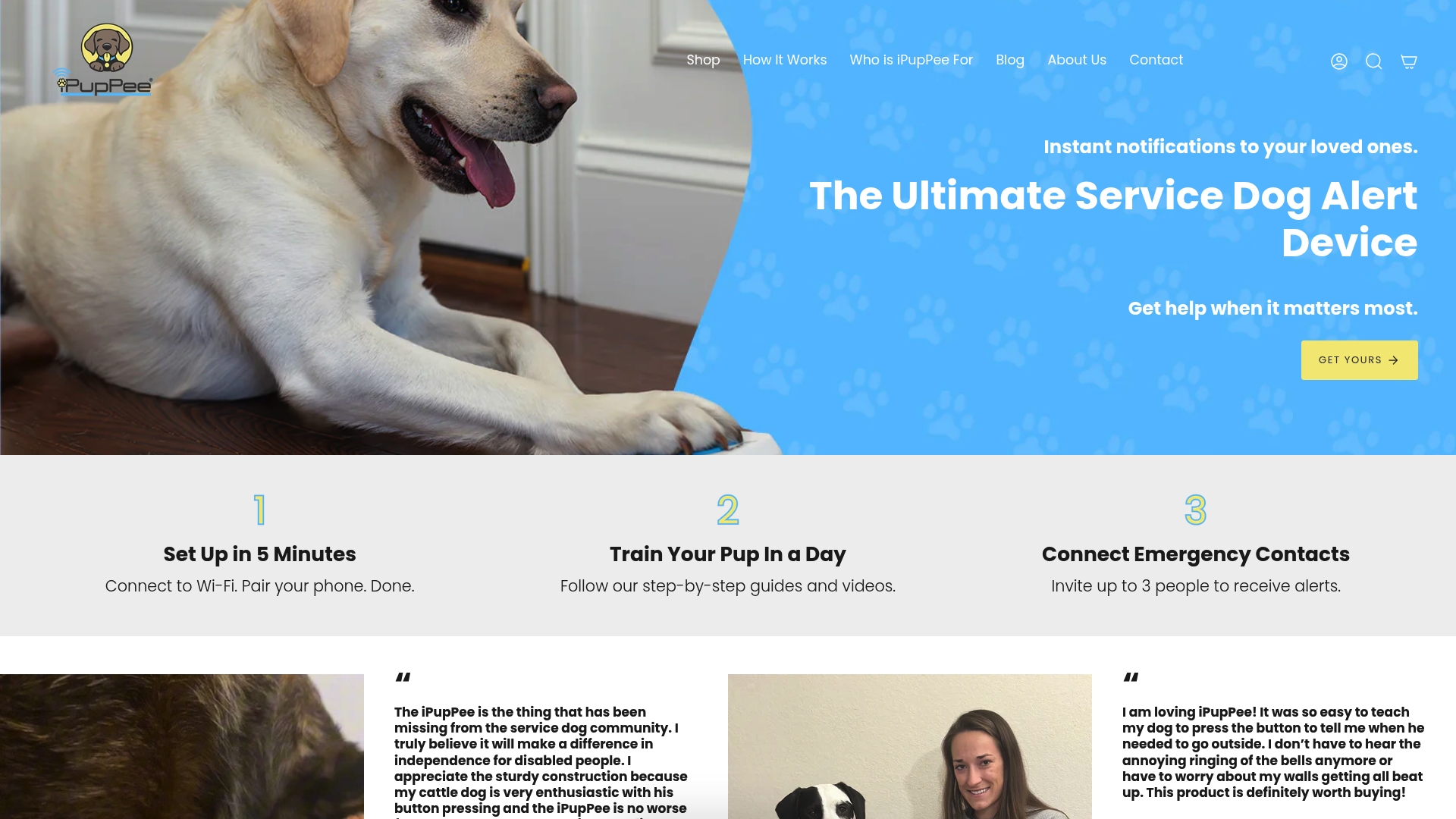
Take control of your safety and freedom today. Visit ipuppee.com to explore the iPupPee alert device and learn how easy it is to train your dog to become your vigilant safety partner. Make the choice for peace of mind and strengthen your bond with technology designed for handlers like you.
Frequently Asked Questions
How can a service dog’s alert behaviors improve my safety at home?
A service dog’s alert behaviors act as an early warning system that can notify you of potential dangers, such as health events or environmental hazards. Train your dog to recognize specific patterns in your movements or health conditions to respond with reliable alerts.
What communication tools can I use to enhance my relationship with my service dog?
Reliable communication tools are essential for effectively partnering with your service dog. Establish clear signals for various commands and practice them daily to ensure your dog responds consistently when you need them.
How does having a service dog reduce feelings of loneliness?
A service dog provides a constant, non-judgmental presence that can significantly combat loneliness. Spend intentional time bonding with your dog to maximize the emotional connection and minimize feelings of isolation.
What steps should I take to prepare my service dog for emergencies?
Prepare your service dog for emergencies by creating a written emergency plan that includes their role and training. Practice emergency scenarios regularly to ensure your dog understands their responsibilities during a crisis.
How can a mobility assistance dog help me maintain independence?
A mobility assistance dog supports your independence by providing stability and helping you navigate your home safely. Train the dog to perform specific tasks that align with your daily needs, allowing you to manage your home more effectively.
What are effective ways to boost my confidence through dog ownership?
Dog ownership can boost your confidence by engaging you in social interactions and community activities. Join local dog walking groups or training classes to meet others and reinforce your role as a responsible dog handler.
Recommended
- Understanding Dog Independence Benefits for Owners – iPupPee
- Can Dogs Provide Independence? Complete Guide – iPupPee
- Complete Guide to Independent Living With Pets – iPupPee
- Independent Dog Behavior – Impact on Communication and Safety – iPupPee
- Pet-Friendly HVAC Solutions: Healthier Homes for Pets - HVAC Service and Repair | Louisville, KY | Project Heating & Cooling