

Proactive dog care is ongoing, preventive care that keeps a dog healthy and catches problems early, before they turn serious. Instead of waiting for a limp, a cough or a bad day at the vet, you work with your veterinarian on a plan covering exams, vaccines, parasite prevention, dental care, nutrition, exercise and behavior, then adjust it as your dog ages. This guide explains what that looks like in practice, how it differs from reactive care, and how to build a plan you can actually follow.
TL;DR
- Proactive care means managing your dog’s health before signs of a problem appear, while reactive care responds to illness, injury or new symptoms.
- A solid plan combines regular veterinary exams, vaccinations, parasite prevention, dental care, healthy weight, exercise and training.
- Every dog should have a veterinary exam at least once a year, and senior dogs need visits twice a year or more.
- Dogs often hide early illness, so you can’t rely on noticing symptoms yourself.
- Safety at home is part of the plan, especially for older owners and dogs that live with them.
Table of Contents
- What proactive dog care means
- Proactive vs. reactive care
- Why waiting for symptoms doesn’t work
- What a proactive care plan includes
- How often should your dog see the vet?
- Adjusting care for puppies, large breeds, seniors and special needs
- Keeping records so nothing slips
- A step-by-step way to start
- The home safety side of proactive care
- Our perspective: care includes communication
- Where iPupPee fits in a proactive plan
- Common mistakes to avoid
- FAQ
- Sources
What proactive dog care means
The American Veterinary Medical Association describes preventive pet healthcare as a process rather than a single appointment. A veterinarian evaluates your pet’s overall health and disease risks, then makes recommendations tailored to that individual animal’s health status and risk factors. Those recommendations cover things like nutrition, dental care, vaccination and parasite prevention.
Other veterinary sources use the words proactive, preventive and wellness almost interchangeably. Elanco’s pet owner site puts the idea simply: you take your pet in to manage its health, rather than waiting for signs of a problem.
Three ideas sit underneath all of it:
- Prevention. Vaccines, parasite control, dental hygiene and a healthy weight stop many problems from starting.
- Early detection. Exams and routine tests find what you can’t see at home.
- Personalization. A young Labrador, a seven-pound senior terrier and a rescue with anxiety do not need the same plan.
Proactive vs. reactive care
Reactive care is what happens when something goes wrong: an injury, sudden illness, a new symptom, an emergency. According to Elanco, reactive care addresses acute disease, injury or new symptoms, while proactive care manages health before any of those signs show up. The Ballantyne Veterinary Team gives an easy example: treating an allergic reaction after a sting is reactive, whereas planned maintenance that reduces risk and finds problems early is preventive.
You need both. No plan prevents every accident, and emergencies always call for fast treatment. The point is to shift the balance so that fewer problems reach the emergency stage.
| Proactive care | Reactive care | |
|---|---|---|
| When it happens | While your dog seems healthy | After a symptom, injury or emergency |
| Typical examples | Annual exam, vaccines, dental cleanings, parasite preventives | Treating an infection, an injury, a sudden illness |
| Main goal | Prevent problems and catch them early | Diagnose and treat what is already wrong |
| Owner’s role | Schedule, track and follow through | Notice symptoms and respond quickly |
Why waiting for symptoms doesn’t work
Dogs are good at hiding discomfort. VCA Animal Hospitals explains that a dog can have disease before the owner notices anything, and that detecting and managing a condition before obvious illness appears can prevent irreversible damage and improve the prognosis.
The Virginia Tech Veterinary Teaching Hospital calls preventive care the foundation of good health. Regular wellness visits, vaccinations, dental care and routine testing can identify problems early, and treatment is generally easier and cheaper when disease is found early.
In practice, that means a dog who “seems fine” is still worth examining. A healthy-looking dog is exactly the patient a wellness exam is built for. VCA describes it as a routine examination of a dog that appears healthy, meant to keep the dog as healthy as possible, and it includes a history and a physical exam.
What a proactive care plan includes
There is no single universal checklist, but the same building blocks appear across veterinary guidance. Elanco lists regular veterinary visits and physical exams, blood and urine tests, vaccinations, parasite preventives, dental care, and guidance on exercise and supplements. VCA adds skin and coat care, joint health and weight management.
Veterinary exams and testing
The AAHA preventive healthcare guidelines describe a routine preventive exam as a history review plus a comprehensive physical exam, followed by recommendations for nutrition, dental care, parasite prevention and vaccinations. They also assess lifestyle, life stage, breed, genetics and age, and recommend annual heartworm testing and at least annual internal parasite testing, with other diagnostics and immunizations customized to the individual dog. Those guidelines date from 2011, so ask your veterinarian how current practice applies to your dog.
Vaccines and parasite prevention
Which vaccines and preventives your dog needs depends on where you live, how your dog spends time outdoors, and whether it boards, travels or visits dog parks. This is a conversation to have with your veterinarian, not a one-size list. Bring up fleas, ticks, heartworm and intestinal parasites at every annual visit.
Dental care
Dental care is on nearly every preventive list. Your vet can examine your dog’s teeth and gums at each visit and tell you whether home brushing, a dental diet or a professional cleaning makes sense. Ask them to show you how to brush if you’ve never done it.

Nutrition and weight
Body weight is one of the most controllable parts of a dog’s health. Elanco’s article cites a study in dogs finding that maintaining an ideal weight and body condition score improved quality of life. Your vet can score your dog’s body condition and suggest portions. Gut health is another area where your vet may weigh in: according to the same source, a veterinarian may recommend probiotics daily or during stressful times to support microbial balance.
Exercise and mental stimulation
The RSPCA’s dog ownership guide says owners should give dogs safe and suitable chances to exercise their bodies and minds at every life stage. That includes walks, sniffing, play and puzzle feeding, scaled to your dog’s age and joints.
Training and socialization
Behavior is health too. The same RSPCA guide notes that reward-based training can help prevent unwanted behaviors, and that socialization helps dogs accept everyday experiences as normal and feel confident as they age. Early work on fear, separation stress or leash manners is far easier than fixing a long-standing habit.
How often should your dog see the vet?
The AAHA guidelines say all dogs should have a veterinary exam at least annually, and that more frequent visits are often recommended depending on a dog’s needs, life stage and health risks. Annual is the minimum, not the target for every dog.
A practical rhythm many owners find workable:
- Puppies: several visits in the first months for the vaccine series and early guidance. Your vet sets the schedule.
- Healthy adults: one wellness exam a year, with testing your vet recommends.
- Seniors and dogs with chronic conditions: the AVMA says senior pets need veterinary visits twice a year or more.
Adjusting care for puppies, large breeds, seniors and special needs
Large breeds
Elanco’s guidance says to proactively regulate growth rate and weight in large breeds and to discuss supplements for connective tissue, joints and mobility with a veterinarian. Do not start joint supplements on your own.
Breed risks and genetic testing
According to a nutrition company’s overview of predictive care, genetic health testing might identify breed-related predispositions, letting a veterinarian suggest environmental, dietary or exercise changes that may delay a disease trigger from expressing. Its guidance is to work with your vet to replace a one-size-fits-all approach with care personalized for your dog.
Senior dogs
The AVMA’s senior pet guidance says owners may need to adjust diet, exercise and the home for changes in mobility, mental health and other age-related needs. Older pets may need more easily digested food, parasite control and changes like a sleeping area that avoids stairs. If you live with an older dog, our own guides cover senior dog care tips for health and happiness and arthritis relief and support for older dogs.
Dogs with behavioral needs
Rescues, anxious dogs and dogs in training for specific work benefit from early, consistent, reward-based training. If a behavior is new or sudden, rule out pain or illness with your vet before assuming it is a training problem.
Keeping records so nothing slips
Proactive care depends on follow-through, and follow-through depends on records. Vaccine dates, lab results, prescriptions, weight history and vet notes pile up quickly, especially if you see more than one clinic or specialist. Many owners now keep these in a digital tool; a guide to apps for pet medical records can help you compare ways to store and share documents so you can find them at the vet or in an emergency.
Whatever you use, keep a simple running list:
- Vaccine and preventive due dates
- Current weight and body condition notes
- Medications and supplements, with doses
- Questions to ask at the next visit
- Changes you have noticed at home, such as appetite, thirst, energy, stiffness or sleep
A step-by-step way to start
- Book a wellness exam. Bring your dog’s history, food labels and your list of questions.
- Ask for a written plan. It should cover vaccines, parasite prevention, dental care, nutrition and the next visit date.
- Check your dog’s weight. Agree on a target and a feeding amount.
- Set reminders for preventives and appointments.
- Build daily habits: exercise, sniffing time, short training sessions, tooth care as your vet advises.
- Review the plan at every life stage change and after any illness.
The home safety side of proactive care
Veterinary care covers your dog’s body. Day-to-day safety covers everything else, and it matters most when the person at home is also vulnerable. Seniors, people with disabilities and anyone living alone may not be able to get help quickly if they fall or become ill, and a dog that is trained to respond can be part of that safety net. Our guides on dog safety for seniors and senior pet safety walk through practical steps, and dog-friendly senior living covers independence at home.
Our perspective: care includes communication
We build tools for people who depend on their dogs and for the dogs who depend on them, so we see proactive care a little more broadly than a vet checklist. Yes, the exam, the vaccines and the dental plan come first. But the dogs we hear about most are the ones whose owners think ahead about the “what if”: what if I fall, what if I can’t reach the phone, what if my dog is the only one who knows something is wrong.
A dog that has been trained, with positive methods and patience, to ask for help is practicing a form of prevention. It shortens the time between a problem and a response, which is the same logic behind early detection at the vet. That is why we pair a simple alert device with training: the device only works as well as the relationship and the habits behind it.
Our advice to any owner is the same. Start with your veterinarian, build a plan you can keep, and then look at the gaps at home. Where would help be slow to arrive? Fix that before you need to.
— Andrew
Where iPupPee fits in a proactive plan
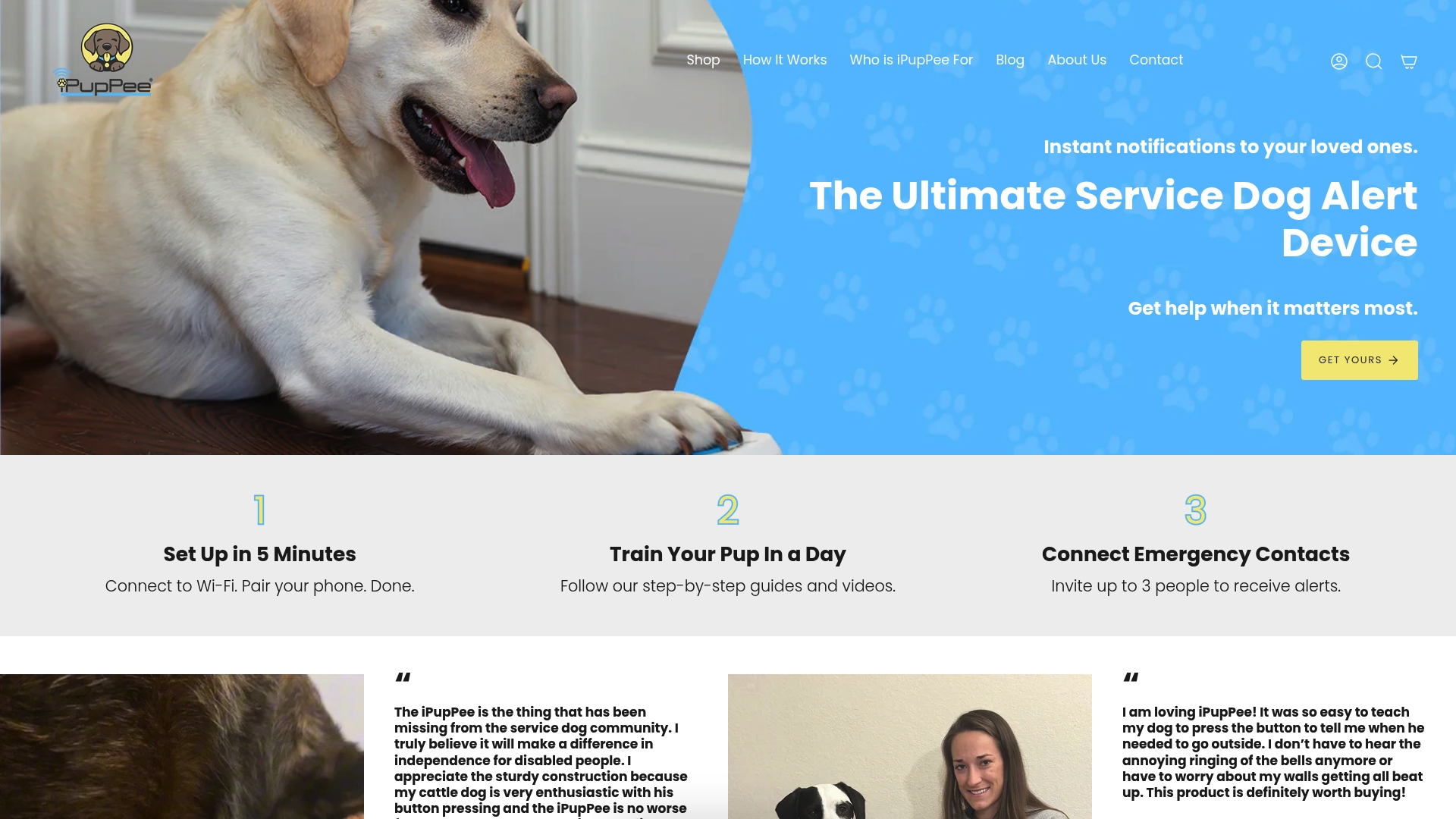
The iPupPee is a Wi-Fi alert device your dog can press to send a notification to you or to emergency contacts, with live video and two-way audio. It has no monthly subscription fees and is designed for dogs of all sizes. The device is $129.99 and is the practical, at-home piece of a proactive plan for service dog handlers, seniors and people who live alone. You can see how it works on the iPupPee product page.
If you want to start with the dog’s side of the equation, our on-demand Psychology & Training Course is $119 and covers dog psychology and training. For owners who also want a way to teach their dog to communicate for help, our guide to dog training for seniors is a good place to begin.
Common mistakes to avoid
- Skipping visits because the dog seems fine. That is when a baseline matters most.
- Treating the annual exam as the whole plan. Home habits do most of the daily work.
- Starting supplements without advice. Ask your vet, particularly for large breeds and seniors.
- Ignoring behavior changes. A shift in mood, sleep or appetite can be an early health sign.
- Forgetting to update the plan. What suited a two-year-old will not suit a ten-year-old.
FAQ
What is proactive dog care?
It is preventive, ongoing care that maintains your dog’s health and finds or reduces risks before they become serious. According to the AVMA, it combines a veterinary evaluation with individualized recommendations on nutrition, dental care, vaccination, parasite prevention and other needs. It also includes daily habits like exercise and training.
Is preventive care for dogs worth it?
Veterinary sources say yes in most cases. Virginia Tech’s teaching hospital notes that treatment is generally easier and cheaper when disease is found early. Preventive care can’t guarantee your dog never gets sick, but it improves your odds of catching problems when they are most manageable. Ask your vet to explain what each item in your dog’s plan is for.
How often should my dog see the vet for preventive care?
At least once a year for every dog, according to the AAHA guidelines, and more often depending on life stage and health risks. Senior dogs should go twice a year or more, per the AVMA. Your vet will set the exact schedule for your dog.
What is the difference between proactive and reactive care?
Proactive care manages health before any signs of a problem appear. Reactive care responds to acute illness, injury or new symptoms. A good plan relies mostly on the first and is ready for the second.
Can I start proactive care with an older dog?
Yes. Older dogs benefit from exams, weight management, mobility support and home adjustments. Start with a senior wellness exam and ask your vet what to change first.
Sources
- Preventive pet healthcare, American Veterinary Medical Association
- Caring for senior cats and dogs, American Veterinary Medical Association
- Preventive Healthcare Guidelines for Dogs and Cats, AAHA
- Why preventive medicine is key to pet health, Virginia Tech Veterinary Teaching Hospital
- Wellness Examination in Dogs, VCA Animal Hospitals
- Proactive Veterinary Healthcare, Elanco Your Pet and You
- Preventative and Reactive Pet Care, Ballantyne Veterinary Team
- Dog Ownership Guide, RSPCA
- Shifting from a Reactive to Proactive Care Mindset, Volhard Dog Nutrition