

Many service dog owners believe their dogs need constant guidance to perform tasks safely and effectively. This misconception limits both handler and dog potential. Service dogs can achieve remarkable autonomy through strategic training and innovative communication tools. Emerging technologies like communication buttons and AI-enhanced training methods transform how handlers collaborate with their dogs. This guide explores proven techniques, evidence-based benefits, and practical steps to foster genuine independence. You’ll discover how to empower your service dog while strengthening your partnership and reclaiming freedom in daily life.
Table of Contents
- Understanding Service Dog Independence: What It Means And Why It Matters
- Training Techniques And Innovative Tools That Enhance Independence
- Evidence-Based Benefits And Challenges Of Fostering Service Dog Independence
- Practical Steps For Owners To Promote Independence And Effective Communication
- Explore Tools And Support To Boost Your Service Dog’s Independence Today
Key takeaways
| Point | Details |
|---|---|
| Training foundation | Positive reinforcement and task-specific skills build confident, independent service dogs. |
| Technology advantage | Communication buttons and AI tools enhance dog autonomy and handler collaboration. |
| Proven benefits | Service dogs significantly improve physical mobility, mental health, and social engagement. |
| Real challenges | Lengthy training periods and ethical welfare concerns require careful consideration. |
| Ongoing support | Professional guidance ensures sustainable independence without overburdening your dog. |
Understanding service dog independence: what it means and why it matters
Service dog independence means your dog performs essential tasks confidently with minimal prompting from you. This autonomy develops through positive reinforcement, socialization, and task-specific training that prepares dogs for public environments. When your dog anticipates your needs and responds proactively, you experience greater safety and freedom.
Independence reduces your cognitive and physical workload dramatically. Your dog becomes a true partner rather than a tool requiring constant direction. This partnership allows you to navigate daily activities with less anxiety and more confidence. For handlers with mobility or cognitive challenges, this shift can be life-changing.
A common misconception suggests independence means your dog operates without you entirely. Actually, independence strengthens your partnership through clearer communication and mutual trust. Your role evolves from micromanaging every action to guiding broader decisions and monitoring your dog’s wellbeing.
Every service dog’s independence level varies based on your specific needs and your dog’s temperament. Some handlers require dogs who alert to medical episodes autonomously, while others need mobility support that adapts to changing physical conditions. Understanding service dogs’ roles for various disabilities helps you set realistic independence goals.
Key factors shaping service dog independence include:
- Consistent positive reinforcement during training phases
- Regular socialization in diverse public settings
- Task-specific skill development matched to handler needs
- Temperament assessment ensuring dog suitability for autonomous work
- Ongoing evaluation and adjustment as handler needs evolve
Independence isn’t about perfection. It’s about building a reliable system where your dog responds appropriately in most situations, and you maintain oversight for complex or novel scenarios.
Training techniques and innovative tools that enhance independence
Positive reinforcement forms the foundation of effective service dog training. Rewarding desired behaviors immediately creates clear associations and builds your dog’s confidence. This approach respects your dog’s wellbeing while producing reliable, enthusiastic task performance.
Task-specific training develops the precise skills your dog needs for your disability. Commands might include retrieving dropped items, providing mobility support during transfers, or alerting to medical episodes before they escalate. Each task requires breaking complex behaviors into manageable steps your dog masters progressively.
Communication devices revolutionize how service dogs express needs and observations. Buttons like those from iPupPee enable your dog to signal bathroom needs, request water, or alert you to environmental changes independently. This two-way communication reduces frustration and increases your dog’s agency.
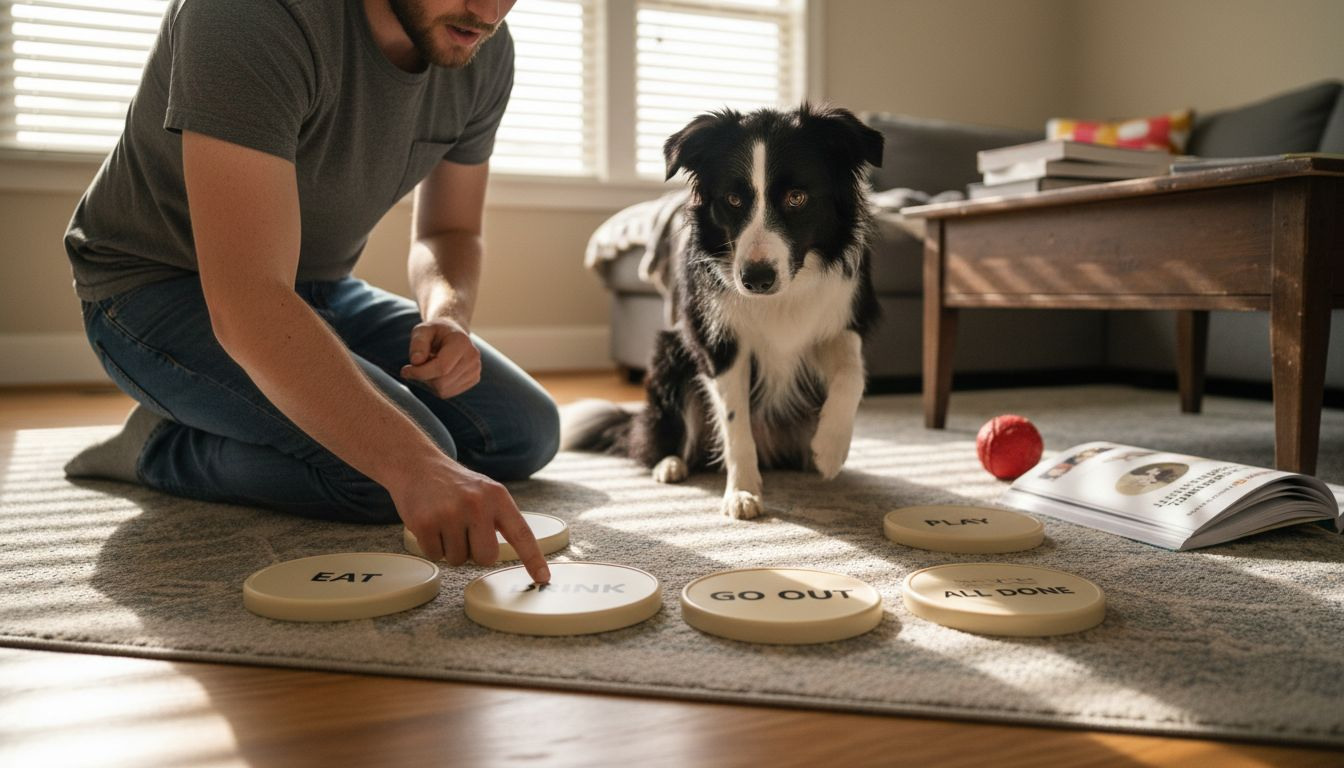
AI and sensor technologies accelerate training precision dramatically. These tools monitor your dog’s responses in real time, providing data-driven feedback that refines training approaches. Guide dog programs using AI report faster skill acquisition and higher accuracy rates.
Comparing traditional and innovative methods reveals significant advantages:
| Training Approach | Timeline | Communication | Accuracy | | — | — | | Traditional methods | 18-24 months | Handler-directed cues | 85% response rate | | AI-enhanced training | 12-18 months | Sensor feedback loops | 92% response rate | | Communication buttons | Ongoing integration | Dog-initiated signals | Contextual clarity |
Explore expert service dog training tips and comprehensive training guides for 2026 to implement these methods effectively.
Pro Tip: Incorporate interactive puzzle toys and supervised alone time to develop your dog’s problem-solving abilities. Dogs who learn to work through challenges independently transfer these skills to service tasks, responding more creatively to unexpected situations.
Essential training elements include:
- Daily positive reinforcement sessions maintaining skill sharpness
- Gradual exposure to distracting environments building focus
- Clear, consistent commands avoiding handler confusion
- Regular rest periods preventing burnout and maintaining enthusiasm
- Technology integration enhancing communication clarity
Innovative tools don’t replace foundational training. They amplify your dog’s natural abilities and create new communication channels that weren’t possible before. The combination of proven methods and emerging technology produces service dogs with unprecedented independence levels.
Evidence-based benefits and challenges of fostering service dog independence
Clinical research demonstrates powerful improvements in handler quality of life. Mobility assistance dogs enhance wheelchair navigation, reduce PTSD symptoms in veterans, and improve social interaction for children with developmental disabilities. These benefits extend beyond physical assistance to psychological and social domains.
Family psychosocial outcomes improve significantly when service dogs achieve independence. Parents report reduced anxiety about their child’s safety in public spaces. Veterans describe feeling more confident rejoining community activities. The ripple effects touch entire family systems, not just individual handlers.
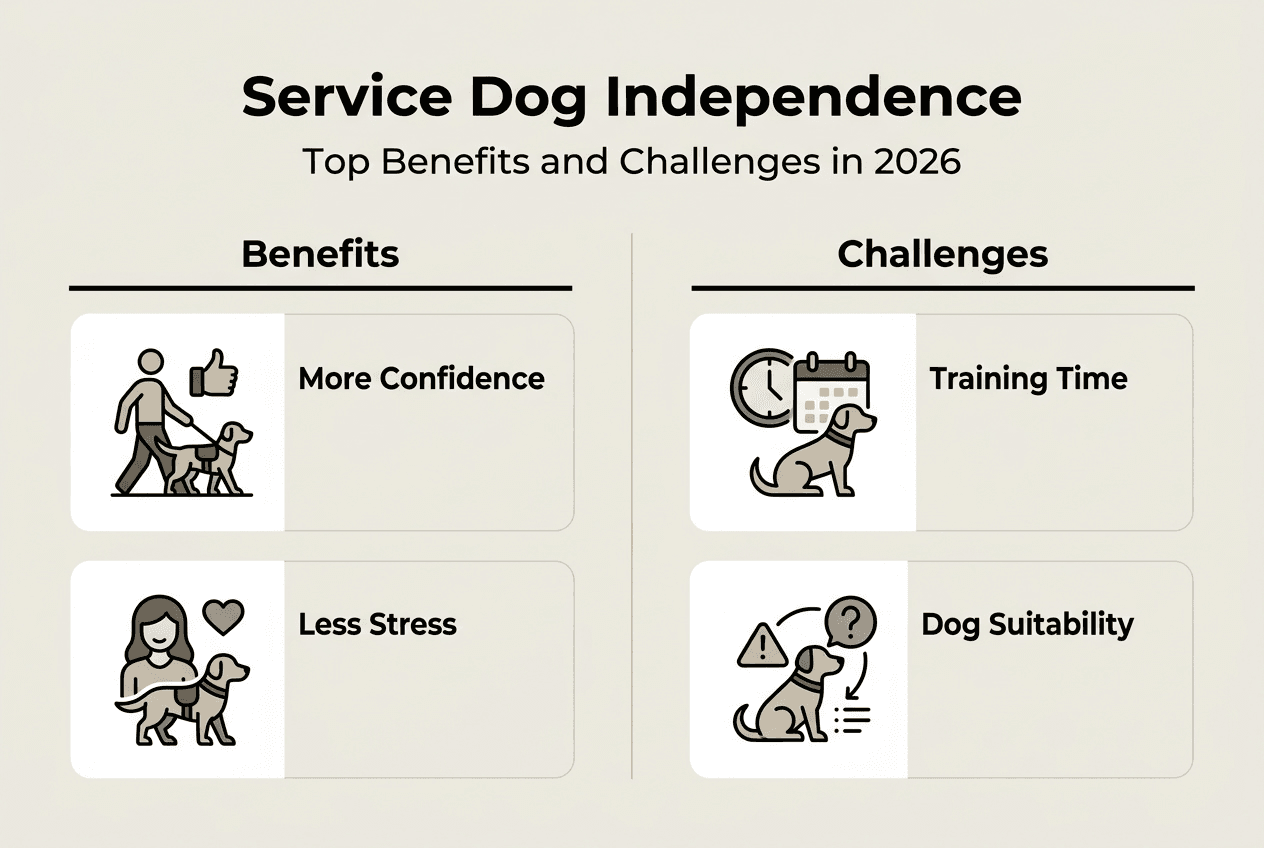
Despite clear benefits, challenges exist throughout the training and working relationship. High dropout rates affect service dog programs, with some dogs unsuited for the demands of public work. Training duration averages six months to two years, requiring substantial time and financial investment. Ethical concerns about dog welfare demand ongoing attention.
“The rewards-led training approach, while humane, contributes to extended wait times as programs prioritize dog wellbeing over rapid placement. This tension between ethical treatment and handler need creates complex program decisions.”
Balancing benefits against challenges provides realistic expectations:
| Benefits | Challenges |
|---|---|
| Improved mobility and physical independence | 20-30% dog dropout rates during training |
| Reduced PTSD and anxiety symptoms | 6-24 month training timelines |
| Enhanced social confidence and interaction | Ethical concerns about overworking dogs |
| Greater handler safety in emergencies | High initial and ongoing costs |
| Family-wide psychosocial improvements | Potential career-ending injuries or stress |
Ethical considerations require honest assessment of your dog’s capacity and temperament. Not every dog thrives in service work, and recognizing when to transition a dog out of service protects their longterm wellbeing. Understanding guide dog training challenges helps you appreciate the complexity involved.
Pro Tip: Consult occupational therapists or veterinarians before assigning physically demanding tasks to your service dog. Some mobility support activities carry injury risks for dogs, particularly those involving body weight support or repetitive strain movements.
Explore comprehensive service dog benefits for health and wellbeing to understand the full scope of potential improvements. Evidence supports service dog independence as a powerful intervention, but success requires matching dog capabilities to handler needs thoughtfully.
Key research findings include:
- 67% reduction in PTSD symptom severity for veterans with service dogs
- 43% improvement in independent mobility for children using assistance dogs
- 58% increase in social interactions reported by handlers
- Significant reductions in family caregiver stress and anxiety
- Improved medication adherence and health monitoring
These outcomes validate the effort required to develop service dog independence. When implemented ethically and sustainably, the partnership transforms both handler and dog quality of life.
Practical steps for owners to promote independence and effective communication
Establishing daily routines creates predictable patterns your dog recognizes and anticipates. Consistent feeding times, exercise schedules, and task practice sessions build your dog’s confidence and autonomy. Structure provides the foundation for independent decision making within safe parameters.
Training communication through buttons or signals empowers your dog to initiate interactions. Start with basic needs like water, bathroom, or food requests. Gradually expand to more complex communications like alerting to environmental changes or expressing discomfort. This two-way dialog transforms your relationship fundamentally.
Socialization and public manners training ensure your dog performs reliably in diverse settings. Regular exposure to stores, restaurants, transportation, and crowded spaces builds tolerance and focus. Your dog learns to filter distractions and prioritize your needs regardless of environment.
Consulting professionals regularly prevents common pitfalls and ensures your expectations align with your dog’s capabilities. Physical therapists assess whether mobility tasks risk injury. Veterinarians monitor for signs of stress or physical strain. Trainers troubleshoot behavioral challenges before they become ingrained patterns.
Implement these steps systematically:
- Establish consistent daily schedules for feeding, exercise, and training sessions
- Introduce communication tools gradually, rewarding successful attempts generously
- Practice tasks in low-distraction environments before advancing to public settings
- Schedule monthly professional evaluations to assess progress and adjust approaches
- Monitor your dog’s stress signals and provide adequate rest between demanding activities
- Document successes and challenges to identify patterns requiring intervention
- Celebrate incremental progress rather than expecting immediate perfection
Review service dog handler essentials and protocol guides for 2026 to understand your rights and responsibilities in public spaces. Knowledge of legal protections and etiquette expectations reduces stress during outings.
Pro Tip: Provide mental stimulation through problem-solving toys and scent work games during downtime. Dogs who exercise their minds independently develop stronger critical thinking skills that transfer to service tasks, enabling more creative responses to novel situations.
Building independence requires patience and consistency. Progress happens incrementally, with occasional setbacks normal during the learning process. Trust the training process and maintain realistic expectations based on your dog’s individual temperament and abilities.
Explore tools and support to boost your service dog’s independence today
Transitioning from training theory to practical implementation requires the right tools and ongoing support. iPupPee offers innovative communication button systems designed specifically for service dog handlers seeking greater independence. These user-friendly devices enable your dog to express needs clearly, reducing guesswork and strengthening your partnership.
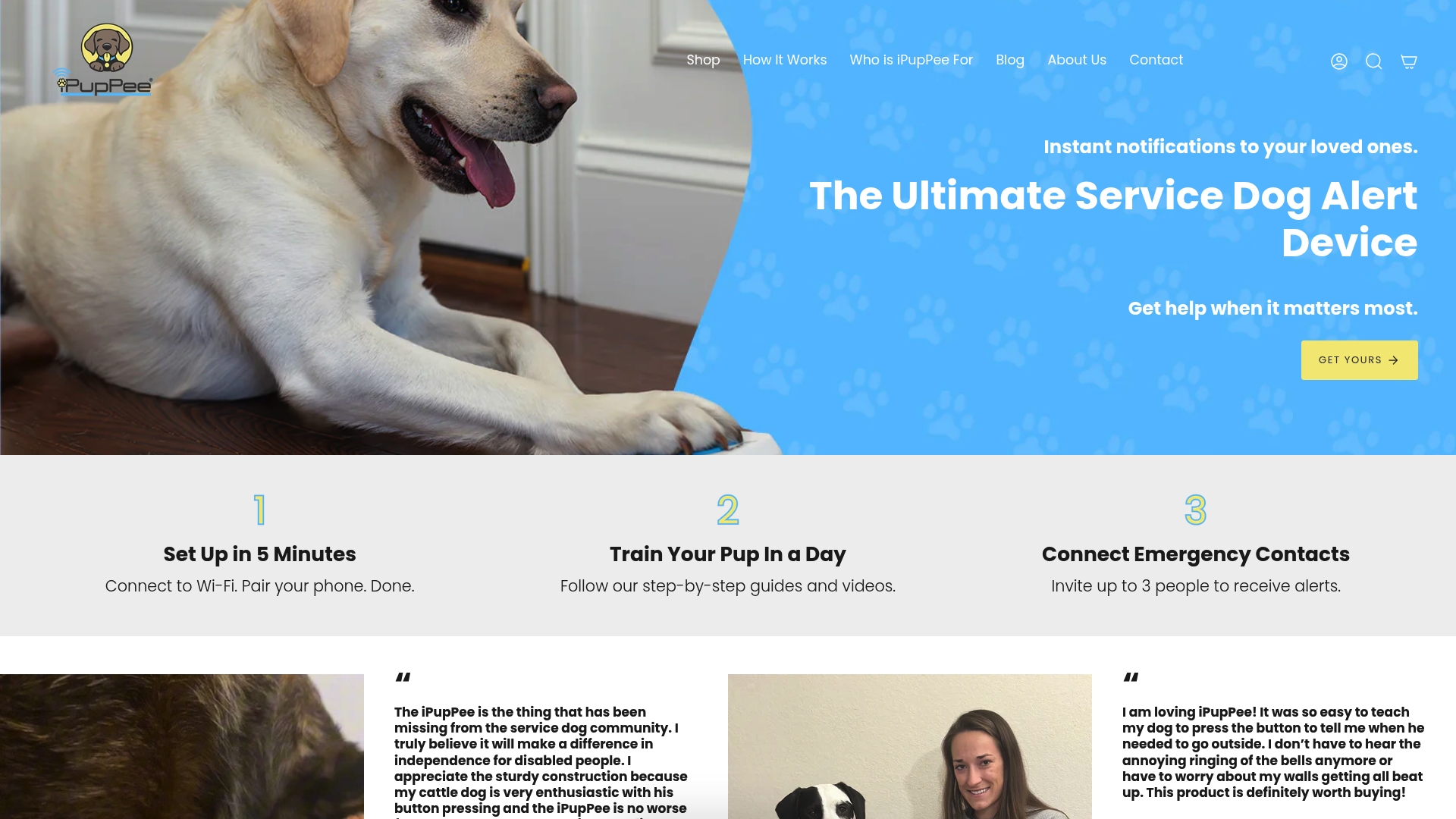
Our platform provides comprehensive resources helping you implement evidence-based training practices at home. From installation guides to troubleshooting tips, you’ll find practical support for every stage of your independence journey. Connecting with iPupPee’s communication solutions unlocks new possibilities for collaboration with your service dog.
Whether you’re training a new service dog or enhancing an established partnership, the right technology makes independence achievable. Explore how communication devices complement professional training and empower both you and your dog to reach your full potential together.
FAQ
How long does it typically take to train a service dog for independence?
Standard service dog training requires approximately 120 hours spread over six months, targeting a 90% first-command response rate. This timeline varies based on task complexity and individual dog aptitude. Advanced tasks like medical alert training may extend timelines to 18-24 months. Positive reinforcement methods prioritize dog wellbeing over speed, ensuring sustainable independence rather than rushed compliance.
What are some ethical concerns when training service dogs for independence?
Ethical training requires assessing temperament suitability before beginning service work. Overworking dogs, particularly those with pre-existing disabilities, raises serious welfare questions. Avoid assigning physically risky tasks that could injure your dog over time. Support ethical career transitions when dogs show stress signs or age out of service work. Prioritizing dog wellbeing ensures sustainable partnerships that benefit both handler and animal.
How can technology improve communication with my service dog?
Communication buttons allow dogs to signal bathroom needs, request water, or alert handlers to environmental changes independently. AI-enhanced training tools accelerate learning by providing real-time feedback on response accuracy. These technologies bridge communication gaps that traditional training alone cannot address. Dogs gain agency to initiate interactions rather than waiting passively for handler cues. The result is clearer mutual understanding and reduced frustration for both partners.
Can all breeds become independent service dogs?
Temperament matters far more than breed for service dog success. Look for dogs demonstrating focus, confidence, and eagerness to work regardless of breed background. Some breeds show higher average success rates due to selective breeding for trainability and temperament stability. However, individual variation within breeds exceeds differences between breeds. Professional evaluation of your specific dog’s aptitude provides better predictions than breed stereotypes alone.
What signs indicate my service dog needs a break from independence training?
Watch for decreased enthusiasm during training sessions or reluctance to perform previously mastered tasks. Physical signs include excessive panting, avoidance behaviors, or stress-related digestive issues. Behavioral changes like increased reactivity to distractions or reduced focus signal mental fatigue. Provide rest days between intensive training periods and monitor for cumulative stress over weeks. Consult veterinarians if concerning patterns persist despite adequate rest and adjustment.
Recommended
- Service Dog Handler Challenges – Boosting Independence – iPupPee
- Independence With Service Dogs: Complete Guide – iPupPee
- 7 Essential Dog Independence Tips for Service Dog Owners – iPupPee
- Training Service Dogs 101: Essential Steps for Success in 2025 – iPupPee
- Why Use Dog Joint Supplements for Mobility | Mybestpharmacy.net | Online Pharmacy