

Over 90% of service dogs in American households pass official obedience tests only after months of specialized training. For many owners across North America, building their dog’s independence is about more than just following commands—it is key to everyday autonomy and safety. Whether you are searching for proven training strategies or new communication aids, discover effective ways to nurture your service dog’s confidence and skills at home and in public.
Table of Contents
- 1. Start With Basic Obedience Training For Independence
- 2. Encourage Problem-Solving Skills With Interactive Toys
- 3. Teach Reliable Recall And Release Commands
- 4. Use Communication Devices Like The Ipupppee Button
- 5. Practice Alone Time To Build Confidence
- 6. Reinforce Positive Behaviors With Consistent Rewards
- 7. Ensure A Safe Space And Clear Boundaries At Home
Quick Summary
| Takeaway | Explanation |
|---|---|
| 1. Start with consistent obedience training | Establishing basic commands strengthens your service dog’s independence and responsiveness across various environments. |
| 2. Use interactive toys for mental stimulation | Encourage problem-solving abilities by incorporating puzzles that challenge your service dog’s cognitive skills during playtime. |
| 3. Teach reliable recall and release commands | These essential commands ensure safety and responsiveness in any situation, promoting your service dog’s independence. |
| 4. Implement communication devices for autonomy | Tools like the iPupPee button help your service dog express needs, enhancing independence and reducing misunderstandings. |
| 5. Create a safe home environment with boundaries | Structured living spaces promote your service dog’s security and understanding of personal space, supporting their independence. |
1. Start With Basic Obedience Training for Independence
Building a service dog’s independence starts with solid foundational obedience training. Basic commands form the critical framework that allows your dog to navigate complex environments confidently and respond reliably to your needs.
According to Assistance Dogs International standards, service dogs must respond to commands 90% of the time on the first request. This means mastering core skills like ‘Sit,’ ‘Stay,’ ‘Come,’ ‘Down,’ and ‘Heel’ becomes crucial for their effectiveness.
Training your service dog requires consistent practice and patience. The International Association of Assistance Dog Partners recommends at least 120 hours of training over six months, with 30 hours dedicated to public environment work. This structured approach ensures your dog develops the skills needed to support your independence.
Start by practicing these basic commands in quiet environments before gradually introducing distractions. Use positive reinforcement techniques like treats and praise to encourage good behavior. Consistency is key your dog needs to understand and execute commands reliably across different settings.
Pro Tip: Practice obedience training in short 10 to 15 minute sessions multiple times a day. This approach keeps training engaging and helps your service dog maintain focus while building strong communication skills.
2. Encourage Problem-Solving Skills With Interactive Toys
Developing a service dog’s cognitive abilities goes far beyond basic obedience training. Interactive toys serve as powerful tools for mental stimulation and help your dog develop critical problem-solving skills that enhance their overall independence.
Research published in Frontiers in Veterinary Science demonstrates that smart toys can significantly improve a dog’s cognitive interactions and adaptive problem solving skills. These specialized toys challenge your service dog to think strategically, analyze situations, and develop innovative solutions to retrieve rewards.
When selecting interactive toys, focus on puzzles that require manipulation and strategic thinking. Games that involve hiding treats inside compartments or toys that demand specific actions to release rewards can stimulate your dog’s mental processing. This approach transforms playtime into a training opportunity that strengthens cognitive flexibility and decision making skills.
Start with simple puzzle toys and gradually increase complexity as your service dog masters each level. Watch how they approach challenges and provide gentle guidance when needed. The goal is to create a positive learning environment where problem solving feels like an enjoyable game rather than a stressful task.
Pro Tip: Rotate your interactive toys weekly to prevent boredom and maintain your service dog’s engagement. Introducing new challenges consistently will keep their problem solving skills sharp and their mental abilities continuously expanding.
3. Teach Reliable Recall and Release Commands
Recall and release commands form the backbone of a service dog’s responsiveness and safety. These critical skills ensure your dog can quickly return to you or pause an action in any environment, which is essential for maintaining independence and preventing potential hazards.
Assistance Dogs International standards emphasize that service dogs must consistently respond to voice and hand signals for commands like ‘come’ and ‘stay.’ This reliability is not just about obedience it is a fundamental safety mechanism that protects both the dog and its handler.
Begin training recall commands in low distraction environments. Start with short distances and gradually increase the challenge. Use high value treats and enthusiastic praise to create positive associations with returning to you. Practice in various settings parks, busy streets, and indoor spaces to ensure your dog responds reliably regardless of the environment.
The release command is equally important. This signals to your service dog that they can stop a current task or move from a stationary position. Practice transitions between focused work and relaxed states. Use a consistent verbal cue like ‘free’ or ‘release’ accompanied by a specific hand signal to help your dog understand the command clearly.
Pro Tip: Practice recall training using long lead lines in open spaces to provide safety while building confidence. Gradually increase distance and distraction levels to solidify your dog’s understanding and responsiveness.
4. Use Communication Devices Like the iPupPee Button
Communication devices represent a revolutionary approach to enhancing service dog and handler interaction. These innovative tools provide a direct method for dogs to communicate their needs and alerts, dramatically improving independence and safety for individuals with disabilities.
Research exploring communication technologies highlights the critical importance of creating reliable interaction methods between service dogs and their handlers. Adaptive communication tools like the iPupPee button allow dogs to signal specific needs or emergencies quickly and effectively.
The iPupPee button functions as a simple yet powerful communication interface. By training your service dog to press the button for specific requests such as needing to go outside, requesting water, or signaling potential health concerns, you create a structured communication system that reduces misunderstandings and increases the dog’s autonomy.
Start training by associating the button with specific actions or needs. Use positive reinforcement techniques demonstrating how pressing the button results in the desired outcome. Practice in controlled environments before expanding to more complex scenarios. Consistency is key in helping your service dog understand and utilize the communication device effectively.
Pro Tip: Position multiple communication buttons in different areas of your home to help your service dog learn context specific communication strategies and expand their ability to communicate independently.
5. Practice Alone Time to Build Confidence
Building a service dog’s confidence through structured alone time is crucial for developing true independence. By teaching your dog to feel secure and self assured when separated from you, you create a foundation for more resilient and adaptable service work.
Interactive frameworks for building autonomy suggest that controlled independent experiences can significantly enhance an individual’s confidence and problem solving skills. This principle applies directly to service dogs, who must learn to manage situations independently while maintaining their core mission of supporting their handler.
Start by creating short supervised separation periods. Begin with brief moments where your dog remains in a designated safe space while you are in another room. Use comfort items like favorite toys or blankets to create a positive association with alone time. Gradually increase the duration of these separations, always returning before your dog becomes anxious and rewarding calm behavior.
Use puzzle toys or treat dispensing devices during alone time to provide mental stimulation. These tools help your service dog associate being alone with positive experiences. Monitor your dog’s body language and stress levels, adjusting the duration and complexity of alone time training based on their individual comfort and progress.
Pro Tip: Create a consistent routine for alone time training. Use the same calm departure and return techniques each time to help your service dog understand that separation is normal and temporary.
6. Reinforce Positive Behaviors With Consistent Rewards
Positive reinforcement is the cornerstone of effective service dog training, transforming desired behaviors into reliable habits through strategic and meaningful rewards. By understanding and implementing consistent reward systems, you create a powerful communication pathway with your service dog.
Assistance Dogs International standards emphasize that service dogs must respond to commands 90% of the time on the first request. This extraordinary level of reliability comes from systematic positive reinforcement techniques that motivate and guide your dog’s behavior.
Choose rewards that are genuinely motivating for your specific dog. While treats work well for many, some dogs respond more enthusiastically to specific toys, verbal praise, or physical affection. The key is identifying what truly excites and drives your service dog to perform tasks with precision and enthusiasm.
Timing is critical in reward based training. Deliver the reward immediately after the desired behavior to create a clear connection between the action and the positive outcome. This instant feedback helps your dog understand exactly what they did right, reinforcing the specific behavior you want to encourage.
Pro Tip: Create a reward hierarchy where high value treats are reserved for challenging or new tasks, while maintaining a varied reward system to keep your service dog engaged and motivated throughout training.
7. Ensure a Safe Space and Clear Boundaries at Home
Creating a structured home environment is fundamental to developing a service dog’s sense of security and independence. By establishing clear spatial boundaries and designated safe zones, you provide your dog with a predictable and comfortable living space.
The International Association of Assistance Dog Partners emphasizes that service dogs must develop proper social behavior skills, which includes understanding and respecting spatial boundaries. This means teaching your dog specific areas where they can rest, play, and work.
Start by creating a dedicated space for your service dog that includes a comfortable bed or crate. According to training guidelines, dogs should have a designated area where they feel secure when unattended. Use consistent verbal commands and positive reinforcement to help your dog understand their permitted zones.
Implement physical boundaries using baby gates or closed doors to define different areas of your home. Train your dog to wait at doorways and not enter rooms without explicit permission. This practice helps reinforce their understanding of spatial limits and enhances their overall self control and independence.
Pro Tip: Use consistent markers like dog beds or special mats to define your service dog’s personal space, helping them understand where they are allowed to rest and relax in different areas of your home.
This table summarizes the key strategies and steps for enhancing service dog independence discussed throughout the article.
| Main Step | Key Points & Actions | Benefits/Outcomes |
|---|---|---|
| Basic Obedience Training | Teach core commands like ‘Sit,’ ‘Stay,’ etc., with positive reinforcement. Practice in gradual environments. | Builds reliable and responsive behavior in complex environments. |
| Interactive Toys for Problem Solving | Use puzzles and strategic games to enhance cognitive skills. Rotate toys weekly. | Encourages critical thinking and adaptability in dogs. |
| Teach Recall and Release Commands | Train in low distraction areas; use voice and hand signals. Practice with high value treats. | Ensures safety and quick responsiveness in diverse settings. |
| Communication Devices | Train with devices like the iPupPee button for specific needs. Use positive reinforcement. | Enhances communication for increased independence and safety. |
| Practice Alone Time | Create short, supervised separations; use comfort items. Gradually increase duration. | Builds dog’s confidence and autonomy. |
| Consistent Rewards | Use motivating rewards like treats or toys immediately after desired behavior. | Reinforces positive behavior and enhances training effectiveness. |
| Safe Space & Boundaries | Establish dedicated spaces and use gates; train spatial limits. | Provides a secure and structured environment, enhancing dog’s self-control. |
Enhance Your Service Dog’s Independence with Smart Communication Tools
The challenge of building true independence for your service dog involves more than just obedience training and problem solving. As the article highlights, consistent communication and reliable recall alongside mental stimulation are key to empowering your dog’s autonomy. One major goal is creating a dependable system where your service dog can easily signal their needs and alerts without confusion or delay.
This is where the innovative iPupPee communication device steps in to transform your daily interactions. Designed specifically for service dogs and handlers looking to improve safety and independence, the iPupPee button allows your dog to communicate urgent needs like requesting to go outside or indicating a health concern with a simple press. This technology bridges the communication gap, offering peace of mind and greater freedom for both you and your dog.
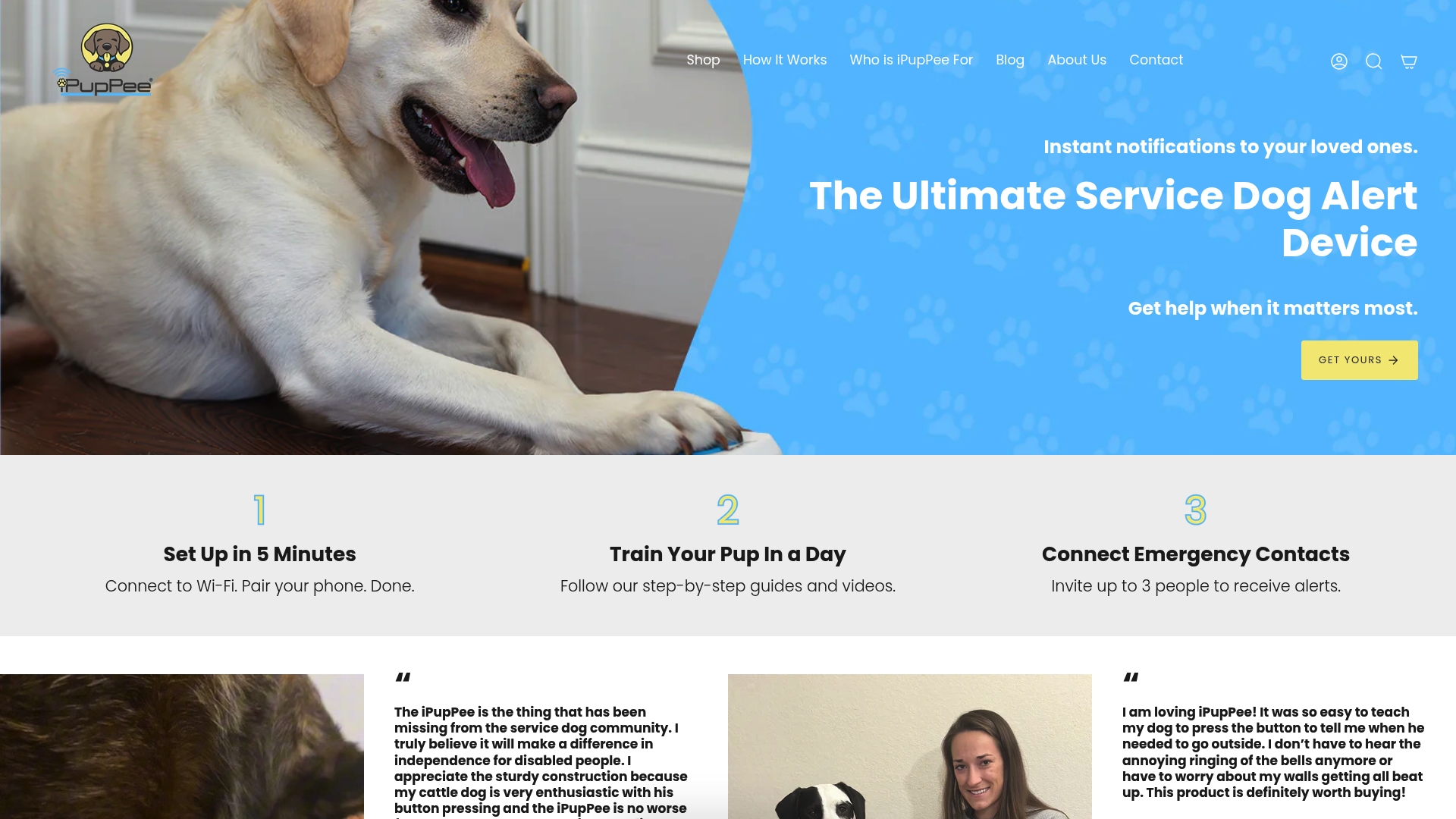
Explore how this unique device supports service dog training methods such as recall and release commands as well as confidence building exercises discussed in the article. Take control of your service dog’s independence now and discover the full benefits by visiting iPupPee official site. Start enhancing communication with your service dog today and experience a safer, more connected partnership.
Frequently Asked Questions
How can I start basic obedience training for my service dog?
Building a service dog’s independence begins with basic obedience training. Start by teaching commands like ‘Sit,’ ‘Stay,’ and ‘Come’ in a quiet environment, practicing consistently for about 10 to 15 minutes multiple times a day to reinforce learning.
What types of interactive toys can I use to improve my service dog’s problem-solving skills?
Use interactive toys that require manipulation, such as puzzle toys that hide treats. Begin with simpler puzzles and gradually increase the complexity to challenge your service dog, rotating toys weekly to keep them engaged.
What should I include in my recall and release command training?
Focus on teaching your service dog reliable recall and release commands, using high-value treats for positive reinforcement. Start practicing in low-distraction settings and gradually introduce new environments to ensure consistent responsiveness.
How can communication devices benefit my service dog?
Communication devices like buttons can significantly enhance interaction between you and your service dog. Train your dog to press these buttons for specific needs, positively reinforcing their actions to establish a clear communication system.
What are effective strategies for helping my service dog feel comfortable alone?
Create structured alone time by starting with short supervised separations. Use comfort items and interactive toys during these periods, gradually increasing the duration as your dog builds confidence and adapts to being alone.
How do I reinforce positive behaviors in my service dog?
Reinforce positive behaviors through consistent rewards that motivate your dog, choosing rewards that excite them, such as treats or praise. Deliver these rewards immediately after the desired behavior to strengthen their understanding of what you expect.