

Every day, over half a million Americans rely on service dogs for more than just help with tasks. These remarkable animals empower people with disabilities to reclaim daily freedoms, from crossing busy streets safely to finding emotional balance during tough moments. Independence with a service dog means more opportunities, stronger self-confidence, and reduced dependence on others. Discover how these canine partners unlock true autonomy and bring life-changing support that goes far beyond physical assistance.
Table of Contents
- What Independence With Service Dogs Means
- Types Of Service Dogs And Their Roles
- How Service Dogs Promote Functional Independence
- Legal Rights And Handler Requirements
- Challenges, Costs And Responsibilities
- Alternatives And Complementary Supports
Key Takeaways
| Point | Details |
|---|---|
| Independence Through Service Dogs | Service dogs enable individuals with disabilities to achieve greater autonomy by providing critical physical and emotional support tailored to their unique needs. |
| Types of Service Dogs | Various types of service dogs, including guide, hearing, mobility, and psychiatric dogs, each serve distinct roles to promote independence based on specific disabilities. |
| Legal Rights | Under the Americans with Disabilities Act (ADA), service dog handlers have specific legal rights, including access to public spaces and protection from discrimination. |
| Challenges of Service Dog Ownership | Owning a service dog requires significant financial investment, commitment to training, and understanding of the responsibilities involved in their care and public interactions. |
What Independence With Service Dogs Means
Service dogs represent far more than just animal companions - they are highly trained professionals dedicated to transforming lives and expanding personal capabilities for individuals with disabilities. Independence in this context goes beyond physical assistance, encompassing emotional support, increased mobility, and enhanced personal autonomy.
According to PetMD, service dogs are specifically trained to perform critical tasks that enable individuals with disabilities to live more independently. These remarkable animals provide support tailored to unique individual needs, helping people overcome challenges that might otherwise limit their daily functioning.
The spectrum of independence service dogs provide is remarkably diverse. Masterclass highlights that these incredible animals assist individuals across multiple disability categories, including:
- Guiding individuals who are blind or visually impaired
- Alerting deaf or hearing-impaired individuals to important sounds
- Supporting people with mobility challenges by retrieving objects
- Providing stability and balance assistance
- Detecting and responding to medical emergencies like seizures
- Mitigating psychiatric conditions by offering emotional grounding
True independence through service dogs means empowering individuals to navigate the world more confidently, reducing dependency on human assistance, and creating opportunities for greater personal agency. These dogs are not just helpers - they are partners in achieving a more autonomous, fulfilling life. Understanding Dog Independence Benefits reveals that the bond between a service dog and their handler is fundamentally about mutual trust and collaborative navigation of life’s challenges.
Types Of Service Dogs And Their Roles
Service dogs represent a remarkable spectrum of specialized support, each type meticulously trained to address specific disabilities and individual needs. PetMD categorizes these incredible animals into several distinct types, highlighting the incredible range of assistance they provide to enhance human independence.
Guide Dogs serve as critical navigational partners for individuals with visual impairments, using advanced training to help their handlers safely traverse complex environments. These dogs are trained to:
- Identify and navigate around obstacles
- Stop at curbs and stairs
- Provide directional guidance
- Ensure safe pedestrian movement
Hearing Dogs assist individuals with hearing disabilities by alerting their handlers to critical environmental sounds like:
- Doorbells
- Alarm clocks
- Emergency vehicle sirens
- Telephone rings
- Smoke detectors
According to Masterclass, mobility assistance dogs provide crucial physical support for individuals with movement challenges. These incredible canines help by:
- Retrieving dropped items
- Opening and closing doors
- Supporting balance and stability
- Helping with wheelchair navigation
Psychiatric Service Dogs offer specialized emotional and psychological support, helping individuals manage conditions like anxiety, PTSD, and depression. They can:
- Interrupt panic attacks
- Provide grounding during emotional episodes
- Create physical barriers in crowded spaces
- Remind handlers to take medication
For those seeking deeper insights into selecting the perfect service dog companion, 7 Top Dog Breeds for Service offers comprehensive guidance on matching specific breeds with individual needs.
How Service Dogs Promote Functional Independence
Functional independence is more than a concept - it’s a transformative journey that service dogs facilitate through remarkable, personalized assistance. PetMD highlights that service dogs promote independence by performing critical life-saving tasks that dramatically enhance an individual’s ability to navigate daily challenges.
Physical Navigation and Mobility represent core areas where service dogs make extraordinary impacts. These trained companions help individuals overcome physical limitations by:
- Providing stable walking support
- Retrieving dropped items
- Opening doors
- Assisting with wheelchair navigation
- Helping maintain balance during movement
According to Masterclass, service dogs enable individuals with disabilities to navigate daily life more independently through precise, targeted interventions. This goes beyond physical assistance - these dogs become comprehensive life partners who restore confidence and autonomy.
Emotional and Psychological Support is another critical dimension of functional independence. Psychiatric service dogs help handlers manage complex emotional landscapes by:
- Interrupting anxiety or panic attacks
- Providing grounding during overwhelming moments
- Creating physical safety buffers in crowded environments
- Offering consistent emotional regulation
For those seeking deeper insights into understanding the comprehensive benefits of service dog partnerships, How Service Dogs Help offers an illuminating exploration of these remarkable animal companions and their life-changing capabilities.
Legal Rights And Handler Requirements
Legal protections for service dogs are comprehensive and critical to ensuring the independence and mobility of individuals with disabilities. PetMD explains that in the United States, the Americans with Disabilities Act (ADA) defines service dogs as working animals specifically trained to perform tasks for individuals with disabilities, granting them unique legal access to public spaces.
Key legal rights for service dog handlers include:
- Unrestricted access to public buildings and spaces
- Protection from discrimination in housing
- Exemption from pet fees in rental properties
- Workplace accommodations
- Travel accommodations in public transportation
Wikipedia highlights that service animals are protected under laws designed to grant individuals with disabilities equal access and accommodation. This means service dogs can accompany their handlers in locations where typical pets are prohibited, including:
- Restaurants
- Grocery stores
- Medical facilities
- Government buildings
- Educational institutions
Handler requirements are equally important and include maintaining the dog’s:
- Professional behavior
- Ongoing training
- Health and hygiene
- Proper public conduct
- Ability to perform specific assistance tasks
For handlers seeking comprehensive guidance on navigating legal complexities, Understanding Service Dog Legal Rights provides an in-depth exploration of rights and responsibilities.
Challenges, Costs And Responsibilities
Service dog acquisition is a complex journey that demands significant commitment. PetMD reveals that training a service dog is an extensive process that can take up to two years, involving substantial time, effort, and financial investment.
Financial challenges for potential service dog handlers include:
- Initial training costs: $15,000 - $30,000
- Professional dog training: $5,000 - $10,000 annually
- Specialized veterinary care
- Custom equipment and accessories
- Ongoing maintenance and health expenses
According to Masterclass, handlers must be prepared for comprehensive responsibilities beyond financial considerations. These include:
- Daily specialized training reinforcement
- Consistent health monitoring
- Maintaining strict behavioral standards
- Ensuring continuous skill development
- Managing public interactions professionally
Emotional and time-related challenges are equally demanding. Handlers must develop:
- Exceptional patience
- Advanced communication skills
- Deep understanding of canine psychology
- Commitment to continuous learning
- Ability to manage complex social interactions
For handlers seeking additional support and strategies, Service Dog Handler Tips provides valuable insights into navigating these intricate challenges successfully.
Alternatives And Complementary Supports
Disability support extends far beyond traditional service dogs, offering a diverse ecosystem of assistance options. Wikipedia highlights that multiple animal types can be trained to assist individuals with disabilities, providing flexible and nuanced support strategies.
Complementary Animal Supports include:
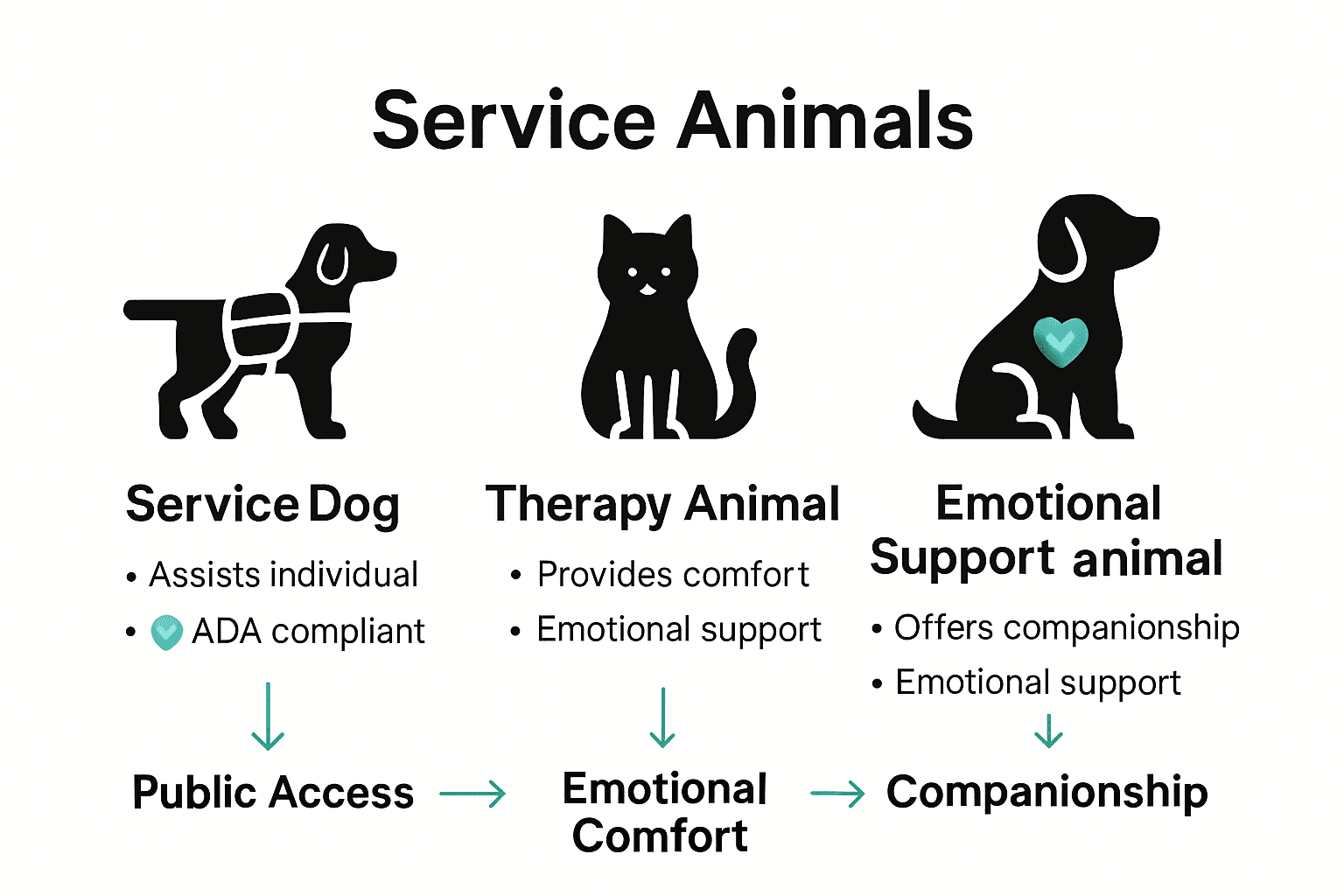
- Therapy Animals: Provide emotional comfort in hospitals, schools, and rehabilitation centers
- Emotional Support Animals: Offer psychological stability and stress reduction
- Companion Animals: Provide social interaction and mental health benefits
- Facility Animals: Assist in specialized environments like healthcare settings
PetMD explains that while service dogs perform specific tasks, therapy and emotional support animals offer critical companionship for individuals with various needs. These alternatives can be particularly beneficial for people who:
- Cannot manage a full-time service dog
- Have limited financial resources
- Require less intensive support
- Need occasional emotional regulation
Technology and adaptive equipment also serve as powerful complementary supports, including:
- Assistive communication devices
- Smart home technologies
- Mobility aids
- Personal emergency response systems
- Adaptive computer interfaces
For handlers exploring alternative support options and training strategies, Puppy Training for Disabilities provides comprehensive insights into developing supportive animal partnerships.
Enhance Your Independence with Innovative Service Dog Communication
Living with a service dog means embracing new ways to achieve true independence. As the article “Independence With Service Dogs: Complete Guide” explains, service dogs provide vital support that goes beyond mobility assistance. They empower handlers to manage daily challenges with confidence and emotional security.
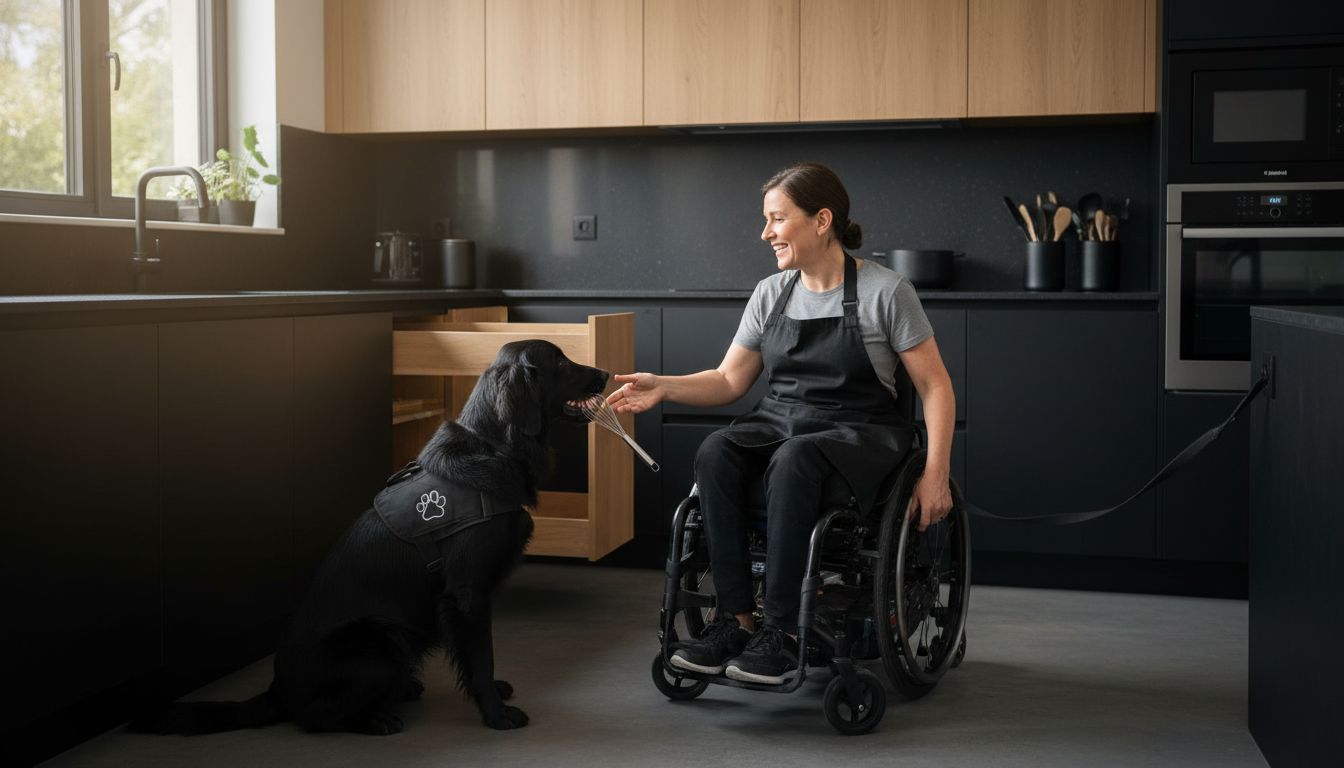 Yet, communication remains a key hurdle for many. Limited ways to signal needs or alert others can slow down response times and reduce autonomy.
The iPupPee device found at ipuppee.com offers a smart solution to this problem. This unique alert system allows service dogs to communicate effectively through a simple button press, bridging critical gaps between the dog and handler or family members. Imagine the peace of mind gained when your service dog can signal an emergency, medication reminder, or request assistance instantly.
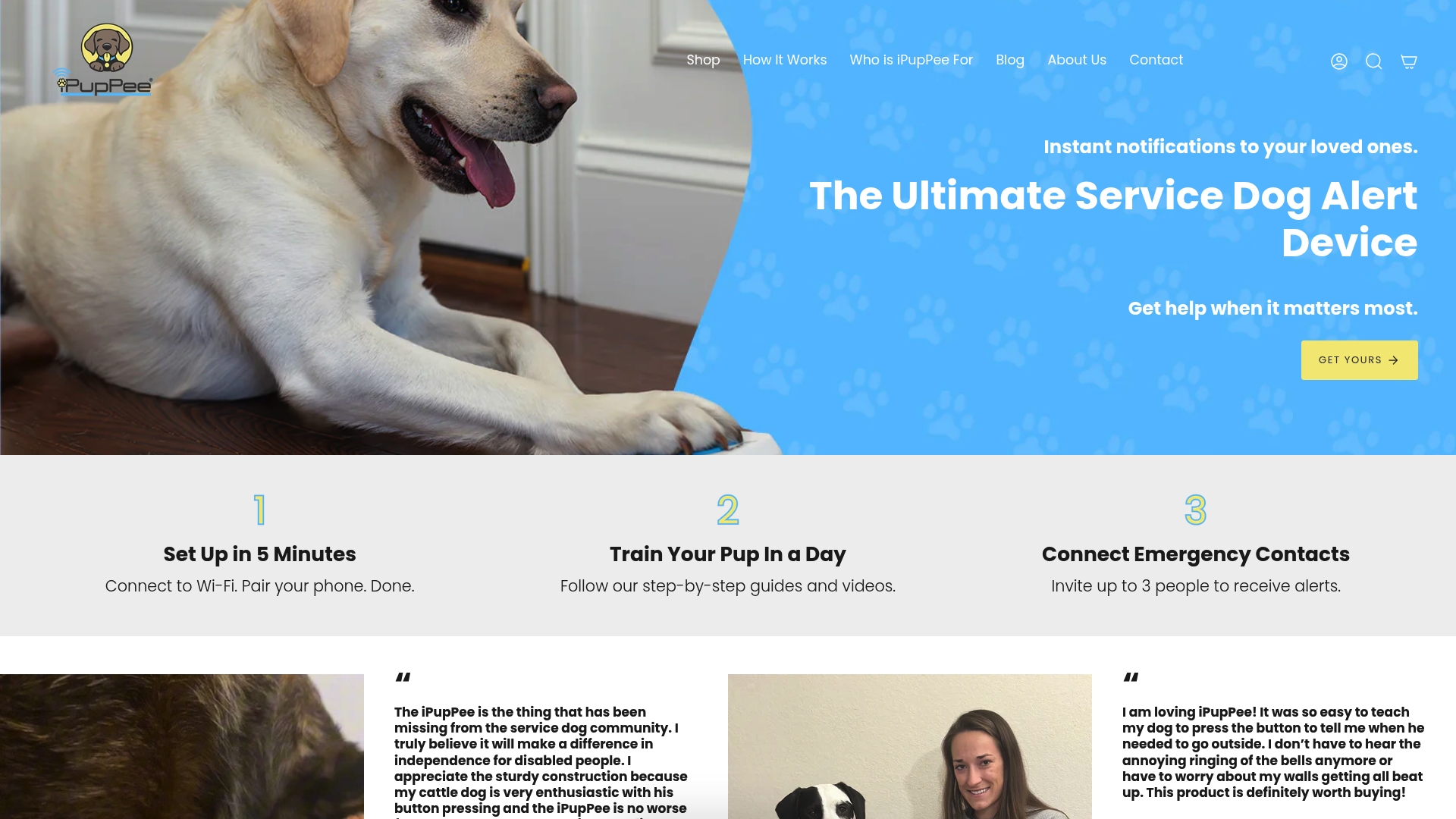
Take control today by enhancing trust and safety in your partnership. Visit ipuppee.com to discover how iPupPee complements your service dog’s training and helps you live with greater confidence and functional independence. Don’t wait to experience the next level of communication that strengthens your bond and supports your freedom.
Frequently Asked Questions
What tasks can service dogs perform to promote independence?
Service dogs can perform various tasks including guiding individuals with visual impairments, alerting those who are hearing-impaired to important sounds, assisting with mobility by retrieving objects, providing stability, detecting medical emergencies like seizures, and offering emotional support for psychiatric conditions.
How do service dogs assist individuals with mobility challenges?
Service dogs help individuals with mobility challenges by retrieving dropped items, opening and closing doors, providing balance and stability support, and assisting with wheelchair navigation.
What legal rights do service dog handlers have?
Service dog handlers have rights that include unrestricted access to public spaces, protection from discrimination in housing, exemption from pet fees in rentals, and accommodation in workplaces and public transportation.
What are the key responsibilities of a service dog handler?
Service dog handlers must maintain their dog’s professional behavior, ensure ongoing training and health monitoring, uphold strict behavioral standards, and manage public interactions responsibly.
Recommended
- Complete Guide to Why Train Service Dogs – iPupPee
- How Service Dogs Work: Complete Guide for Owners – iPupPee
- Understanding Service Dog Legal Rights Explained – iPupPee
- How Service Dogs Help: Real Benefits Explained for 2025 – iPupPee
- Airlines That Will Allow Dogs and Cats in The Cabin - press24.click