

TL;DR:
- Assistive canine tools include devices that help service dogs perform tasks more effectively for individuals with disabilities. These tools are categorized into communication aids, mobility supports, and safety devices, each addressing specific handler needs. Proper matching, professional assessment, and training are essential for effective and safe use of these devices.
Assistive canine tools are specialized devices and equipment designed to help service dogs perform their tasks more effectively for individuals with disabilities and seniors. These tools fall into three broad categories: communication aids, mobility supports, and safety devices. Examples include support harnesses, wheeled carts, alert collars, and GPS trackers. Understanding these devices is the first step toward choosing the right setup for your service dog. Explaining assistive canine tools correctly matters because the wrong device can reduce a dog’s effectiveness or cause physical harm to the animal.
What are the main categories of assistive canine tools?
Assistive canine tools divide into three functional groups: communication aids, mobility supports, and safety devices. Each group addresses a different aspect of the handler and dog relationship. Knowing which category fits your situation narrows your choices quickly.
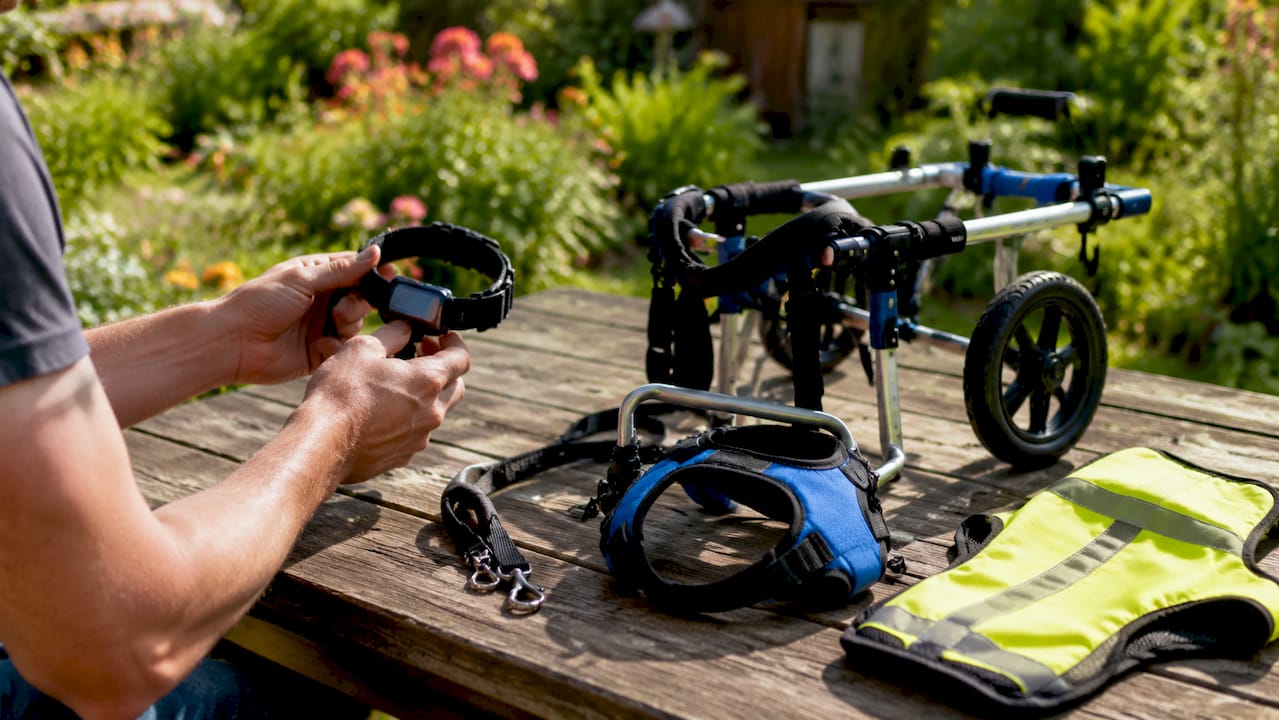
Communication aids are devices that help a service dog signal its handler. Alert collars, vibration devices, and button-press systems like the iPupPee device allow dogs to initiate contact with their handlers. AI pet collars use machine learning to interpret vocalizations and motion, then deliver emotional state classifications and health data through a phone app. Products like Petpuls and PettiChat represent this newer class of canine communication technology. These tools are especially valuable for seniors living alone who need a reliable alert when their dog detects a problem.
Mobility supports include support harnesses and wheeled carts. Matching the device to the dog’s weakness pattern ensures effective support and preserves quality of life. A rear-support harness works for a dog with hind limb weakness, while a full-body cart suits a dog with more extensive paralysis. Traction aids such as rubber toe grips, paw wax, and non-slip boots improve stability on slippery floors. These adjunct devices reduce falls and encourage confident movement in dogs with mobility challenges.
Safety devices cover specialized leashes, reflective vests, and high-visibility gear. These tools protect both the dog and the handler in public environments. A reflective harness keeps a service dog visible during evening walks, which matters greatly for seniors with low vision.
- Alert collars and vibration devices for communication
- Support harnesses for front, rear, or full-body weakness
- Wheeled carts for dogs with significant mobility loss
- Rubber toe grips, paw wax, and non-slip boots for traction
- Reflective vests and high-visibility leashes for safety
Pro Tip: Before purchasing any mobility device, ask your veterinarian to map your dog’s specific limb weakness. A rear harness placed on a dog with front limb weakness can worsen the problem.
How do assistive tools differ across guide, hearing, and mobility dogs?
The types of assistive dogs each require different equipment because their tasks are fundamentally different. A guide dog navigates physical space. A hearing dog responds to sound. A mobility dog provides physical support. Each role demands a distinct set of canine support tools.
| Service Dog Type | Primary Tool | Key Function | Training Focus |
|---|---|---|---|
| Guide dog | Rigid handle harness | Transfers directional cues from dog to handler | Obstacle avoidance, route navigation |
| Hearing dog | Alert collar or chain | Signals sound presence and location | Alert chain sequence, sound discrimination |
| Mobility dog | Support harness or cart | Provides physical stability and balance | Weight-bearing tasks, brace work |
Guide dogs wear a rigid harness with a handle that transmits movement information directly to the handler’s hand. The handle design is the critical tool here. It converts the dog’s body movement into tactile signals the handler can read in real time.
Hearing dogs use a trained sequence called the alert chain. The dog makes physical contact with the handler, then leads them to the sound source or performs a specific behavior at danger sounds like smoke alarms. This distinguishes a true hearing service dog from a dog that simply reacts to noise. Hearing dog reliability is evaluated based on alert response accuracy across diverse acoustic environments, which is why proofing in multiple settings is non-negotiable.
Mobility dogs use support harnesses and carts selected based on the dog’s own physical condition. Effective device selection starts with functional mapping of the dog’s limb weakness to determine whether a harness, cart, or traction aid is appropriate. A dog supporting a handler’s balance cannot do that job reliably if the dog itself has unaddressed mobility issues.
What factors should you consider when choosing canine assistive devices?
Choosing the right canine assistive device starts with a clear assessment of the handler’s disability-related needs. The device must match the specific task the dog performs, not just the general category of disability. A communication device designed for a deaf handler serves a completely different purpose than a mobility harness for someone with balance problems.
The dog’s physical condition is equally important. Assistive devices must be tailored to the dog’s specific deficit pattern to prevent harm and maximize independence. A harness that fits poorly or addresses the wrong limb group can cause pressure sores, muscle strain, or gait problems over time.
Professional consultation is not optional. NDIS guidance classifies assistance animals as assistive technology, which means their training and equipment require formal assessments. This framing is useful even outside Australia. It means you should approach device selection the same way you would approach any medical equipment decision: with professional input and documented evidence.
- Identify the specific task the device must support
- Assess the dog’s physical capabilities and any existing limitations
- Consult a veterinarian and a certified service dog trainer before purchasing
- Factor in maintenance costs and device lifespan
- Test the device in the environments where the dog will actually work
Pro Tip: Ask your service dog trainer to observe the dog wearing the device during a real task before you commit to it. A device that looks correct in a store may restrict movement during actual work.
Cost is a real consideration. Wheeled carts and custom harnesses can be expensive, and insurance coverage varies. Some programs, like NDIS, fund the cost of the animal, training, care, and assessments when the device is reasonable and necessary. Checking eligibility before purchasing saves significant money.
What role does training play in using assistive tools effectively?
Training is the foundation that makes any assistive tool work. A harness on an untrained dog is just equipment. A harness on a well-trained dog becomes a functional extension of the handler’s body. The device and the dog’s skills must develop together.
Service dogs must demonstrate safe, calm, and reliable behavior in public. The public access test, while a voluntary standard, evaluates the skills that matter most: loose-leash walking, ignoring distractions, and performing disability-related tasks on cue. These behaviors are prerequisites for any assistive tool to function as intended.
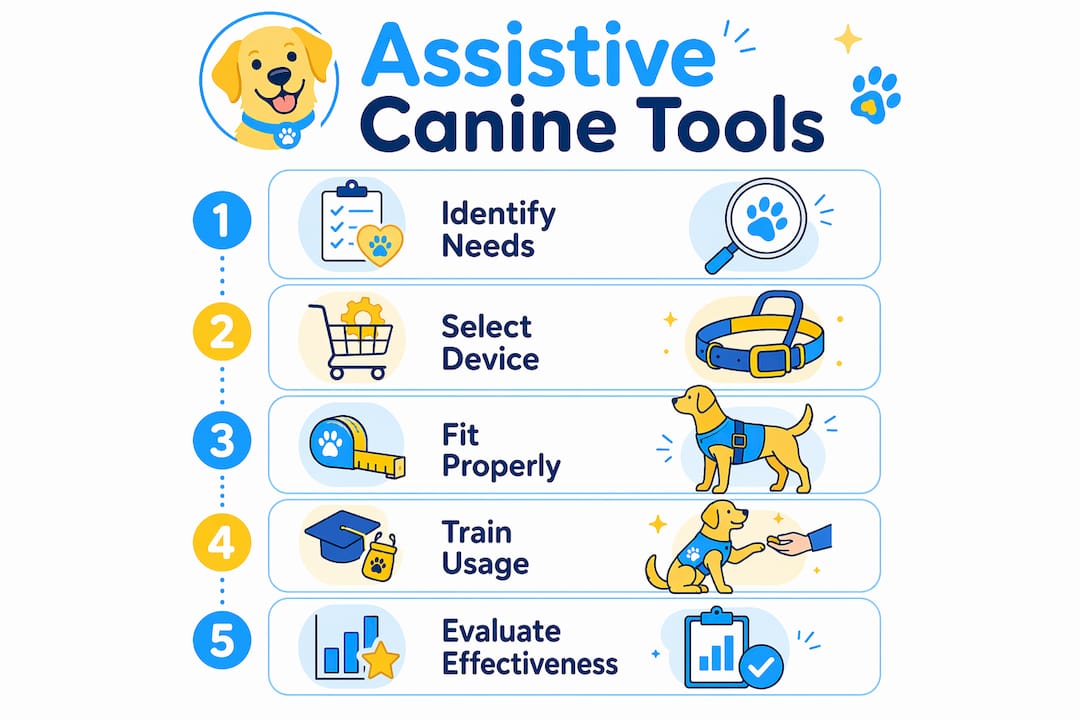
Training a service dog to use assistive tools effectively follows a clear sequence:
- Build the foundational obedience behaviors first: sit, stay, heel, and recall under distraction.
- Introduce the device in a low-stress environment so the dog associates it with positive experiences.
- Practice the specific task the device supports in controlled settings before moving to public spaces.
- Proof the behavior across multiple environments, including stores, transit, and crowded areas.
- Conduct regular maintenance training to prevent skill drift over time.
Service dog training integrates tool use with behavioral standards such as calmness in public, reliability in task execution, and ignoring distractions. A dog that performs perfectly at home but becomes distracted in a grocery store is not ready for public access work with assistive equipment. Consistent proofing across environments is what separates a reliable service dog from one that works only in familiar settings.
Public access readiness also protects the handler legally. Under the Americans with Disabilities Act, a service dog must be under control and performing a task related to the handler’s disability. A dog that disrupts a public space, even while wearing assistive equipment, can be asked to leave. Training to a public access standard protects both the handler’s rights and the dog’s working status.
What emerging technologies are changing assistive canine tools?
Technology is expanding what canine assistance devices can do. The most significant shift is the move from passive equipment to active monitoring and communication systems.
- AI collars like Petpuls analyze vocalizations and classify emotional states, giving handlers real-time data on their dog’s stress or alertness levels.
- GPS trackers integrated into service dog harnesses allow handlers and caregivers to monitor a dog’s location, which is critical if a dog becomes separated from a handler with a cognitive disability.
- Wearable health sensors track heart rate, activity levels, and sleep patterns, flagging early signs of illness before they affect the dog’s working ability.
- Button-press communication devices, including the iPupPee alert system, give dogs a simple, reliable way to signal their handler without requiring complex vocalization or physical contact.
- Smart leashes with tension sensors provide feedback on the dog’s pulling behavior, helping trainers identify when a dog is stressed or distracted during public access work.
The limitation of emerging technology is reliability. An AI collar that misclassifies a dog’s emotional state during a critical moment creates a false sense of security. Traditional training and well-fitted physical devices remain the most dependable foundation. Technology works best as a supplement to proven methods, not a replacement for them.
Key Takeaways
Assistive canine tools work best when the device type, the dog’s physical condition, and the handler’s specific disability needs are matched through professional assessment and consistent training.
| Point | Details |
|---|---|
| Three core categories | Communication aids, mobility supports, and safety devices each serve distinct handler needs. |
| Dog type determines device | Guide, hearing, and mobility dogs require fundamentally different equipment based on their tasks. |
| Professional assessment is required | Formal evaluation by a vet and trainer prevents device mismatch and physical harm to the dog. |
| Training precedes tool use | A service dog must master foundational behaviors before any assistive device becomes effective. |
| Technology supplements, not replaces | AI collars and GPS trackers add value but cannot substitute for well-trained task performance. |
What I’ve learned about assistive tools that most guides miss
Most articles on defining assistive pet tools focus on the equipment itself. The harder lesson is that the device is almost never the problem. The problem is usually a mismatch between what the handler expects the tool to do and what the dog has actually been trained to do with it.
I’ve seen handlers invest in expensive wheeled carts and AI collars before their dog had mastered basic public access behaviors. The technology sat unused because the dog wasn’t ready for it. The role of devices in service dog training is to amplify a skill that already exists, not to create one from scratch.
The other thing most guides skip is the dog’s comfort with the device over time. A harness that fits well on day one may cause problems after the dog gains or loses weight, or as the dog ages. Regular fit checks and veterinary reviews are as important as the initial selection. Assistive tools require ongoing maintenance, not just a one-time purchase decision.
My honest advice: treat device selection as a process, not an event. Start with a professional assessment, introduce the device gradually, and revisit the fit and function every six months. That approach produces reliable results. Buying the most expensive device available and skipping the process does not.
— Andrew
Ipuppee’s resources for service dog handlers
Ipuppee publishes practical guides and product resources specifically for service dog handlers and their dogs. The blog covers topics from service dog behavior to equipment selection, giving you a reliable reference point as your needs evolve.
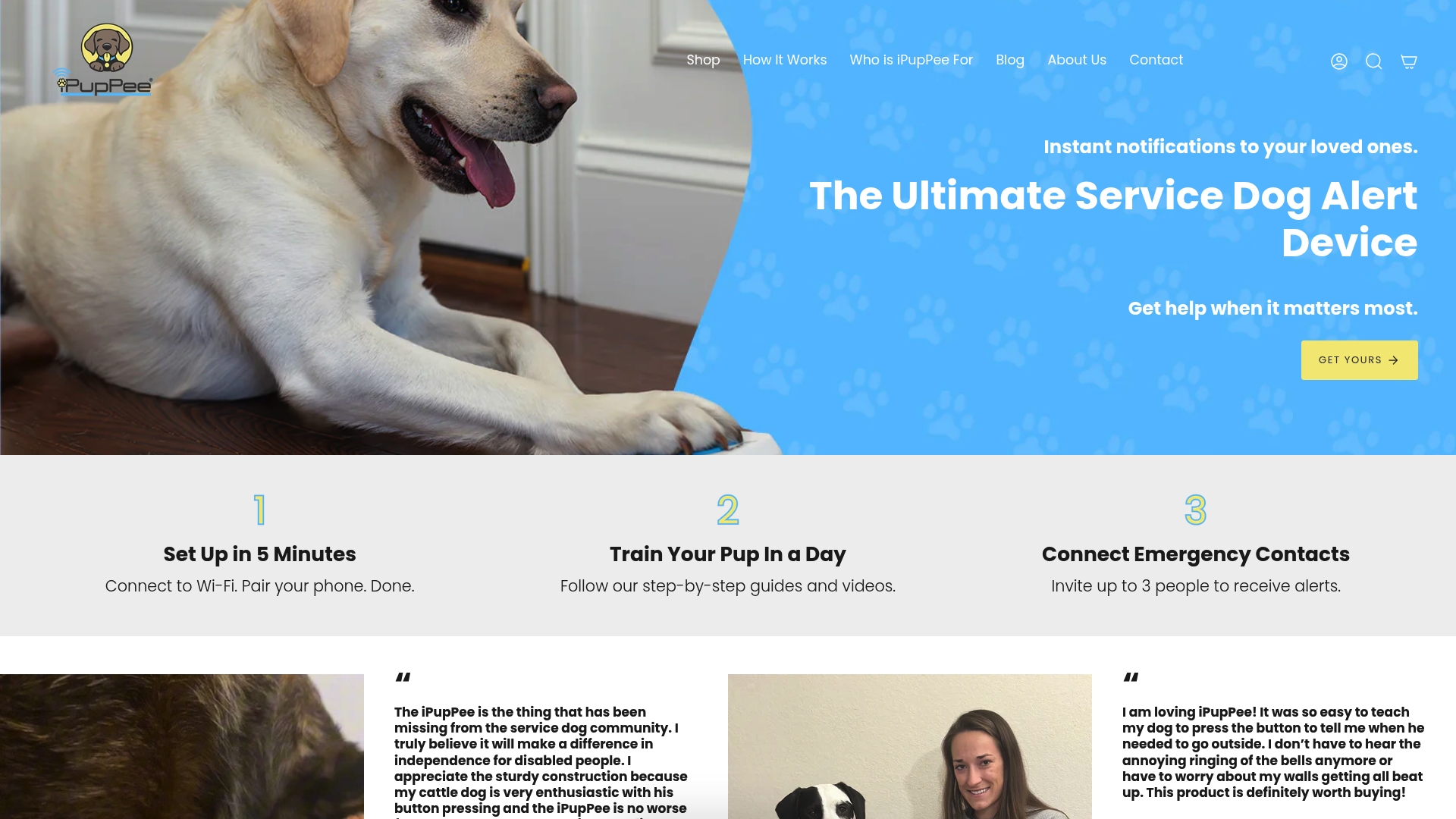
Whether you are a senior living independently or a person with a disability building a stronger working relationship with your dog, Ipuppee offers equipment and expert content designed for real-world use. The iPupPee alert device gives your dog a direct, simple way to communicate with you through a single button press. Visit Ipuppee to see the full product range and access training resources built around safety, communication, and independence.
FAQ
What is the definition of an assistive canine tool?
An assistive canine tool is any device or equipment that helps a service dog perform tasks related to its handler’s disability. Examples include support harnesses, alert collars, wheeled carts, and communication button systems.
How many tasks must an assistance dog be trained to perform?
Assistance animals must be trained to perform at least three tasks related to their handler’s disability to qualify as assistance animals under formal definitions. These tasks must be directly connected to the handler’s disability-related needs.
What is the alert chain used by hearing service dogs?
The alert chain is a trained sequence where the hearing dog makes physical contact with the handler and then leads them to the sound source or performs a specific behavior at danger sounds. This distinguishes a certified hearing service dog from a dog that simply reacts to noise.
Are public access tests required for service dogs?
Public access tests are voluntary standards, not legal requirements under the ADA. They evaluate skills like loose-leash walking, ignoring distractions, and performing disability-related tasks, and passing one demonstrates that a service dog meets a recognized behavioral standard.
Can seniors get funding for assistive canine tools?
Funding availability depends on the program and country. NDIS in Australia funds the cost of the animal, training, care, and assessments when the assistance animal is deemed reasonable and necessary. In the United States, funding options vary by state and insurance plan, so consulting a disability services coordinator is the most reliable first step.