

More than 60 million american adults live with a disability, relying on support that can often feel out of reach. For many, service dogs make daily independence possible thanks to their rigorous training and unique skills. Understanding what sets these animals apart, the vital ways they help, and the rights that protect both dog and handler will help anyone appreciate their life-changing role.
Table of Contents
- Defining Service Dogs And Their Primary Roles
- Major Types Of Service Dogs Explained
- Key Tasks And Characteristics By Role
- Legal Protections And Public Access Rights
- Handler Responsibilities And Ethical Guidelines
Key Takeaways
| Point | Details |
|---|---|
| Definition of Service Dogs | Service dogs are trained canines that assist individuals with disabilities, performing specific tasks that enhance independence and quality of life. |
| Legal Protections | Under the Americans with Disabilities Act, service dogs have special access rights, allowing them to accompany their handlers in public spaces where pets are typically restricted. |
| Handler Responsibilities | Handlers must ensure their service dogs are well-trained, well-behaved, and maintain high standards of conduct while advocating for their rights. |
| Types and Tasks of Service Dogs | Various types of service dogs, including guide, hearing, and medical alert dogs, are specifically trained to perform distinct tasks tailored to the needs of their handlers. |
Defining Service Dogs and Their Primary Roles
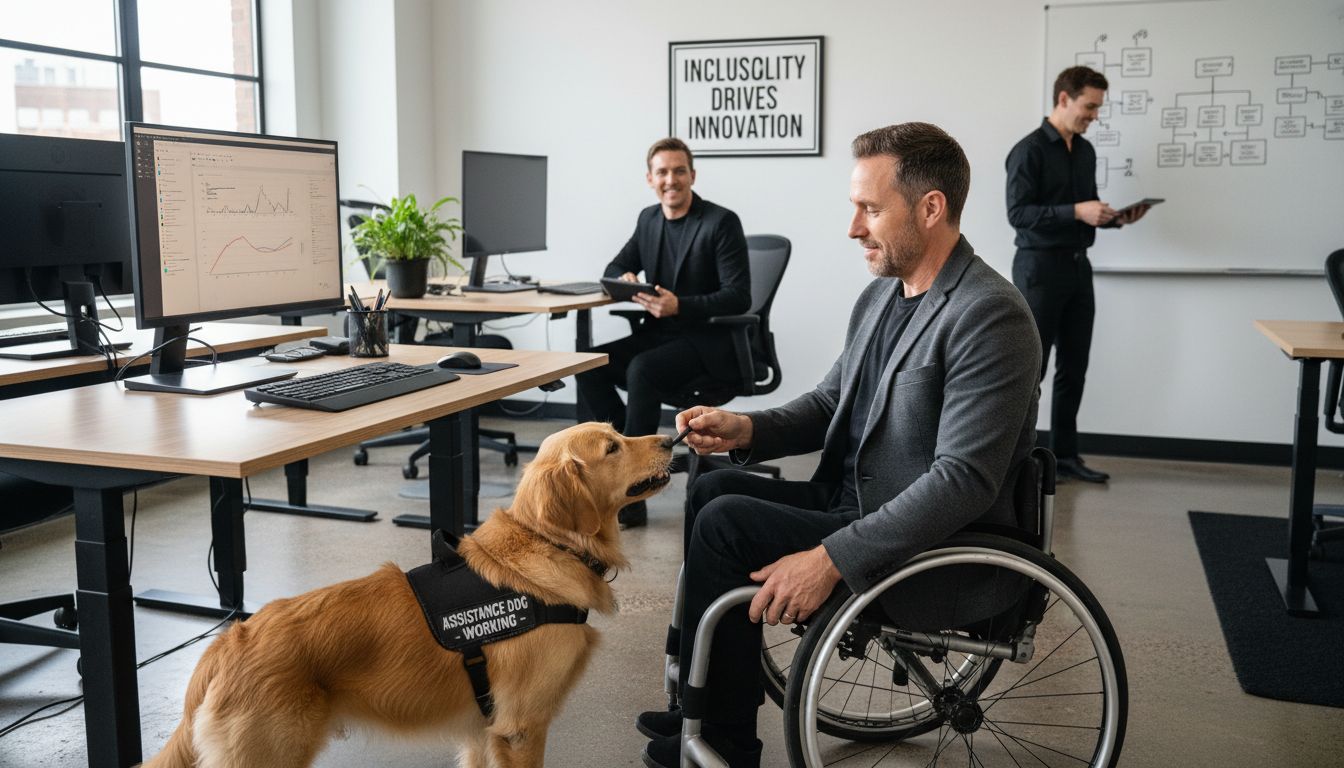
Service dogs are highly specialized canines trained to provide critical assistance to individuals with disabilities, performing specific tasks that enhance independence and quality of life. According to the American Kennel Club, these remarkable animals are specifically trained to support people with a wide range of conditions including visual impairments, hearing loss, PTSD, seizures, mobility challenges, mental health conditions, diabetes, and autism.
Service dogs differ significantly from companion or therapy animals because they are professionally trained to complete precise tasks directly related to their handler’s disability. These tasks might include guiding individuals with visual impairments, alerting deaf individuals to sounds, retrieving dropped items, providing physical stability, interrupting panic attacks, or detecting incoming medical events like seizures or blood sugar changes. The selection and training of service dogs require extensive screening to ensure they possess the right temperament, intelligence, and capability to perform complex assistance functions.
The legal definition emphasizes that service dogs are working animals, not pets. They are granted special access rights under the Americans with Disabilities Act, allowing them to accompany their handlers in public spaces where typical pets would be restricted. Comprehensive service dog training involves months of specialized instruction to help these dogs develop the skills necessary to support their human partners effectively. Their roles are defined not just by their ability to perform tasks, but by their consistent reliability, calm demeanor, and deep connection with the individuals they serve.
Major Types of Service Dogs Explained
Service dogs are remarkable animals trained to support individuals with diverse disabilities, each specializing in specific types of assistance. According to the American Kennel Club, these specialized canines are categorized into several critical types that address unique human needs, including guide dogs, hearing dogs, mobility assistance dogs, medical alert dogs, psychiatric service dogs, and autism support dogs.
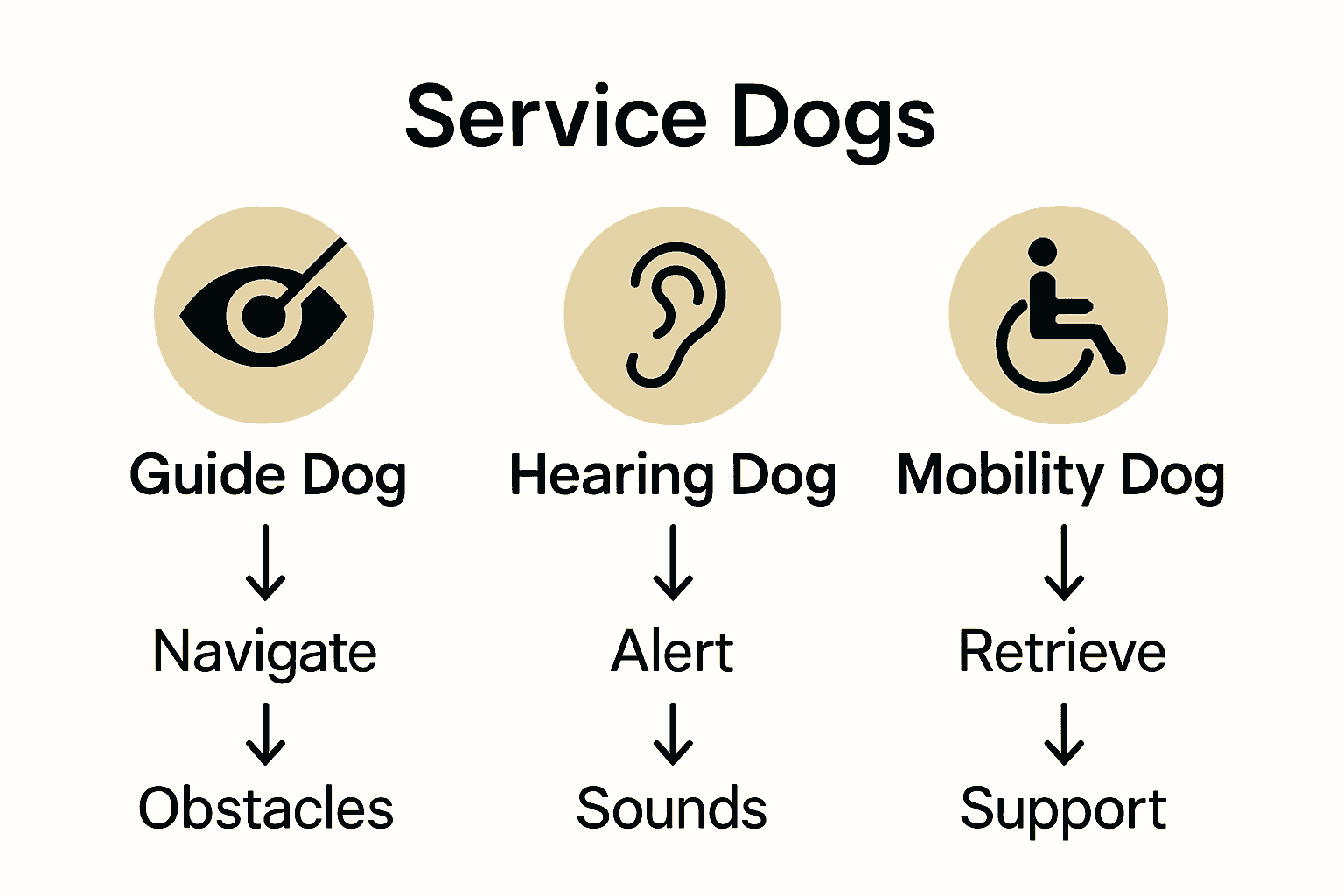
Each service dog type performs highly specialized tasks tailored to their handler’s specific challenges. Guide dogs assist visually impaired individuals by navigating complex environments, while hearing dogs alert deaf individuals to critical sounds like alarms, doorbells, or approaching vehicles. Mobility assistance dogs help people with physical disabilities by retrieving objects, providing balance support, opening doors, and helping with daily tasks. Understanding the right service dog breed can make a significant difference in matching a dog’s capabilities with a handler’s unique requirements.
Medical service dogs represent another extraordinary category of assistance animals. Medical alert dogs are trained to detect and respond to specific health conditions such as impending seizures, dangerous blood sugar fluctuations in diabetic individuals, or potential cardiac events. Psychiatric service dogs provide crucial support for individuals managing mental health conditions, helping to interrupt anxiety attacks, provide grounding during emotional distress, and create a sense of safety. Autism support dogs specifically work with individuals on the autism spectrum, offering comfort, reducing sensory overload, and helping maintain emotional regulation in challenging social situations.
Key Tasks and Characteristics by Role
Service dogs are meticulously trained to perform specialized tasks that go far beyond typical animal assistance. According to the American Kennel Club, these remarkable animals are selected and trained to execute precise tasks that directly address their handler’s unique disability-related challenges, with each role requiring distinct skills and temperamental characteristics.
The specific tasks performed by different service dog types reveal the incredible depth of their training and capabilities. Guide dogs must demonstrate exceptional spatial awareness, calm temperament, and the ability to navigate complex environments while maintaining their handler’s safety. Hearing dogs require acute sound detection skills and the capability to alert their handlers through specific, trained signals. Mobility assistance dogs need significant physical strength, precise object retrieval skills, and the ability to provide stable support during movement. Selecting the right service dog breed becomes crucial in matching a dog’s natural abilities with the specific requirements of their potential handler.
Beyond physical tasks, service dogs must possess extraordinary psychological attributes. Medical alert dogs require an almost intuitive ability to detect subtle physiological changes, such as blood sugar fluctuations or impending seizures. Psychiatric service dogs need exceptional emotional intelligence to recognize and interrupt potential mental health episodes, providing grounding and comfort. Autism support dogs must be particularly patient, adaptable, and capable of maintaining calm in overstimulating environments. These dogs are not just trained performers but empathetic partners who develop deep, nuanced understanding of their handler’s unique needs and challenges.
Legal Protections and Public Access Rights
Service dogs occupy a unique legal status that distinguishes them from ordinary pets, providing critical protections that ensure individuals with disabilities can navigate public spaces with dignity and independence. According to the American Kennel Club, the Americans with Disabilities Act (ADA) grants these remarkable animals comprehensive public access rights, allowing them to accompany their handlers in spaces typically restricted to pets, including restaurants, shops, government buildings, and public transportation.
The legal framework surrounding service dogs is complex and nuanced, with specific requirements that protect both handlers and public spaces. Public access rights are not absolute and come with critical responsibilities. Service dogs must be individually trained to perform specific tasks directly related to their handler’s disability, demonstrating clear functional purpose beyond companionship. Understanding service dog regulations is crucial for both handlers and businesses to ensure proper implementation of these rights.
Beyond federal protections, service dog handlers must also maintain high standards of behavior and training. The dog must remain under control, be housebroken, and not pose a direct threat to the health or safety of others. Businesses can only ask two specific questions when encountering a service dog: whether the animal is required because of a disability, and what task the dog has been trained to perform. Importantly, they cannot demand documentation, require the dog to demonstrate its task, or inquire about the specific nature of the handler’s disability. These legal protections are designed to preserve the dignity and privacy of individuals with disabilities while ensuring public safety and accessibility.
Handler Responsibilities and Ethical Guidelines
Service dog handlers bear significant responsibilities that extend far beyond typical pet ownership. According to NEADS, handlers must ensure their service dogs are meticulously trained, well-behaved, and capable of performing specific tasks that directly mitigate their disability, while maintaining the highest standards of public conduct and professional demeanor.
Ethical guidelines for service dog handlers encompass multiple critical dimensions. This includes maintaining the dog’s ongoing training, ensuring impeccable public behavior, and recognizing the animal as a working partner rather than a traditional pet. Choosing the right approach to service dog management becomes crucial in preserving the dog’s effectiveness and professional status. Handlers must consistently demonstrate control, prevent disruptive behaviors, and ensure their dog remains focused on its critical assistance tasks in various environments.
The responsibilities extend to comprehensive care and professional maintenance of the service dog. This includes regular veterinary check-ups, continued task-specific training, maintaining the dog’s physical and mental health, and ensuring proper nutrition and exercise. Handlers must also be prepared to advocate for their rights while simultaneously respecting public spaces and other individuals. The relationship between a handler and a service dog is a profound partnership built on mutual trust, rigorous training, and an unwavering commitment to supporting the handler’s independence and quality of life.
Enhance Your Service Dog Partnership with Innovative Communication Tools
Service dogs play critical roles in supporting independence and safety for individuals with disabilities. The article highlights how these specially trained animals perform essential tasks ranging from mobility assistance to medical alerts. Yet, even the most skilled service dog and handler face communication challenges, especially when subtle requests or urgent alerts could make a vital difference in daily life.
The right tools can bridge this communication gap by empowering your service dog to express needs clearly, reducing stress and enhancing reliability. At ipuppee.com, you will find innovative solutions designed specifically for service dog handlers who value safety, independence, and seamless interaction with their canine partners. Our flagship alert device is simple to use and provides a clear way for your dog to communicate important signals whenever needed. This helps maintain the strong bond between you and your service dog while supporting their important role as your trusted partner.
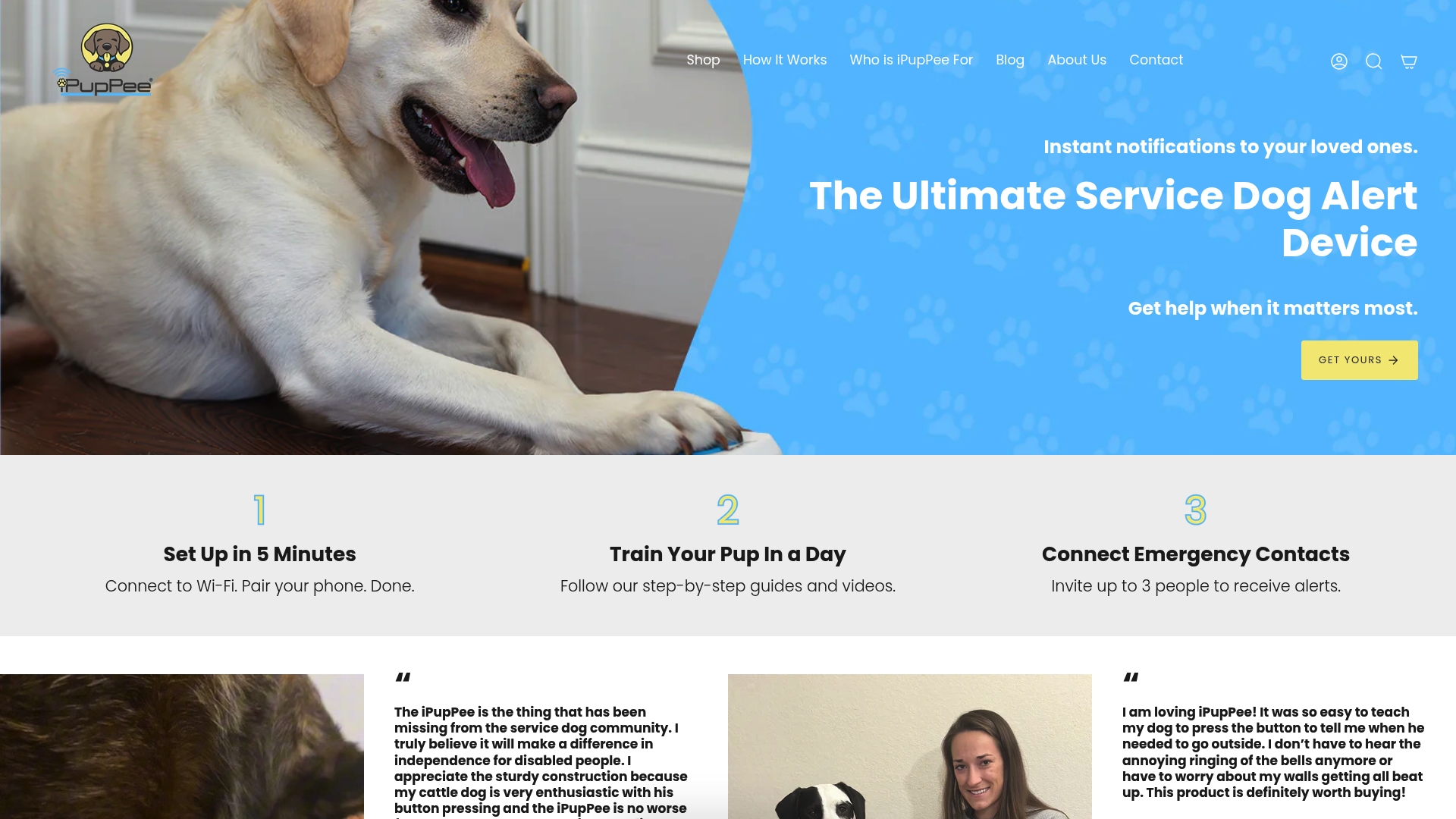
Discover how the iPupPee device can transform communication with your service dog by visiting ipuppee.com. Learn more about proper service dog training techniques and explore the top dog breeds for service roles to align your choice perfectly. Take action now to enhance your service dog’s effectiveness and create a safer, more independent life together.
Frequently Asked Questions
What are service dogs trained to do?
Service dogs are trained to perform specific tasks to assist individuals with disabilities, such as guiding visually impaired individuals, alerting deaf individuals to sounds, retrieving items, providing stability for mobility challenges, and detecting medical events like seizures or blood sugar changes.
How are service dogs different from therapy dogs?
Service dogs are specifically trained to perform tasks directly related to their handler’s disabilities, whereas therapy dogs provide comfort and companionship but do not have the same access rights or specific task-related training.
What legal protections do service dogs have?
Service dogs are protected under the Americans with Disabilities Act (ADA), which grants them public access rights to accompany their handlers in places typically restricted to pets, such as restaurants and public transportation.
What are the responsibilities of a service dog handler?
Handlers are responsible for ensuring their service dogs are trained, well-behaved, and capable of performing specific tasks. They must maintain the dog’s ongoing training, provide care, and advocate for their rights while respecting public spaces.