

Most dogs that seek out alone time are showing a normal temperament trait or a healthy need to self-regulate, not a problem you need to fix. That preference usually stays steady over weeks and months. What’s not normal is a sudden shift, paired with pain signals, appetite changes, or a dog that starts avoiding people it used to greet. The sections below walk through both, using guidance from the AKC and current behavior research so you know which pattern you’re looking at.
TL;DR:
- Most dogs that seek solitude are displaying a natural temperament or breed trait, especially if the preference remains consistent over weeks.
- Sudden changes in behavior, such as hiding, appetite loss, or pain signals, indicate underlying health issues like arthritis or dental problems requiring veterinary attention.
- Normal solitude involves relaxed resting positions, consistent favorite spots, and responsiveness to food and voice, whereas distress behaviors include pacing and vocalizing.
- Gradual, structured training and routine help dogs enjoy alone time, with tools like enrichment, exercise, and low-stimulation environments supporting calm independence.
- Use video or photo monitoring to distinguish healthy withdrawal from distress, and consider a vet visit if behavioral changes are paired with physical signs or in older dogs.
Table of Contents
- Why Dogs Prefer Solitude: Personality, Breed, and Social Style
- Health, Age, and Sensory Reasons Dogs Withdraw
- Separation Stress vs. Healthy Alone Time
- How to Support Healthy Solitude at Home
- When to See a Veterinarian or Behaviorist
- Training Support for Healthy Alone Time
- A Balanced View on Dogs and Alone Time
- Consider Ipuppee When You Want Extra Reassurance
- Sources
- FAQ
Why Dogs Prefer Solitude: Personality, Breed, and Social Style
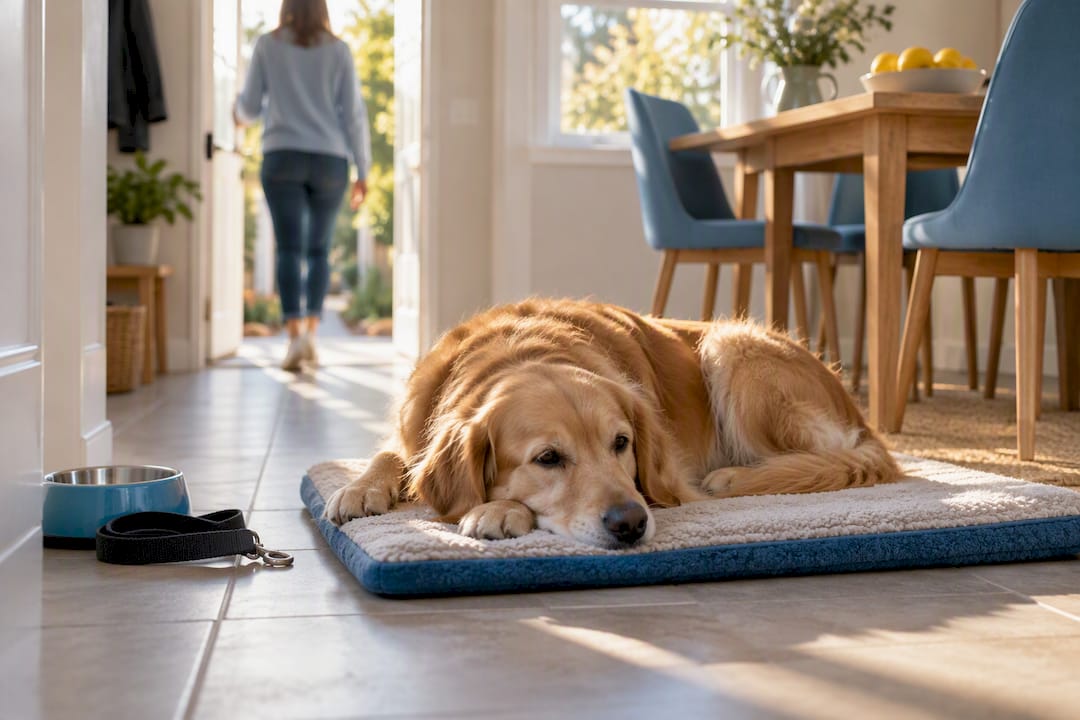
Some dogs are just wired for independence. Breeds developed for solo work, guarding livestock overnight, tracking scent alone across open ground, flushing birds without constant handler contact, tend to carry that self-directed streak into the living room. A dog bred to make decisions without a human standing next to it doesn’t suddenly need constant company once it’s off duty.
Individual temperament matters just as much as breed history. Two littermates raised in the same house can land on opposite ends of the social spectrum: one glued to your ankles, the other perfectly content in the next room. The AKC makes this point directly: even naturally social breeds vary in how much personal space they need, and that variation is normal rather than a flaw to train out.
The real skill for owners is telling stable preference from sudden withdrawal. A dog that has always drifted off to a favorite corner during movie night isn’t sending you a warning. A dog that used to nap next to the couch and now hides under the bed every evening is a different story.
Here’s what comfortable, personality-driven solitude usually looks like:
- Loafing loosely on its side or back, not curled tight or tucked away.
- Returning to the same preferred spot consistently, not a new hiding place each day.
- Perking up or wandering over when you call its name or open a treat bag.
- Sleeping with loose, relaxed breathing rather than tense stillness.
- Staying reachable, in the same room or a room away, rather than sealing itself off behind a door.
Pro Tip: Track where your dog naturally rests for a week. If the location stays consistent and it still responds to food or your voice, you’re looking at temperament, not trouble. A sudden switch to a new, harder-to-reach spot is the detail worth flagging.
Health, Age, and Sensory Reasons Dogs Withdraw
Pain changes behavior before it changes anything else you can see. A dog with arthritis in its hips will often stop joining you on the stairs or on the bed, not because it’s lost interest in you, but because getting there hurts. Dental pain works the same way: a dog quietly avoiding its food bowl and retreating instead of begging at dinner may have a cracked tooth or an abscess, not a sudden personality shift.
Several medical and sensory issues commonly show up as increased solitude:
- Arthritis or joint pain: reluctance to climb stairs, jump on furniture, or follow you room to room.
- Dental disease: dropping food, chewing on one side, or avoiding hard treats altogether.
- Hearing or vision loss: startling less at doorbells or your arrival, then compensating by staying in one predictable, low-stimulation spot.
- Cognitive decline in senior dogs: disorientation, altered sleep patterns, and staring at walls or into corners.
- Internal illness: general lethargy, appetite loss, or seeking out cool, quiet, low-traffic areas.
Senior dogs are especially prone to hiding pain by choosing odd resting spots, a tile floor over a soft bed, a closet over the living room, because the location feels physically easier or less exposed. Sudden isolation-seeking in an older dog is one of the more reliable early flags for arthritis or cognitive decline, and it often shows up before an owner notices any limping or obvious confusion.
Keep a simple log for a week if you notice a change: what time of day the withdrawal happens, which spot the dog chooses, whether appetite or water intake has shifted, and whether mobility looks different getting up from rest. That log turns a vague “he’s been off lately” into something a veterinarian can actually work with at the appointment.
Separation Stress vs. Healthy Alone Time
Calm solitude and separation distress look nothing alike once you know what to watch for, but owners mix them up constantly. Passive, relaxed alone time means a dog that settles into rest fairly quickly and stays quiet. Separation-related distress means pacing, whining, barking, chewing at doors, or attempts to escape a crate or room. Video analysis of nonclinical dogs left alone found that most spent extended periods simply resting rather than showing high activity or vocalizing, which tells you calm withdrawal is the common baseline, not the exception.
The behavior differences trace back to different emotional states, and they don’t all call for the same fix.
Behavioral research combining questionnaires and direct observation shows that separation-related behaviors stem from multiple distinct inner states, fear, anxiety, or frustration, and different dogs display different behavioral patterns depending on which state is driving the response.
That distinction matters practically. A frustrated dog might destroy a door frame near the exit it wants to use. A fearful dog might freeze, drool, or urinate. An anxious dog might pace in loops or vocalize continuously from the moment you leave. Lumping all three into “separation anxiety” leads owners toward the wrong fix.
A safe way to test where your own dog lands: step out for five minutes, staying close enough to observe through a window or a camera, and note what happens in the first sixty seconds after you leave.
- Does the dog settle within a minute or two, or does agitation build?
- Is there vocalizing, and does it stop on its own or continue the whole time?
- Are there signs of chewing, scratching at exits, or drooling?
- Does the dog return to a normal, relaxed state quickly once you come back?
If your dog settles fast and stays quiet, you’re likely watching healthy solitude. If the agitation escalates or doesn’t resolve, that’s the pattern worth discussing with a professional, and the guide on handling separation issues walks through next steps in more detail.
How to Support Healthy Solitude at Home
A dog that prefers alone time still needs that time to actually be restorative, not just tolerated. Building the right environment and routine turns “leaves me alone” into genuine self-soothing.
- Set up a dedicated retreat. Pick a low-traffic spot, a covered crate, a bed in a quiet corner, and make it consistently positive by feeding meals or high-value chews there for the first week. Never use it for time-outs or corrections.
- Choose enrichment that calms rather than revs up. A trial testing different enrichment options during short isolation periods found that long-lasting chews produced more calm, positive responses than treat-dispensing toys or smart dispensers. Puzzle toys can work well for engagement, but they can also backfire: effort-based toys can spike arousal briefly and create frustration if the dog gets stuck or the toy malfunctions. A mental stimulation option that suits your dog’s chewing style beats a generic puzzle bought off a shelf.
- Match exercise to the alone-time schedule. A dog that’s had a real walk or play session settles into solitude far more easily than one that’s still full of unspent energy. Time the bigger exercise session an hour or two before you need the dog to self-soothe.
- Taper attention gradually, don’t cut it off suddenly. If your dog is used to constant contact, reduce it in small steps, sit farther away, then in another room for a few minutes, then out of the house entirely, rather than jumping straight to a full day alone.
- Reinforce calm on your return, not excitement. Greeting a dog with the same energy you’d give a returning soldier teaches it that your absence is a big event. A low-key hello reinforces that alone time is unremarkable.
Routine consistency matters more than most owners expect here. Many dogs that had irregular schedules during long stretches at home later struggled when normal routines resumed, and gradual reintroduction of alone time protected against that kind of setback far better than an abrupt return to a full workday absence. A structured daily routine built around consistent feeding, exercise, and rest times gives a dog’s nervous system less to react to.
Pro Tip: Start alone-time training in five-minute blocks at a time of day when your dog is naturally sleepy, right after a walk works well, and only extend the duration once your dog settles within the first minute for three sessions in a row.
When to See a Veterinarian or Behaviorist
Certain signs deserve a same-week appointment rather than a wait-and-see approach. Sudden withdrawal in a dog that was previously social, especially in a senior dog, tops that list. So does any combination of reduced appetite, new incontinence, obvious pain behaviors like limping or yelping when touched, or lethargy that doesn’t lift after rest.
Bring these red flags straight to a vet visit:
- Sudden, unexplained preference for isolation in a dog with no history of it.
- Limping, stiffness, or reluctance to jump or climb stairs.
- Appetite loss lasting more than a day or two.
- New house-soiling or incontinence.
- Severe lethargy that doesn’t improve with rest.
- Disorientation, staring at walls, or altered sleep and wake cycles in an older dog.
Documentation speeds up the appointment enormously. A short video of the behavior in question, ideally comparing it to how the dog acted a few months ago, gives a vet or certified behaviorist far more to work with than a verbal description. Bring a simple timeline: when the change started, what if anything changed in the household around that time, and any medications or supplements the dog is currently taking.
Expect the first visit to focus on ruling out physical causes, bloodwork, a joint exam, dental check, before any behavior plan gets built. If the exam comes back clean and the pattern still points to fear, anxiety, or frustration during separation, that’s when a referral to a certified behaviorist for a structured plan makes sense.
Training Support for Healthy Alone Time
Owners who want a structured path forward don’t have to guess their way through it. Ipuppee’s step-by-step guide to teaching a dog to enjoy alone time breaks the process into the same gradual steps covered above, and the Psychology & Training Course goes deeper for owners dealing with a more entrenched pattern.
For owners who want an extra layer of reassurance during the transition, particularly service dog handlers, seniors living alone, or anyone managing a dog with health-related solitude, a communication device can help you check in without hovering:
- Get a video or audio check without physically disturbing a resting dog.
- Confirm a dog is calm rather than distressed during a longer absence.
- Support independence for the dog while keeping a safety net for the owner.
None of that replaces a veterinary exam when the red flags above show up. It’s a monitoring layer, not a diagnosis.
A Balanced View on Dogs and Alone Time
Most of the alarm owners feel about a dog wanting space is misplaced. A dog resting quietly in another room is very often just doing what dogs bred for independence, or dogs with a naturally lower social battery, are built to do. The mistake isn’t giving them that space. The mistake is not noticing when the pattern changes.
Watch for the shift, not the solitude itself. Log it, video it, and bring that evidence to a vet before guessing. Then use structured training, gradual and consistent, to make the alone time that remains actually restful for your dog.
— Andrew
Consider Ipuppee When You Want Extra Reassurance
Working through the checklist above, quiet retreat, matched exercise, gradual independence training, solves most cases of a dog that simply prefers its own space. If you want a safety net layered on top of that routine, Ipuppee gives you a way to check on a dog without walking into the room and undoing the calm you just built.
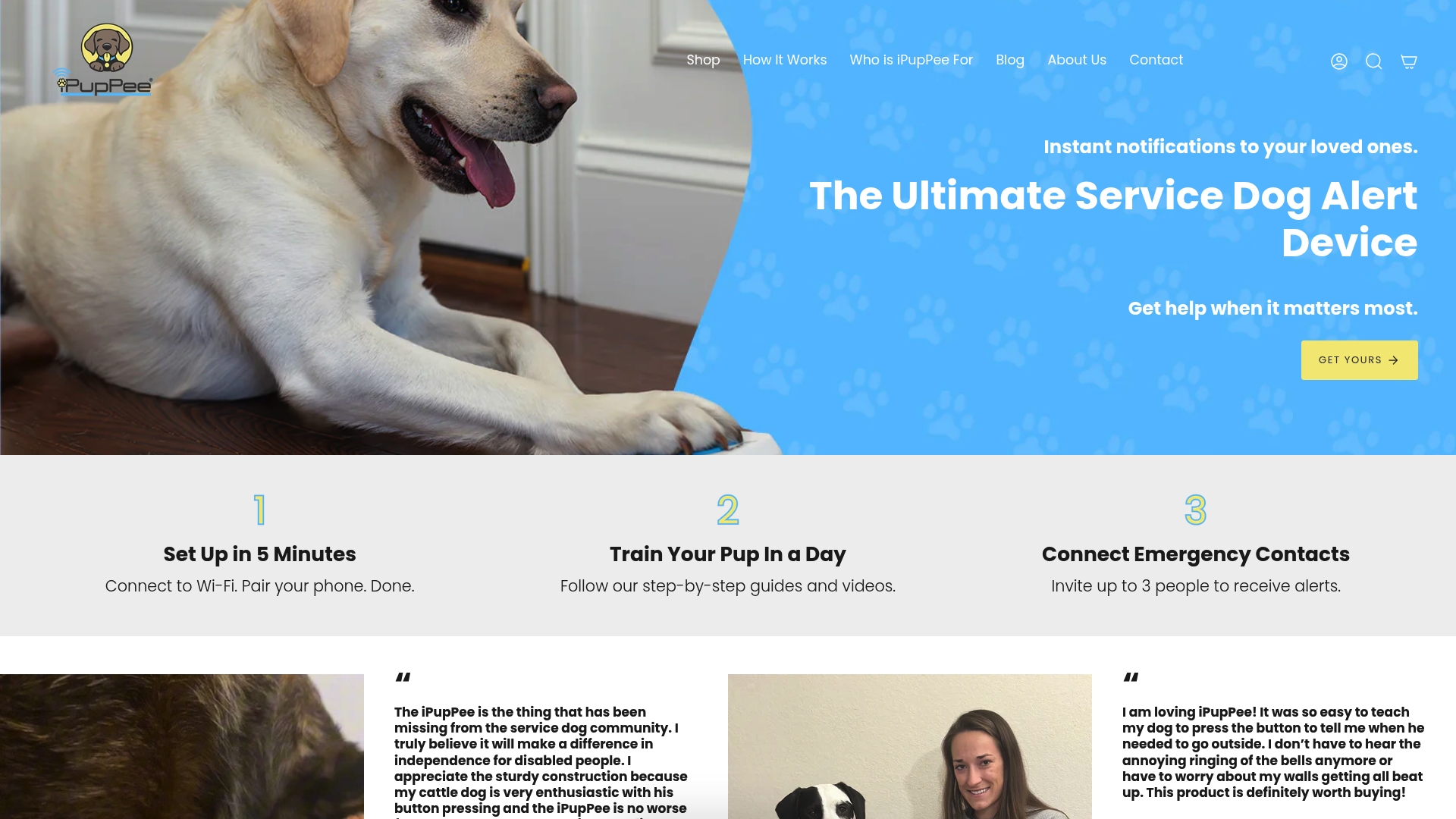
The iPupPee alert device lets a dog send a direct notification, complete with live video and two-way audio, to you or another contact with a single button press, and it runs without a monthly subscription. That setup fits service dog handlers, seniors living alone, and any pet owner who wants confirmation that a resting dog is actually resting, not distressed. Pair it with the Psychology & Training Course if you’d rather follow a structured, guided program than piece the training together yourself. Check the device’s current setup requirements and order details on the product page to see if it fits your household.
Sources
Guidance in this article draws on the AKC, a video-analysis study of dogs left alone, an enrichment trial on long-lasting chews, and PMC research on separation-related behavior.
- AKC expert advice: some dogs just need a little space
- Long-Lasting Chews Elicit Positive Emotional States in Dogs during Short Periods of Social Isolation
- Video analysis of adult dogs when left home alone
FAQ
Do dogs ever actually like being alone?
Yes. Many dogs prefer periods of solitude as a normal part of their temperament, and the AKC notes that even social breeds need downtime and a safe space to retreat to. This is especially common in breeds developed for independent work.
Are dogs happier alone or with another dog for company?
It depends entirely on the individual dog rather than a universal rule. Some dogs are calmer as the only pet in the household, while others regulate their stress better with a companion nearby, and social thinning in urban single-dog households can increase dogs’ reliance on human cues over time.
Do dogs get bored being home alone all day?
Some do, but video analysis of nonclinical dogs shows most spend extended stretches simply resting rather than showing signs of boredom or distress. Boredom is more likely when a dog gets little exercise or enrichment before being left alone, not from alone time itself.
Do dogs feel sad or distressed when left alone?
Some do, but distress and calm solitude look very different. Research shows separation-related behaviors stem from distinct states like fear, anxiety, or frustration, producing pacing, vocalizing, or destructive behavior, while a dog experiencing healthy alone time typically settles and rests quietly instead.
When should I worry about my dog wanting to be alone?
Worry when the preference for solitude appears suddenly, especially paired with appetite loss, limping, incontinence, or unusual hiding spots. A sudden shift in an older dog is often an early sign of arthritis or cognitive decline and is worth a veterinary visit rather than a wait-and-see approach.