

Your dog knocks over his water bowl, chews the corner of the couch, or hides under the bed. Most owners chalk these up to bad behavior or a quirky personality. But these can be early distress signals, and missing them has real consequences. Research shows that owners who understand dog body language catch stress up to 60% more reliably. This guide walks you through what distress actually looks like in dogs, what causes it, how to judge its severity, and exactly what to do next, whether your dog is a family pet, a rescue, or a working service dog.
Table of Contents
- What distress looks like in dogs
- Common causes and risk factors for dog distress
- How to interpret dog distress: context and severity
- What to do when your dog shows signs of distress
- A hard truth: why subtle distress is often missed
- Find more support for your dog’s well-being
- Frequently asked questions
Key Takeaways
| Point | Details |
|---|---|
| Body and behavior matter | Spotting distress early relies on knowing your dog’s body language and habits. |
| Common triggers abound | Loud noises, separation, and change often spark distress even in well-trained dogs. |
| Context shapes meaning | The same sign, like barking or chewing, can mean different things depending on context. |
| Prompt action helps | Early response, including reducing triggers and calming techniques, can prevent escalation. |
What distress looks like in dogs
Distress in dogs rarely announces itself with a flashing sign. More often, it shows up as a cluster of small, easy-to-dismiss signals that owners mistake for stubbornness, laziness, or mischief. Knowing what to look for changes everything.
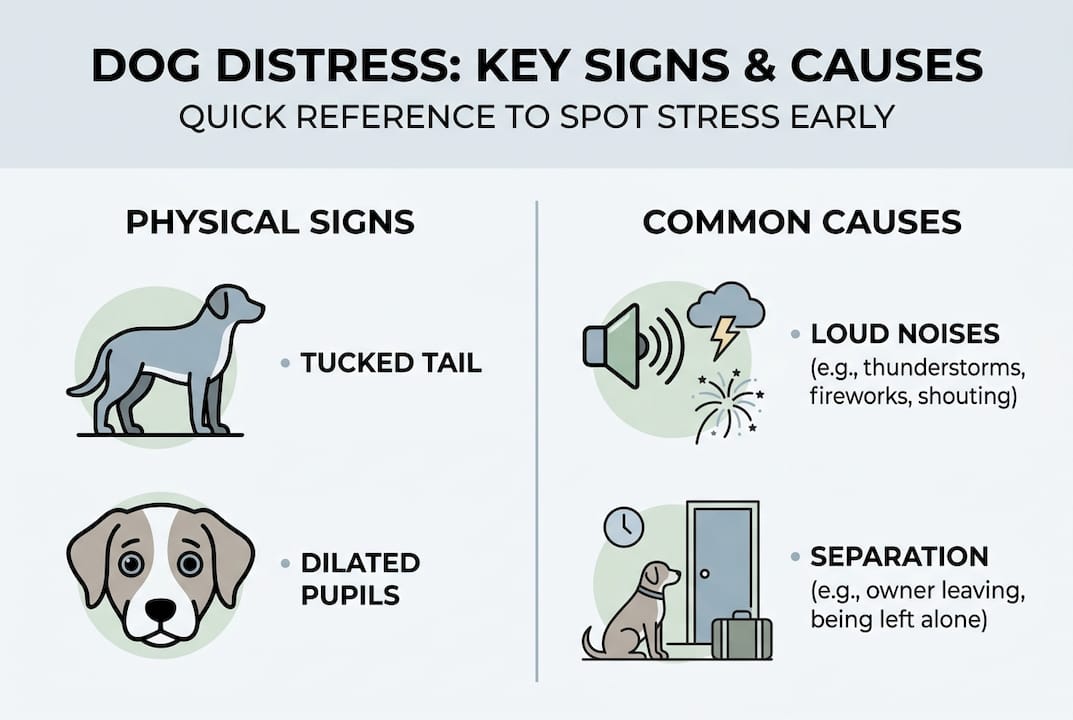
Physical signs are often the first clue. Watch for a tucked tail, ears pinned flat against the head, dilated pupils, and visible trembling. These are the body’s stress responses, not personality traits. A dog that suddenly holds its tail low during a walk it used to enjoy is telling you something important.
Behavioral changes are equally telling. Hiding in closets, excessive barking at nothing, or destroying furniture can all signal emotional or physical distress. The tricky part is that these behaviors often get labeled as “bad” and corrected rather than investigated.
Unusual grooming deserves special attention. Excessive licking of paws or a specific body part often points to pain or discomfort at that location. If your dog obsessively licks one spot, that area may hurt. Check out how dogs signal pain for a closer look at this pattern.
One of the most misread signals: yawning, lip licking, or pacing repeatedly are classic stress responses, not signs of tiredness or hunger. Owners see a yawn and think their dog is sleepy. In reality, the dog may be overwhelmed.
| Signal | Common misreading | What it may actually mean |
|---|---|---|
| Yawning | Tired | Stressed or overwhelmed |
| Lip licking | Hungry | Anxious or nauseous |
| Hiding | Antisocial | Fearful or in pain |
| Destructive chewing | Bored | Separation anxiety |
| Excessive licking | Grooming | Pain or skin irritation |
Context matters too. Some dogs only show distress in specific environments, like at the vet, during thunderstorms, or when a particular person visits. Situational distress is still distress.
- Tucked tail and pinned ears
- Trembling or shaking without cold temperatures
- Hiding or avoiding contact
- Sudden destructive behavior
- Repetitive yawning, licking, or pacing
- Excessive grooming of one body area
Pro Tip: Take short videos of your dog’s behavior when something seems off. A 30-second clip can help your vet identify patterns that are hard to describe in words.
Common causes and risk factors for dog distress
Once you can spot distress signals, the next question is: why is this happening? The causes range from environmental triggers to medical issues, and understanding them helps you respond more effectively.
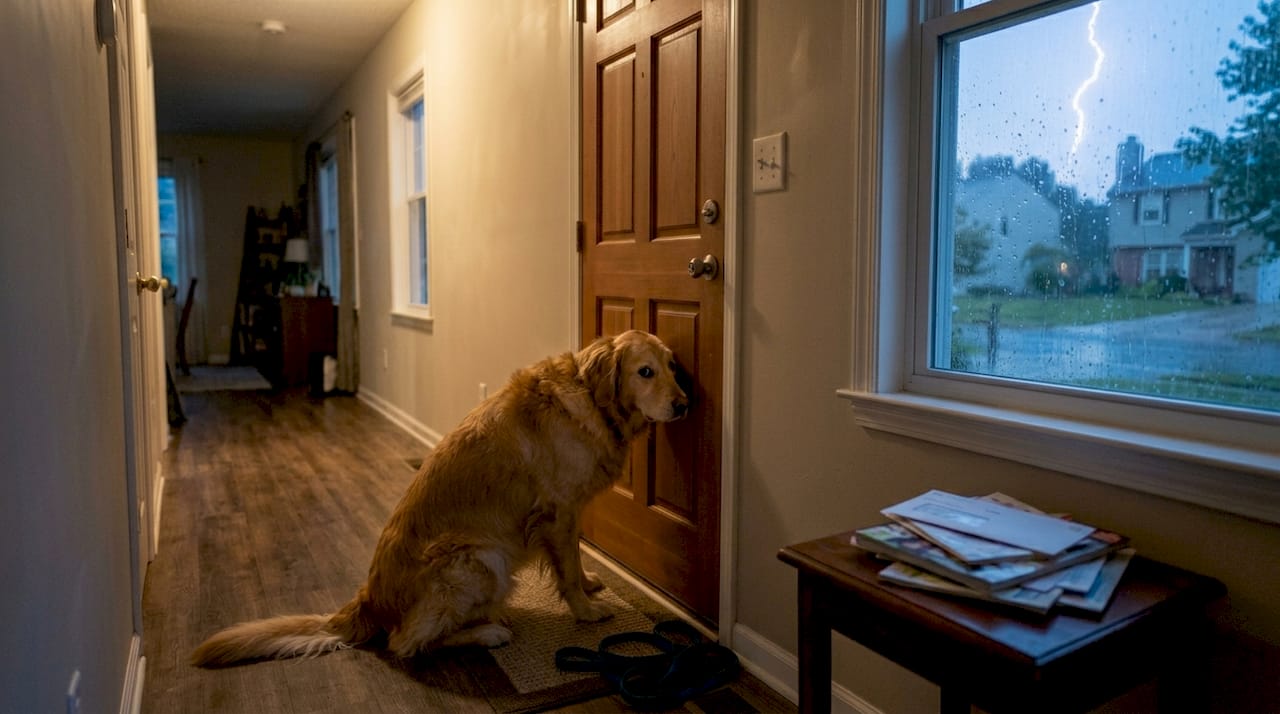
Loud noises, separation, and unfamiliar environments are among the most common triggers. Fireworks, thunderstorms, and construction sounds can send even a calm dog into a stress spiral. Separation anxiety is especially prevalent, with some estimates suggesting it affects up to 17% of dogs.
Medical causes are often overlooked. Pain from arthritis, dental disease, or an internal injury can produce behavioral distress that looks exactly like emotional anxiety. Medication side effects are another underappreciated trigger. If your dog’s distress started around the same time as a new prescription, mention that to your vet.
Service dogs face a unique set of stressors. Overwork, insufficient recovery time between tasks, and exposure to emotionally intense environments can all lead to burnout-like distress. Handlers sometimes push through these signals because the dog “seems fine” during work. That’s a dangerous assumption.
Age and breed also play a role. Puppies are still developing emotional regulation, making them more reactive to change. Senior dogs may experience cognitive decline that produces confusion-based distress. Some breeds, including Border Collies, German Shepherds, and Vizslas, are genetically wired for high sensitivity and can show dog anxiety triggers more intensely than others.
Top causes of distress in dogs:
- Separation from owner or familiar companions
- Loud or sudden noises (fireworks, thunder, alarms)
- Changes in household routine or environment
- Underlying pain or illness
- Overwork or insufficient rest (especially in service dogs)
- Negative past experiences or trauma
| Risk factor | More vulnerable | Less vulnerable |
|---|---|---|
| Age | Puppies and seniors | Healthy adult dogs |
| Breed | High-sensitivity breeds | Lower-sensitivity breeds |
| History | Rescue or trauma history | Stable upbringing |
| Role | Working/service dogs | Non-working dogs |
Exploring calming techniques for dogs alongside identifying causes gives you a more complete picture of how to help.
Statistic: Studies suggest that up to 70% of dogs show at least one anxiety-related behavior during their lifetime, yet many cases go unaddressed because owners don’t connect the behavior to stress.
How to interpret dog distress: context and severity
Not every stress signal is a five-alarm emergency. But some are. Knowing the difference is one of the most valuable skills you can develop as a dog owner.
Frequency and intensity are your first filters. A dog that yawns once during a vet visit is probably just mildly uncomfortable. A dog that pants, shakes, and refuses to move for 20 minutes is showing something more serious. One-off incidents are worth noting. Repeated patterns demand action.
Certain signals require urgent attention. Sudden collapse, continuous whining combined with shaking, labored breathing, or complete unresponsiveness are not “wait and see” situations. These dog emergency signals can escalate into life-threatening situations if ignored. Act fast.
Your dog’s baseline matters enormously. A dog that normally greets you at the door but suddenly hides when you come home has changed its behavior. That shift is data. You know your dog better than any chart does, so trust your gut when something feels different, even if you can’t name it yet.
“Some distress behaviors may escalate into emergencies if unaddressed.” Recognizing the pattern early is what separates a manageable situation from a crisis.
Body language must always be read in context. A dog crouching low in a thunderstorm is responding to a known trigger. The same posture during a calm afternoon walk could mean pain or fear of something you haven’t identified yet. Understanding emotional language in dogs helps you read these situations more accurately.
- Mild distress: Occasional yawning, brief hiding, minor appetite change
- Moderate distress: Repeated pacing, sustained whining, avoidance of normal activities
- Severe distress: Collapse, uncontrolled shaking, inability to stand, unresponsiveness
Pro Tip: Keep a simple behavior log for one week. Note the time, trigger, and signal. Patterns become obvious fast, and your vet will find it incredibly useful.
What to do when your dog shows signs of distress
Knowing the signs is only half the job. Responding correctly is what actually protects your dog. Here’s a practical sequence to follow.
Step-by-step response plan:
- Observe and document. Note exactly which signals appear, when they started, and what was happening at the time. This context is critical for identifying triggers and communicating with your vet.
- Remove or reduce the trigger. If your dog is reacting to a loud noise, move them to a quieter room. If a specific person or animal is causing stress, create distance. Fast environmental changes can interrupt a stress response before it escalates.
- Apply calming techniques. For mild to moderate distress, calm a dog techniques like gentle pressure wraps, white noise, or calm physical contact can help. Avoid high-energy reassurance, which can reinforce the anxious state.
- Monitor for escalation. Stay close and watch for worsening signs. If trembling increases, breathing becomes labored, or your dog stops responding to you, move to the next step immediately.
- Contact your vet or emergency services. Severe, sudden, or pain-related distress needs professional attention. Don’t wait to see if it passes on its own.
For dogs with known anxiety triggers, working proactively to handle dog anxiety before stressful events, like giving calming supplements before fireworks season, reduces the severity of distress responses.
Signs that always warrant a vet call:
- Collapse or inability to stand
- Uncontrolled, prolonged shaking
- Refusal to eat or drink for more than 24 hours
- Sudden, unexplained aggression
- Whimpering when touched in a specific area
Creating calm environments and contacting a vet promptly are the two most effective actions you can take when distress is present. Speed matters, especially with service dogs whose handlers depend on them.
A hard truth: why subtle distress is often missed
Here’s something most guides won’t tell you: even attentive, loving owners miss distress signals all the time. Not because they don’t care, but because daily routines create blind spots.
When you see your dog every day, small changes become invisible. A slightly different sleeping position, a hesitation before jumping onto the couch, a less enthusiastic greeting. These aren’t quirks. They are data points. But busy schedules and the assumption that “he’d tell me if something was wrong” cause owners to filter them out.
Old training beliefs make this worse. Many owners were taught that certain behaviors are dominance or defiance. That framing makes it easy to punish what is actually a cry for help. Handlers often overlook silent or minor distress responses, and the outcomes are worse because of it.
The fix isn’t complicated, but it requires intention. Daily observation, not just reaction to obvious problems, is what actually improves outcomes for dogs. Spend two minutes each day watching your dog move, eat, and rest. You’ll catch changes weeks earlier than you would otherwise. That window of time is often the difference between a simple vet visit and a serious health event.
Find more support for your dog’s well-being
You now have a solid foundation for recognizing and responding to distress in your dog. But staying ahead of your dog’s needs is an ongoing process, not a one-time read.

At iPupPee, we’ve built a library of guides covering everything from calming techniques and anxiety management to emergency signal recognition and service dog care. Whether you’re a first-time dog owner or a seasoned handler, there’s always more to learn and better tools to use. Explore our resources to stay proactive about your dog’s health, because the earlier you catch a problem, the easier it is to fix. Your dog is counting on you to notice.
Frequently asked questions
How can I tell if my dog is stressed or just bored?
Stress signs like trembling, panting, or avoiding interaction tend to persist and appear alongside new triggers, while boredom usually shows up as restlessness or playful mischief that stops when you engage the dog.
Are certain breeds more prone to stress?
Yes. Some breeds are genetically more sensitive to stress, including Border Collies, German Shepherds, and Vizslas, and they may show anxiety responses more intensely than lower-sensitivity breeds.
When should I call the vet for my dog’s distress?
Call your vet immediately if you see urgent distress behaviors like collapse, uncontrolled shaking, labored breathing, or complete unresponsiveness, as these can escalate quickly.
Can puppies show signs of distress differently than adult dogs?
Puppies often express distress through whining, shivering, or destructive chewing, and their subtle distress signals can be harder to read than those of adult dogs because their emotional regulation is still developing.
Recommended
- Dog Body Language Guide: 60% Better Stress Detection – iPupPee
- How to calm a dog: proven techniques for anxious pets – iPupPee
- Dog Emergency Signals: How They Save Lives – iPupPee
- How Dogs Signal Pain – What Service Dog Handlers Miss – iPupPee
- Understanding Dog Breed Characteristics and Essentials – FunLifeNow