

TL;DR:
- Dog mental stimulation activities challenge your dog’s mind, burn energy, and reduce destructive behaviors more effectively than walks alone. Incorporating scent work, puzzle solving, and short training routines provides lasting mental engagement, calming anxious or hyperactive dogs, and creating balanced behavior. Consistency, variety, and starting with simple exercises ensure any dog benefits from mental enrichment without frustration.
Dog mental stimulation ideas are structured brain activities, including scent work, puzzle solving, and trick training, that challenge your dog’s mind, burn energy, and reduce destructive behavior. 15 minutes of focused mental stimulation can equal up to 60 minutes of physical walking in energy expenditure and satisfaction. That single fact changes how you should think about tiring out your dog. A bored dog does not need more walks. It needs more thinking. The activities in this guide are low cost, easy to set up, and effective for dogs of all ages and energy levels.
1. Scent games and nose work for mental stimulation
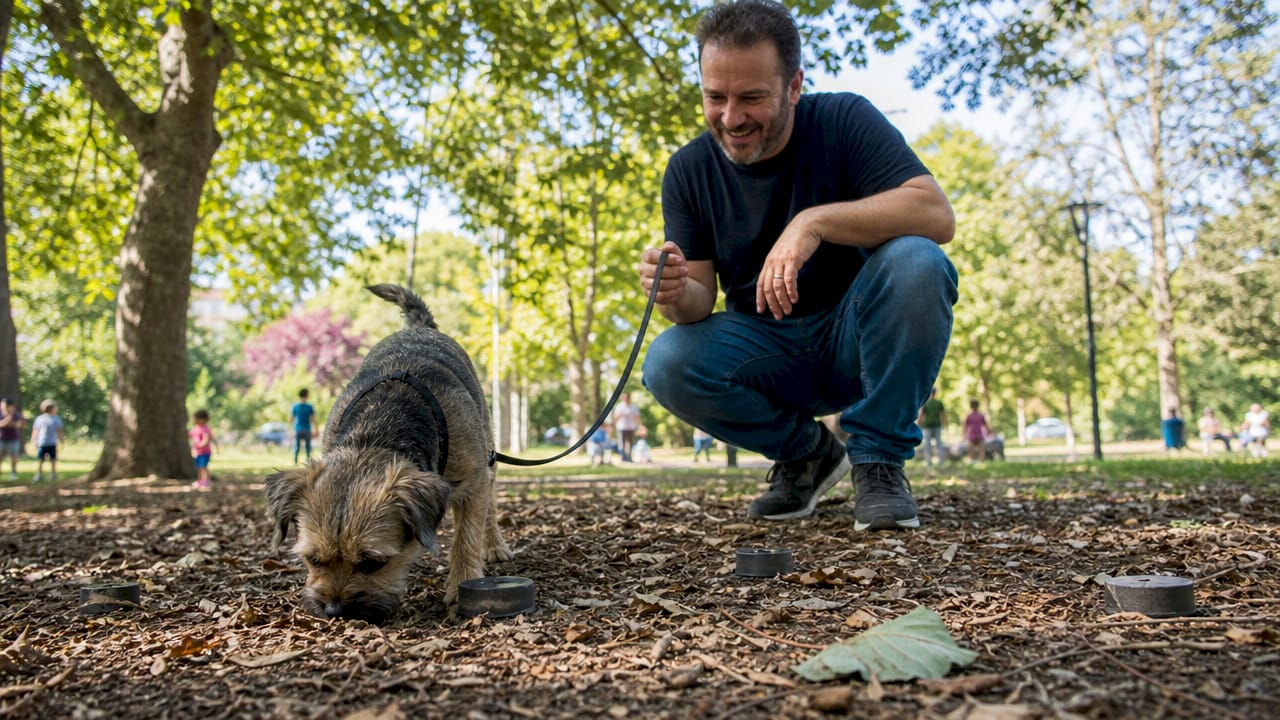
Scent work is the single most effective mental exercise you can give a dog. Sniffing activates the parasympathetic nervous system, lowering cortisol and inducing relaxation in anxious or hyperactive dogs. That means nose work does not just tire your dog out. It actively calms them down.
The most common scent activities include:
- Find It: Toss a piece of kibble or a treat onto the floor and say “find it.” Gradually hide treats under cups, behind furniture, or in another room.
- Snuffle mats: Scatter kibble through the mat’s fabric folds. Your dog uses its nose to forage, mimicking natural hunting behavior.
- Scent trails: Drag a treat or a scented cloth across the floor or yard, then hide it at the end of the trail for your dog to locate.
- Box searches: Fill several cardboard boxes with crumpled paper and hide a treat in one. Let your dog sniff each box to find the reward.
Start every scent game in a small, low-distraction space. Increase difficulty by adding more hiding spots or moving outdoors once your dog understands the game.
Pro Tip: Run a five-minute scent game before your walk. A dog that has already used its nose is calmer on leash and less reactive to distractions.
2. Puzzle toys and problem-solving challenges
Interactive dog toys that require problem-solving are one of the most reliable ways to engage your dog indoors. Puzzle toys should be introduced gradually, starting with easy settings and increasing difficulty as your dog gains confidence. Skipping this step leads to frustration and disinterest.
Types of puzzle toys
| Puzzle type | Difficulty | Best for |
|---|---|---|
| Sliding tile feeders | Beginner | New puzzle learners |
| Flip board puzzles | Intermediate | Dogs with some puzzle experience |
| Multi-step treat dispensers | Advanced | Confident, food-motivated dogs |
| DIY muffin tin puzzles | Beginner | Budget-friendly home setup |
DIY puzzle ideas you can make today
Enrichment activities like muffin tin puzzles and scatter feeding effectively reduce destructive behaviors. You do not need to buy anything expensive to get started.
- Muffin tin game: Place treats in a few cups of a muffin tin, then cover all cups with tennis balls. Your dog lifts the balls to find the reward.
- Towel roll-up: Lay a towel flat, scatter treats across it, then roll it up. Your dog unrolls it to reach the food.
- Cup shuffle: Set three cups upside down on the floor. Hide a treat under one. Let your dog sniff and paw to find it.
Pro Tip: Always show your dog how the puzzle works on the first session. One successful repetition with your help builds confidence faster than letting them struggle alone.
3. Training exercises and trick learning as mental workouts
Teaching new behaviors is one of the most underused thinking games for dogs. A five-minute training session demands more focus from your dog than a twenty-minute fetch session. Short, frequent training sessions produce better mental fatigue and focus than one long block.
Four training exercises that challenge the brain
- Spin: Lure your dog in a circle with a treat. Once they complete the circle, name it “spin.” This builds body awareness and focus.
- Target training: Hold out your palm and reward your dog for touching it with their nose. Extend this to targeting objects or specific spots on the floor.
- Toy naming: Place two toys on the floor and consistently use one name for each. Ask your dog to “get the ball” or “get the rope.” Dogs can learn to distinguish multiple named objects with practice.
- Shaping games: Reward your dog for any interaction with a new object, then gradually shape the behavior toward a specific goal. This teaches dogs to think and experiment rather than wait for cues.
Variety in training routines keeps dogs mentally engaged and prevents boredom. Repetition leads to decreased engagement once a dog masters a specific task. Rotate exercises weekly to maintain the challenge.
Keep sessions at 5–15 minutes for adult dogs. Puppies lose focus quickly, so puppy sessions should stay at 2–3 minutes to avoid frustration and maintain interest.
4. Calming enrichment ideas for anxious or high-energy dogs
Physical exercise sometimes raises arousal in anxious or reactive dogs rather than calming them. Mental exhaustion promotes calm. Low-arousal enrichment activities are the right tool for dogs that are stressed, recovering from injury, or on crate rest.
The most effective calming activities include:
- Lick mats: Spread peanut butter, plain yogurt, or wet food across a textured mat. Licking is self-soothing and releases calming endorphins.
- Frozen treat challenges: Freeze peanut butter and kibble inside toys to create long-lasting licking challenges. Frozen treats extend engagement time and keep dogs calm during downtime.
- Slow foraging: Scatter a meal across a patch of grass or a snuffle mat instead of feeding from a bowl. Your dog spends ten times longer eating and finishes calmer.
- Cardboard box exploration: Fill a shallow box with crumpled paper and hidden treats. Let your dog dig and sniff at their own pace.
These activities work because they engage your dog’s natural calming instincts without raising heart rate or excitement. They are especially useful before vet visits, thunderstorms, or any high-stress event.
Pro Tip: Offer a lick mat or frozen toy during situations that typically trigger anxiety. Pair the calming activity with the stressor consistently, and your dog begins to associate the trigger with relaxation instead of fear.
5. Sensory walks and environmental enrichment
A walk does not have to be a march from point A to point B. A decompression walk, where your dog leads and sniffs freely, delivers far more mental benefit than a structured heel. Sniffing a small patch of grass engages more neural pathways than walking a full block at pace. That is not a metaphor. It is how canine neurology works.
Rotate your walking routes regularly. New smells, textures, and sounds all count as canine enrichment activities. A dog that walks the same block every day stops processing the environment. A dog on a new route is actively thinking the entire time.
You can also bring enrichment home. Set up a sensory box with different textures, safe household objects, and hidden treats. Let your dog investigate without pressure. This type of open-ended exploration builds confidence in shy or anxious dogs and satisfies curiosity in high-energy breeds.
6. How to build a mental stimulation routine
A good canine enrichment routine does not require hours of effort. It requires consistency and variety. Routine is essential but must be combined with variety to avoid habituation and maintain mental challenge.
Build your routine around these principles:
- Session length: Keep adult dog sessions at 5–15 minutes. Stop before your dog loses interest, not after.
- Frequency: Two to three short sessions spread through the day outperform one long session. Your dog retains focus better and finishes each session satisfied.
- Rotation: Alternate activity types across the week. Scent work on monday, puzzle toys on tuesday, training on wednesday. Repetition of the same task leads to disengagement.
- Difficulty progression: Increase challenge only after your dog succeeds consistently at the current level. Jumping difficulty too fast causes frustration, not stimulation.
- Watch for signals: A dog that walks away, yawns repeatedly, or stops engaging is telling you the session is over. End on a success, not a struggle.
Dogs thrive with predictable routines that also include novelty. The structure gives them security. The variety gives them something to think about. Both are necessary for lasting behavioral improvement.
Key takeaways
Mental stimulation for dogs works best when it combines scent work, puzzle solving, and short training sessions rotated throughout the day, not just added to a walk.
| Point | Details |
|---|---|
| 15 minutes equals 60 minutes | Short mental sessions match long walks in energy expenditure and satisfaction. |
| Scent work calms dogs | Sniffing activates the parasympathetic nervous system, reducing cortisol and anxiety. |
| Start puzzles easy | Introduce interactive toys at the lowest difficulty and increase gradually to avoid frustration. |
| Keep sessions short | Adult dogs need 5–15 minutes; puppies need just 2–3 minutes per session. |
| Rotate activities weekly | Repeating the same task leads to disengagement; variety maintains mental challenge. |
What I’ve learned after years of watching dogs think
Most dog owners underestimate how fast a dog’s brain gets bored. They add another walk. They buy a bigger yard. They wonder why their dog still chews the furniture. The answer is almost never more physical exercise. It is almost always more thinking.
The shift I see make the biggest difference is when owners stop treating mental enrichment as a bonus and start treating it as the main event. A ten-minute scent game before breakfast changes the entire tone of a dog’s day. Mental enrichment converts chaotic energy into calm focus by releasing dopamine through problem-solving tasks. That is not a wellness trend. That is basic neuroscience applied to a species that evolved to work for its food.
The other thing I want to say plainly: you do not need expensive gear. A muffin tin and some tennis balls outperform most commercial puzzles for beginner dogs. A rolled-up towel with kibble inside it will occupy a motivated dog for longer than you expect. The tool matters far less than the consistency.
Start with one activity. Do it every day for a week. Watch your dog’s behavior change. Then add a second activity. That is the whole system.
— Andrew
Ipuppee and the mental side of service dog care
Dogs that work as service animals carry a heavier cognitive load than most pet owners realize. They need structured mental engagement as much as they need physical conditioning.
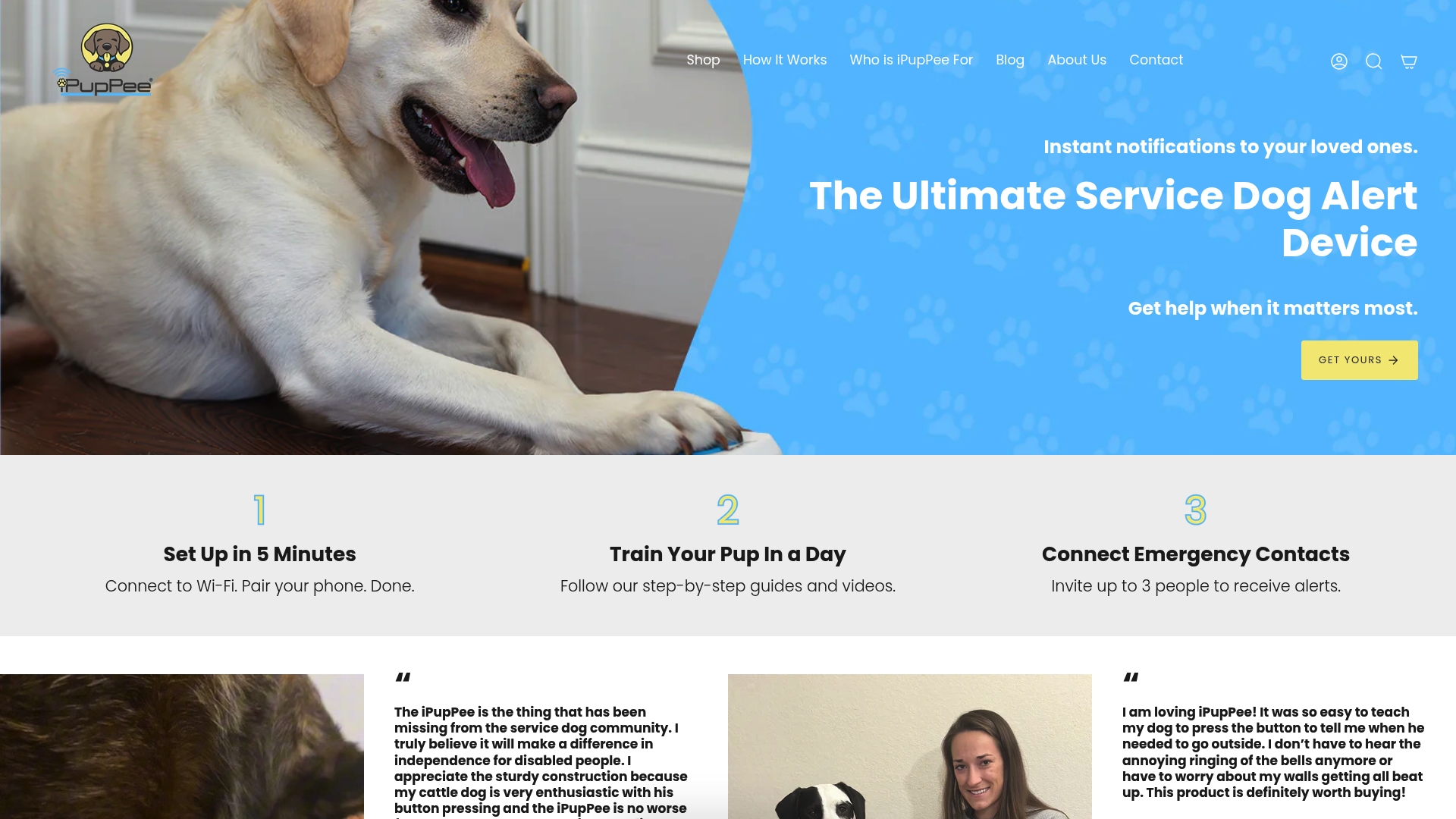
Ipuppee’s service dog resources are built around exactly that need. The iPupPee alert device supports communication between dogs and their handlers, reinforcing the kind of consistent, purposeful interaction that keeps working dogs mentally sharp and behaviorally stable. If your dog is a service animal or you are training one, Ipuppee’s tools and guidance connect daily dog habits to real safety outcomes. Mental fitness and physical safety belong in the same plan.
FAQ
How much mental stimulation does a dog need each day?
Most adult dogs benefit from two to three short mental sessions of 5–15 minutes each day. Puppies need sessions of just 2–3 minutes to avoid frustration and maintain focus.
What are the best dog mental stimulation ideas for indoors?
Snuffle mats, muffin tin puzzles, lick mats, frozen treat toys, and short training sessions are the most effective indoor options. They require minimal space and no special equipment.
Can mental stimulation replace physical exercise for dogs?
Mental stimulation does not fully replace physical exercise, but 15 minutes of focused mental work can match the energy expenditure of a 60-minute walk. Combining both produces the best results for behavior and wellbeing.
Why does my dog seem more tired after a puzzle than after a walk?
Cognitive problem-solving burns significant mental energy and releases dopamine. That combination produces genuine fatigue and calm, which physical exercise alone does not always achieve.
Are puzzle toys safe to leave with my dog unsupervised?
Avoid leaving dogs unsupervised with puzzles until they fully understand the task. Unsupervised use before mastery can lead to frustration, disinterest, or safety risks.