

Dog separation anxiety is genuine distress, not bad behavior. When your dog destroys furniture, barks for hours, or soils the house the moment you leave, that’s a dog in panic, not a dog acting out. The good news: it responds well to treatment when you approach it correctly.
The most effective way to handle dog separation issues combines three things: systematic behavior modification, environmental enrichment, and, for severe cases, veterinary-prescribed medication. None of these work overnight. But together, applied consistently, they can transform a dog who can’t be left alone for five minutes into one who settles comfortably for hours.
Here’s what that looks like in practice:
- Behavior modification through desensitization and counterconditioning retrains your dog’s emotional response to being alone
- Environmental enrichment gives your dog something positive to focus on during absences
- Medication (fluoxetine, trazodone, or others) reduces baseline anxiety enough for training to take hold
- Calming aids like dog-appeasing pheromone diffusers provide additional support
- Consistent routines reduce unpredictability, which is a major anxiety trigger
- No punishment, ever. Punishing a dog for anxiety-driven behavior makes the anxiety worse, not better
Patience is the non-negotiable ingredient. Treatment takes weeks to months, not days.
How to recognize the signs of separation anxiety in your dog
Most owners don’t witness the problem firsthand because it happens the moment they leave. That’s why video monitoring is one of the most practical tools available. Set up a phone or camera before you go, and watch what actually happens after the door closes.
The behavioral signs typically fall into three categories:
- Excessive vocalization: barking, howling, or whining that starts within minutes of your departure and continues throughout your absence
- Destructive behavior: chewing door frames, scratching at exits, tearing up furniture, often focused near entry and exit points
- Inappropriate elimination: urinating or defecating inside the house, even in a dog who is otherwise reliably house-trained
- Pacing and restlessness: circling, inability to settle, moving between rooms repeatedly
- Escape attempts: trying to break out of crates, rooms, or yards, sometimes causing self-injury
- Pre-departure stress: whining or shadowing you as you put on shoes, pick up keys, or grab your bag
Severity varies. A mildly anxious dog might whine briefly and then settle. A severely anxious dog may injure itself trying to escape within the first few minutes. The video footage tells you which end of that spectrum you’re dealing with, and that shapes everything about how you respond.
One detail worth knowing: vocalization typically begins within about 3 minutes of the owner’s departure, while destructive behavior tends to start around 7 minutes in. If your dog is calm for the first 10 minutes on camera, that’s meaningful information.
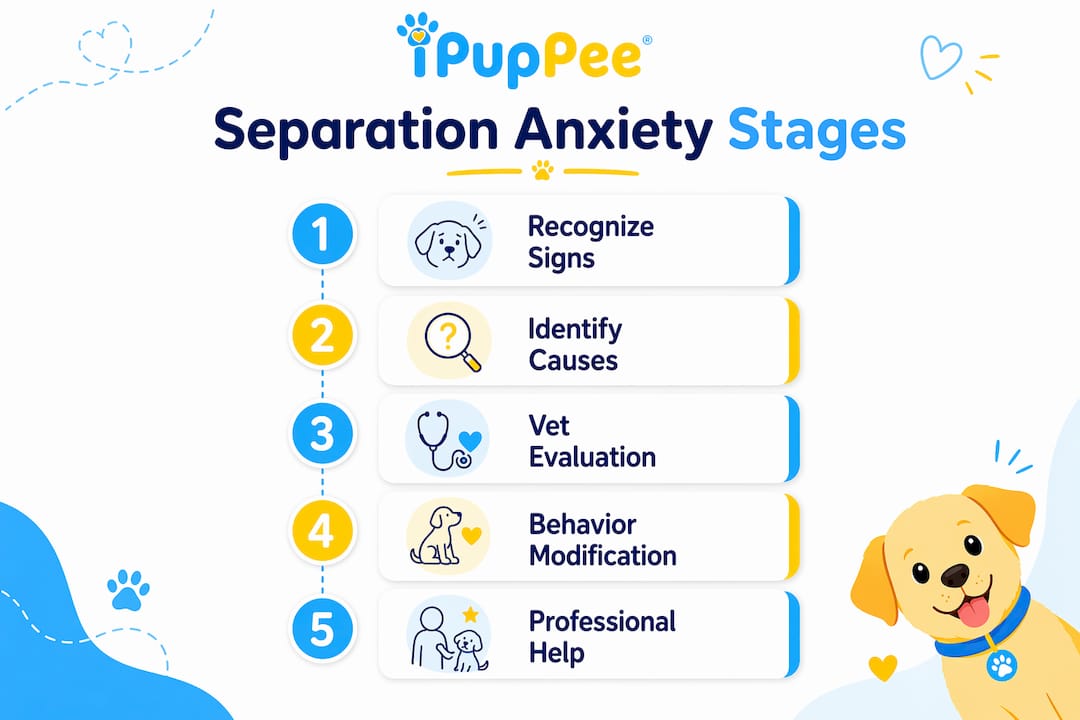
Why some dogs develop separation anxiety
No single cause explains every case. Separation anxiety tends to develop from a combination of genetic predisposition and environmental factors, and understanding the mix helps you tailor your approach.
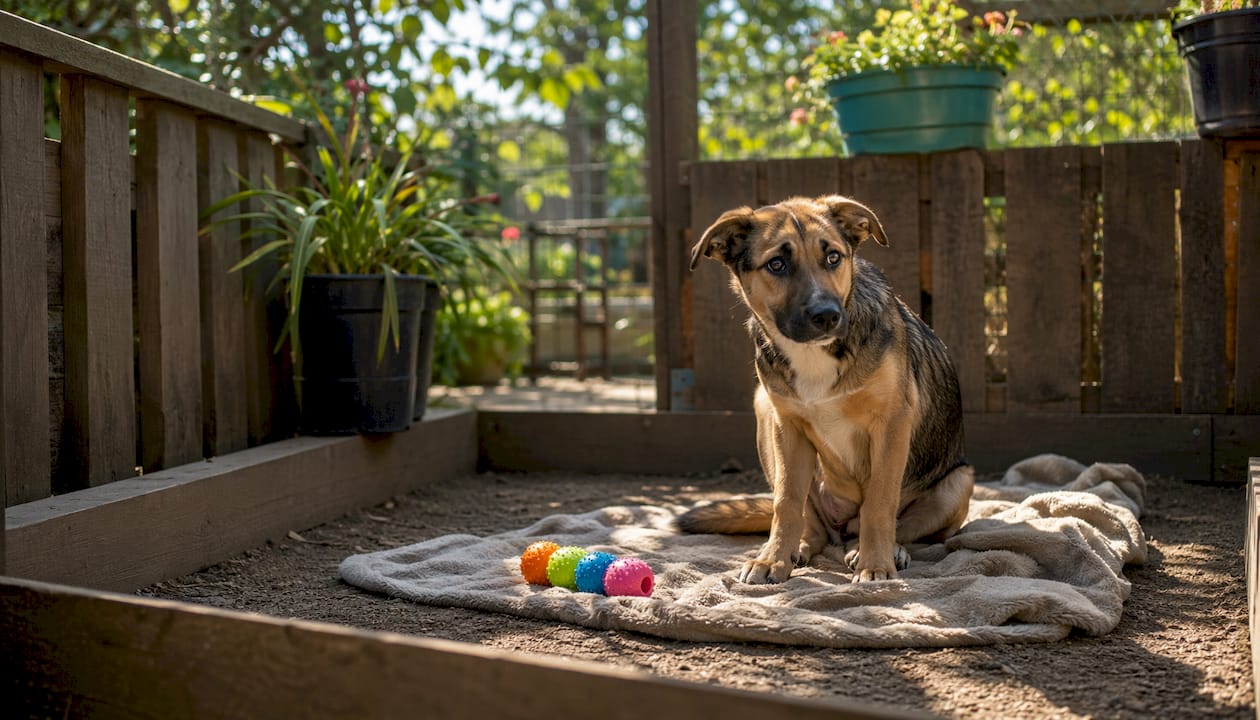
Dogs sourced from shelters, or those separated from their litter before 60 days of age, appear more likely to develop separation-related behavior problems. Male dogs also show higher rates than females in some research, though the picture isn’t entirely clear. What this suggests is that early life experience leaves a real mark on how a dog handles solitude later.
Lack of socialization during the critical window between 5 and 10 months is another significant factor. Dogs who weren’t exposed to a range of people, environments, and situations during that period tend to be less confident adults. Less confidence means more anxiety when the safety net of their owner disappears.
Routine disruptions can also trigger or worsen anxiety in dogs who were previously fine. A change in work schedule, a move, a new baby, or the loss of another pet can all destabilize a dog who relied on predictability. Senior dogs face an additional risk: cognitive dysfunction, the canine equivalent of dementia, can produce anxiety-like symptoms that look identical to separation anxiety but have a different underlying cause entirely.
Medical and behavioral problems to rule out first
Before you commit to a separation anxiety treatment plan, a veterinary evaluation is worth doing. Several medical conditions produce behaviors that look exactly like separation anxiety but require completely different treatment.
Pain is a common one. A dog with arthritis, a gastrointestinal problem, or an undiagnosed injury may vocalize, pace, or eliminate indoors, and none of that will improve with behavior modification. Cognitive dysfunction in older dogs can cause disorientation, nighttime restlessness, and apparent distress that mimics anxiety. Thyroid disorders and neurological conditions are also worth ruling out.
Beyond medical causes, some behaviors that look like separation anxiety are actually something else. Incomplete house-training, boredom, or a dog who simply learned that barking gets attention are all different problems with different solutions. A dog who only eliminates in one specific spot, or who destroys things selectively (your shoes, not the door frame), may be expressing something other than separation distress.
Your vet will take a behavioral history, possibly run bloodwork, and help you distinguish true separation anxiety from these alternatives. That step isn’t optional for severe cases. Treating the wrong problem wastes months and leaves the dog no better off.
Comprehensive treatment strategies for dog separation anxiety
Multi-modal treatment combining behavior modification with optional pharmacological support gives the best outcomes for persistent separation anxiety. The specific combination depends on severity.
Step-by-step desensitization and counterconditioning
Desensitization means exposing your dog to the thing that triggers anxiety at such a low intensity that no anxiety response occurs, then building up gradually. For separation anxiety, that means starting with absences so short they don’t register as threatening.
- Start at the threshold. Leave the room for just a few seconds. Return before your dog shows any sign of distress. Praise calmly.
- Increase duration slowly. Add a few seconds at a time over multiple sessions. There’s no fixed timeline. Some dogs progress in days; others need weeks at each stage.
- Add counterconditioning. Just before you step out, give your dog a food-stuffed puzzle toy, like a KONG filled with peanut butter or frozen cottage cheese. The toy creates a positive association with your departure. Remove it when you return so it stays special.
- Watch for stress signals. Dilated pupils, panting, trembling, pacing, or an overly exuberant greeting when you return all indicate the last absence was too long. Back up to a shorter duration and rebuild.
- Avoid long absences during training. This is the part most owners struggle with. If you have to be gone for hours while you’re still in early training, arrange a dog sitter, doggy daycare, or a trusted neighbor. Preventing full panic episodes during retraining is critical. Every panic episode reinforces the anxiety rather than reducing it.
Pro Tip: Keep a simple log of each session: duration, your dog’s behavior during, and any stress signals on return. Patterns become obvious quickly, and you’ll know exactly when to push forward and when to hold.
Medication options
For moderate to severe cases, behavior modification alone often isn’t enough to get started. The anxiety is simply too high for the dog to learn anything. Medication reduces that baseline enough for training to work.
- Fluoxetine (the generic form of Prozac) is one of the most commonly prescribed options. It takes 4–8 weeks to reach full effect and requires yearly blood tests for dogs on long-term use. It’s not a quick fix, but it’s well-studied in dogs.
- Trazodone works faster and is often used situationally or as a bridge medication while fluoxetine builds up. It can help a dog stay calm enough to engage with training.
- Dog-appeasing pheromone (DAP), sold under the brand name Adaptil, is a synthetic version of the calming pheromone mother dogs produce. Available as a plug-in diffuser, spray, or collar, it won’t resolve severe anxiety on its own but adds meaningful support alongside behavioral work.
- Anxiety wraps like the Thundershirt apply gentle, constant pressure and help some dogs settle. Results vary, but the risk is zero and the cost is low.
Medication decisions belong with your veterinarian. The goal is always to use medication as a bridge, withdrawing it gradually once behavior improves, though some dogs benefit from long-term support.
Daily management tips that actually reduce anxiety
Behavior modification sessions matter, but so does everything that happens between them. Daily habits either build your dog’s confidence or quietly reinforce the anxiety.
- Establish a consistent daily routine. Feeding, walks, play, and rest at predictable times give your dog a framework for the day. Predictable structure reduces the ambient stress that makes separation harder. Ipuppee’s guide on why dogs thrive with routines breaks this down practically.
- Exercise before absences. A physically tired dog has less excess energy to channel into anxiety. A 30-minute walk before you leave is not a cure, but it lowers the starting point.
- Use puzzle feeders and enrichment toys. Scatter feeding, snuffle mats, and frozen Kongs give your dog something absorbing to do. For ideas beyond the basics, Ipuppee’s resource on dog mental stimulation covers a range of options that work well for anxious dogs.
- Keep departures and arrivals low-key. No long goodbyes, no emotional send-offs. A pat on the head and a calm “see you later” is the goal. When you return, greet your dog briefly, then wait until they’ve settled before giving real attention.
- Avoid punishment entirely. Punishment worsens anxiety and has no corrective effect on behavior that happened hours ago. Your dog cannot connect your anger to the chewed chair leg from this morning.
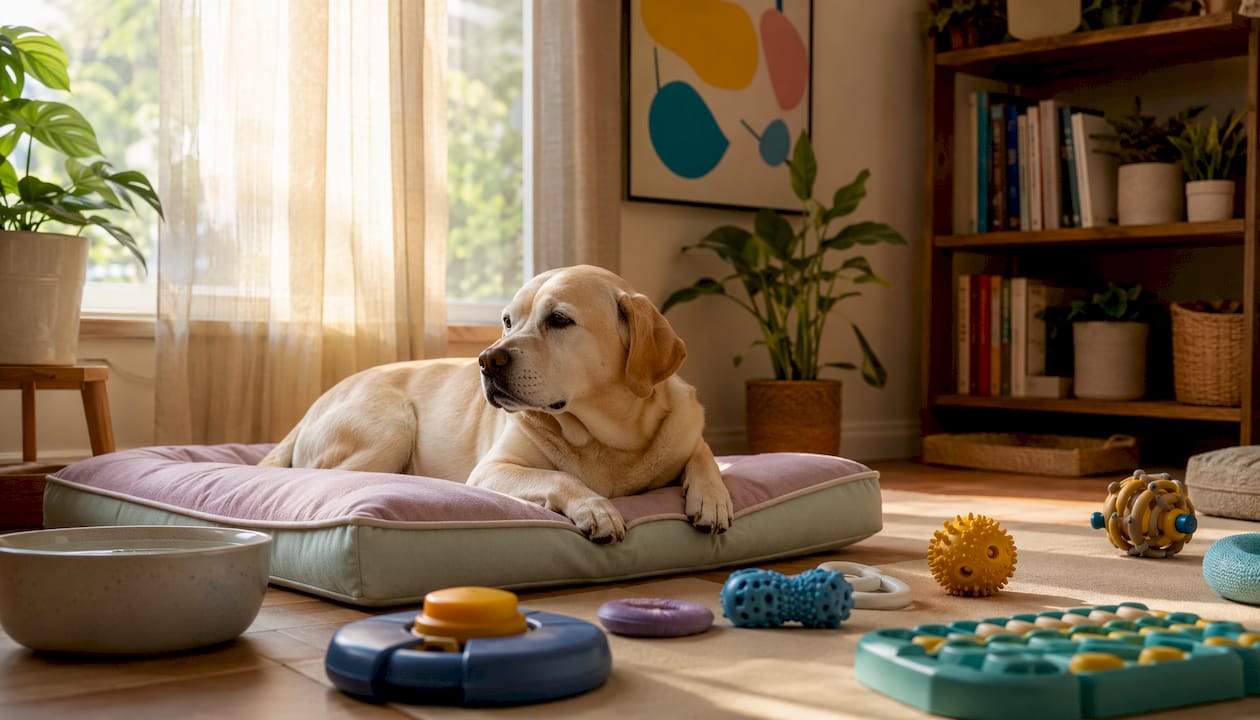
- Create a safe, comfortable space. A dog bed or mat associated with treats and calm rest gives your dog somewhere to settle. Keep it consistent and positive.
Pro Tip: Practice being intentionally “dull” at home. Constant attention and fussing when you’re around makes your absence feel more dramatic by contrast. Ignoring your dog sometimes and rewarding calm, independent behavior actually reduces separation-related distress over time. It feels counterintuitive, but it works.
When to seek professional help for your dog’s anxiety
Some cases of separation anxiety are beyond what an owner can manage alone, and recognizing that early saves a lot of time and suffering.
The clearest signal is when your initial efforts aren’t moving the needle after several weeks of consistent work. If your dog is still panicking, still injuring itself, or still unable to tolerate even very short absences after a genuine attempt at desensitization, that’s the point to bring in an expert. Early intervention consistently produces better outcomes. Chronic, long-standing anxiety is harder to treat and takes longer to shift.
A certified professional dog trainer (CPDT) with experience in anxiety cases can observe your dog, identify what’s going wrong in your current approach, and adjust the protocol. Look for trainers who use positive reinforcement exclusively. Avoid anyone who suggests punishment, dominance-based methods, or shock collars for an anxious dog.
A veterinary behaviorist (a veterinarian with a board specialty in behavior) is the highest level of expertise available. They can prescribe and manage medication, design a full behavior modification program, and handle cases that haven’t responded to standard approaches. If your dog’s anxiety is severe, self-injurious, or has failed multiple treatment attempts, a veterinary behaviorist is the right call.
A clinical animal behaviorist with a graduate degree in animal behavior can also provide structured behavior modification programs, often working in coordination with your regular vet for medication management.
One specific warning: if you’ve been using a crate to manage your dog’s anxiety, reconsider. Crate confinement can cause severe distress and self-injury in dogs with true separation anxiety, because the dog experiences the crate as entrapment rather than security. Watch for heavy panting, frantic escape attempts, or persistent howling when crated. If those appear, a baby gate to limit roaming is often a better option than a closed crate.
What behavioral experts say about treating separation anxiety
The clinical picture of separation anxiety has become clearer over the past decade, and the expert consensus points in a consistent direction.
Research published in Frontiers in Veterinary Science and reviewed by animal behavior specialists confirms that the most effective treatment combines systematic desensitization with counterconditioning, supplemented by medication in the early stages for moderate to severe cases. Behavior modification alone can work, but it demands significant owner commitment and careful management of absences throughout the process.
That insight from Cornell’s veterinary team captures something practitioners see repeatedly: anxious dogs aren’t just reacting to being alone. They’re reacting to uncertainty. A dog who knows exactly when the walk happens, when dinner arrives, and what your departure routine looks like has far less to be anxious about than one living in an unpredictable environment.
The clinical guidance also emphasizes keeping instructions simple. Research on owner compliance shows that advice limited to five or fewer specific instructions produces better adherence than complex multi-step programs. If your treatment plan feels overwhelming, it probably is. Simplify it. A plan you actually follow beats a perfect plan you abandon after two weeks.
One area where practitioners consistently push back on popular advice: flooding, or forcing a dog to face its fear until it gives up reacting. This approach occasionally works, but when it doesn’t, the anxiety becomes significantly worse. The ASPCA and most certified behaviorists recommend against it entirely in favor of gradual, sub-threshold exposure.
Key Takeaways
Effective management of dog separation anxiety requires combining behavior modification, consistent routines, and veterinary support, with punishment avoided at every stage.
| Point | Details |
|---|---|
| Start desensitization below the anxiety threshold | Begin with absences of just a few seconds, then build duration slowly over weeks or months. |
| Use counterconditioning alongside desensitization | Give a food-stuffed puzzle toy at departure to create a positive association with being alone. |
| Medication bridges the gap for severe cases | Fluoxetine takes 4–8 weeks to work; trazodone and dog-appeasing pheromone provide faster supplemental support. |
| Punishment always makes anxiety worse | Dogs cannot connect correction to past behavior, so punishment increases fear without changing the underlying problem. |
| Early professional help improves outcomes | Chronic separation anxiety is harder to treat; bring in a certified trainer or veterinary behaviorist before the pattern becomes entrenched. |