

TL;DR:
- Maintaining a consistent daily routine in nutrition, exercise, hygiene, and observation helps prevent long-term health issues in dogs. Regular monthly health checks and diligent dental care, including brushing and early recognition of warning signs, are crucial for early disease detection. Building simple habits gradually and using proper tools supports long-term canine health, well-being, and a longer lifespan.
Most dog owners love their pets deeply but miss the small, daily habits that prevent the biggest health problems. Chronic disease, dental decay, and weight-related joint issues rarely appear overnight. They build quietly, over months, while life stays busy. Learning how to maintain dog health daily is not complicated, but it does require consistency. This guide gives you a practical, vet-informed routine that covers nutrition, exercise, dental care, monthly home checks, and the warning signs that tell you it’s time to call your vet.
Table of Contents
- Key takeaways
- How to maintain dog health daily: the five core areas
- How to do a monthly home health check
- Daily dental care and how to build a brushing routine
- Managing weight and nutrition for the long haul
- Recognizing warning signs and when to see the vet
- My honest take on building these habits
- How Ipuppee supports your dog’s daily care routine
- FAQ
Key takeaways
| Point | Details |
|---|---|
| Daily habits beat sporadic care | Consistency over complexity prevents long-term health issues better than occasional interventions. |
| Brush teeth every single day | Daily brushing reduces plaque by 87%; skipping even a day or two drops that benefit significantly. |
| Monthly home checks catch problems early | An 8 to 10 minute head-to-tail check each month creates a health baseline that saves lives and vet bills. |
| Weight control extends lifespan | Lean dogs live about two years longer on average; body condition matters as much as breed. |
| Know the warning signs | Pale gums, labored breathing, or sudden gait changes require same-day veterinary attention. |
How to maintain dog health daily: the five core areas
Knowing where to focus makes the whole process much less overwhelming. Most daily dog health maintenance comes down to five areas: food, movement, mental engagement, hygiene, and observation. Get these right consistently and you prevent the majority of common, costly problems.
Nutrition and portion control
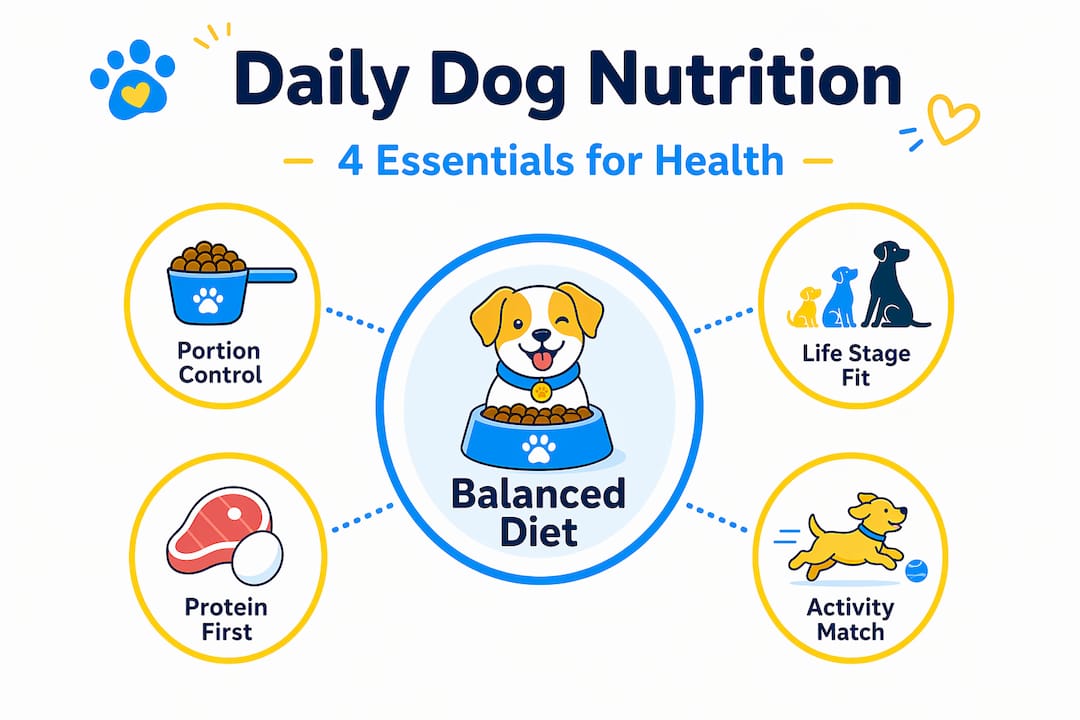
The best diet for dogs is one that matches their life stage, breed size, and activity level. A senior Labrador and a six-month-old Australian Shepherd have almost nothing in common nutritionally. Feed at consistent times each day, since consistent feeding schedules support digestive timing and cortisol cycles. Measure portions using a kitchen scale or marked cup rather than eyeballing. Free-feeding, where kibble sits out all day, makes it nearly impossible to track intake or catch appetite changes early.
Exercise tailored to the dog you actually have
Most dogs need at least 30 minutes of daily movement, but that number varies dramatically. A Border Collie may need 90 minutes of vigorous activity while a Basset Hound does well with a couple of calm walks. Matching exercise to your dog’s breed and age needs prevents both under-stimulation and injury from overdoing it.
Mental stimulation
Physical exercise alone is not enough. Mental enrichment reduces anxiety and behavioral problems while improving sleep quality. Puzzle feeders, scent games, training sessions, and new walking routes all count. Ten minutes of active mental engagement can tire a dog as effectively as a 30-minute walk.
Daily hygiene habits
Brushing your dog’s coat daily or several times per week removes debris, distributes skin oils, and gives you a chance to spot lumps, irritation, or parasites. Check ears for odor or discharge. Inspect paw pads for cuts or cracking. And trim nails regularly because overgrown nails alter gait mechanics and contribute directly to arthritis progression. For a deeper look at grooming routines, the dog grooming essentials guide from Ipuppee covers the full process step by step.
Year-round parasite prevention
Warm microclimates can harbor parasites even in winter, which means monthly preventives should never skip a season. If you have multiple pets, store each animal’s preventives in separate labeled bins to avoid accidentally giving a dog’s treatment to a cat.
Pro Tip: Keep a small notebook or phone note dedicated to your dog’s daily observations. Appetite up or down? Energy lower than usual? Drinking more water? These micro-observations become powerful data when you visit the vet.
How to do a monthly home health check
Think of this as a short physical exam you give your dog once a month. It takes 8 to 10 minutes, requires almost no equipment, and builds a health baseline that makes early disease detection genuinely possible. Without that baseline, subtle changes are almost impossible to notice.
What you need: A flashlight, a kitchen scale, a notebook or digital log, and a calm, well-lit space where your dog feels relaxed.
Follow this sequence every month:
- Eyes: Look for cloudiness, excessive discharge, redness, or unequal pupil size.
- Ears: Smell for yeast or infection odor. Check for dark debris or scratching behavior.
- Mouth: Examine the gums. Healthy gums are pink and moist. Pale, white, blue, or yellow gums require immediate veterinary attention.
- Skin and coat: Part the fur in several spots to check for lumps, redness, flaking, hair loss, or parasites.
- Lymph nodes: Gently feel under the jaw, behind the knees, and in the armpits for swelling.
- Abdomen: Lightly press along the belly. Any hard spots, visible bloating, or sensitivity when touched are worth a call to your vet.
- Joints and gait: Watch your dog walk. Stiffness after resting, limping, or reluctance to climb stairs can signal early joint disease.
- Weight: Weigh your dog monthly on the same scale. A weight change greater than 5% in one month without a diet change warrants a vet visit.
Here is a quick reference for what’s normal versus what needs attention:
| Area checked | Normal finding | Flag for vet |
|---|---|---|
| Gums | Pink, moist | Pale, white, blue, or yellow |
| Ears | Clean, odor-free | Dark debris, odor, head shaking |
| Skin | Smooth, no lumps | New lumps, redness, or hair loss |
| Weight | Stable month to month | More than 5% change in one month |
| Gait | Fluid and even | Limping, stiffness, or reluctance to move |
Pro Tip: Log every monthly check in the same document you track parasite treatments and vet visits. Patterns across three or four months tell a story no single appointment can. Your vet will notice and appreciate the detail.
Daily dental care and how to build a brushing routine
Here is a number that should stop you mid-scroll: 80% of dogs show signs of periodontal disease by age three. It develops below the gum line, silently, long before you smell anything wrong. And once it progresses, it does not just affect teeth. Bacteria from infected gums enter the bloodstream and damage the heart, kidneys, and liver.
Daily tooth brushing reduces plaque by 87% and tartar by 76%. Brushing every other day drops that to roughly 45% of the benefit. Weekly brushing? Essentially ineffective against plaque accumulation.
The problem most owners hit is resistance. Dogs do not naturally enjoy having fingers in their mouths. The solution is a gradual desensitization process that takes about two to four weeks:
- For three to five days, let your dog lick a small amount of enzymatic toothpaste off your finger. Do this at the same time each day so it becomes a routine.
- Once your dog licks willingly, begin touching the outside of the teeth with your finger, still using toothpaste.
- Introduce a soft-bristle pet toothbrush or finger brush, continuing with the toothpaste.
- Gradually increase brushing duration each session until you can brush all surfaces comfortably.
Most dogs accept brushing within two to four weeks using this approach. Starting abruptly almost always causes lasting resistance.
A few things to keep in mind about products and alternatives:
- Use only pet-safe enzymatic toothpaste. Human toothpaste contains xylitol and fluoride, both toxic to dogs.
- Dental chews and water additives help but do not replace brushing. Think of them as supplements, not substitutes.
- Dental wipes are a lower-effort backup option for dogs that genuinely cannot tolerate a brush.
Managing weight and nutrition for the long haul
Weight management might be the single highest-impact area in any dog health maintenance guide. Lean dogs live about two years longer on average, and maintaining a lean body condition delays chronic diseases like arthritis, diabetes, and respiratory problems.
The challenge is that most owners cannot accurately tell by eye whether their dog is overweight. Use the body condition score (BCS) system instead. You should be able to feel your dog’s ribs easily without pressing hard, but not see them prominently. There should be a visible waist when viewed from above and a slight abdominal tuck from the side.
| Feeding strategy | What it does |
|---|---|
| Scheduled meal times (twice daily) | Prevents overeating and helps you track appetite changes |
| Measured portions by weight | Eliminates the guesswork that causes gradual weight gain |
| Low-calorie treats (under 10% of daily intake) | Keeps training motivation without adding untracked calories |
| High-protein, species-appropriate food | Supports muscle mass during weight management |
Daily dog nutrition advice that actually moves the needle:
- Choose foods where a named protein (chicken, salmon, beef) is the first ingredient.
- Avoid foods with corn syrup, artificial preservatives, or generic “meat meal” as a primary component.
- Adjust portions every time your dog’s activity level changes seasonally or with age.
- Exercise complements diet but does not compensate for overfeeding. You cannot out-walk a consistently oversized bowl of kibble.
The Ipuppee blog post on healthy dog habits covers the daily movement-and-nutrition combination in more practical detail if you want to go deeper.
Recognizing warning signs and when to see the vet
Good daily habits are your first line of defense, but knowing when to hand things off to a professional is equally important. Many serious dog diseases progress silently, and daily care bridges the gap between veterinary visits by catching changes before they become crises.
Watch for these subtle early warning signs during your daily observations:
- Reduced appetite lasting more than 24 hours
- Increased thirst or urination without a change in weather or activity
- Unexplained weight loss or gain
- Decreased energy or interest in normal activities
- Scooting, excessive licking, or repetitive scratching
These signs below require same-day or emergency veterinary attention:
- Pale, white, blue, or yellow gums
- Labored or noisy breathing
- Collapse or sudden inability to stand
- Visible bloating of the abdomen
- Seizures or disorientation
Regarding vet visits frequency: healthy adult dogs typically need one wellness exam per year. Senior dogs (age seven and up for most breeds) benefit from twice-yearly visits. Puppies and dogs with known health conditions follow more frequent schedules set by their vet. No amount of home observation replaces a professional physical exam, blood panel, and preventive screening.
The owner who watches their dog daily and the vet who examines them annually are partners in preventing disease, not competitors. Your observations matter enormously when you bring them documented and specific.
My honest take on building these habits
In my experience, the biggest obstacle to dog health maintenance is not knowledge. It’s the feeling that you have to do everything perfectly or you’re doing it wrong.
I’ve seen owners with detailed logs, monthly check schedules, and custom feeding plans who still felt guilty about missing a brushing session. And I’ve seen dogs with attentive owners doing simple, consistent daily checks catch a thyroid problem early enough to treat it for under $200 rather than thousands.
What I’ve learned is this: consistency beats perfection every single time. Five minutes of observation each morning, teeth brushed six days out of seven, a monthly weigh-in with notes, and a vet visit once a year. That’s not a complicated protocol. That’s just a routine. And routines, once built, cost almost no mental energy to maintain.
The importance of routines for pets goes beyond behavior. Dogs who live on predictable schedules show measurably lower stress and fewer digestive complaints. You’re not just making your life easier when you build a daily care routine. You are directly improving your dog’s physiology.
Start with one habit. Add the next when the first feels automatic. You don’t need to overhaul your life to give your dog a longer, healthier one.
— Andrew
How Ipuppee supports your dog’s daily care routine
At Ipuppee, we know that keeping a dog healthy every day takes more than good intentions. It takes the right tools, reminders, and resources in your corner. Whether you’re building a dental routine from scratch, tracking your dog’s monthly health checks, or figuring out how to stay consistent with exercise and feeding, Ipuppee has practical blog content and purpose-built products to support every step. Visit Ipuppee.com to explore our full range of dog health resources, including training guides, product picks for daily care routines, and tools designed to help your dog communicate their needs clearly and safely. Healthy dogs start with informed, consistent owners, and that’s exactly who we build for.
FAQ
How often should I check my dog’s health at home?
Perform a quick daily observation (appetite, energy, gait) and a thorough 8 to 10 minute head-to-tail check once per month. Monthly checks establish the health baseline needed to catch early disease changes.
How many times a week should I brush my dog’s teeth?
Daily is the goal. Brushing every other day drops dental plaque reduction to about 45% of the daily benefit, and weekly brushing provides almost no meaningful protection against periodontal disease.
What is the best diet for dogs to maintain a healthy weight?
Choose a high-protein food with a named protein as the first ingredient, measure portions by weight rather than volume, feed on a set schedule twice daily, and limit treats to under 10% of total daily caloric intake.
When should I take my dog to the vet urgently?
Pale or blue gums, labored breathing, collapse, sudden bloating, or seizures all require immediate veterinary care. Do not wait to see if these symptoms resolve on their own.
How often do dogs need routine vet visits?
Healthy adult dogs need one wellness exam per year. Dogs aged seven and older benefit from twice-yearly exams to catch age-related conditions earlier. Dogs with chronic conditions may need more frequent visits based on their vet’s recommendation.