

TL;DR:
- Smart dog devices enable earlier health issue detection, improved safety, and mental stimulation beyond simple novelty. They integrate GPS tracking, smart doors, and behavioral insights, creating connected ecosystems that enhance pet care and owner awareness. Proper selection and consistent data use turn these technologies into valuable tools for proactive, connected dog management.
Most dog owners think smart dog devices are a luxury for tech enthusiasts with too much money. That framing misses the actual story. The real benefits of smart dog devices go far beyond novelty. They include catching chronic illness months earlier than a routine vet visit would, preventing escapes before they happen, and giving your dog genuine mental exercise that a walk around the block simply cannot provide. If you’ve been on the fence about pet monitoring technology, the research behind these devices will likely change how you think about modern dog care.
Table of Contents
- Key takeaways
- Benefits of smart dog devices for safety and location
- Smart collars and what they actually detect
- How smart enrichment devices support your dog’s mind
- Connected pet ecosystems and why isolation defeats the purpose
- Choosing smart dog devices wisely
- My honest take on where this technology stands
- See what Ipuppee has built for connected dog care
- FAQ
Key takeaways
| Point | Details |
|---|---|
| Earlier disease detection | Integrated pet health monitoring catches chronic conditions up to 42% earlier than traditional methods. |
| Layered safety systems | Combining GPS trackers and smart doors creates significantly stronger escape prevention than either device alone. |
| Mental work beats physical | Just 30 minutes of cognitive device training equals the mental fatigue of two hours of physical exercise. |
| Context matters in data | Documenting travel, weather, and medication alongside wearable data makes vet consultations far more productive. |
| Ecosystems beat single devices | Connecting feeders, trackers, and health apps creates feedback loops that isolated gadgets cannot replicate. |
Benefits of smart dog devices for safety and location
Your dog’s safety is the most urgent reason to explore this technology. A dog that slips through a fence or darts out an open door can disappear in seconds. Modern pet monitoring technology is built specifically to close that window of panic.
Today’s GPS trackers are not the chunky, single-signal units from a decade ago. Multi-network connectivity combining GPS, GLONASS, Galileo, and cellular data means your dog’s location updates in near real time, even in areas where a single network would drop. You get a notification the moment your dog leaves a defined zone, not when it’s already too late.
Smart pet doors add another layer. RFID or microchip integration means the door opens only for your dog. Wildlife, stray animals, and even the neighbor’s cat stay out. The door also logs every entry and exit, giving you a timestamped record you can actually use.
The real advantage comes from stacking these tools:
- GPS tracker with geofence alerts stops a wandering dog at the source
- Smart door controls where your dog can go when you are not watching
- Community finding networks connected to tracker apps extend your search radius if an escape does happen
- App-based alerts reach you on your phone, wherever you are
Pro Tip: Set your geofence slightly smaller than your actual yard boundary. This gives you a buffer to intercept your dog before it reaches the fence line, not after.
The wearable safety features available today also extend to service dog handlers and seniors living alone. An alert device that signals a caregiver when a dog detects a problem adds a layer of independence that GPS alone cannot offer. That is a practical advantage of pet tech that rarely gets talked about.
Smart collars and what they actually detect
The health monitoring conversation around smart dog devices has matured significantly. Early collars tracked steps. Current devices track heart rate, respiratory rate, heart rate variability, skin temperature, and sleep architecture. That is a fundamentally different product.
The practical result of this depth is meaningful. Integrated health tracking catches chronic conditions like kidney disease and diabetes 42% earlier than owners using traditional care alone. That gap matters enormously because dogs are skilled at masking discomfort. By the time symptoms are obvious, a condition is often well established.

Here is a snapshot of what current monitoring covers and how it helps:
| What the device tracks | What it can signal |
|---|---|
| Resting heart rate trends | Cardiac stress, infection, or fever |
| Respiratory rate changes | Respiratory illness, pain, or anxiety |
| Sleep pattern disruption | Chronic pain, neurological changes, or stress |
| Activity level decline | Joint degeneration, fatigue, or illness onset |
| Barking and scratching frequency | Skin conditions, anxiety, or environmental stressors |
Behavioral monitoring through smart collars adds something physiological sensors cannot fully capture on their own. A sudden spike in nighttime scratching, increased restlessness, or more frequent barking each carry diagnostic weight when logged alongside vital signs. The combination gives you and your vet a much fuller picture.
One critical caveat: trend data over weeks is far more useful than any single day’s reading. A low activity day might mean your dog is tired. A sustained two-week drop in activity is a conversation worth having with your vet.
Pro Tip: Before your next vet appointment, export the last 30 days of your dog’s activity and sleep data. Vets increasingly know how to use this information, and it often surfaces patterns neither of you would have noticed otherwise.
How smart enrichment devices support your dog’s mind
Physical exercise is necessary. It is not sufficient. This is the piece most dog owners do not fully absorb until they see the evidence in front of them.
Thirty minutes of structured cognitive work produces mental exhaustion equivalent to two hours of physical exercise in high-intelligence breeds. A tired brain produces a calm, content dog. A physically tired but mentally under-stimulated dog is still likely to chew your furniture, bark at shadows, or pace the house.
Smart enrichment devices work because they apply operant conditioning principles precisely. The key is timing. Dogs have a 3-second cognitive window to connect an action to its consequence, and reinforcement needs to land within 0.8 seconds to stick. Devices like PupPod are engineered around this constraint. The reward delivers almost instantaneously, which is something a human trainer cannot consistently replicate.
Here is what this looks like in practice for different dogs:
- High-energy breeds get cognitive fatigue from puzzle-solving that an extra hour of fetch cannot provide, reducing destructive outlet-seeking at home.
- Senior dogs benefit from gentle but engaging tasks that keep neural pathways active, which research associates with slower cognitive decline.
- Anxious dogs experience reduced separation anxiety when they have structured independent tasks. Mental enrichment devices provide what owners describe as a meaningful job to do while alone.
- Rescue dogs adapting to a new home show faster behavioral stabilization with consistent enrichment routines.
The behavioral data backs this up. Interactive cognitive training devices are associated with a 73% reduction in destructive behavior compared to traditional toys. That number reflects what good device design actually accomplishes when the reinforcement timing is right.
You can read more about how cognitive training works and why it produces these results at a biological level, which helps you choose the right type of device for your specific dog.
Connected pet ecosystems and why isolation defeats the purpose
One smart device gives you data points. A connected ecosystem gives you understanding. That distinction drives the most significant advantages of pet tech in 2026.
Integrated pet ecosystems link smart feeders, activity trackers, health apps, and vet record platforms into continuous feedback loops. When your dog eats less on a day when activity is also down and sleep quality was poor the night before, the system flags the correlation. A single device would show you the food intake drop and nothing more.
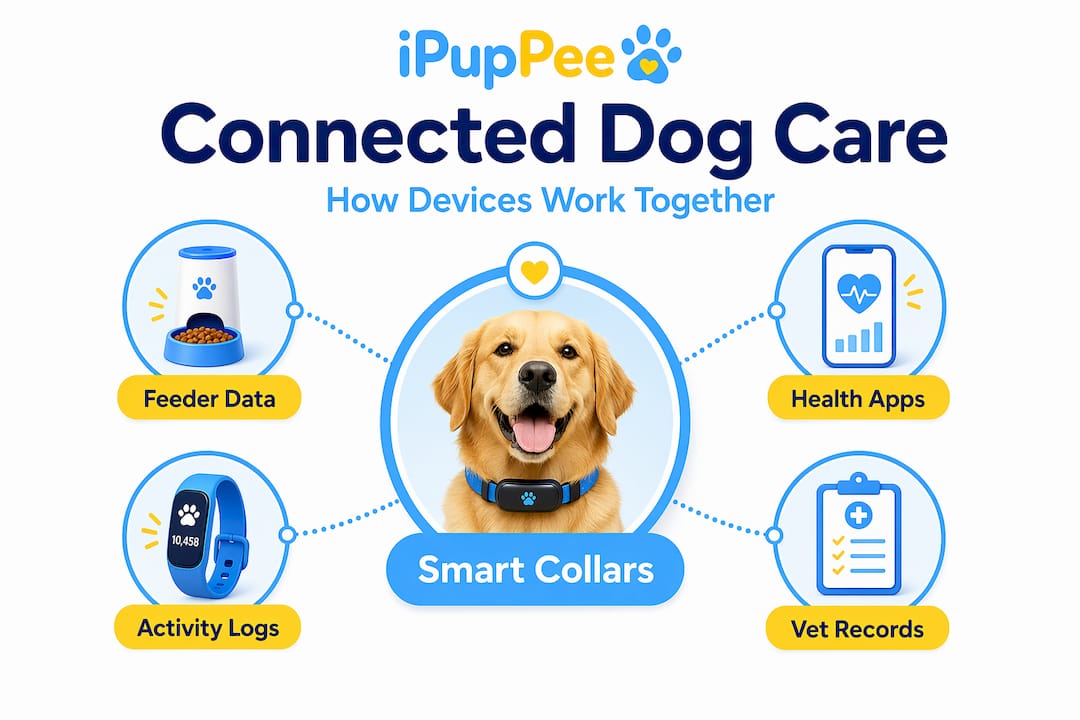
| Approach | What you see | What you miss |
|---|---|---|
| Single device (feeder only) | How much your dog ate today | Whether appetite change connects to activity or sleep |
| Connected ecosystem | Cross-device health correlations over time | Very little. Gaps shrink as more devices connect |
AI-powered portion control in smart feeders adjusts calories based on the activity data coming from a paired wearable. Medication tracking apps timestamp doses and log behavioral responses. Health analytics platforms are beginning to surface patterns across thousands of dogs, which means your individual pet’s data gets compared against a meaningful baseline.
The direction this technology is heading is toward predictive care rather than reactive care. That shift is already visible in how smart home tech is being designed to communicate between devices rather than operate in silos.
Choosing smart dog devices wisely
The smart dog gadgets benefits you read about are real, but they depend on selecting and using devices appropriately.
- Wellness devices vs. medical devices: The FDA’s 2026 guidelines make a clear distinction. Wellness wearables using non-invasive sensors cannot make clinical or diagnostic claims. This means your collar can flag a trend worth discussing with your vet. It cannot diagnose your dog.
- Document confounders: Routine factors like travel, weather changes, new medications, or a change in feeding schedule will affect your data. Log them manually so your vet can interpret readings accurately.
- Battery life and connectivity: Check how often the device needs charging and whether it relies on cellular data, Bluetooth, or Wi-Fi. A GPS tracker that dies mid-day provides a false sense of security.
- Privacy basics: Understand what data the manufacturer stores, how long they keep it, and whether it is shared with third parties. Your dog’s health data has value beyond your household.
Pro Tip: Start with one device, learn its data patterns over four to six weeks, and then add a second device. Adding too many at once makes it hard to know which data is most relevant or reliable.
The goal of improving dog training devices and health tools is not to replace your relationship with your vet. It is to arrive at appointments with better information than you could gather by observation alone.
My honest take on where this technology stands
I’ve watched dog owners adopt smart pet technology for years now, and the pattern that stands out most is not the tech itself. It’s the shift in awareness it produces.
Before a health monitoring device, most owners would describe their dog as “fine” until something was obviously wrong. After six weeks of wearing a smart collar, those same owners notice a 10% activity drop over two weeks, bring it to their vet, and catch early-stage joint inflammation that would have gone unaddressed for months. The device did not diagnose the problem. It created the conditions for the owner to ask a better question.
What I believe most people underestimate is the mental enrichment side. We talk endlessly about exercise for dogs, but the cognitive piece genuinely moves the needle for high-strung breeds in a way that more physical activity simply doesn’t. I’ve seen anxious dogs settle into calmer household routines within weeks of structured enrichment device use. That result surprises owners every time.
My honest caution: the integrated ecosystem vision is real, but it requires some patience to set up correctly. The owners who get the most from these tools treat them like a log, not an oracle. They document, they observe, and they bring data to their vet with questions rather than conclusions. That mindset turns a smart collar into something genuinely useful rather than an expensive novelty.
The future of this space is predictive and connected. I’m confident about that. Getting there requires dog owners who engage with the data critically rather than passively.
— Andrew
See what Ipuppee has built for connected dog care
If the idea of safer, healthier, and more mentally engaged dogs sounds like what you are after, Ipuppee has spent real effort building toward exactly that.
Ipuppee’s focus on pet communication and safety devices covers the full range of what connected dog care looks like in practice. From alert devices that give service dog handlers genuine independence to resources on setting up a connected pet home, Ipuppee approaches smart dog ownership as a system rather than a single gadget. Explore the blog, the product pages, and the training resources. You will find practical guidance for new puppy owners, rescue dog handlers, and seniors living with dogs, all built around the same core idea: your dog deserves care that works even when you cannot be present.
FAQ
What are the main benefits of smart dog devices?
Smart dog devices improve pet safety through GPS tracking and smart door access, detect health issues up to 42% earlier through continuous monitoring, and reduce destructive behavior through cognitive enrichment. The combined effect across safety, health, and mental engagement is what makes the technology genuinely useful rather than gimmicky.
Can smart dog devices replace veterinary care?
No. Per FDA 2026 guidelines, wellness wearables cannot make clinical or diagnostic claims. They function as early-warning trend tools that help owners bring better information to veterinary appointments, not as substitutes for professional diagnosis.
How do smart enrichment devices reduce destructive behavior in dogs?
Devices using operant conditioning with rapid reinforcement engage your dog’s cognitive capacity during periods of inactivity or isolation. Research shows a 73% reduction in destructive behavior compared to traditional toys because the cognitive load displaces boredom-driven outlet behaviors.
How often should I review my dog’s wearable data?
Look for trends over two to three weeks rather than reacting to daily changes. Sustained shifts in activity, sleep, or heart rate over that window are far more meaningful indicators of health change than isolated daily anomalies caused by weather or routine disruption.
Are all GPS dog trackers equally reliable?
No. Trackers using multi-network connectivity (GPS, GLONASS, Galileo, and cellular combined) provide significantly better accuracy and coverage than single-network devices, particularly in areas with limited signal. Check network specifications before purchasing any tracker.