

The fastest way to a calmer groom is this: set up a quiet, non-slip space with every tool within arm’s reach. Then work in short, predictable micro-steps and stop the moment your dog shows signs of stress. That’s the whole workflow. Everything else is refinement.
If you have five minutes, your micro-plan looks like this: brush out one section, check the ears, reward, and quit while your dog is still relaxed. Skip the bath and nails entirely on day one if your dog is new to grooming or already tense.
Before you touch a brush, confirm you have:
- A non-slip mat or towel on the floor or table
- Brush, comb, and treats already laid out
- A quiet room with the dryer and clippers out of sight
- A plan to stop before panic, not after
Reward every small win, even a two-second ear check. Hygiene basics (ears, eyes, mats) come before anything cosmetic.
Key Takeaways
A stress-free dog grooming workflow succeeds when short, predictable micro-steps replace marathon sessions, and owners stop at the first sign of stress rather than pushing for a finished look.
| Point | Details |
|---|---|
| Brush before bath | Wet mats tighten and cause pain, so always detangle the coat dry first. |
| Use micro-steps | Break nail trims and drying into 5 to 10 second segments with a reward after each. |
| Watch for threshold signs | Lip licking, whale eye, or stiffening mean stop and reset, not push through. |
| Aim for MVG, not perfection | A Minimum Viable Groom covers health essentials even if the cosmetic finish waits. |
| Match gear to coat and temperament | Low-noise dryers and grinders reduce startle triggers for sensitive dogs. |
Keeping your dog’s grooming predictable connects to the same principles behind building a calming daily routine, and owners managing broader anxiety issues may also find value in natural anxiety-reduction techniques that extend beyond the grooming table. For dogs whose anxiety shows up in other parts of daily life, a Wi-Fi enabled alert device from Ipuppee lets your dog signal you directly when something feels wrong, giving you another layer of communication alongside a calmer grooming routine. If you’re building out a broader preventive-care habit, the pet health maintenance guide from Loyal Saints covers scheduling beyond grooming alone. Explore Ipuppee’s full lineup at Ipuppee.
Table of Contents
- Building Your Stress-Free Dog Grooming Workflow Step by Step
- How Do You Groom an Anxious or Sensitive Dog?
- What Tools Do You Need for Low-Stress Grooming?
- Common Grooming Mistakes That Trigger Panic
- Try This 15-Minute Mini Grooming Session
- Frequently Asked Questions
- Sources
Building Your Stress-Free Dog Grooming Workflow Step by Step
A full session runs through six stages, and you don’t have to finish all of them in one sitting. The American Kennel Club’s grooming sequence moves from brush-out to ears/eyes, bath, drying, nails, and trim work, and that order isn’t arbitrary. Brushing first prevents mats from tightening when they get wet, which turns a five-minute knot into a painful shave-down.
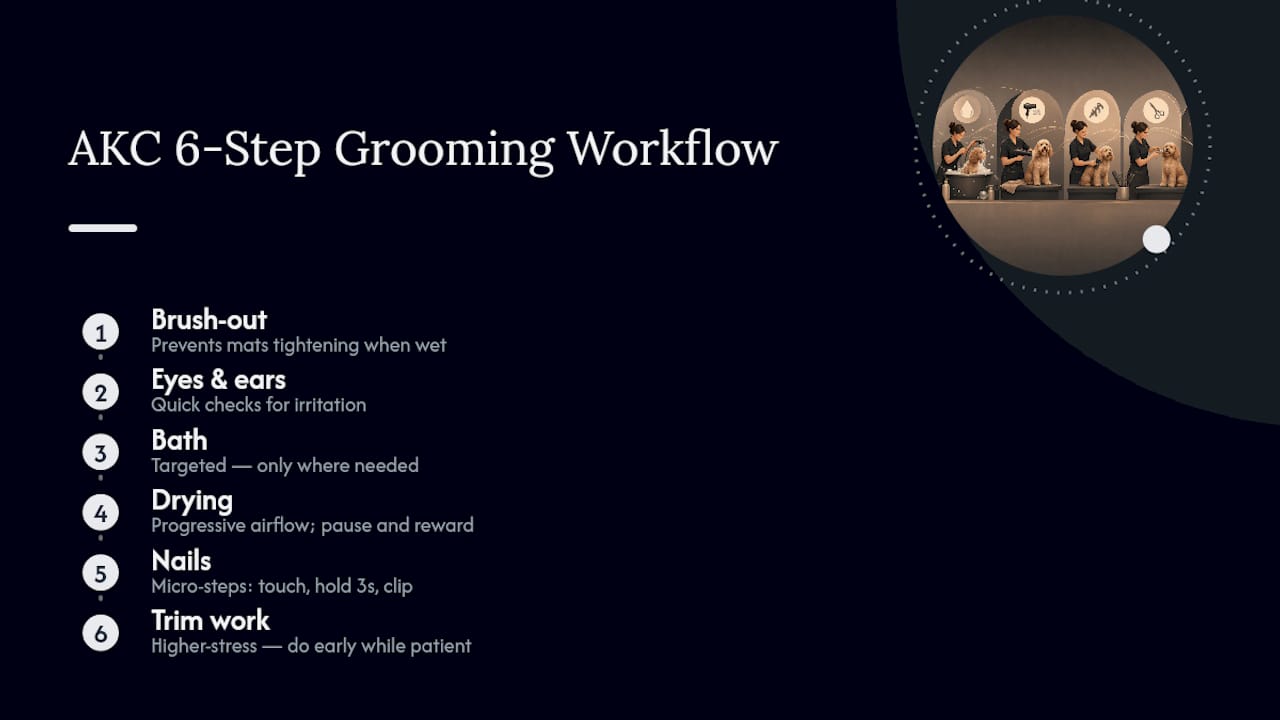
Here’s the expanded flow: safe zone setup, a greeting period where your dog sniffs the tools, a pre-brush pass, quick eye and ear checks, a targeted bath only where needed, a drying progression, then the higher-stress tasks (nails and face) while your dog still has patience in reserve. Finish at whatever point counts as a Minimum Viable Groom, or MVG, meaning the health essentials are done even if the cosmetic finish isn’t.
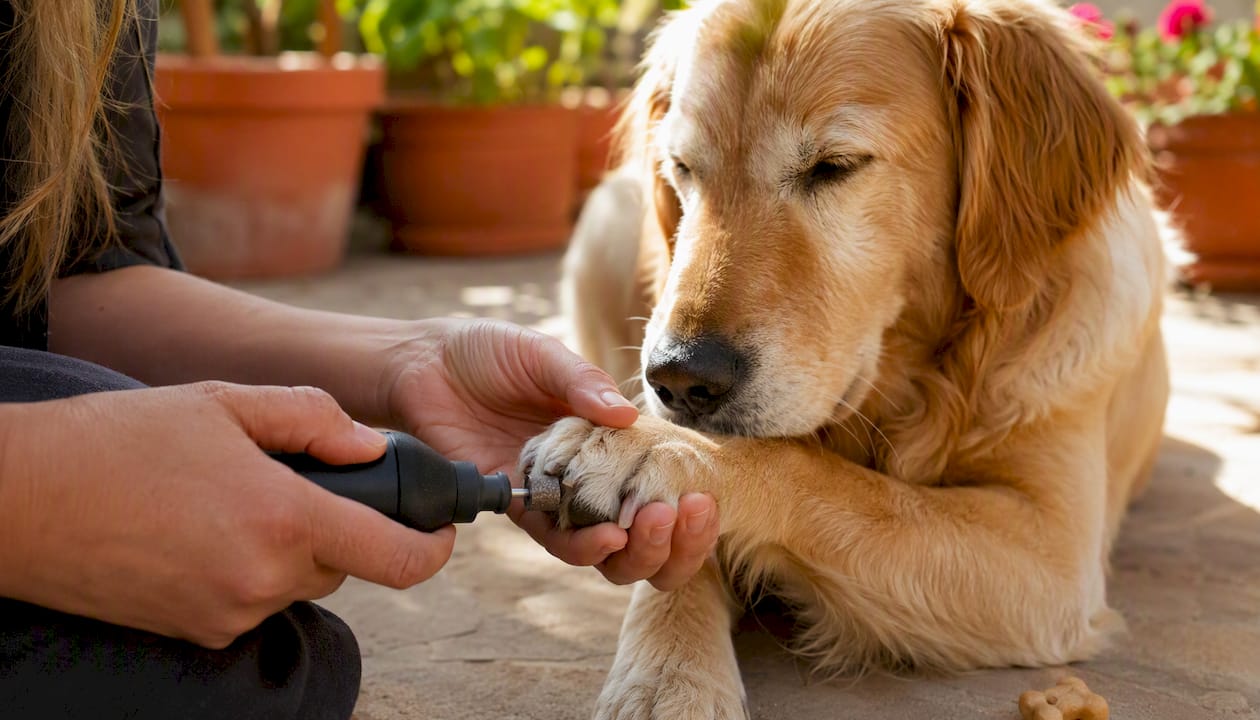
Timing matters more than most owners assume. A tense dog can usually handle two to four minutes of active handling before arousal starts climbing, so split a 20-minute groom into four or five short visits across a day or a week rather than pushing through in one sitting. Break a nail trim into micro-steps: touch the paw, reward, hold the paw for three seconds, reward, clip one nail, reward, and stop if you see any stiffening. Drying works the same way: ten seconds of airflow near (not on) the coat, pause, reward, then extend.
Coat type changes the timing math. Long or curly coats need slower, more frequent brushing sessions since missed brushing on these coats leads to matting that can require de-matting or a full shave. Double coats dry slowly and need more airflow time in the drying stage. Short coats often skip the brush-out entirely and can move straight to hygiene checks.
Pro Tip: Reorder nail trims and face work to the front half of the session, right after the pre-brush. Dogs have more behavioral capacity early on, and pushing hard tasks to the end is when meltdowns happen.
The two mistakes that escalate stress fastest: bathing over unbrushed mats, and running a loud dryer directly at a dog’s face before it’s had any positive exposure to the sound.
How Do You Groom an Anxious or Sensitive Dog?
You groom an anxious dog by decoupling the tools from the task. Let your dog sniff the clippers, brush, and dryer with zero pressure to perform, and reward calm curiosity before you ever use them for real. Building positive associations before the first bath by letting your dog explore freely, with treats scattered nearby, does more for long-term cooperation than any single grooming session ever will.
A useful mental model here is a 3-3-3 adaptation of the standard shelter-dog timeline: three days of slow introduction with no handling demands, three weeks of building a short daily routine around the tools, and three months before you expect real calm cooperation during the harder steps like nails or drying. Rushing this timeline is the single most common reason grooming turns into a fight.
Watch for these signals and respond immediately:
- Lip licking, yawning, or whale eye (whites of the eyes showing)
- Stiff body posture or a tucked tail
- Trying to move away or hide
- Low growling or sudden stillness
Forcing a groom past these signals doesn’t just ruin today’s session. It teaches your dog that grooming predicts something bad, and that association can outlast the original trigger by months.
If you see two or more of these signs, stop, wait for relaxed body language, and try again later or the next day. If growling escalates to snapping, or your dog shows no improvement after several weeks of gentle exposure, bring in a fear-free certified groomer or your veterinarian rather than pushing through alone.
What Tools Do You Need for Low-Stress Grooming?
Every dog needs a core kit: a breed-appropriate brush, a metal comb, nail clippers or a grinder, styptic powder for accidental quicking, ear-cleaning solution with cotton balls, dog-safe shampoo, absorbent towels, and high-value treats. The AKC’s baseline schedule recommends bathing every 4 to 8 weeks, brushing several times per week, and nail trims and ear checks at appropriate intervals.
Coat type narrows the list. Long or silky coats need a pin brush plus a wide-tooth comb for detangling. Curly and double coats do best with a slicker brush and an undercoat rake. Short coats need little beyond a rubber curry brush and a nail tool.
For anxious dogs, upgrade two items specifically: a low-noise dryer (or plain towels if your dog reacts to any motor sound) and a low-vibration nail grinder instead of a clipper, since grinders let you stop instantly at the first flinch. A lick mat with peanut butter or spray cheese keeps many dogs occupied and calmer during bath time. One consideration owners skip: rinse brushes and combs weekly and let clipper blades air-dry fully between uses to avoid skin irritation from trapped bacteria.
Common Grooming Mistakes That Trigger Panic
Most grooming disasters trace back to four repeat offenders: bathing over mats instead of brushing first, forcing a task through active resistance, running loud equipment without warning, and leaving tools scattered so you’re hunting for the nail clipper mid-session while your dog waits, tense, on a wobbly table.
Each has a simple fix. Brush thoroughly before any water touches the coat. Break resistance points into smaller micro-steps rather than pushing harder. Swap in a quieter dryer or towel-dry instead. And stage every tool within reach before you start, on a stable, non-slip surface, which professional grooming station design treats as a baseline requirement, not a luxury.
Run this safety check every session:
- Ears, eyes, and skin: no redness, odor, or new lumps
- Tools inspected and clean before use
- Styptic powder within reach before any nail work
- Any lump, sore, or limp reaction gets a vet call, not a home fix
Professional groomers typically charge $65 to $85 per session, so a careful at-home routine that avoids injury and repeat vet visits pays for itself within a few sessions, even accounting for the tools.
Try This 15-Minute Mini Grooming Session
Set a timer and run this: minutes 0 to 2, greet the tools and treat for calm sniffing. Minutes 2 to 6, brush one section (back, then one side) with a treat every 30 seconds. Minutes 6 to 9, check ears and eyes, rewarding after each check rather than during. Minutes 9 to 13, attempt one or two nails with the grinder, stopping at the first sign of tension. Minutes 13 to 15, end on something easy, like a final brush pass, so the session closes on success.
Use two-minute blocks with a built-in pause between each, and never chain more than two hard tasks back to back. A cue word like “paw” or “ears” paired with a treat every single time builds a reliable association fast.
Pro Tip: Keep a one-line log after each session, noting what your dog tolerated well and where they tensed up. That log becomes your roadmap for what to attempt next time.
Why Short Sessions Beat Marathon Grooms
I’ve come to think most grooming failures aren’t about technique at all. They’re about owners treating a 45-minute finish as the goal when a repeatable 10-minute MVG, done consistently, builds more trust and safety over a month than any single perfect session ever could.
Frequently Asked Questions
How often should I groom an anxious dog? Brush several times a week in short sessions, bathe every 4 to 8 weeks, and trim nails every 1 to 2 months, adjusting frequency downward if your dog needs longer to adapt.
What is a Minimum Viable Groom? It’s the health-essential version of a groom, covering brushing, ear checks, and nail maintenance, without requiring the cosmetic trim or full bath in the same session.
Should I ever force a grooming step my dog resists? No. Pushing past resistance builds a lasting negative association with grooming and often makes future sessions harder, not easier.
How long until an anxious dog gets comfortable with grooming? Expect gradual progress over roughly three months of consistent short sessions, following a slow introduction and routine-building period first.
Sources
- How to groom a dog | American Kennel Club (AKC)
- Dog grooming at home: complete step-by-step guide (2026) — OneHealthGlobe
- How to set up a professional dog grooming station — AdeoPets