

Watching your dog pace, tremble, or whine during a thunderstorm or when left alone can be heartbreaking. Many dog owners struggle to soothe their anxious pets effectively, often unsure which methods truly work. This guide walks you through recognizing anxiety signs, preparing a calming environment, and applying expert-backed techniques that reduce stress and strengthen your bond. You’ll learn step-by-step methods, common mistakes to avoid, and how to maintain lasting calm behavior for your dog’s wellbeing.
Table of Contents
- Recognizing Dog Anxiety And Preparing To Calm Your Dog
- Step-By-Step Calming Techniques To Soothe Your Dog
- Common Mistakes And How To Avoid Them When Calming Your Dog
- Verifying Results And Maintaining Calm Behavior Long-Term
- Discover Tools And Expert Advice To Calm Your Dog Effectively
- Frequently Asked Questions
Key takeaways
| Point | Details |
|---|---|
| Early recognition matters | Identifying anxiety signs like pacing and trembling allows timely intervention before stress escalates. |
| Preparation sets success | Creating a quiet space with calming tools and maintaining your own calm demeanor helps your dog relax faster. |
| Multiple methods work | Combining massage, distraction, breathing exercises, and pheromones offers flexible approaches for different situations. |
| Avoid common pitfalls | Never punish anxious behavior or force contact, as these mistakes increase stress and damage trust. |
| Consistency builds results | Daily routines and patient practice lead to long-term calm behavior and improved emotional wellbeing. |
Recognizing dog anxiety and preparing to calm your dog
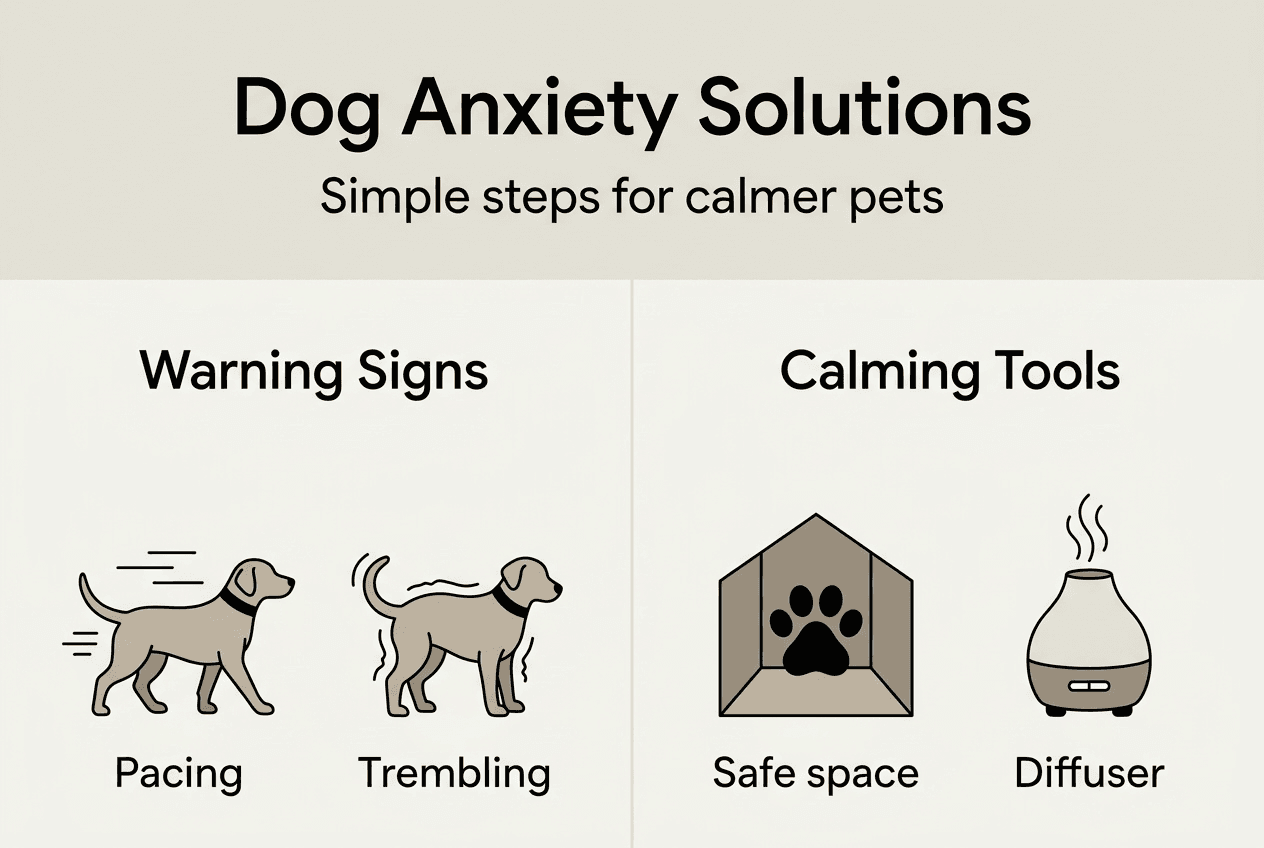
Before you can effectively calm your dog, you need to spot the warning signs early. Common signs of dog anxiety include pacing, whining, panting, and destructive behavior, which signal your pet needs immediate support. Recognizing these symptoms quickly allows you to tailor your calming approach to your dog’s specific triggers, whether it’s separation, loud noises, or unfamiliar environments.
Early identification prevents anxiety from spiraling into panic attacks or aggressive responses. Watch for physical cues like trembling, excessive drooling, or dilated pupils, alongside behavioral changes such as hiding, refusing food, or suddenly becoming clingy. Each dog expresses stress differently, so learning your pet’s unique signals helps you respond faster and more effectively.
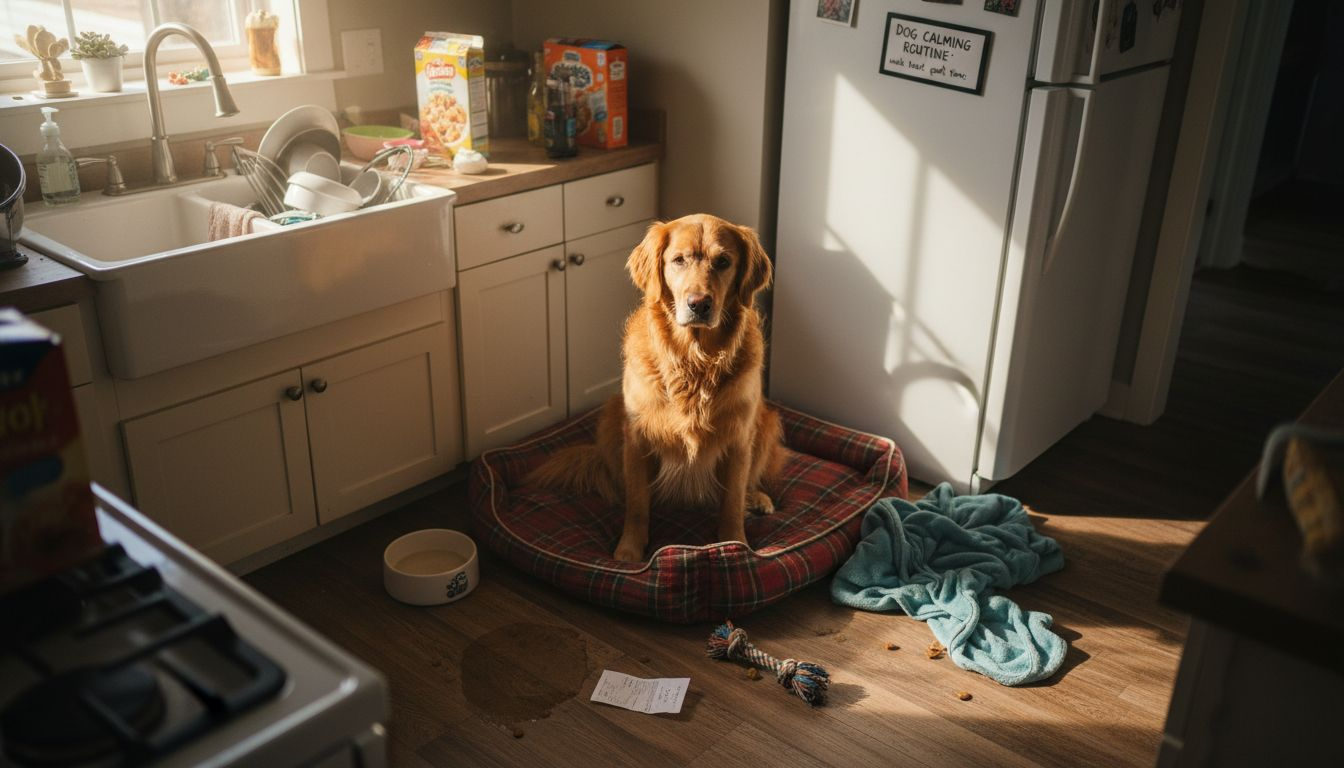
Preparing a calm environment is just as crucial as recognizing anxiety. Start by designating a quiet, safe space in your home where your dog can retreat during stressful moments. This area should be away from high-traffic zones, loud appliances, and windows facing busy streets. Stock this space with familiar bedding, favorite toys, and calming aids that create a soothing atmosphere.
| Tool | Benefit |
|---|---|
| Pheromone diffuser | Releases calming scents that mimic natural dog pheromones to reduce stress |
| Calming treats | Contains ingredients like chamomile or L-theanine that promote relaxation |
| Weighted blanket | Provides gentle pressure that soothes anxious dogs similar to swaddling |
| White noise machine | Masks startling sounds and creates consistent auditory environment |
| Interactive puzzle toys | Redirects anxious energy into mental stimulation and problem solving |
Your emotional state directly influences your dog’s anxiety levels. Dogs are incredibly perceptive and pick up on human stress through body language, tone of voice, and even scent changes. When you remain calm and confident, your dog feels safer and more secure. Practice deep breathing and maintain relaxed posture when interacting with your anxious pet, as tense muscles and hurried movements can amplify their fear.
Pro Tip: Remove overstimulating elements from your dog’s environment at least 30 minutes before applying calming techniques. Turn off televisions, dim bright lights, and ask family members to speak quietly. This pre-calming preparation helps your dog’s nervous system begin settling before you even start hands-on methods, making subsequent techniques significantly more effective.
For more comprehensive strategies, explore how to handle dog anxiety naturally through environmental modifications and behavioral approaches that complement the preparation steps outlined above.
Step-by-step calming techniques to soothe your dog
Once you’ve prepared the environment, it’s time to apply specific calming methods that address your dog’s anxiety directly. These techniques work best when combined and practiced consistently, allowing your dog to associate them with safety and relaxation.
-
Gentle massage therapy: Start by placing your hand on your dog’s chest and applying light pressure in slow, circular motions. Gentle massage and slow petting can reduce stress hormone levels in dogs, making this one of the most effective physical calming methods. Focus on the neck, shoulders, and base of the ears where tension accumulates. Use firm but gentle strokes, moving in the direction of hair growth. Spend at least five minutes per session, watching for signs your dog is relaxing such as heavy sighing or lying down.
-
Strategic distraction with calming toys: Redirect your dog’s anxious energy toward positive activities using carefully selected toys. Interactive puzzle feeders slow down eating while engaging problem-solving skills. Calming plush toys designed with heartbeat simulators or lavender scent provide comfort similar to littermate presence. Rotate toys regularly to maintain interest and prevent boredom.
- Snuffle mats that hide treats and encourage natural foraging behaviors
- Lick mats spread with peanut butter or plain yogurt for extended calming activity
- Soft, squeaker-free plush toys that won’t startle anxious dogs
- Frozen Kong toys stuffed with healthy treats for long-lasting distraction
- Tug toys for controlled play that releases pent-up nervous energy
-
Synchronized breathing exercises: Sit close to your dog and establish eye contact if they’re comfortable with it. Breathe slowly and deeply, inhaling for four counts and exhaling for six counts. Many dogs naturally synchronize their breathing patterns with their owners, creating a shared calm state. This technique works particularly well for dogs who respond to your emotional cues and enjoy close proximity during stressful moments.
-
Environmental calming aids: Deploy pheromone diffusers in rooms where your dog spends most time, as these release synthetic versions of calming dog pheromones that signal safety. Pair diffusers with specially designed calming sound playlists featuring classical music, nature sounds, or frequencies proven to reduce canine anxiety. Studies show certain musical tempos and tones lower heart rates and decrease stress behaviors in dogs.
Pro Tip: Apply calming techniques at the same time each day, even when your dog isn’t visibly anxious. This consistent practice builds positive associations and teaches your dog to self-soothe. Morning and evening sessions work best, as they bookend the day with calm energy and help establish predictable routines that anxious dogs desperately need.
Discover how dogs reduce anxiety through these bonding activities, and explore additional pet accessories for calming environment setup that enhances your toolkit.
Common mistakes and how to avoid them when calming your dog
Even well-intentioned owners make errors that worsen anxiety instead of relieving it. Understanding these pitfalls helps you avoid setbacks and accelerate your dog’s progress toward lasting calm.
The most damaging mistake is punishing or scolding anxious behavior. Punishment or loud reprimands during anxious episodes increase dog stress and undermine trust, creating a vicious cycle where your dog becomes anxious about being anxious. Your dog isn’t misbehaving out of spite; they’re experiencing genuine distress. Responding with anger or frustration teaches them that you’re unpredictable during their most vulnerable moments.
“Anxiety is not disobedience. When you punish fear-based behaviors, you’re punishing an emotional state your dog cannot control, which only deepens their insecurity and damages the trust foundation essential for effective calming.”
Forcing physical contact when your dog resists is another critical error. Some dogs find touch overwhelming during high-anxiety moments and need space to self-regulate first. Respect your dog’s body language signals like turning away, tucking the tail, or moving to another location. Forcing a hug or restraint can trigger defensive aggression or teach your dog that their communication doesn’t matter, making future calming attempts more difficult.
Many owners overwhelm anxious dogs by deploying too many calming tools simultaneously. Using a pheromone diffuser, calming treats, weighted blanket, massage, and music all at once makes it impossible to identify which methods work best for your specific dog. Start with one or two techniques, observe results over several days, then gradually add others if needed. This systematic approach reveals your dog’s preferences and prevents sensory overload.
- Don’t expect immediate transformation after one calming session
- Avoid inconsistent application of techniques across different family members
- Never use calming methods as punishment or forced timeout
- Don’t ignore subtle stress signals hoping anxiety will resolve on its own
- Avoid high-energy play immediately before calming sessions as it raises arousal levels
Impatience undermines progress more than any other factor. Anxiety management is a gradual process requiring weeks or months of consistent practice. Some dogs show improvement within days, while others need extended time to rewire stress responses. Celebrate small victories like reduced pacing duration or quicker recovery from triggers, rather than expecting perfect calm overnight.
Learn more about building trust with rescue dogs, which applies equally to any anxious dog regardless of background. These trust-building principles prevent common mistakes and establish the secure foundation necessary for effective anxiety management.
Verifying results and maintaining calm behavior long-term
Knowing whether your calming techniques actually work requires careful observation of specific behavioral and physical changes. Successful calming produces measurable indicators that distinguish genuine relaxation from temporary distraction or suppression.
Watch for relaxed body posture as the primary success marker. A truly calm dog displays loose, fluid movements rather than rigid, tense muscles. Their ears rest in a natural position instead of pinned back or hyperalert. The tail hangs comfortably or wags gently, and facial muscles soften so the mouth appears slightly open with a relaxed tongue. Steady, regular breathing replaces rapid panting, and your dog maintains normal appetite and interest in surroundings.
| Timeframe | Short-term outcomes | Long-term outcomes |
|---|---|---|
| First week | Reduced pacing duration, less frequent whining, willingness to eat treats during mild stress | Limited sustained change, techniques still feel unfamiliar to dog |
| One month | Faster recovery from anxiety triggers, increased time spent in calm state, improved sleep quality | Beginning to self-soothe using learned techniques, fewer intense anxiety episodes |
| Three months | Proactive seeking of safe space before anxiety peaks, reduced startle responses, better social confidence | Significantly lower baseline anxiety, resilience to previously overwhelming triggers, stronger owner bond |
Consistent calming routines reduce long-term anxiety and improve dog-owner bonding, making daily practice essential for lasting results. Establish predictable schedules that incorporate calming activities at the same times each day. Morning massages, afternoon puzzle toy sessions, and evening quiet time create rhythm that anxious dogs rely on for emotional stability.
Maintaining calm during high-stress triggers requires advance planning and practiced responses. Identify your dog’s specific anxiety triggers such as thunderstorms, fireworks, vet visits, or car rides. Before these events, implement calming protocols early rather than waiting for anxiety to peak. For predictable triggers like veterinary appointments, start calming routines the night before and continue through the event itself.
- Schedule daily exercise sessions that tire your dog physically without overstimulation
- Rotate mental enrichment activities like scent work, training games, or food puzzles
- Maintain the designated safe space with fresh bedding and updated calming aids
- Practice calming techniques during neutral times to strengthen positive associations
- Monitor for new anxiety triggers as your dog ages or circumstances change
- Keep detailed notes tracking which techniques work best for specific situations
Long-term success depends on adapting your approach as your dog’s needs evolve. Senior dogs may develop new anxieties around mobility challenges or cognitive changes. Rescued dogs often show delayed anxiety responses months after adoption once they feel secure enough to express suppressed stress. Stay flexible and willing to modify techniques, introduce new tools, or seek professional guidance when progress stalls.
Explore dog training emotional benefits to understand how consistent calming practice strengthens your relationship while building your dog’s confidence and emotional resilience over time.
Discover tools and expert advice to calm your dog effectively
Now that you understand proven calming techniques, enhance your efforts with specialized products and ongoing expert guidance. iPupPee offers carefully selected calming aids including treats formulated with natural anxiety-reducing ingredients, interactive toys designed for stress relief, and pheromone diffusers that create peaceful environments. These tools complement the behavioral methods you’ve learned, giving you a complete anxiety management system.
Our expert blog provides continuously updated resources covering everything from natural dog anxiety management tips to specialized approaches for rescue dog calming techniques. Access detailed guides, watch instructional videos, and learn from experienced trainers who understand the challenges you face. Visit dog calming products and advice to explore our full range of solutions designed specifically for anxious dogs and the owners who love them.
Pro Tip: Combining quality calming products with consistent behavioral techniques produces faster, more reliable results than either approach alone. Products provide immediate sensory relief while training builds long-term coping skills, creating a powerful synergy that transforms anxious dogs into confident, relaxed companions.
Frequently asked questions
How can I tell if my dog is really anxious?
Physical signs include pacing, trembling, excessive licking or yawning, dilated pupils, and rapid panting even when not hot or exercising. Behavioral indicators show up as destructive chewing, house soiling despite being trained, excessive barking or whining, and attempts to escape or hide. Some dogs display subtle signals like refusing treats they normally love, avoiding eye contact, or showing a tucked tail and lowered body posture. If you notice multiple signs occurring together, especially in response to specific triggers, your dog is experiencing genuine anxiety that requires intervention.
Are calming treats safe for all dogs?
Calming treats containing natural ingredients like chamomile, valerian root, or L-theanine are generally safe for healthy adult dogs when used according to package directions. However, you should consult your veterinarian before giving calming treats to puppies under six months, pregnant or nursing dogs, or pets taking medications for other conditions. Some dogs have sensitivities to specific ingredients, so start with half the recommended dose and monitor for any digestive upset or unusual behavior. Always check ingredient labels to avoid artificial additives or allergens your dog might react to poorly.
What is the best way to calm a newly adopted rescue dog?
Use gradual introductions to your home environment, allowing your rescue dog to explore one room at a time rather than overwhelming them with full access immediately. Create a dedicated safe space with comfortable bedding where they can retreat without interruption, and avoid forcing physical contact until they initiate it themselves. Focus on building positive associations through high-value treats, calm voice tones, and predictable routines that help them understand what to expect each day. Patience is essential, as rescue dogs often need weeks or months to decompress from previous trauma and learn to trust their new environment. Learn more about rescue dog trust building for detailed strategies.
How long does it usually take to see results from calming techniques?
Results vary significantly based on your dog’s anxiety severity, age, previous experiences, and consistency of technique application. Most owners notice subtle improvements within the first week, such as slightly shorter anxiety episodes or quicker recovery times. Meaningful, sustained progress typically requires three to six weeks of daily practice before you see substantial behavioral changes. Severely anxious dogs or those with trauma histories may need several months of consistent work before achieving lasting calm. The key is maintaining regular practice even when progress feels slow, as cumulative effects build over time to produce dramatic long-term improvements in your dog’s emotional wellbeing.