

Navigating daily life with a service dog means safety is always a top concern, whether you are in an American city, a Canadian suburb, or anywhere across the globe. Understanding the unique risks in your dog’s surroundings becomes essential when their independence and wellbeing are at stake. This guide highlights potential danger zones and practical steps to help you assess your environment, choose the right technology, and maintain a secure connection with your dog no matter your location.
Table of Contents
- Step 1: Assess Your Dog’s Environment For Safety Risks
- Step 2: Select And Install Reliable Communication Devices
- Step 3: Train Your Dog To Use Safety Alert Systems
- Step 4: Test Device Functionality With Real-Life Scenarios
- Step 5: Monitor And Maintain Safety Protocols Regularly
Quick Summary
| Key Insight | Explanation |
|---|---|
| 1. Assess Your Dog’s Environment | Identify hazards in your home to prevent accidents and ensure safety. Regularly evaluate key areas like kitchens, living rooms, and outdoor spaces. |
| 2. Choose Effective Communication Devices | Select devices based on range, durability, and ease of use to enhance monitoring and safety for your dog. |
| 3. Train Your Dog on Alert Systems | Use positive reinforcement to train your dog on safety systems, ensuring they respond effectively to alerts in various scenarios. |
| 4. Test Device Functionality Regularly | Conduct real-life tests to ensure communication devices work under diverse conditions, such as different environments and challenges. |
| 5. Regularly Monitor Safety Protocols | Maintain a routine check-up on safety devices and protocols to ensure continued protection and effectiveness for your dog. |
Step 1: Assess your dog’s environment for safety risks
Understanding potential hazards in your dog’s environment is crucial for preventing accidents and ensuring their wellbeing. By systematically examining your living space, you can identify and mitigate risks that could compromise your dog’s safety.
Start with a comprehensive assessment of your home’s physical layout. Potential danger zones include areas with sharp edges, unstable furniture, exposed electrical cords, and toxic substances. Canine environmental welfare research highlights how environmental factors significantly impact dog safety.
Key areas to evaluate include:
- Kitchen spaces with accessible cleaning chemicals
- Living areas with potential falling objects
- Outdoor spaces with potential escape routes
- Areas with temperature extremes
- Spaces with small objects that could be choking hazards
Consider geographic-specific risks as well. Regional environmental exposures demonstrate that safety risks can vary dramatically depending on your specific location and surrounding environment.
Here’s a quick comparison of key safety risks in different household areas:
| Area | Unique Hazards | Preventive Measures |
|---|---|---|
| Kitchen | Toxic chemicals, hot surfaces | Store items out of reach, lock cabinets |
| Living Room | Falling objects, choking items | Secure furniture, manage clutter |
| Outdoor Spaces | Escape routes, extreme weather | Fencing, shade, weatherproof shelter |
| Utility Room | Electrical cords, sharp tools | Cover cords, keep tools locked away |
A thorough environment assessment can prevent up to 80% of potential dog-related accidents.
Pro tip: Create a digital safety map of your home, marking potential hazard zones and developing specific mitigation strategies for each area.
Step 2: Select and install reliable communication devices
Selecting and installing the right communication device is critical for enhancing your dog’s safety and independence. Advanced technology now offers sophisticated solutions that can dramatically improve your ability to monitor and communicate with your dog.
Internet of Pets technologies have revolutionized how we can track and interact with our canine companions. When choosing a communication device, consider these essential factors:
- Signal strength and range
- Battery life and durability
- Compatibility with your specific dog’s needs
- Ease of installation
- Water and impact resistance
For specialized environments like search and rescue operations, wearable communication devices demonstrate remarkable capabilities in real-world scenarios. When installing your device, ensure it is:
- Securely attached to your dog’s body
- Comfortable and not restricting movement
- Positioned to maintain consistent signal transmission
- Tested thoroughly before regular use
The right communication device can be a lifeline between you and your dog, providing unprecedented safety and connection.
Pro tip: Always conduct a comprehensive test run of your communication device in multiple environments to ensure consistent performance and reliability.
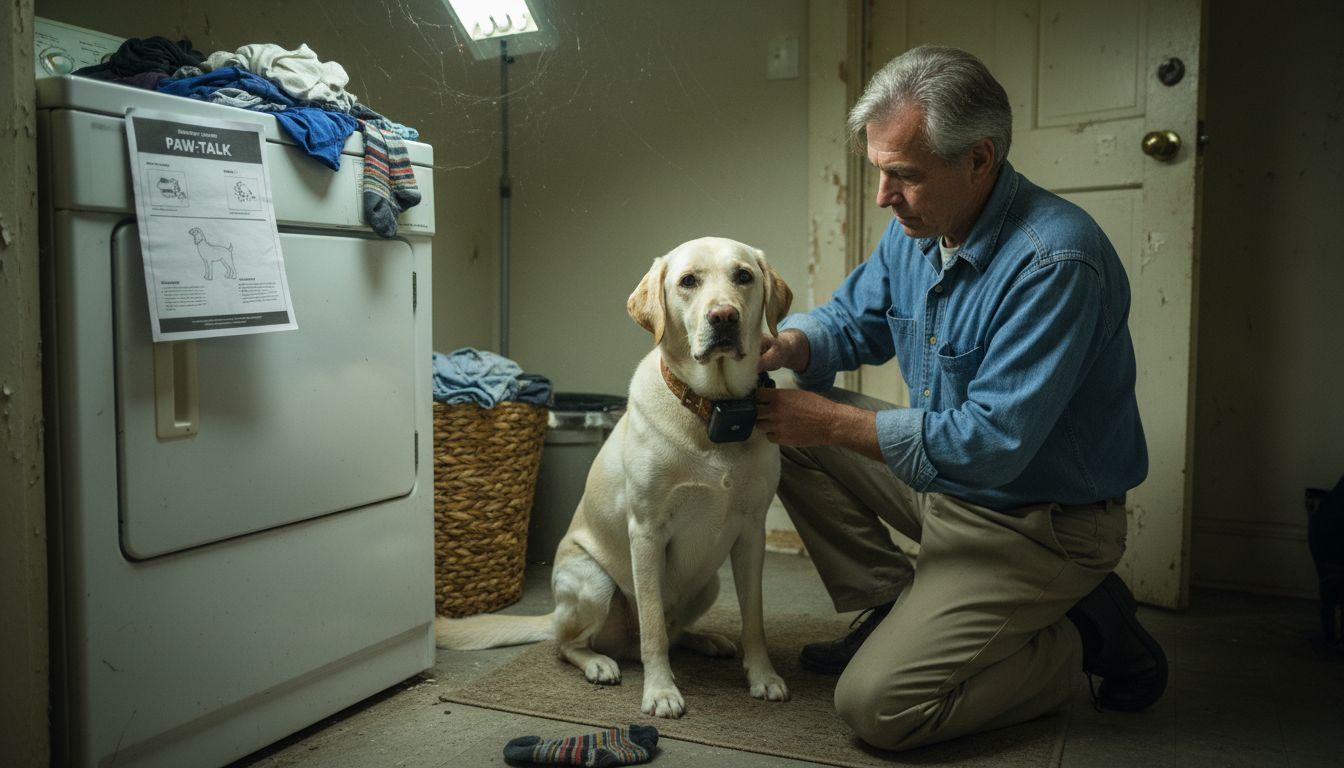
Compare dog communication device types for safety and day-to-day use:
| Device Type | Typical Use Case | Durability Level | Monitoring Capability |
|---|---|---|---|
| GPS Collar | Daily tracking outdoors | High, weather resistant | Location updates in real time |
| Wearable Camera | Search and rescue, training | Moderate, water-resistant | Visual check on surroundings |
| Smart Tags | Indoor pet safety alerts | Basic protection | Sends alerts to smartphone |
| Emergency Button | Elderly/special-needs dogs | High, impact resistant | Calls for immediate help |
Step 3: Train your dog to use safety alert systems
Training your dog to effectively use safety alert systems requires patience, consistency, and strategic positive reinforcement. Advanced communication technologies now offer unprecedented opportunities to enhance your dog’s safety and responsiveness.
Dog training methods demonstrate that positive reinforcement is the most effective approach to teaching alert system interactions. When introducing a new safety device, focus on creating a positive, rewarding experience for your dog.
Key training strategies include:
- Start with short, focused training sessions
- Use high-value treats as immediate rewards
- Practice in low-distraction environments first
- Gradually increase complexity of alert scenarios
- Maintain a calm and encouraging demeanor
Training steps for alert system mastery:
- Introduce the device gradually
- Create positive associations with the device
- Teach basic interaction commands
- Practice simulated alert scenarios
- Reinforce correct responses consistently
Successful alert system training transforms your dog from a passive companion to an active safety partner.
Pro tip: Record your training sessions to track progress and identify areas where your dog might need additional support or motivation.
Step 4: Test device functionality with real-life scenarios
Testing your communication device in authentic environments is crucial for ensuring reliable performance when it matters most. Safety communication technologies require comprehensive evaluation beyond standard laboratory conditions.
Wearable device testing demonstrates the importance of thorough real-world scenario assessment. Effective testing involves simulating multiple challenging conditions to verify your device’s responsiveness and reliability.
Key testing scenarios include:
- Indoor environments with potential signal interference
- Outdoor spaces with varying terrain
- High-stress or emergency-like situations
- Different weather conditions
- Locations with diverse noise levels
Comprehensive testing steps:
- Check signal strength across different locations
- Verify battery performance under stress
- Test communication range
- Evaluate device durability
- Assess response time in multiple scenarios
A communication device is only as good as its performance when you need it most.
Pro tip: Create a structured testing checklist and document each scenario’s performance to identify potential improvements or limitations in your device’s functionality.
Step 5: Monitor and maintain safety protocols regularly
Consistent monitoring and maintenance of safety protocols are critical for ensuring your dog’s long-term protection and well-being. Safety communication systems require ongoing attention and proactive management to remain effective.
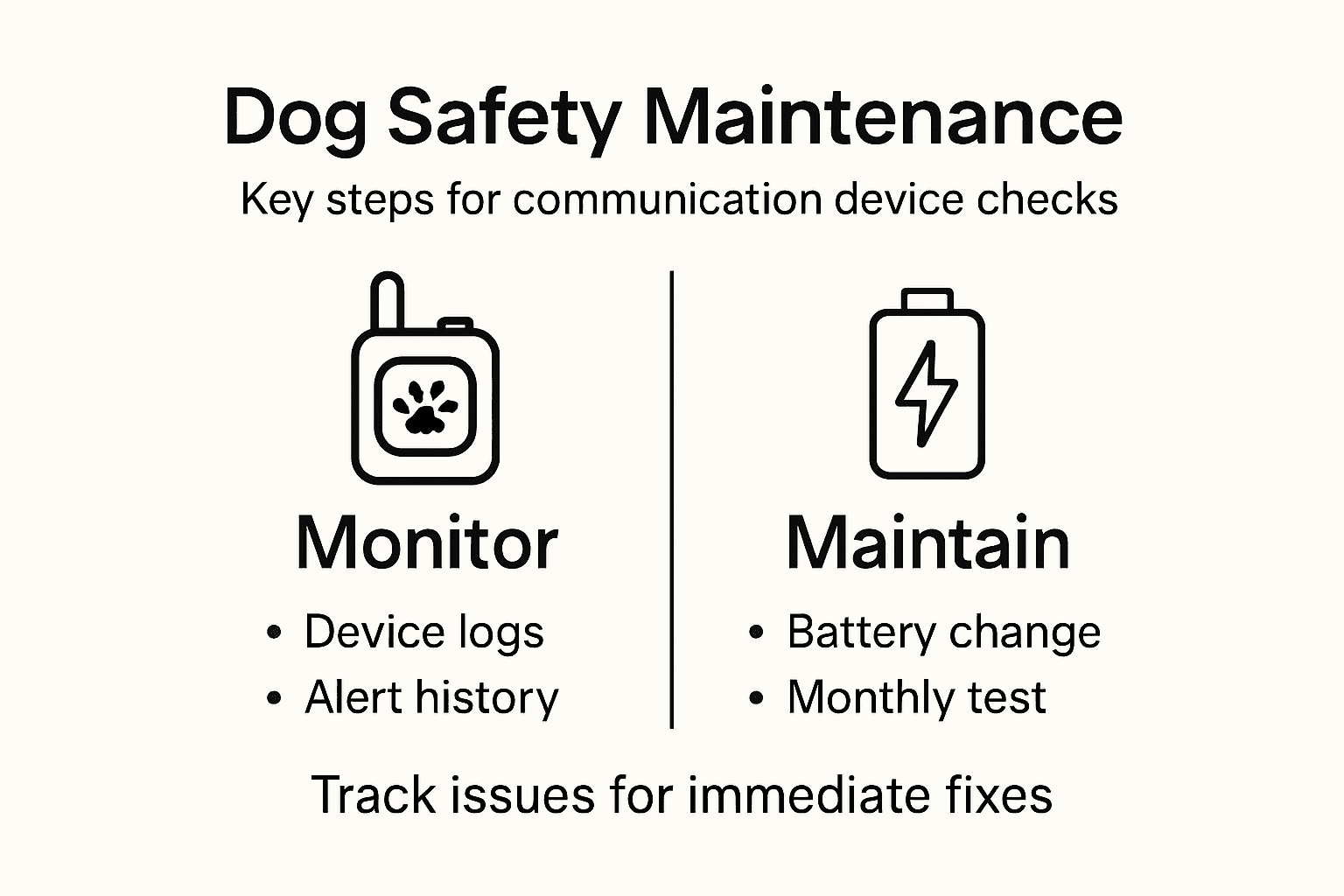
Standardized health protocols emphasize the importance of systematic observation and continuous assessment. Regular check-ups and documentation help identify potential risks before they become serious problems.
Key maintenance activities include:
- Inspect communication devices monthly
- Check battery performance and signal strength
- Review training effectiveness
- Update safety response strategies
- Assess overall device functionality
Comprehensive monitoring steps:
- Create a detailed tracking log
- Schedule regular device performance reviews
- Test alert system responsiveness
- Update software and firmware
- Retrain your dog periodically
Consistent monitoring transforms your safety system from a reactive tool to a proactive protection mechanism.
Pro tip: Develop a digital tracking system to log device performance, noting any inconsistencies or areas requiring immediate attention.
Enhance Your Dog’s Safety with Advanced Communication Solutions
Ensuring your dog’s safety goes beyond identifying hazards and training. The challenge many dog owners face is bridging effective communication to react promptly when it matters most. This article highlights the importance of reliable communication devices paired with consistent training and testing. If you want to transform your dog into a proactive safety partner while overcoming common concerns such as signal reliability and ease of use, discover solutions tailored just for you.
Experience how the iPupPee device simplifies communication with your dog. Designed for service dogs, rescue dogs, and everyday companions, this innovative alert device lets your dog notify you instantly with a simple button press. It empowers both you and your dog by enhancing safety, independence, and peace of mind.
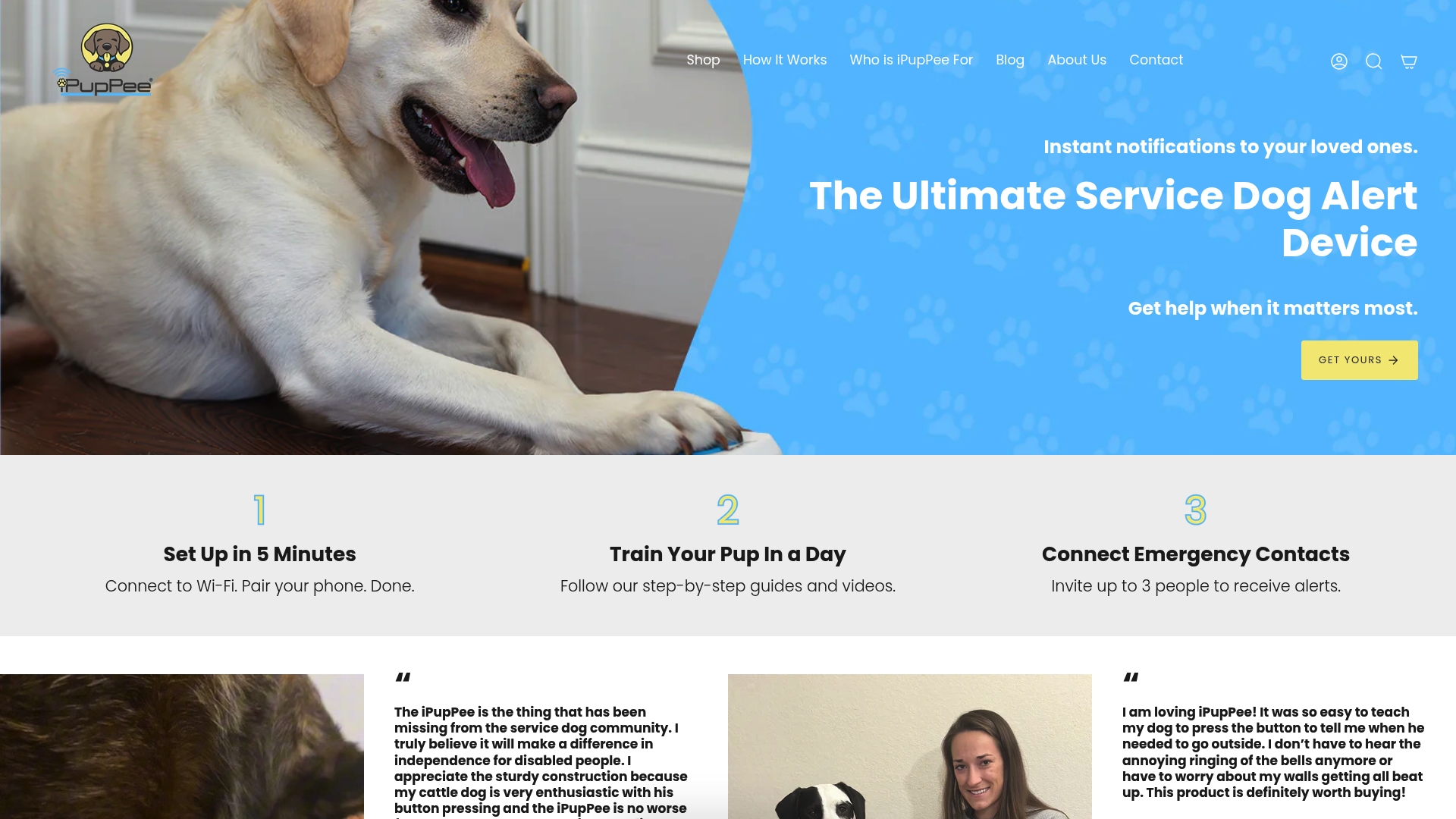
Don’t wait for an emergency to test your communication system. Take action now and explore how the iPupPee can fit your unique safety needs. Visit iPupPee to learn more about the device features and training guidance. Begin your journey of improved dog safety today by checking out these essential resources: advanced communication devices for service dogs and practical training tips to maximize device use. Your dog’s safety starts with clear communication and smart choices proven by real-life success stories.
Frequently Asked Questions
How can I assess my dog’s environment for safety risks?
Assessing your dog’s environment involves systematically examining areas of your home for potential hazards. Start by checking spaces like the kitchen for toxic chemicals and the living room for choking hazards. Create a checklist of risk zones and address them within a week to significantly improve your dog’s safety.
What features should I look for in an advanced communication device for my dog?
When selecting an advanced communication device, prioritize features like signal strength, battery life, and ease of installation. Ensure it meets your dog’s specific needs and is durable enough for various conditions. Evaluate these features against your requirements in a structured comparison to make an informed choice.
How do I train my dog to use a safety alert system effectively?
Training your dog to use a safety alert system involves positive reinforcement and gradual exposure to the device. Start with short sessions, use high-value treats for rewards, and simulate alert scenarios to build confidence. Aim to see significant improvement in your dog’s response within 30 days through consistent practice.
What steps should I take to test my communication device in real-life scenarios?
To test your communication device, simulate different environments and conditions where you might use it. Check for signal strength, battery performance, and device durability in various locations. Conduct these tests at least once a month to ensure reliable functionality when needed.
How often should I monitor and maintain my dog’s safety protocols?
You should monitor and maintain your dog’s safety protocols at least once a month. Regularly inspect communication devices, check battery strength, and evaluate training progress to identify any adjustments needed. By setting up a schedule for these checks, you can effectively prevent potential safety issues before they arise.
Can I create a digital tracking system for my dog’s safety device performance?
Yes, you can create a digital tracking system to log your dog’s safety device performance. Document key metrics such as alert response times and battery life regularly to identify patterns or areas needing improvement. Aim to review these records quarterly to ensure optimal device functionality.
Recommended
- Dog Communication Technology: Enhancing Safety and Independence – iPupPee
- Dog Signals for Help: Enhancing Safety with Tech – iPupPee
- How Dogs Alert Owners Using Communication Devices – iPupPee
- Dog Communication for Seniors: Enhancing Safety – iPupPee
- Communication Barriers: Everything You Need to Know - Mastering Conflict