

Every handler knows the daily demands of living with a disability require more than just assistance—they call for true partnership and clear communication. Disability assistance dogs deliver critical support through highly trained skills, defined by the Americans with Disabilities Act as dogs trained to perform tasks directly related to a person’s disability. Discover how effective strategies and tools can turn these remarkable animals into reliable companions, empowering safety, freedom, and confidence in daily routines.
Table of Contents
- What Are Disability Assistance Dogs?
- Major Types And Key Functions Explained
- Training, Certification, And Daily Roles
- Legal Rights And Global Access Protections
- Handler Responsibilities And Financial Considerations
- Risks, Barriers, And Technology Solutions
Key Takeaways
| Point | Details |
|---|---|
| Understanding Assistance Dogs | Disability assistance dogs are trained to help individuals with various disabilities, ensuring greater independence in daily life. |
| Types of Support | Different assistance dogs cater to specific needs, including mobility, medical alerts, sensory support, and psychiatric aid. |
| Training and Certification | Assistance dogs undergo extensive training for up to 18 months to reliably perform tasks that support their handlers. |
| Legal Rights and Responsibilities | Handlers have rights under the Americans with Disabilities Act, along with responsibilities for the dog’s care and training. |
What Are Disability Assistance Dogs?
Disability assistance dogs are specially trained canines that help individuals with physical, sensory, psychiatric, intellectual, or mental disabilities navigate daily life more independently. These remarkable animals undergo extensive training to perform specific tasks that directly support their handler’s unique needs, enabling greater safety and autonomy.
According to the Americans with Disabilities Act, service animals are defined as dogs trained to perform tasks directly related to a person’s disability. These dogs are not just companions but highly skilled working partners who provide critical support in multiple domains:
- Mobility Assistance: Helping individuals with physical limitations move safely
- Medical Alert: Detecting seizures, blood sugar changes, or impending medical episodes
- Sensory Support: Guiding visually or hearing-impaired individuals
- Psychiatric Support: Mitigating symptoms of conditions like PTSD or anxiety
- Navigation Assistance: Providing physical stability and directional guidance
Different types of assistance dogs specialize in addressing specific disability needs. Assistance dog organizations recognize multiple categories, including guide dogs for the visually impaired, hearing dogs, mobility support dogs, seizure response dogs, and psychiatric assistance dogs.
These dogs undergo rigorous training to ensure they can reliably perform complex tasks while maintaining exceptional temperament and public behavior. Unlike emotional support animals, assistance dogs have specific, trained capabilities that directly mitigate their handler’s disability-related challenges.
Pro tip: Always respect the working status of assistance dogs and avoid distracting them when they are performing critical tasks for their handlers.
Major Types and Key Functions Explained
Disability assistance dogs are not a one-size-fits-all solution. Assistance dog organizations recognize multiple specialized categories, each designed to address unique disability-related challenges with remarkable precision and dedication.
These specialized assistance dogs can be categorized into several critical types:
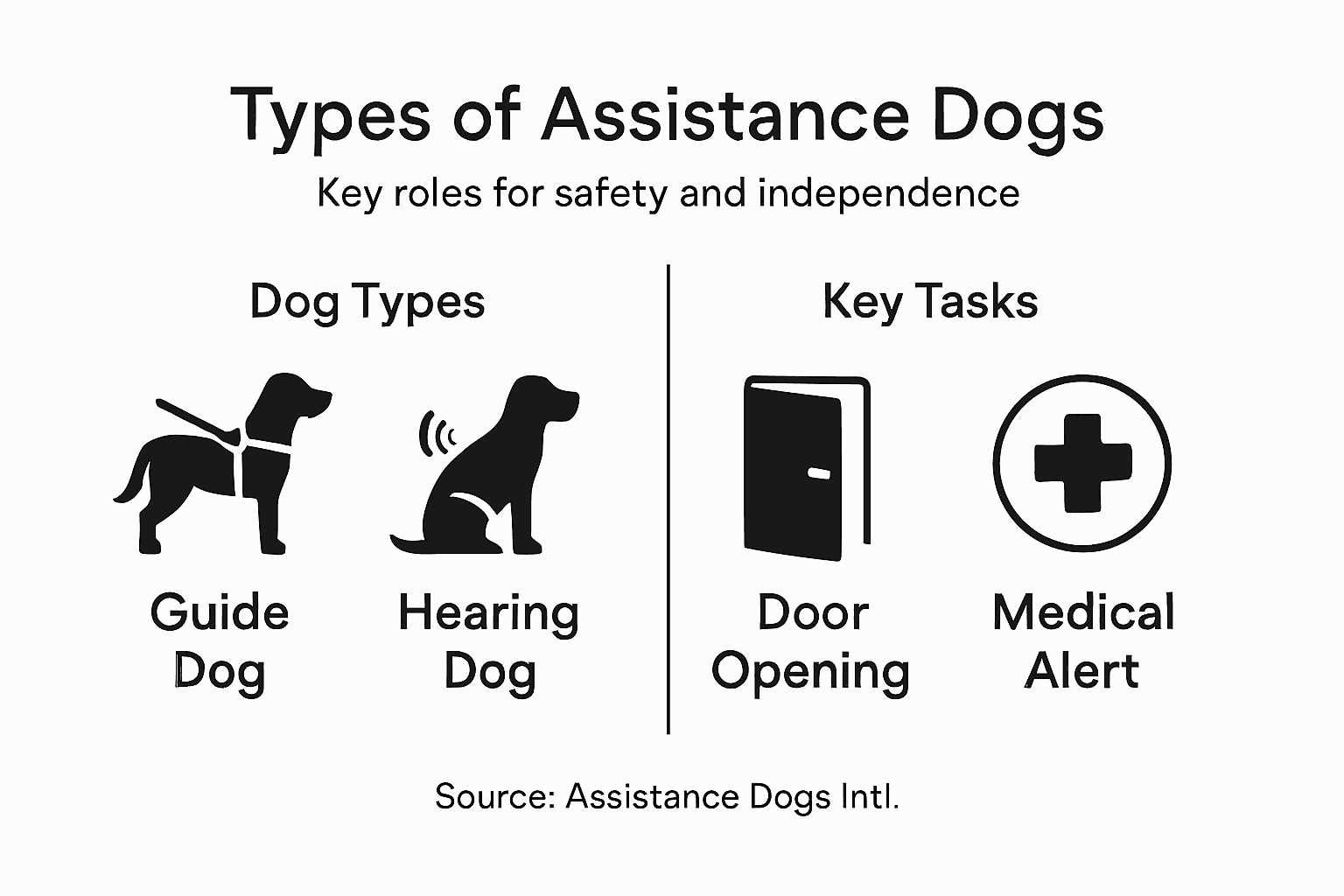
- Guide Dogs: Support individuals with visual impairments
- Hearing Dogs: Alert handlers to important environmental sounds
- Mobility Assistance Dogs: Help individuals with physical disabilities navigate spaces
- Medical Alert Dogs: Detect and respond to medical emergencies like seizures
- Psychiatric Service Dogs: Provide support for mental health conditions
- Autism Service Dogs: Assist individuals with sensory and social challenges
Each type of assistance dog undergoes intensive, specialized training to perform specific tasks tailored to their handler’s precise needs. Medical response dogs, for instance, can detect subtle physiological changes that signal an oncoming seizure or blood sugar irregularity, potentially preventing serious medical incidents.

Assistance Dogs International emphasizes the critical importance of consistent, high-standard training to ensure these dogs can reliably perform their life-changing tasks. Their global standards mandate not just task proficiency, but also impeccable public behavior and adaptability.
Beyond task performance, these dogs develop profound emotional bonds with their handlers, providing not just practical assistance but also emotional support and companionship. Their ability to understand and respond to complex human needs makes them more than just animals - they are true partners in independence.
Here’s a comparison of the major types of disability assistance dogs and their specialized areas of support:
| Assistance Dog Type | Unique Training Focus | Typical Handler Needs |
|---|---|---|
| Guide Dogs | Advanced navigation skills | Visual impairment and blindness |
| Hearing Dogs | Sound alert and recognition | Hearing loss and deafness |
| Mobility Support Dogs | Object retrieval, stability | Limited physical movement |
| Medical Alert Dogs | Detection of symptoms/events | Seizure, diabetes, allergies |
| Psychiatric Service Dogs | Interrupting harmful behaviors | PTSD, anxiety, mental illness |
| Autism Service Dogs | Behavioral/task support | Sensory/social challenges |
Pro tip: Research specific assistance dog training programs in your area to understand the precise capabilities and certification processes for different types of service dogs.
Training, Certification, and Daily Roles
Canine Companions highlights the extraordinary complexity of assistance dog training, which typically spans 16-18 months and involves multiple stages of intensive preparation. This comprehensive process transforms ordinary dogs into extraordinary partners capable of supporting individuals with diverse disabilities.
The training process encompasses several critical components:
- Socialization: Exposing dogs to various environments and situations
- Basic Obedience: Developing fundamental command responses
- Task-Specific Training: Teaching specialized skills matching handler needs
- Public Access Preparation: Ensuring impeccable behavior in diverse settings
- Medical and Behavioral Screening: Confirming dog’s physical and mental fitness
Certification standards are rigorous and multifaceted. Assistance Dogs International mandates extensive evaluations to ensure dogs can reliably perform critical tasks while maintaining exceptional temperament and adaptability. These standards verify that each assistance dog can consistently support their handler’s specific needs across unpredictable real-world scenarios.
Daily roles for assistance dogs extend far beyond basic commands. Depending on their specialized training, these remarkable animals might retrieve medication, provide stability during walking, alert to potential medical emergencies, interrupt anxiety episodes, or help navigate complex physical environments. Their tasks are precisely tailored to each handler’s unique requirements, transforming limitations into opportunities for greater independence.
The bond between an assistance dog and their handler represents a profound partnership built on trust, training, and mutual understanding. These dogs are not just working animals - they are lifeline companions who dramatically enhance their handlers’ quality of life and personal autonomy.
Pro tip: Consult multiple certified training organizations to understand the specific certification processes and training requirements for different types of assistance dog specialties.
Legal Rights and Global Access Protections
The Americans with Disabilities Act establishes critical legal protections for assistance dog handlers, ensuring their fundamental right to access public spaces and participate fully in society. These comprehensive legal frameworks are designed to prevent discrimination and support independence for individuals with disabilities.
Key legal protections for assistance dog handlers include:
- Public Space Access: Guaranteed entry to restaurants, stores, hospitals, and government buildings
- Transportation Rights: Unrestricted access to public transit and transportation services
- Housing Accommodations: Protection against housing discrimination
- Workplace Modifications: Reasonable accommodations for service dog presence
- Educational Institution Access: Rights to accompany handlers in academic settings
Verification and Documentation remain complex legal territories. Assistance Dogs International advocates for standardized international recognition, though specific regulations vary by jurisdiction. Handlers are not legally required to carry certification, but documentation demonstrating the dog’s trained status can help prevent potential access challenges.
Global variations in legal protections mean that handlers must understand their specific regional rights. While the United States offers robust federal protections, other countries may have more limited or differently structured legal frameworks. Some nations require specific registration or certification processes, making it crucial for handlers to research local regulations.
The fundamental principle underlying these legal protections is recognizing assistance dogs as essential medical equipment rather than mere pets. This perspective ensures that handlers can navigate public spaces with the same dignity, independence, and respect afforded to anyone using necessary medical assistance.
Pro tip: Always carry concise documentation about your assistance dog’s trained status and be prepared to provide clear, factual information about their specific tasks.
Handler Responsibilities and Financial Considerations
The Americans with Disabilities Act emphasizes that service dog handlers bear critical responsibilities beyond simply having a working animal. These responsibilities encompass comprehensive care, training maintenance, and ensuring their dog’s ongoing ability to perform essential tasks with professionalism and reliability.
Key handler responsibilities include:
- Daily Care: Providing proper nutrition, grooming, and medical maintenance
- Behavioral Management: Ensuring consistent training and public-appropriate behavior
- Task Performance: Maintaining the dog’s specialized skill proficiency
- Health Monitoring: Regular veterinary check-ups and preventative care
- Financial Commitment: Covering ongoing expenses related to dog’s working capabilities
Acquisition costs represent a significant initial investment. Assistance Dogs International highlights that while some organizations provide dogs at reduced rates or through grant programs, handlers should anticipate substantial financial considerations. These expenses typically include:
- Initial dog acquisition costs
- Specialized training expenses
- Ongoing veterinary care
- Equipment and support supplies
- Potential travel or training program fees
Financial planning is crucial for prospective and current assistance dog handlers. The total lifetime cost of an assistance dog can range from $20,000 to $50,000, accounting for training, medical care, specialized equipment, and maintenance. Some nonprofit organizations and grants can help offset these expenses, but handlers should be prepared for significant personal financial investment.
The partnership between a handler and an assistance dog represents a profound commitment that extends far beyond monetary considerations. It requires emotional dedication, consistent training, and a genuine understanding of the dog’s working role in supporting the handler’s independence and quality of life.
Below is a summary of key financial considerations when planning for a disability assistance dog:
| Expense Area | Example Costs | Long-Term Commitment |
|---|---|---|
| Dog Acquisition | $15,000-$30,000 upfront | One-time |
| Specialized Training | $10,000-$20,000 | 12-18 months |
| Veterinary Care | $500-$1,000/year | Annual |
| Equipment/Supplies | $250-$500/year | Ongoing |
| Travel/Program Fees | Up to $2,000 | As needed |
Pro tip: Research multiple funding sources, including disability support organizations, grants, and nonprofit assistance dog programs to help manage the financial aspects of acquiring and maintaining an assistance dog.
Risks, Barriers, and Technology Solutions
Assistance Dogs International recognizes that assistance dog handlers face complex challenges beyond their dogs’ remarkable capabilities. These challenges range from societal misunderstandings to physical environmental barriers that can significantly impact a handler’s daily experience and independence.
Primary barriers confronting assistance dog handlers include:
- Social Misconceptions: Lack of public understanding about service dog roles
- Access Discrimination: Illegal refusals in public spaces
- Physical Environment Limitations: Inaccessible infrastructure
- Communication Challenges: Explaining dog’s working status
- Emotional Stress: Navigating repeated questioning and potential confrontations
Technological innovations are emerging to address these challenges. Canine Mobility Devices represent significant advancements in supporting both handlers and their assistance dogs. These technologies include:
- GPS tracking systems for dog location and health monitoring
- Communication devices that translate dog behaviors
- Specialized mobility equipment for aging or injured assistance dogs
- Advanced training simulation technologies
- Adaptive harnesses with integrated communication tools
Modern technology is transforming how assistance dogs support their handlers, providing unprecedented levels of communication, safety, and independence. Sophisticated tracking systems can now monitor a dog’s health metrics, alert handlers to potential medical issues, and ensure the dog’s ongoing capability to perform critical tasks.
The future of assistance dog support lies in continued technological development, increased public education, and a deeper societal understanding of the profound partnership between handlers and their working dogs.
Pro tip: Research emerging assistive technologies and connect with support organizations to stay informed about the latest innovations in assistance dog support.
Enhance Independence and Safety with Innovative Assistance Dog Communication
Living with a disability assistance dog means embracing greater safety and independence. Yet, effective communication between handler and dog remains a vital challenge mentioned in the article. Whether your service dog supports mobility, medical alerts, or psychiatric needs, a clear, reliable way to communicate can ease daily tasks and strengthen your partnership. The article highlights how specialized training helps disability assistance dogs perform life-changing tasks. Complementing this, iPupPee offers a unique alert device designed to bridge communication gaps with a simple press of a button. This technology empowers handlers by giving their service dogs a voice to signal important needs or emergencies, promoting confidence and peace of mind.
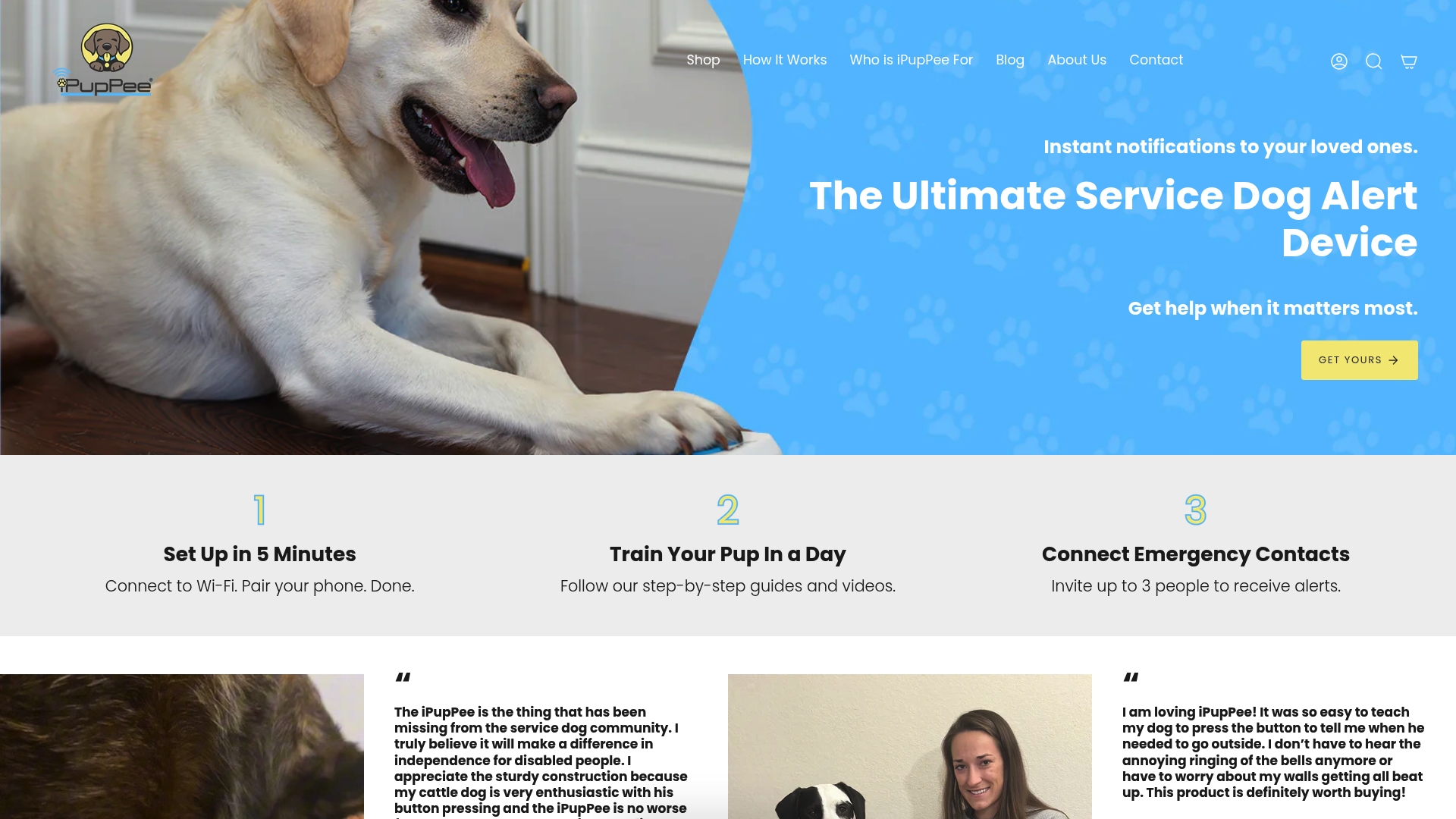
Discover how the iPupPee device can transform your assistance dog’s effectiveness and your quality of life today. Take control of your safety and independence by exploring training guidelines, user testimonials, and detailed instructions directly at iPupPee. Act now to harness the power of communication and enhance your daily living with your trusted disability assistance dog.
Frequently Asked Questions
What is a disability assistance dog?
Disability assistance dogs are specially trained canines that help individuals with various disabilities navigate their daily lives more independently. These dogs perform tasks directly related to their handler’s needs, enhancing safety and autonomy.
What types of tasks can disability assistance dogs perform?
Disability assistance dogs can perform a variety of tasks, including mobility assistance, medical alert responses, sensory support, psychiatric assistance, and navigation help, depending on the specific needs of their handlers.
How are disability assistance dogs trained and certified?
Disability assistance dogs undergo 16-18 months of specialized training, which includes socialization, obedience, task-specific training, public access preparation, and medical screening. Certification standards ensure that these dogs can reliably perform their critical tasks.
What legal rights do handlers of assistance dogs have?
Handlers of assistance dogs have the right to access public spaces, transportation, and housing, as established by the Americans with Disabilities Act. They are also entitled to reasonable accommodations in their workplace and educational institutions.
Recommended
- Dogs and Disability Independence: Enhancing Daily Life – iPupPee
- Can Dogs Provide Independence? Complete Guide – iPupPee
- Disability and Pet Care: Enhancing Safety and Connection – iPupPee
- 7 Ways Dogs Impact Lives for Safety and Independence – iPupPee
- 7 Best Taxi That Takes Dogs Services in 2026 - Capital Cars