

For many handlers across the United States and Canada, understanding the true role of a service dog can make a world of difference. Confusion around legal rights, training requirements, and public access often leads to unnecessary barriers. By learning what truly sets service dogs apart from pets or emotional support animals, you gain the confidence to advocate for your independence and harness the full benefits these expertly trained companions provide.
Table of Contents
- What Are Service Dogs and Common Myths
- Major Types of Service Dogs and Their Roles
- How Service Dogs Are Trained for Tasks
- Legal Rights and Handler Responsibilities
- Real-World Impact: Safety, Mobility, and Communication
- Comparing Service Dogs to Alternatives
Key Takeaways
| Point | Details |
|---|---|
| Definition of Service Dogs | Service dogs are specially trained animals that assist individuals with disabilities, providing critical support in daily life. |
| Legal Status and Rights | Under the ADA, service dogs have legal public access rights, unlike emotional support or therapy animals, which do not have the same protections. |
| Training Requirements | Service dogs undergo extensive, tailored training programs lasting up to two years to perform specific tasks that enhance their handlers’ independence and safety. |
| Common Misconceptions | Many people mistakenly believe that service dogs must have certification or wear special vests; however, these are not legal requirements for service animals. |
What Are Service Dogs and Common Myths
Service dogs are highly trained canine companions who provide critical assistance to individuals with disabilities. Unlike typical pets, these animals undergo extensive specialized training to perform specific tasks that help their handlers navigate daily life with greater independence and safety. Service animals support individuals with diverse needs through precise, targeted interventions.
Under the Americans with Disabilities Act (ADA), service dogs are defined as working animals trained to perform tasks directly related to a person’s disability. These dogs are not emotional support or therapy animals - they are professional assistance partners with legal public access rights. Key characteristics include:
- Trained to perform specific disability-related tasks
- Not required to wear special identification
- Permitted in public spaces where pets are typically prohibited
- Must demonstrate task-specific skills
Common myths about service dogs often create misunderstandings about their roles and legal protections. Many people incorrectly believe that service dogs must:
- Have official certification
- Wear special vests or identification
- Only assist individuals with visible physical disabilities
- Be restricted from certain public spaces
Service dogs are working animals, not casual companions - their primary purpose is to enable greater independence for individuals with disabilities.
In reality, service animals assist with a wide range of disability support, including:
- Guiding visually impaired individuals
- Alerting to potential seizures
- Retrieving objects
- Providing psychiatric and emotional stability
- Navigating physical environments
- Detecting medical emergencies
Pro Tip: Always ask permission before interacting with a service dog, as they are working professionals focused on supporting their handler’s safety and independence.
Major Types of Service Dogs and Their Roles
Service dogs play a crucial role in supporting individuals with diverse disabilities, providing targeted assistance that transforms daily life experiences. Multiple categories of service dogs exist, each specialized to address unique challenges faced by handlers with different needs. These remarkable animals undergo extensive training to perform specific tasks that enhance independence and safety.
Guide Dogs are perhaps the most recognized type of service dog, specifically trained to assist individuals who are visually impaired. These highly skilled companions help their handlers navigate complex environments, avoiding obstacles and ensuring safe mobility. Other critical types of service dogs include:
- Hearing Dogs: Alert deaf or hard-of-hearing individuals to important sounds
- Mobility Assistance Dogs: Help individuals with physical disabilities move around
- Medical Alert Dogs: Detect and warn about potential medical emergencies
- Psychiatric Service Dogs: Provide emotional and psychological support
- Autism Assistance Dogs: Help individuals with autism manage social interactions
- Seizure Response Dogs: Detect and respond to oncoming seizures
Service dogs are more than pets - they are professionally trained partners who dramatically improve quality of life for individuals with disabilities.
Specialized service animal roles extend far beyond simple companionship. Each dog is carefully matched with a handler based on specific disability requirements, ensuring the most effective possible support. Their training focuses on precise task performance, including:
- Retrieving dropped items
- Opening and closing doors
- Providing physical stability
- Interrupting repetitive behaviors
- Carrying essential medical supplies
- Providing deep pressure therapy
These incredible animals undergo rigorous training that can take up to two years, learning complex skills that directly address their handler’s unique needs. The bond between a service dog and its handler represents a profound partnership of trust, independence, and mutual support.
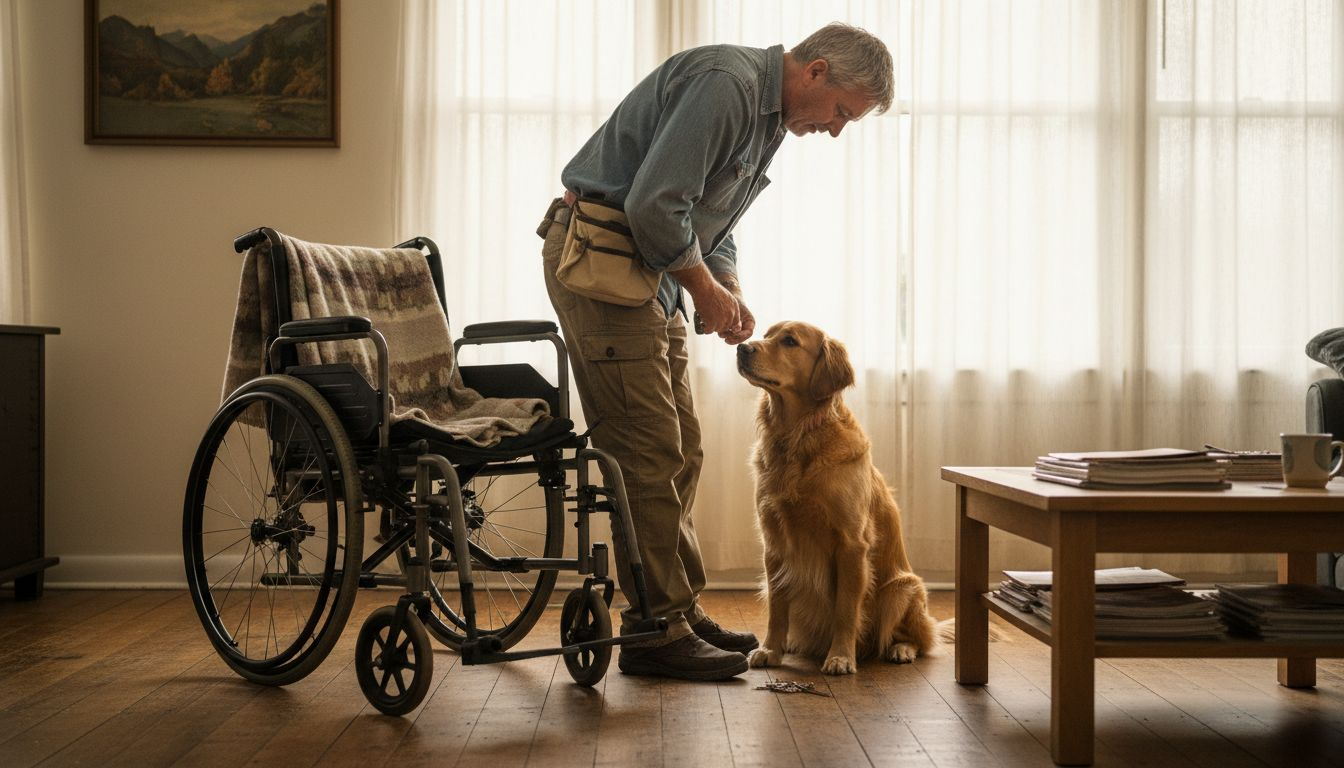
Pro tip: Always respect the working status of a service dog by asking permission before interacting and avoiding distractions during their critical assistance tasks.
Here is a side-by-side look at major types of service dogs and their specialized support roles:
| Service Dog Type | Primary Function | Typical Beneficiary |
|---|---|---|
| Guide Dog | Navigates for visually impaired | Individuals with vision loss |
| Hearing Dog | Alerts to important sounds | Deaf or hard-of-hearing people |
| Mobility Assistance Dog | Offers physical support, retrieval | Those with physical disabilities |
| Medical Alert Dog | Detects medical emergencies | People with diabetes, allergies, etc. |
| Psychiatric Service Dog | Provides emotional stability | Individuals with psychiatric conditions |
| Autism Assistance Dog | Supports social interactions | Children and adults with autism |
| Seizure Response Dog | Responds to seizures | Epilepsy or seizure disorder cases |
How Service Dogs Are Trained for Tasks
Training a service dog is an intricate and comprehensive process that transforms a typical canine companion into a highly skilled professional assistant. Extensive training protocols begin during puppyhood, focusing on developing remarkable skills that directly support individuals with specific disabilities. The journey from playful puppy to dedicated service dog requires patience, specialized techniques, and methodical skill development.
Foundational Training involves several critical stages of preparation:
- Socialization: Exposing dogs to diverse environments and situations
- Obedience: Teaching fundamental commands and behavioral control
- Public Access Skills: Learning appropriate behavior in various public settings
- Emotional Stability: Developing calm, predictable responses
- Task-Specific Training: Learning unique skills for individual handler needs
Service dog training is not about creating a perfect dog, but about developing a reliable partner who can navigate complex human environments with precision and compassion.
Specialized training techniques focus on teaching dogs to perform complex tasks tailored to specific disabilities. These tasks can range from physical assistance like retrieving objects or providing mobility support to medical alert functions such as detecting seizures or blood sugar changes. The training process typically includes:
- Initial temperament assessment
- Basic obedience training
- Advanced skill development
- Disability-specific task training
- Public access and distraction resistance training
- Final certification and handler matching
Each service dog undergoes a rigorous two-year training program designed to ensure they can reliably perform critical tasks while maintaining composure in unpredictable environments. Trainers use positive reinforcement techniques, breaking complex skills into manageable steps and gradually building the dog’s capabilities through consistent, patient instruction.
Pro tip: Consider working with professional service dog training organizations that specialize in customized training programs matching a dog’s natural abilities with specific handler requirements.
Legal Rights and Handler Responsibilities
Service dog legal protections provide critical support for individuals with disabilities, ensuring they can navigate public spaces with their essential working companions. The Americans with Disabilities Act (ADA) establishes clear guidelines that protect the rights of service dog handlers while also outlining specific responsibilities for maintaining appropriate public behavior.
Handler Responsibilities encompass several key obligations:
- Maintaining complete control of the service dog at all times
- Ensuring the dog remains well-behaved in public settings
- Cleaning up after the dog
- Preventing disruptions to business operations
- Addressing any potential damage caused by the dog
Service dogs are working professionals, not casual pets - their access rights come with corresponding handler accountabilities.
Under federal regulations, businesses and public spaces must adhere to specific guidelines when interacting with service dog teams. Legal access requirements outline critical protections:
- Cannot request detailed medical documentation
- May only ask two specific questions:
- Is the dog a service animal?
- What task has the dog been trained to perform?
- Must allow service dogs in all public areas
- Cannot charge additional fees for service dog access
- Cannot segregate or isolate service dog teams
Importantly, emotional support animals do not receive the same legal protections as trained service dogs. Service dogs must demonstrate specific task training directly related to the handler’s disability, distinguishing them from companion or therapy animals.
Pro tip: Always carry a concise, clear description of your service dog’s trained tasks to confidently address potential questions about public access rights.
Real-World Impact: Safety, Mobility, and Communication
Service dogs transform daily experiences for individuals with disabilities, providing unprecedented levels of independence and support across multiple life domains. These highly trained companions go beyond simple assistance, becoming essential partners that enable handlers to navigate complex environments with confidence and security.
Safety Enhancement involves multiple critical dimensions:
- Detecting potential medical emergencies
- Alerting to environmental hazards
- Providing physical stability
- Offering immediate response during health crises
- Mitigating risks in unpredictable situations
A service dog is not just an animal, but a lifeline that bridges capability gaps and empowers individuals to live more autonomously.
Disaster preparedness and emergency response represent another crucial aspect of service dog capabilities. These remarkable animals are trained to support handlers in high-stress scenarios by:
- Providing immediate medical alerts
- Assisting with physical navigation
- Offering emotional stabilization
- Supporting search and rescue efforts
- Detecting environmental dangers
Beyond physical assistance, service dogs dramatically improve communication and social interaction for individuals with sensory or cognitive challenges. They help bridge communication barriers, reduce isolation, and provide a sense of security that extends far beyond traditional mobility support.
Pro tip: Regularly practice emergency scenarios with your service dog to ensure seamless communication and coordinated response during unexpected situations.
Comparing Service Dogs to Alternatives
Service dog distinctions are critical for understanding the unique capabilities and legal protections of these remarkable working animals. Unlike other animal assistance options, service dogs represent a specialized category of support with specific training, legal rights, and functional capabilities.
Types of Animal Assistance include several distinct categories:
- Service Dogs: Trained for specific disability-related tasks
- Emotional Support Animals: Provide comfort without task training
- Therapy Dogs: Offer support in group settings
- Companion Animals: Provide general emotional companionship
Not all support animals are created equal - service dogs stand apart through their specialized training and legal recognition.
Comprehensive animal assistance comparisons reveal significant differences in capabilities and legal standing:
-
Task Performance
- Service Dogs: Highly specialized task training
- Emotional Support Animals: No specific task training
- Therapy Dogs: Group interaction focused
-
Legal Access Rights
- Service Dogs: Full public access protections
- Emotional Support Animals: Limited legal recognition
- Therapy Dogs: Restricted to specific environments
-
Training Requirements
- Service Dogs: Extensive, individualized training
- Emotional Support Animals: Minimal training
- Therapy Dogs: Basic behavioral training
The fundamental difference lies in the level of specialized training and the specific support provided to individuals with disabilities. Service dogs represent a professional-level intervention designed to enhance independence and safety in ways other animal companions cannot match.
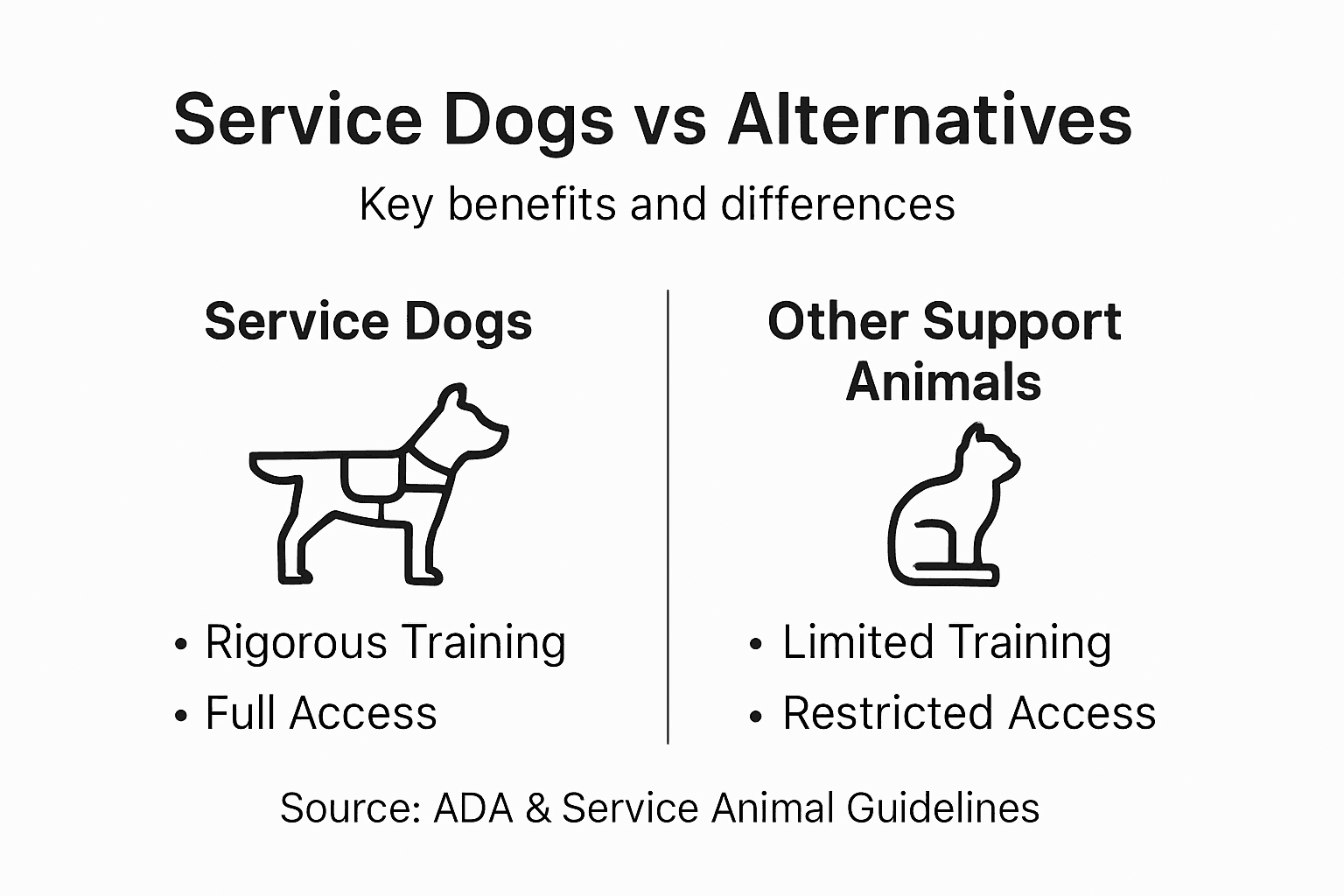
The chart below compares legal and practical differences among common animal assistance categories:
| Animal Type | Task-Specific Training | Public Access Rights | Primary Benefit |
|---|---|---|---|
| Service Dog | Extensive, customized tasks | Protected under ADA | Independence and safety support |
| Emotional Support | Minimal or no task training | Limited, not ADA-protected | Comfort and anxiety reduction |
| Therapy Dog | Basic group setting training | Restricted to some facilities | Therapeutic visitation in groups |
| Companion Animal | No specialized training | No legal public access | General emotional companionship |
Pro tip: Always verify the specific legal status and training requirements of any support animal before relying on them for critical assistance.
Enhance Your Service Dog Partnership with Innovative Communication Tools
Living with a service dog means embracing independence and safety every day. However the challenge of clear dog-to-human communication can sometimes limit that freedom. This article highlights how service dogs provide essential support yet rely on effective signals to convey their needs or alerts. Key pain points include enhancing safety vigilance and strengthening the handler’s control over critical situations.
At iPupPee, we understand the importance of reliable communication between you and your service dog. Our unique alert device empowers your service dog to easily notify you with a simple button press. This fosters quicker responses to medical alerts or mobility assistance needs while maintaining their crucial working role. With features designed specifically for service dog handlers our product supports the independence and safety you deserve.
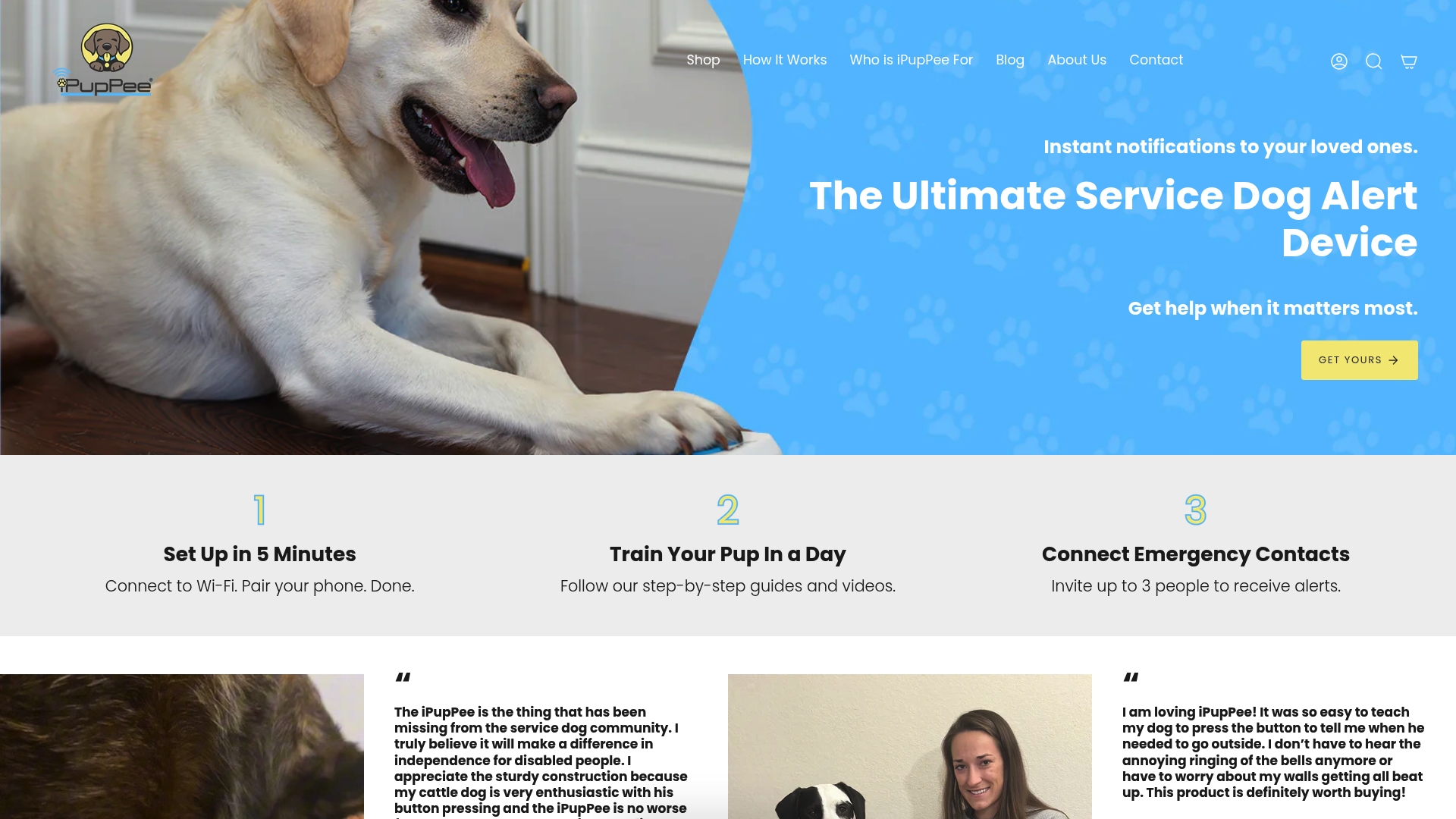
Discover how the iPupPee device complements your service dog’s training and enhances everyday safety. Visit iPupPee now to explore product details, training guides, and customer testimonials. Take control of your communication and strengthen your bond with your service dog today to unlock more confidence and peace of mind.
Learn more about how to improve your handler experience here iPupPee and start embracing the full benefits of service dog independence.
Frequently Asked Questions
What tasks can service dogs perform to enhance independence?
Service dogs are trained to perform a variety of tasks such as guiding visually impaired individuals, alerting to medical emergencies, retrieving objects, providing mobility assistance, and offering emotional support for psychiatric conditions.
How do service dogs improve safety for their handlers?
Service dogs enhance safety by alerting handlers to potential hazards, detecting medical emergencies, providing physical stability, and helping navigate complex environments, thereby reducing the risk of accidents or health crises.
Are all service dogs trained the same way?
No, service dogs undergo specialized training tailored to the specific needs of their handlers. This training can last up to two years and includes foundational obedience, public access skills, and task-specific training depending on the handler’s unique disability.
What are the legal rights of service dog handlers?
Under the ADA, service dog handlers have the right to access public spaces with their trained animals, are not required to show proof of training, and can only be asked if the dog is a service animal and what tasks it performs.