

Confusion about what truly defines a service animal often causes frustration for pet owners, especially when it comes to ensuring the highest level of support for loved ones with disabilities. Service dogs are more than helpful companions—they are highly trained professionals under the Americans with Disabilities Act, performing tasks that directly relate to an individual’s disability. By understanding the difference between service animals and emotional support animals, you can confidently choose the right training and communication techniques to support safety and greater independence.
Table of Contents
- Defining Service Animals And Common Misconceptions
- Types Of Service Animals And Their Key Roles
- Essential Training Methods And Communication Tools
- Us Legal Requirements And Access Rights
- Risks Of Untrained Service Animals And Avoidable Mistakes
Key Takeaways
| Point | Details |
|---|---|
| Definition of Service Animals | Service animals are specifically trained dogs that assist individuals with disabilities, according to the Americans with Disabilities Act (ADA). |
| Legal Rights and Access | Service animals have comprehensive legal protections, allowing them access to public spaces, housing, and employment without special identification. |
| Training Requirements | Extensive task-specific training is critical for service animals to ensure they perform necessary functions effectively and safely. |
| Risks of Untrained Animals | Untrained service animals can create significant risks, such as unpredictable behavior, which undermines the credibility of legitimate service animals and could lead to public safety issues. |
Defining Service Animals and Common Misconceptions
Service animals are highly specialized working companions trained to assist individuals with specific disabilities. Unlike pets or emotional support animals, these dogs perform critical tasks that directly enhance their handler’s safety and independence. Service dogs are legally defined under the Americans with Disabilities Act (ADA) as animals specifically trained to help people with physical, sensory, psychiatric, intellectual, or other mental disabilities.
Under ADA guidelines, service animals must perform specific tasks related to an individual’s disability. These tasks can range from retrieving objects and guiding individuals with visual impairments to alerting handlers about impending medical events like seizures or blood sugar changes. Critically, emotional support or comfort animals do not qualify as service animals because they do not perform task-specific functions.
Many people hold misconceptions about service animals that can create unnecessary barriers. Here are some key facts that challenge common misunderstandings:
- Service animals are NOT required to wear vests or identification
- No legal certification or registration is mandatory for service dogs
- Service animals can be any breed
- Some service dogs are specifically trained to bark as a communication signal
- Handlers may have multiple service animals for different disability needs
Legal protections for service animals are comprehensive. Legal rights for service dogs ensure these animals can accompany their handlers in public spaces, housing, and other environments where pets might typically be restricted.
Here’s a comparison of service animals, emotional support animals, and pets:
| Animal Type | Purpose | Legal Public Access | Training Requirement |
|---|---|---|---|
| Service Animal | Disability-specific assistance | Full | Extensive, task-based |
| Emotional Support Animal | General emotional support | Limited | No specific requirement |
| Pet | Companionship only | None | Basic socialization |
Pro tip: Always ask the handler about their service animal’s specific role, and remember that these incredible animals are working professionals, not typical pets.
Types of Service Animals and Their Key Roles
Service animals play a crucial role in supporting individuals with diverse disabilities, offering remarkable assistance across multiple domains. Specialized service dogs help individuals navigate complex daily challenges by performing specific, life-changing tasks tailored to unique medical needs.
The primary types of service animals include:
- Guide Dogs: Assist visually impaired individuals with navigation and spatial awareness
- Hearing Dogs: Alert deaf or hearing-impaired handlers to important environmental sounds
- Mobility Assistance Dogs: Help individuals with physical disabilities by retrieving objects, opening doors, and providing stability
- Seizure Response Dogs: Detect and respond to oncoming seizures, providing critical medical support
- Psychiatric Service Dogs: Support individuals managing mental health conditions by providing emotional regulation and interrupting anxiety episodes
Each type of service animal undergoes extensive, specialized training to perform precise tasks. Service dog roles vary significantly depending on the handler’s specific medical requirements, ensuring targeted and personalized assistance.
Service animals are not just pets – they are highly trained professionals dedicated to enhancing human independence and safety.
Beyond physical task completion, these animals provide emotional support, increase personal confidence, and dramatically improve quality of life for individuals facing challenging disabilities. Their profound impact extends far beyond simple companionship.

Pro tip: Always respect service animals as working professionals by avoiding distractions and asking permission before interacting with them.
Essential Training Methods and Communication Tools
Training service animals requires a sophisticated approach that goes beyond traditional dog training. Specialized service dog training involves developing precise communication skills and task-specific abilities that directly support an individual’s unique medical needs.
Key training methods for service animals include:
- Positive Reinforcement: Reward-based techniques that encourage desired behaviors
- Task-Specific Training: Focused instruction on disability-related assistance tasks
- Public Access Skill Development: Teaching appropriate behavior in diverse environments
- Distraction Resistance Training: Building focus and reliability under challenging conditions
- Consistent Command Response: Developing immediate and accurate reactions to handler signals
Communication Tools play a critical role in service animal training. Handlers use multiple approaches to establish clear understanding:
- Voice commands with specific tone and pitch
- Hand signals for silent communication
- Body language cues
- Tactile signals for hearing-impaired handlers
Effective communication between handler and service animal is the foundation of successful assistance and safety.
Dog training communication techniques require patience, consistency, and a deep understanding of canine learning processes. Professional trainers often recommend starting training early and maintaining ongoing skill reinforcement throughout the animal’s working life.
Pro tip: Practice communication techniques daily and create a structured training environment that minimizes distractions and maximizes learning potential.
US Legal Requirements and Access Rights
Service animal legal protections in the United States are comprehensive and designed to ensure individuals with disabilities can navigate public spaces with their essential support companions. Service animal rights under ADA provide clear guidelines that protect both handlers and their service animals in various public and private settings.
Key legal protections for service animals include:
- Guaranteed access to all public spaces where the general public is permitted
- Protection against discrimination in housing, employment, and public accommodations
- No requirement for special identification or certification
- Limitations on questions businesses can ask about the animal’s status
- Ability to accompany handlers in restaurants, stores, hospitals, and other public venues
Businesses and organizations have specific legal obligations when encountering service animals:
- They can only ask two questions:
- Is the animal required because of a disability?
- What task has the animal been trained to perform?
- They cannot request documentation or medical details
- They must allow the service animal unless it is clearly out of control
- They cannot charge additional fees for service animals
Service animals are working professionals, not pets, and are protected by federal law to support individuals with disabilities.
Legal access rights for service dogs extend beyond simple entry permissions. These laws recognize that service animals are critical tools for independence, enabling individuals with disabilities to participate fully in public life without unnecessary barriers or discrimination.
Pro tip: Familiarize yourself with local and federal service animal regulations to confidently assert your rights and support those who rely on these remarkable working animals.
Risks of Untrained Service Animals and Avoidable Mistakes
Untrained service animals pose significant risks not just to their handlers, but to the entire service dog community. Poorly trained service dogs can create dangerous situations that compromise the safety and credibility of legitimate working animals.
Common risks associated with untrained service animals include:
- Unpredictable behavior in public spaces
- Potential aggression towards other animals or people
- Inability to perform critical assistance tasks
- Disruption of other trained service dog teams
- Potential legal challenges and public access restrictions
The most critical mistakes handlers and potential service dog owners make involve:
- Misrepresenting pets as service animals
- Skipping comprehensive professional training
- Failing to maintain ongoing behavioral standards
- Ignoring public access etiquette
- Not understanding legal responsibilities
An untrained service animal is not just an inconvenience – it’s a potential safety hazard that can undermine the critical work of legitimate service dogs.
Service dog training challenges require consistent, professional intervention. Misconceptions about service animal qualifications can lead to significant problems, including reduced public trust and potential restrictions on legitimate service animal access.
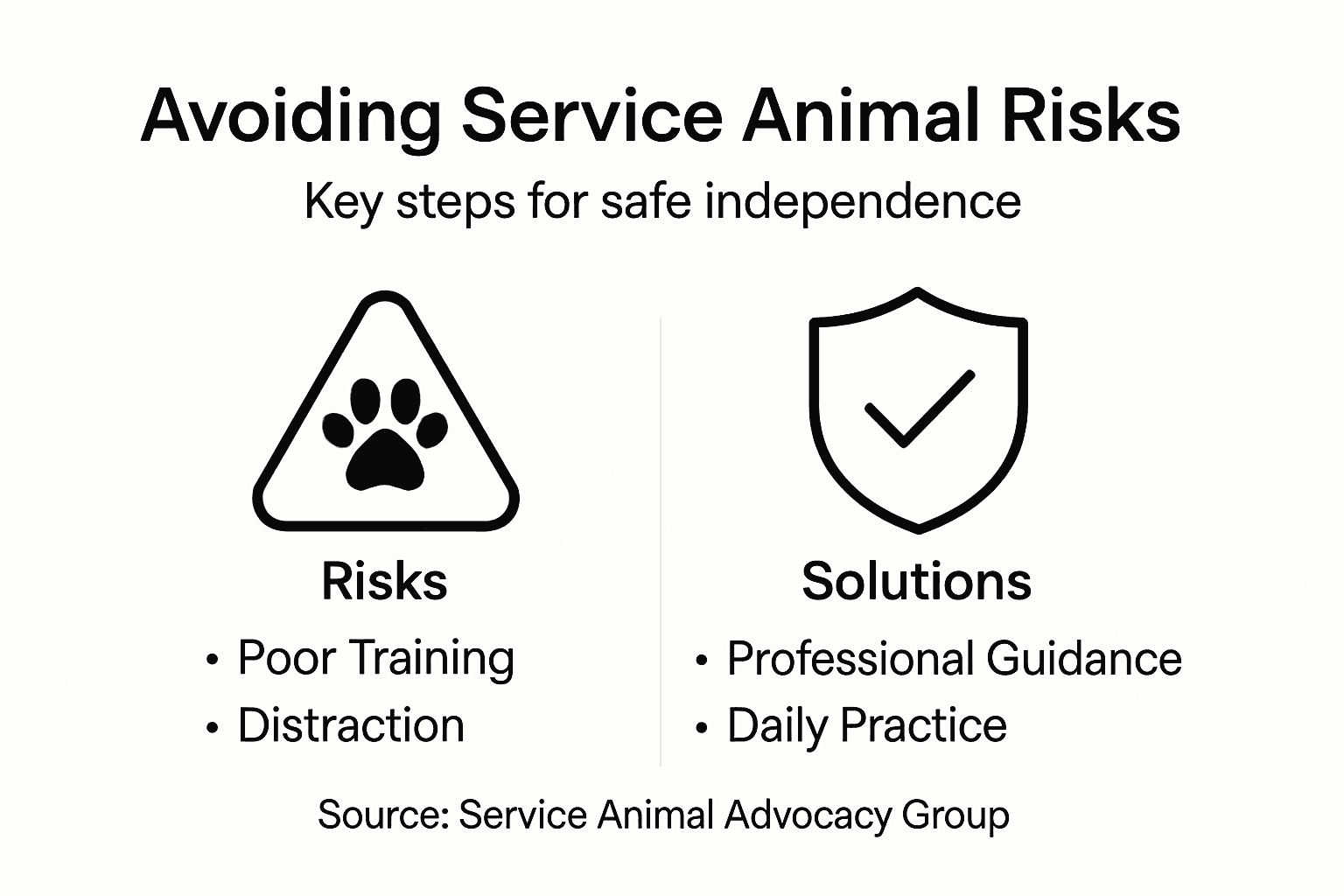
This summary highlights major risks of using improperly trained service animals:
| Risk Type | Potential Outcome | Impact Level |
|---|---|---|
| Aggression toward others | Injury or exclusion | High |
| Failure to perform tasks | Handler independence reduced | High |
| Disruption of working teams | Safety concerns in public | Moderate to High |
| Undermined public trust | Access limits for others | High |
Pro tip: Invest in professional training and consistently reinforce your service animal’s skills to maintain the highest standards of behavior and reliability.
Empower Your Service Animal Training with Innovative Communication Tools
Training service animals requires precision, patience, and the right resources to enhance safety and independence effectively. This article highlights the importance of specialized, task-specific training for service dogs and the challenges handlers face in maintaining clear communication. If you are striving to overcome these hurdles and want to support your service dog’s training with innovative technology, iPupPee offers a unique solution designed exactly for this purpose.
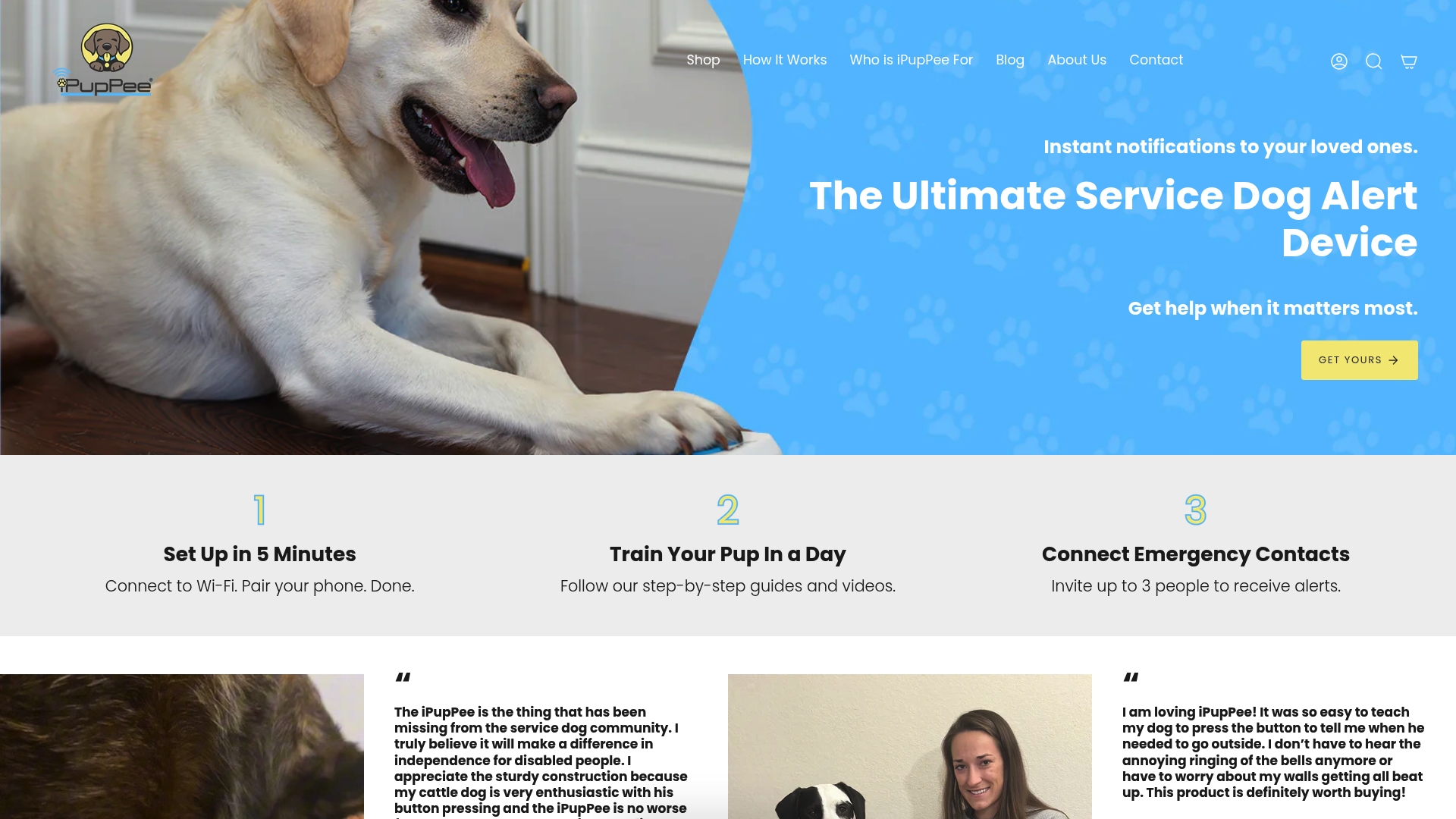
Discover how the iPupPee alert device can transform your service animal’s assistance capabilities through simple button presses that enhance communication and safety. Whether you are a handler managing multiple service dogs or training a new puppy destined for important work, this device complements professional training by providing clear, reliable signals tailored to your needs. Take the next step in your journey by exploring how iPupPee supports service dogs and see why it is trusted by handlers committed to professional standards. Act now to unlock greater independence and confidence for you and your service animal.
Frequently Asked Questions
What are service animals trained to do?
Service animals are trained to perform specific tasks that assist individuals with disabilities, such as guiding the visually impaired, alerting individuals to sounds for those who are deaf, or providing stability for those with mobility issues.
How does training for service animals differ from regular dog training?
Training for service animals is more specialized and focused on task-specific abilities, public access skills, and developing communication techniques that cater to the unique needs of their handlers compared to traditional dog training.
Are there any legal requirements for a service animal to wear a vest or have certification?
No, service animals are not required by law to wear vests or carry special identification, nor is there a legal requirement for certification or registration under the Americans with Disabilities Act (ADA).
What are the risks associated with untrained service animals?
Untrained service animals can exhibit unpredictable behavior, fail to perform critical assistance tasks, and disrupt trained service dog teams, potentially compromising safety and undermining public trust in service animals.
Recommended
- Dogs and Disability Independence: Enhancing Daily Life – iPupPee
- How Service Dogs Help: Real Benefits Explained for 2025 – iPupPee
- Benefits of Service Dogs: Independence and Safety – iPupPee
- Top Service Dog Benefits in 2025: Health, Support, and Wellbeing – iPupPee
- 7 Key Pet Camera Integration Benefits for Pet Owners