

TL;DR:
- Making your home safe for dogs involves thorough, eye-level inspections to identify hidden hazards behind appliances and furniture. Securing dangerous items, optimizing space, and practicing household routines reduce injury risks significantly. Ongoing awareness and household communication are essential for maintaining a truly dog-friendly environment.
Making your home truly dog-friendly goes far deeper than setting out a water bowl and calling it a day. Every year, thousands of dogs are rushed to emergency veterinary clinics because of hazards hiding in plain sight inside the family home. Whether you share your space with a spirited rescue puppy, a senior dog slowing down, or a highly trained service animal, the stakes for getting home safety right are real. This guide walks you through every major risk category, room by room and season by season, so you can build an environment where your dog genuinely thrives.
Table of Contents
- Evaluate your home from a dog’s eye view
- Dog hazard hotspots: Rooms and items to secure
- Spring cleaning and chemical safety for pets
- Service dogs at home: Essential etiquette and boundaries
- Comparison chart: Top pet-proofing priorities
- A real-world perspective: What most pet-proofing guides miss
- Create a safer, happier home with iPupPee
- Frequently asked questions
Key Takeaways
| Point | Details |
|---|---|
| Check hazards at dog level | Get on your dog’s eye level to find home dangers often missed from standing height. |
| Secure common accident sites | Doors, gates, and pet toys are top culprits for falls and injuries—make them safe first. |
| Prioritize chemical safety | Store all cleaning products and dangerous items out of paw’s reach to prevent poisoning. |
| Respect service dogs’ boundaries | Always ask handlers before interacting with service animals even at home. |
| Adopt ongoing habits | Pet-friendly homes thrive on routines and adapting as your pet’s needs change. |
Evaluate your home from a dog’s eye view
Once you understand the depth of unseen home risks, it’s time to actually scout your space from a whole new perspective, the one your dog experiences every day.
Most of us walk through our homes at full height, scanning the countertops, checking the stove, glancing at the shelves. Your dog, though, lives in an entirely different environment. A four-legged friend who stands 12 inches at the shoulder sees the world as a maze of table legs, power strips, forgotten socks, and dark, inviting gaps behind the refrigerator. The hazards your dog encounters are mostly invisible from where you’re standing.
How to do a proper eye-level walkthrough
This is not a casual stroll. It takes genuine effort and a little bit of humility (yes, you’re going to get on your hands and knees). Here’s a step-by-step process to do it right:
- Get to your dog’s level. Crouch or crawl through each room. Don’t just peek from above. You need to see exactly what your dog sees.
- Check behind and under every appliance. Dishwashers, refrigerators, washing machines, and dryers all have power cords, drain hoses, and heat vents at ground level. These are prime chewing targets.
- Scan under furniture. Sofas, beds, and recliners hide dust bunnies, dropped medications, small toys, rubber bands, and hair ties, all of which are choking or toxicity hazards.
- Look at low shelves and open cabinets. Cleaning supplies stored under the sink, trash cans without lids, and accessible bookshelves all invite exploration.
- Identify tight squeeze points. Dogs can wedge themselves into gaps between appliances and walls. Getting stuck in a tight spot causes panic, injury, and sometimes worse.
“Walkthroughs should be done at the pet’s (or puppy’s) eye level and include behind/under/around appliances and furniture to find reachable cords, chewables, and tight squeeze points that typical upright checks can miss.”
The most dangerous discoveries in a typical walkthrough include unsecured electrical wires, chewable baseboards with fresh paint, loose change, and small decorative items sitting on the floor. Any one of these can cause a crisis. These home pet safety tips provide an expanded checklist if you want to go even deeper after your initial walkthrough.
Pro Tip: Repeat this eye-level inspection seasonally and any time you add new furniture, rearrange a room, or introduce a new pet. What was safe last spring might not be safe after a remodel.
Good habits around keeping pets safe indoors start with this simple but powerful act of perspective-taking. Once you’ve done it even once, you’ll never look at your living room the same way again.
Dog hazard hotspots: Rooms and items to secure
After looking at your home from your dog’s perspective, it’s time to focus on the areas and items that most often lead to injuries, many of which can be easily secured with a little planning.
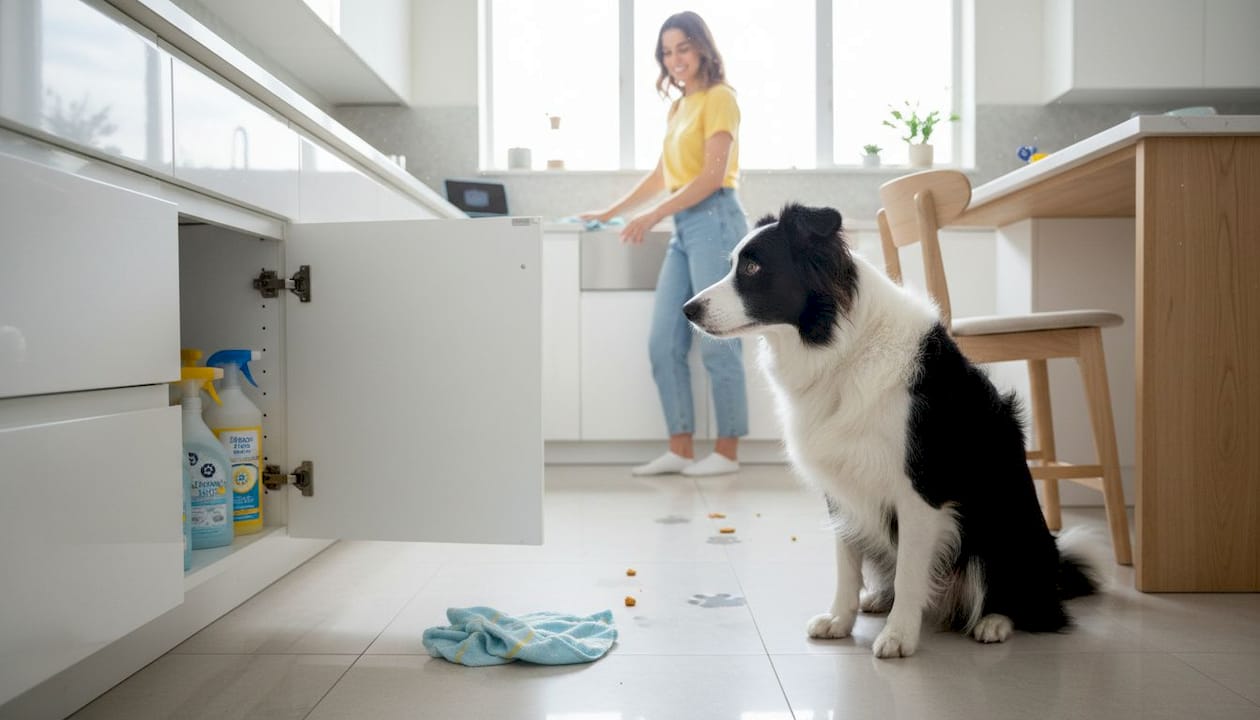
The data on this topic is striking. An estimated 175,451 dog-item-related falls were treated at US hospital emergency departments between 2000 and 2023. This figure, drawn from the NEISS (National Electronic Injury Surveillance System), captures falls tied to pet items such as gates, doors, bowls, mats, leashes, and beds. The risk isn’t just for dogs. It’s for their owners too. A home that’s safer for your dog is almost always safer for the humans in it as well.
The top accident zones in your home
- Doorways and interior gates. Dogs dart through, owners trip, paws get caught in folding or sliding barriers. Pressure-mounted baby gates used for pets can tip under the weight of a large breed.
- Kitchen and bathroom floors. Spilled water, scattered kibble, and loose mats are the perfect recipe for slips and falls, for both dogs and people.
- Toys and chew items. Squeaker toys, rubber balls, and rope toys can all become choking hazards as they break down. Check every toy weekly for signs of damage.
- Beds and blankets. Loose threads and stuffing from dog beds are a swallowing hazard. Wash and inspect bedding regularly.
- Bowls and slow feeders. Tipped water bowls create wet floors fast. Elevated bowls can be unstable if not properly designed for your dog’s size.
| Hazard category | Frequency of injury (US EDs, 2000-2023) | Ease of fix | Impact on safety |
|---|---|---|---|
| Leashes and walking equipment | Highest | Moderate | Very high |
| Dog beds, blankets, and mats | High | Easy | High |
| Bowls and feeders | Moderate | Easy | Moderate |
| Gates and barriers | Moderate | Moderate | High |
| Toys and chew items | Moderate | Easy | High |
Creating a dog-friendly home means addressing these hazard categories one by one, not all at once. Prioritize the areas where your dog spends the most time first.
Pro Tip: Place non-slip mats under water bowls and food stations. Use slow-feeders to reduce frantic eating and spills. These two small changes eliminate a surprising number of slip hazards for both dogs and their owners. Additional safety tips for dog owners cover everything from toy rotation schedules to the best types of gates for different dog sizes.
Spring cleaning and chemical safety for pets
With your everyday environment addressed, the next challenge is the seasonal hazards that come with cleaning and reorganizing.
Spring cleaning feels productive and fresh, but for your dog it can introduce a wave of new risks almost overnight. The combination of open windows, rearranged furniture, and a cabinet full of strong cleaning products creates a genuinely dangerous environment if you’re not deliberate about it.
“Spring cleaning introduces hazards from cleaners and essential oils and also from open windows and insecure screens; storing chemicals out of reach and checking window screen security helps prevent both poisoning and escape attempts.”
The biggest seasonal risks and how to handle them
- Cleaning sprays and solutions. Many all-purpose cleaners, bleach products, and floor polishes contain compounds that are toxic to dogs even in small doses. Phenols (found in many pine-based cleaners) are especially dangerous.
- Essential oil diffusers. Popular for making a home smell fresh, essential oils like tea tree, eucalyptus, and clove are well documented toxins for dogs. Even passive diffusion in an enclosed room can cause respiratory distress.
- Open windows and loose screens. A dog excited by a squirrel outside can push through a poorly fitted window screen in seconds. Falls from upper-story windows cause serious trauma.
- Rearranged spaces. Moving furniture exposes hidden wires and gaps. Cleaning behind appliances can dislodge previously tucked-away cords.
- Trash and clutter. Deep-cleaning brings out items that were stored or forgotten, bones from last Thanksgiving, batteries, and holiday decorations, all of which attract curious noses.
Your action plan during spring cleaning should include locking chemical products behind secured cabinet doors (not just on high shelves, which dogs can access via jumping or climbing), checking every window screen for fit and security before opening windows wide, and supervising your dog closely when you’re accessing areas that are normally closed off.
Pro Tip: Switch to pet-safe cleaning products for your regular surfaces. Brands that use enzyme-based or plant-derived formulas dramatically reduce the chemical load your dog is exposed to every time the floor is cleaned. For more guidance on managing larger-scale disruptions, the section on pet safety in emergencies covers how to keep dogs calm and safe when their environment changes quickly.
Service dogs at home: Essential etiquette and boundaries
Setting up a pet-friendly home isn’t just about objects. It also means understanding and respecting the special roles service dogs play, and how everyone in the household can help them do their job safely.
Service dogs are not pets in the traditional sense while they are working. They are trained to perform specific tasks that directly affect the health, safety, and independence of their handler. At home, this distinction matters enormously, especially when guests visit or children are present. A distracted service dog can fail to detect a medical event, miss an alert cue, or simply break the trained focus that took months and thousands of dollars to build.
What every household member and guest needs to know
- Never touch a service dog without permission. This applies at home just as much as it does in public. The dog is working, and unsolicited contact is a distraction.
- Address the handler, not the dog. If someone wants to interact with or ask about the dog, they should speak directly to the person holding the leash.
- Do not offer food or toys. Even a well-meaning treat from a family member can undermine a service dog’s training and, in some cases, cause dietary issues depending on the dog’s specific health plan.
- Avoid making sudden noises or gestures around the dog. Service dogs are trained to stay calm, but household members can still set back a session or startle a dog during a critical task.
- Teach children explicitly. Kids need direct and clear instruction, not hints. Role-play what to do when the service dog is in a working vest versus when the handler has signaled the dog is off duty.
“Do not distract, pet, feed, or talk to the service dog; instead speak to the handler and ask permission if needed.”
Pro Tip: Post a small, clear sign near your front door reminding visitors of service dog etiquette before they even step inside. Something as simple as “Working dog inside. Please ask before interacting” sets the tone and prevents awkward moments. You’ll find a thorough breakdown of rights and expectations in this service dog etiquette guide, and practical day-to-day advice in these service dog etiquette tips.
Comparison chart: Top pet-proofing priorities
With the top strategies covered, it’s useful to see how they stack up so you can focus first on the smartest, highest-impact improvements.
| Pet-proofing action | Risk level if ignored | Difficulty of implementation | Safety payoff |
|---|---|---|---|
| Eye-level home walkthrough | High | Low | Very high |
| Securing cleaning chemicals | Very high | Low | Very high |
| Non-slip mats and slow feeders | Moderate | Very low | High |
| Gate and door reinforcement | High | Moderate | High |
| Service dog etiquette training | High (for service dog households) | Moderate | Very high |
| Window screen security check | High | Low | High |
| Toy and bedding inspection | Moderate | Low | Moderate |
| Seasonal re-inspection of rooms | High | Low | Very high |
This chart makes one thing clear: most of the highest-impact improvements are also the easiest to implement. The challenge isn’t resources. It’s consistency.
A real-world perspective: What most pet-proofing guides miss
We’ve worked with dog owners across every situation imaginable, from first-time puppy parents to experienced service dog handlers navigating complex household dynamics. And the honest truth is this: most pet-proofing guides fail because they treat home safety as a one-time project rather than an ongoing practice.
The checklist approach has real value, but it creates a false sense of completion. You go through the list, you check the boxes, and then you stop paying attention. Meanwhile, your dog grows, your home changes, the seasons shift, and a new hazard appears that wasn’t there six months ago. The homes we’ve seen work best for dogs over the long term aren’t the ones with the most products or the most thorough initial audit. They’re the ones where the humans have built daily awareness into their routines.
This means actually noticing when something new lands on the floor. It means checking on your dog’s toys and bedding once a week as a genuine habit, not a chore. It means having a real conversation with every person who enters your home about how to behave around your dog, especially if that dog has a working role. These dog-friendly inspiration ideas are great for sparking creativity, but inspiration without routine follow-through doesn’t keep dogs safe.
The other piece most guides skip is communication. Not just between you and your dog, but between everyone in the household. A lot of dog-related home accidents happen because one person knew about a hazard and assumed someone else had handled it. Building simple shared systems, a household text thread for “something to check,” a weekly 5-minute walk-through together, dramatically reduces these gaps. Safety isn’t a product you buy once. It’s a habit you build together.
Create a safer, happier home with iPupPee
If you’re ready to take your home environment to the next level, iPupPee is built for exactly this kind of journey.
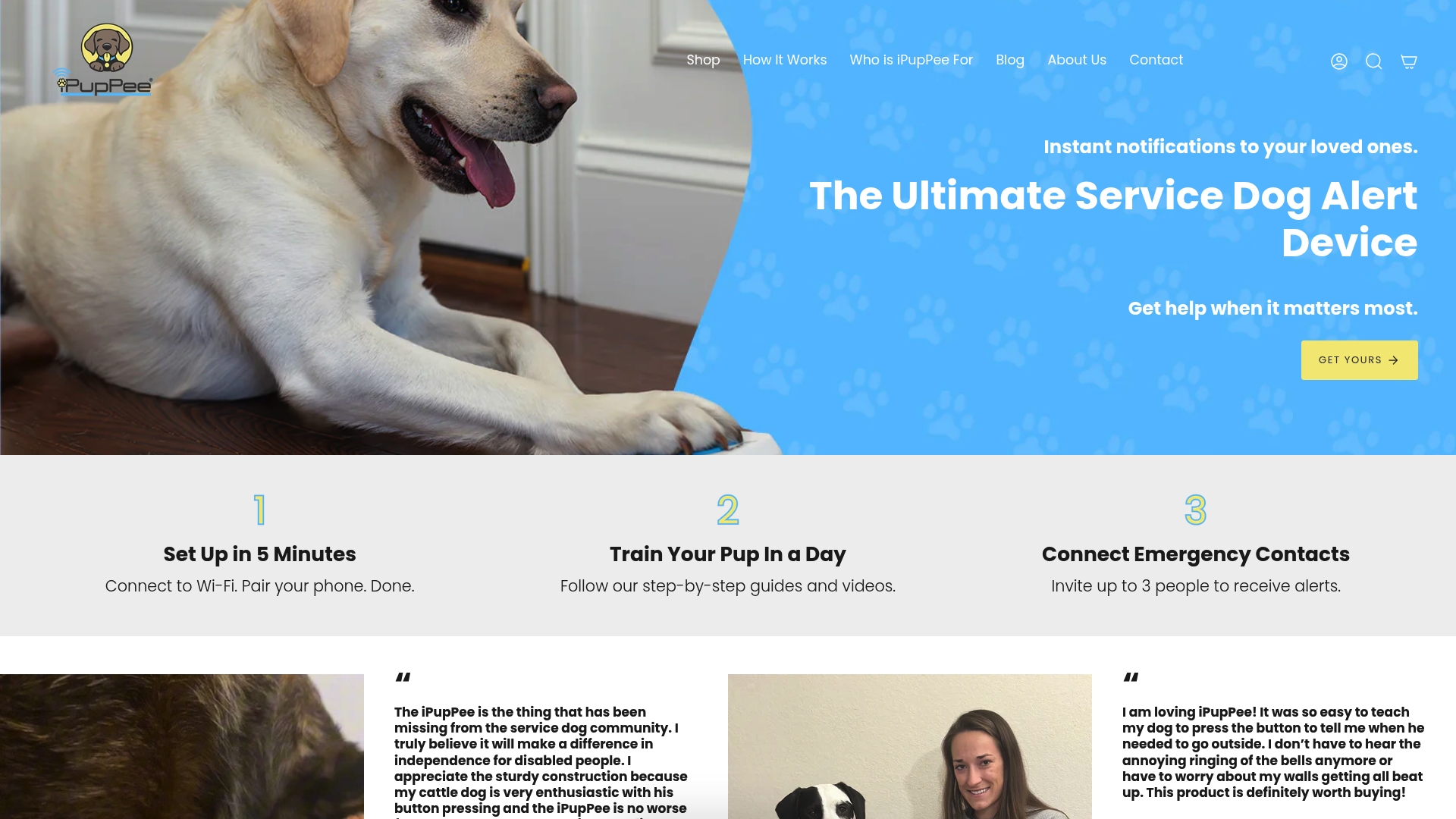
At iPupPee, we focus on the full picture of pet safety and communication, not just reactive fixes but proactive tools that keep dogs and their owners connected every day. From detailed guides for service dog handlers to practical resources for new puppy owners, our blog is packed with actionable, evidence-backed content. Our flagship alert device also gives dogs a direct way to communicate needs to their owners, which is especially valuable for seniors, people with disabilities, and anyone living alone with a beloved companion. Explore our full resource library and discover the products and insights that make living with dogs safer, simpler, and more joyful.
Frequently asked questions
What are the most common household hazards for dogs?
Gates, doors, toys, beds, and mats are leading causes of injuries requiring emergency care, with over 175,000 dog-item-related falls treated in US emergency departments over a recent 23-year period.
How can I prevent my dog from getting into cleaning supplies?
Store all chemicals high up or behind secured cabinets, and choose pet-safe products whenever possible, since even fumes from common cleaners can harm dogs with prolonged exposure.
Is it safe for guests to pet or play with my service dog at home?
Guests should speak to you, the handler, and get permission before touching or interacting with your service dog, since unsolicited contact can disrupt critical working behaviors.
What’s one simple step to make any room pet-friendly?
Do a floor-level walkthrough to find loose wires, small objects, or tight gaps your dog might chew on, get stuck in, or swallow without you ever noticing.