

TL;DR:
- Understanding your dog’s behavioral drivers helps tailor effective training strategies at home.
- Reward-based methods, environmental management, and consistency are essential for lasting behavior improvement.
Living with a dog who jumps on guests, barks nonstop, or ignores every command you give is genuinely exhausting. Knowing how to improve dog behavior at home is not about dominance or endless repetition — it is about understanding what drives your dog’s actions and giving clear, consistent feedback that actually makes sense to them. This guide walks you through the causes behind common problems, the tools you need, and the step-by-step methods that work, including approaches tailored for service dog owners, seniors, and anyone who depends on clear communication with their dog every single day.
Table of Contents
- Understanding why your dog misbehaves at home
- Preparing your home and mindset for behavior improvement
- Step-by-step training techniques to improve specific dog behaviors
- Addressing fear, anxiety, and aggression with reinforcement-based strategies
- Maintaining progress and troubleshooting common training challenges
- Why reward-based training is the kinder, smarter path to lasting behavior change
- How iPupPee supports your journey to better dog behavior at home
- Frequently asked questions
Key Takeaways
| Point | Details |
|---|---|
| Use positive reinforcement | Reward-based training is safer and more effective than punishment for improving dog behavior at home. |
| Manage environment | Set up your home to limit opportunities for problem behaviors and encourage good habits. |
| Teach alternatives | Replace unwanted behaviors with clear, rewardable commands like sit or settle to improve communication. |
| Be consistent | Everyone in the household must follow the same rules and training approach for lasting results. |
| Address emotional issues | Identify triggers of fear or aggression and use reinforcement-based treatment plans, consulting professionals as needed. |
Understanding why your dog misbehaves at home
Before you can fix a behavior problem, you need to know what is actually driving it. Canine behavior is shaped by developmental age, breed, past experiences, and environment — which means the same behavior in two different dogs can have completely different roots. A rescue dog who growls near food is not being aggressive in the same way a bored teenage Lab who chews furniture is being destructive. Treating them identically will fail both dogs.
Some of the most common behavioral triggers include:
- Unmet physical needs. A dog who has not had enough exercise will redirect that energy somewhere, usually somewhere you do not want.
- Stress or anxiety. Moving homes, new people, loud noises, and schedule changes all spike stress levels and produce “bad” behaviors that are actually coping mechanisms.
- Learned patterns. If jumping on people has ever gotten your dog attention, even negative attention, they have been accidentally rewarded for it.
- Natural instincts. Herding breeds circle children. Terriers dig. Hounds bark and follow their nose. These are features, not bugs, but they need to be redirected thoughtfully.
Puppies and adolescent dogs (roughly 6 to 18 months) go through a fear period and a surge in independence that makes them look like they have forgotten everything they learned. That is developmental, not defiance. Senior dogs, on the other hand, may develop new behavioral changes because of pain, cognitive decline, or vision loss. Age matters enormously when you are reading your dog’s signals. You can dig deeper into decoding dog behavior signals to sharpen that skill.
Pro Tip: Keep a simple behavior log for one week before starting training. Note the time, trigger, and what happened immediately before and after the behavior. Patterns emerge fast, and they change everything about how you respond.
A solid grasp of dog training tips for better behavior also reinforces that you are not starting from scratch every session — you are building a language your dog can trust.
Preparing your home and mindset for behavior improvement
Now that you understand your dog’s behavioral drivers, let’s prepare your home and yourself for effective behavior change. The environment you create determines whether training is hard or nearly effortless. Dogs practice whatever behaviors their surroundings allow, so reducing the opportunity to rehearse problem behaviors is not giving up — it is smart management.
Only reward-based methods should be used for all dog training because they are both safer and more effective than punishment-based approaches. That is the American Veterinary Society of Animal Behavior’s official position, and it aligns with everything we see in practical training outcomes.
Setting up your training environment:
- Remove temptations. If your dog counter-surfs, keep food off the counter during the learning phase. If they shred mail, get a door slot blocker. Prevention is not cheating.
- Designate a training area with minimal distractions, especially for the first few weeks.
- Stock your treat pouch with small, high-value rewards like real meat pieces, not just kibble.
- Set a schedule. Two to three short sessions daily (5 to 10 minutes each) beat one long, exhausting session every time.
- Brief every person in the household. Inconsistent rules are one of the top reasons training stalls.
Essential tools to have ready:
- High-value training treats (soft, small, smelly)
- A treat pouch you can wear around the house
- A clicker (optional but useful for marking exact moments)
- Puzzle feeders and engaging toys for mental stimulation between sessions
| Training tool | Best for | Why it works |
|---|---|---|
| High-value treats | Motivating difficult behaviors | Dogs work harder for better rewards |
| Clicker | Marking precise moments | Bridges the gap between behavior and reward |
| Puzzle feeders | Pre-session mental drain | Reduces excess energy and improves focus |
| Leash and tether | Management indoors | Prevents rehearsal of problem behaviors |
For more structured approaches, explore these easy dog training methods and a deeper look at positive reinforcement training specifically built around the communication needs many iPupPee users have.
Pro Tip: Exercise your dog for at least 20 minutes before a training session. A tired dog is a focused dog. You are not draining them — you are priming them to learn.
Step-by-step training techniques to improve specific dog behaviors
With your home and tools ready, let’s learn step-by-step how to implement effective training to improve your dog’s behaviors. These methods address the most common issues owners deal with daily: excessive barking, jumping, and attention-seeking behaviors.
Stopping jumping on people:
- Turn your back the moment all four paws leave the ground. No eye contact, no touch, no voice.
- The instant four paws land, turn around and reward calmly.
- Ask guests to do the same. One person who gives in resets the whole process.
- Once your dog reliably sits when you approach, start asking for a “sit” before they have a chance to jump.
Managing attention-seeking barking at home:
To reduce attention-seeking behaviors, manage the environment and use short, increasing ignore periods while teaching alternative behaviors. Start with just 30 seconds of ignoring the barking, then reward silence. Gradually stretch that window over days and weeks. Rushing this step is the most common reason it fails.
When your dog does stop barking, use the moment. Use “quiet” training paired with your full attention only when the dog is actually quiet — not while they are still barking. If you say “quiet” over and over while the dog barks, “quiet” becomes meaningless background noise.
| Approach | What you do | When it works best |
|---|---|---|
| Ignoring unwanted behavior | No eye contact, touch, or speech during the behavior | Attention-seeking barking, jumping, pawing |
| Rewarding the alternative | Reward calm sitting, lying down, or silence immediately | Replacing any behavior you want to extinguish |
| Management first | Remove access to triggers or rehearsal opportunities | Any new behavior problem or early training phase |
| Cue-based redirection | Ask for “sit” or “down” before the problem starts | Dogs who already know basic commands |
Mental stimulation is as important as physical exercise. Engaging dog toys like sniff mats, lick pads, and puzzle feeders can drain mental energy between sessions and reduce the restless boredom that drives a lot of barking and destructive behavior. For deeper guidance, the dog behavioral training guide and dog training steps for success both walk through these methods in sequence.
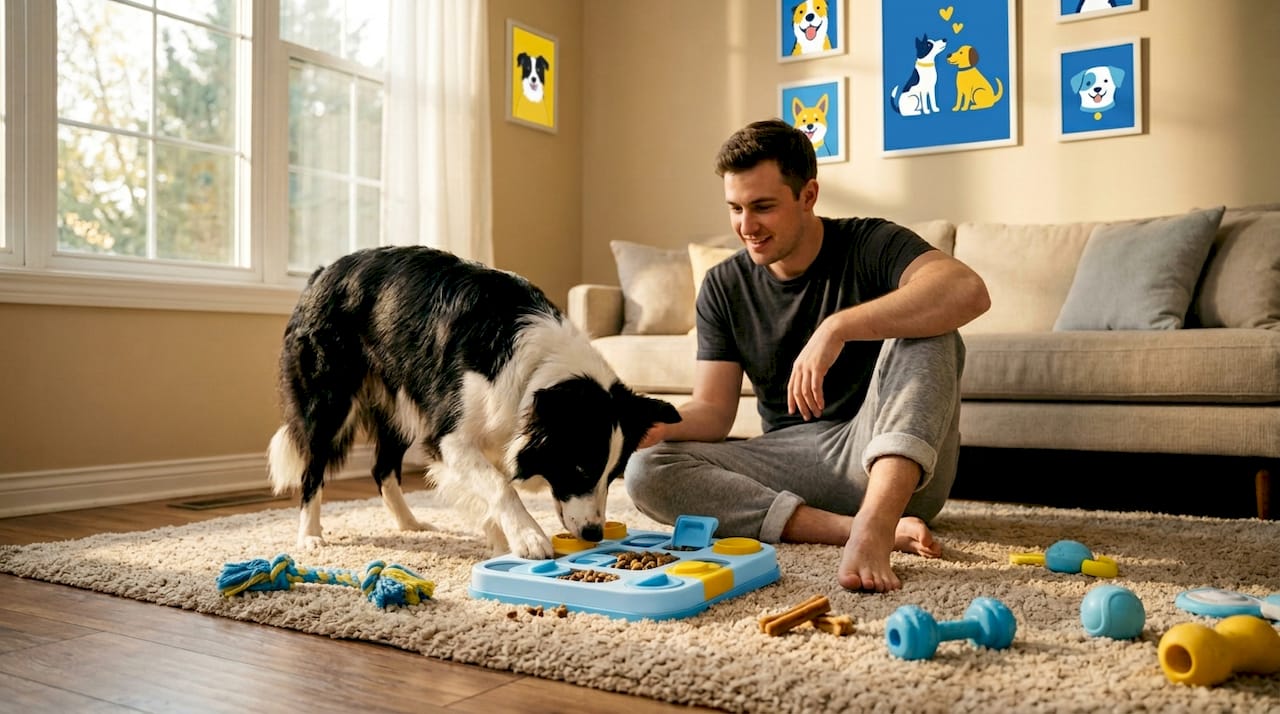
Pro Tip: If you are wondering how to calm a hyper dog mid-training, stop the session. Reward the last good behavior, then walk away. Pushing through a dog’s overstimulation threshold always creates setbacks.
Addressing fear, anxiety, and aggression with reinforcement-based strategies
After mastering basic behavior improvements, it is essential to safely handle deeper emotional or aggression issues with proven methods. This is where many owners hit a wall, because fear and aggression respond poorly to the same techniques that work for jumping or barking.
Key steps for addressing fear, anxiety, and aggression:
- Identify specific triggers. Is it strangers? Other dogs? Loud sounds? Knowing the exact trigger allows you to control exposure and prevent the dog from going over threshold.
- Rule out medical causes first. Pain, thyroid issues, and neurological problems can all look like behavior problems. Behavioral treatment should start by ruling out medical causes before attempting behavior modification.
- Use calm removal. When your dog reacts, quietly move them away from the trigger before the reaction escalates. No punishment, no soothing babble (which can reinforce fear).
- Teach a refocus cue. A reliable “sit” or “look at me” command gives your dog something to do with their anxiety and gives you a tool to interrupt a reaction before it peaks.
- Apply counterconditioning. Pair the scary trigger at a low level, far away or brief, with something the dog loves. Over time, the trigger predicts good things. This changes the emotional response, not just the behavior.
For owners managing dogs with serious anxiety, the resources on calming anxious dogs and handling dog anxiety naturally go into much greater depth on this process.
Pro Tip: Never try to counter-condition a dog who is already reacting at full intensity. Distance is your most powerful tool. Increase physical distance from the trigger until your dog can notice it without reacting, then start rewarding there.
Maintaining progress and troubleshooting common training challenges
Successfully changing behavior requires ongoing effort. This section helps you maintain progress and handle common obstacles that almost every dog owner eventually faces.
Staying on track over time:
- Run a quick “behavior check” every two weeks. Practice each trained cue in different rooms and contexts to confirm the behavior has generalized.
- Gradually raise the difficulty of sessions. Add distance, duration, or distractions one at a time, never all three at once.
- Keep rewarding. Many owners stop treating once a behavior seems solid, and the behavior slowly drifts. Random reward schedules actually maintain behavior better than stopping rewards entirely.
- When regression happens, drop back to an easier version of the exercise and rebuild. Regression is information, not failure.
A management-first approach that limits rehearsal of problem behaviors accelerates overall progress. If your dog has been backsliding, ask yourself: are they getting opportunities to practice the problem behavior? Often the answer is yes, and the fix is environmental, not more training repetitions.
Common challenges and what actually causes them:
| Problem | Likely cause | Practical fix |
|---|---|---|
| Behavior works at home, nowhere else | Hasn’t generalized to new locations yet | Practice in 5 new places this week |
| Dog ignores cues when guests arrive | Over threshold from excitement | Practice with mild distractions first, then build |
| Training “worked” but behavior returned | Rewards stopped too early | Reinstate random reward schedule |
| Different household members get different results | Inconsistent rules and cues | Hold a 15-minute household training meeting |
For a thorough breakdown of where to take training next, the proven dog training techniques resource covers advanced strategies for owners and handlers who need reliable, consistent results.
Pro Tip: Record short video clips of your training sessions every few weeks. Watching yourself interact with your dog reveals timing issues and inconsistencies that you cannot catch in the moment.
Why reward-based training is the kinder, smarter path to lasting behavior change
Here is what most training articles skip over: punishment does not just suppress behavior. It suppresses the dog’s willingness to try anything. A dog who has been corrected repeatedly for wrong guesses starts offering nothing. They freeze. They disengage. They look like they are “finally calm” when they are actually just shut down. That is not success.
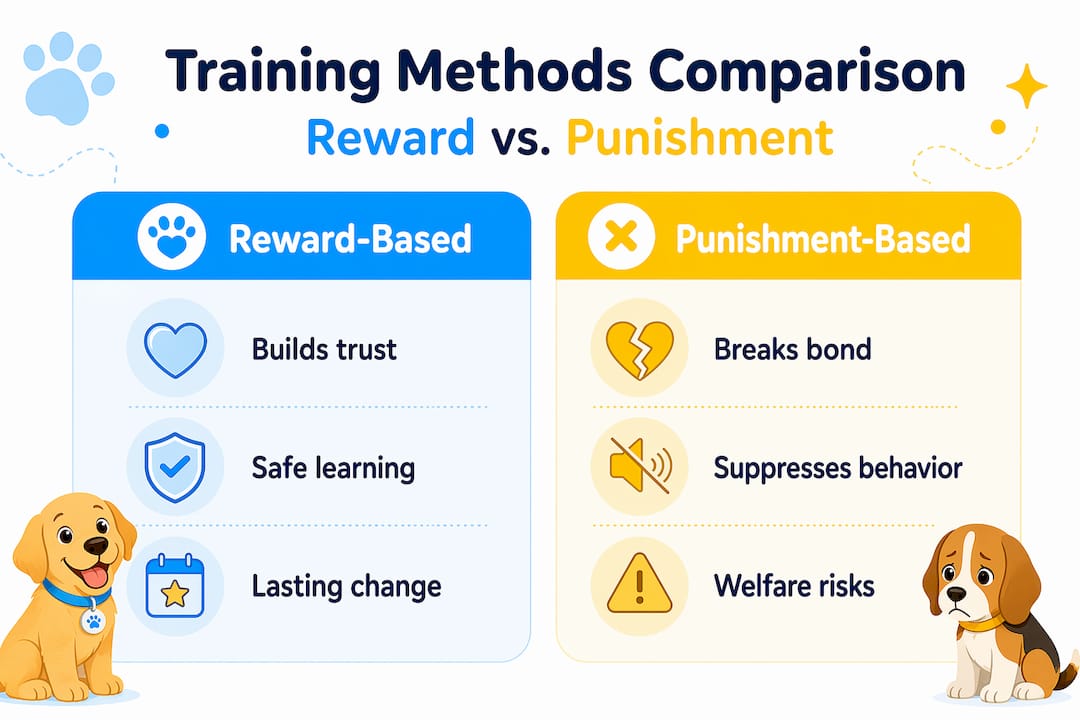
Reward-based training is safer, more effective, and strengthens the human-animal bond compared to punishment-based methods. Every major veterinary and behavioral organization backs this, not because they are soft on dogs, but because the research is unambiguous.
There is also a practical case beyond the ethical one. When you train with rewards, your dog starts actively thinking about what behavior might earn them something good. That mental engagement is exactly what makes trained behaviors stick under pressure. A dog who has been shocked or choked into compliance has not learned what to do. They have only learned what to avoid. The moment the aversive is gone, the problem behavior returns.
For owners who rely on their dogs for safety, communication, or daily assistance — which describes many iPupPee users directly — this distinction is not abstract. A service dog or alert dog who shuts down under stress is a liability. A dog trained through the power of reward-based methods stays engaged, responsive, and reliable precisely when it matters most.
The uncomfortable truth is that punishment feels like it is working because it gets an immediate, visible reaction. Reward-based training can feel slow in the early days. But the dog you have at six months of consistent positive training is unrecognizable compared to the dog you are managing through corrections and frustration. The investment pays out every single day after that.
How iPupPee supports your journey to better dog behavior at home
You have a real foundation now. Understanding your dog’s triggers, managing the environment, applying reward-based techniques, and staying consistent over time — these are the building blocks of a dog you can genuinely rely on.
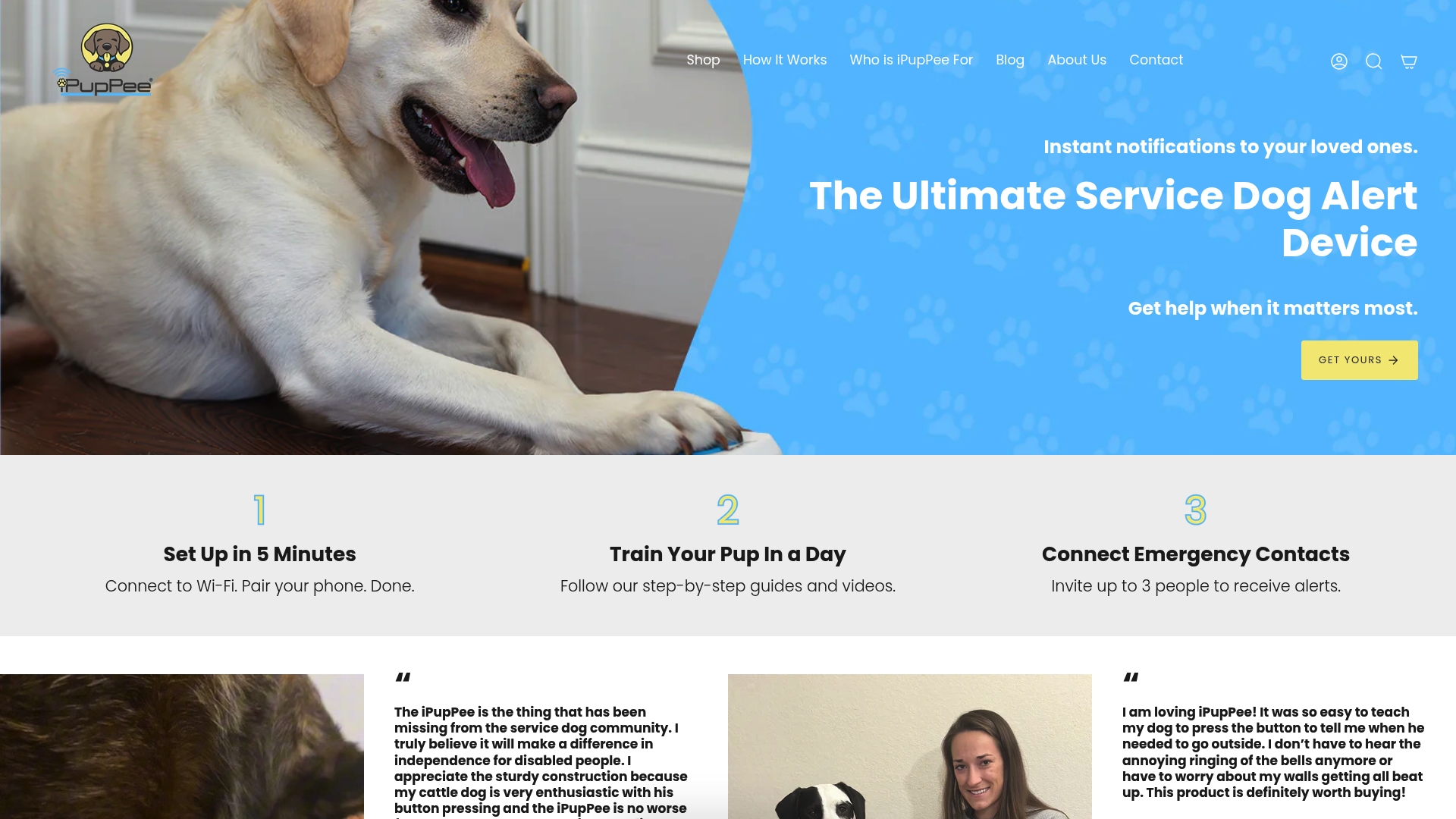
At iPupPee, we build products and resources around one idea: communication between you and your dog should be clear, simple, and stress-free — especially when your health, safety, or independence is part of the equation. Our blog offers training guides tailored to new puppy owners, service dog handlers, seniors, and rescue dog owners. And the iPupPee alert device gives dogs a concrete way to communicate needs to you, removing a major source of stress for both sides of the leash. Browse our training resources and product information to find the tools that fit your dog’s specific needs and your daily life.
Frequently asked questions
What is the most effective way to improve my dog’s behavior at home?
Using positive reinforcement training to reward good behavior and teach clear alternative actions is the safest and most effective approach because reward-based training is safer and more effective than aversive methods.
How do I manage attention-seeking behaviors like barking or jumping?
Manage the situation, use short ignore periods, and consistently reward calm alternative behaviors — the key is starting with very brief ignore windows and building from there.
When should I seek professional help for my dog’s behavior?
Seek a trainer or veterinary behaviorist if your dog shows severe aggression, persistent fear, or anxiety that does not respond to reward-based training, since referral is important for aggression, profound fears, or treatment-resistant behavior.
Can punishment-based training methods be harmful?
Yes. Punishment methods carry risks to welfare and the human-animal bond while also inhibiting the learning you are trying to create, which is why reward-based methods are consistently the better choice.
How much exercise and mental stimulation should I provide during training?
Aim for 30 to 60 minutes of physical activity daily based on your dog’s breed and health, plus mental enrichment activities, to reduce hyperactivity and sharpen your dog’s focus during training sessions.