

TL;DR:
- Consistent routines reduce dog anxiety and promote better behavior and health.
- Structured schedules support physical needs like sleep, feeding, and exercise, improving overall well-being.
- Flexibility with routine timing helps build a dog’s adaptability while maintaining security.
Dogs are widely believed to be easygoing, adaptable companions who simply roll with whatever life throws at them. But research tells a different story. The absence of a structured daily routine can push a dog into a constant state of low-level anxiety, which quietly fuels barking, destructive chewing, restlessness, and even physical health problems. Understanding how and why routines work gives you a genuine advantage as a dog owner, and this guide breaks down the science, the practical strategies, and the tailored advice you need to build a routine that actually improves your dog’s behavior and overall well-being.
Table of Contents
- The science behind dogs and routines
- How routines impact behavior and well-being
- Physical health benefits of routines
- Routines for every dog: Puppies, seniors, and special needs
- The truth about routines: Flexibility, over-training, and real-world life
- Take the next step with your dog’s well-being
- Frequently asked questions
Key Takeaways
| Point | Details |
|---|---|
| Routines reduce dog stress | Structured routines help dogs feel safe, reduce anxiety, and improve behavior. |
| Physical health improves | Consistent feeding, exercise, and sleep schedules prevent obesity and support digestion. |
| Adapt routines thoughtfully | Flexibility and consistency in sequence are more important than keeping rigid times every day. |
| Special needs benefit most | Puppies, seniors, and anxious or service dogs gain extra stability from predictable routines. |
The science behind dogs and routines
Dogs are not wired for uncertainty the way humans can sometimes manage it. Their brains are built around patterns. When a dog can predict what comes next, whether it is breakfast, a walk, or bedtime, that predictability acts as a form of security. It tells the nervous system that things are safe and under control.
Research confirms that dogs thrive on routines because predictability reduces anxiety and helps them know what to expect, leading to better behavior and overall well-being. This is not just about comfort. It is about the dog’s baseline stress level throughout the day.
“A dog that knows what comes next is a dog that can relax in the present moment. That relaxation is the foundation of good behavior.”
When routines fall apart, the consequences show up fast. A dog that misses its usual morning walk may pace the hallway, bark at nothing, or chew the corner of a couch. These behaviors are not acts of defiance. They are stress responses. The importance of pet routines extends well beyond simple convenience for the owner. Structure is a genuine welfare issue for the animal.
Key ways that predictable patterns support a dog’s psychology:
- Security and trust: A routine tells your dog that you are reliable, which deepens the bond between you.
- Reduced cortisol spikes: Predictable days mean fewer sudden surprises, which keeps stress hormones lower.
- Faster learning: Dogs in structured environments pick up commands and house rules more quickly because their minds are not preoccupied with uncertainty.
- Emotional stability: A calm dog is a trainable, sociable, and happy dog.
Now that you know why routines are essential, let’s break down the specific behavioral and health impacts.
How routines impact behavior and well-being
The connection between routine and behavior is direct. When a dog’s schedule is disrupted, the stress it feels does not stay hidden. According to research on consistency in dog training, disruption in routines causes stress that manifests as destructive behavior, pacing, restlessness, excessive barking, or anxiety. These are not personality flaws. They are symptoms of a dog that feels unsafe or confused.
Sleep is another major factor most owners overlook entirely. Poor sleep routines fragment rest, and the downstream effects are surprisingly significant. Studies on canine sleep show that sleep fragmentation from poor routines increases daytime inactivity, reduces play and alertness, and leads to compensatory overeating. A tired, under-stimulated dog is far more likely to act out.
Here is a quick comparison that illustrates the behavioral difference between dogs with and without structured routines:
| Behavior area | Dog with a routine | Dog without a routine |
|---|---|---|
| Barking at home | Rare and purposeful | Frequent and excessive |
| Eating habits | Steady, consistent appetite | Erratic, sometimes refusing food |
| Energy levels | Well-regulated | Hyperactive or lethargic |
| Response to commands | Reliable | Inconsistent |
| Anxiety around departures | Low to moderate | High, often separation anxiety |
| Sleep quality | Restful and predictable | Fragmented and restless |
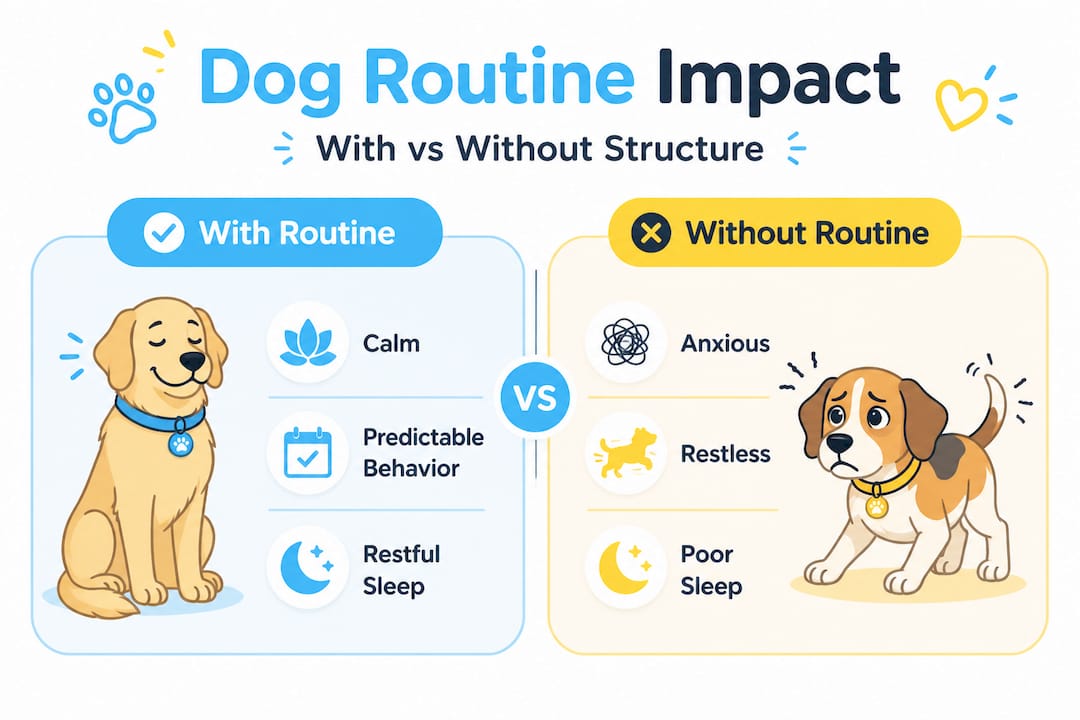
The good news is that improving behavior does not require expensive training programs. It often starts with tightening up the daily schedule.
Here are practical steps to build a behavior-supporting routine:
- Set consistent wake-up and bedtime hours so your dog’s internal clock stabilizes.
- Feed at the same time each day, not just roughly the same time but within a 15-minute window.
- Walk your dog at predictable intervals, especially first thing in the morning and before bed.
- Schedule play or training sessions at the same point in the day so the dog anticipates and looks forward to them.
- Use a consistent pre-departure cue, like putting on shoes or picking up keys, so your dog learns those signals without alarm.
Alongside these healthy dog habits, small variations in the content of activities actually help build adaptability.
Pro Tip: Vary small details like the walking route or the type of treat used during training, but always keep the overall sequence consistent. Your dog learns the pattern, not the exact details, and that sequence is what provides security.
With this understanding, let’s see how specific routines affect core health needs like potty training, feeding, and sleep.
Physical health benefits of routines
Routines do more than calm a nervous dog. They actively protect physical health in measurable ways. According to guidelines from veterinary and canine behavior experts, routines regulate physical needs like feeding, exercise, and sleep, with puppies needing 12 to 18 hours of sleep per day, and structured schedules preventing obesity, digestive problems, and mental stagnation.
One of the most striking pieces of evidence comes from the Dog Aging Project, a large-scale study involving more than 24,000 dogs. Results showed that once-daily feeding was linked to lower cognitive dysfunction scores and significantly reduced odds of gastrointestinal, dental, orthopedic, kidney, urinary, liver, and pancreatic disorders. That is a wide range of health benefits tied directly to a feeding routine.
Key physical health benefits of a structured routine:
- Digestion: Eating at consistent times trains the gut to produce digestive enzymes predictably, reducing bloating, gas, and upset stomachs.
- Weight management: Dogs that are fed on a schedule are far less likely to become overweight compared to free-feeding animals.
- Sleep quality: A regular sleep schedule supports immune function, tissue repair, and memory consolidation.
- Exercise tolerance: Consistent daily walks build cardiovascular fitness gradually without the strain of sporadic intense exercise.
- Cognitive health: Mental stimulation at predictable times keeps the brain engaged and may slow cognitive decline in older dogs.
| Health area | Routine effect | Risk without routine |
|---|---|---|
| Digestion | Regular enzyme production | Bloating, irregular bowel movements |
| Weight | Controlled intake | Obesity, metabolic issues |
| Sleep | Deep, restorative cycles | Fragmented rest, daytime lethargy |
| Cognitive function | Better memory and alertness | Early cognitive decline |
| Joint and orthopedic health | Gradual exercise buildup | Strain from irregular activity |
Explore more pet health tips to complement the physical benefits of a solid routine. The combination of good habits and a structured schedule is genuinely powerful.
Given these health benefits, let’s look at how routines help at every life stage from puppies to seniors, and for special cases like service or anxious dogs.
Routines for every dog: Puppies, seniors, and special needs
Not every dog has the same routine needs, but every dog benefits from some form of structure. The difference is in how you tailor the routine to the animal’s age, temperament, and health situation.
Puppies are perhaps the most obvious candidates for structured routines. Young dogs have tiny bladders and even tinier impulse control. Research from the American Kennel Club confirms that consistent potty schedules with regular breaks every two to four hours reduce accidents significantly and establish good behaviors early. The routine teaches the puppy what is expected. Without it, house training drags on for months longer than necessary, and the puppy never develops the reliable habits that make life easier for everyone.
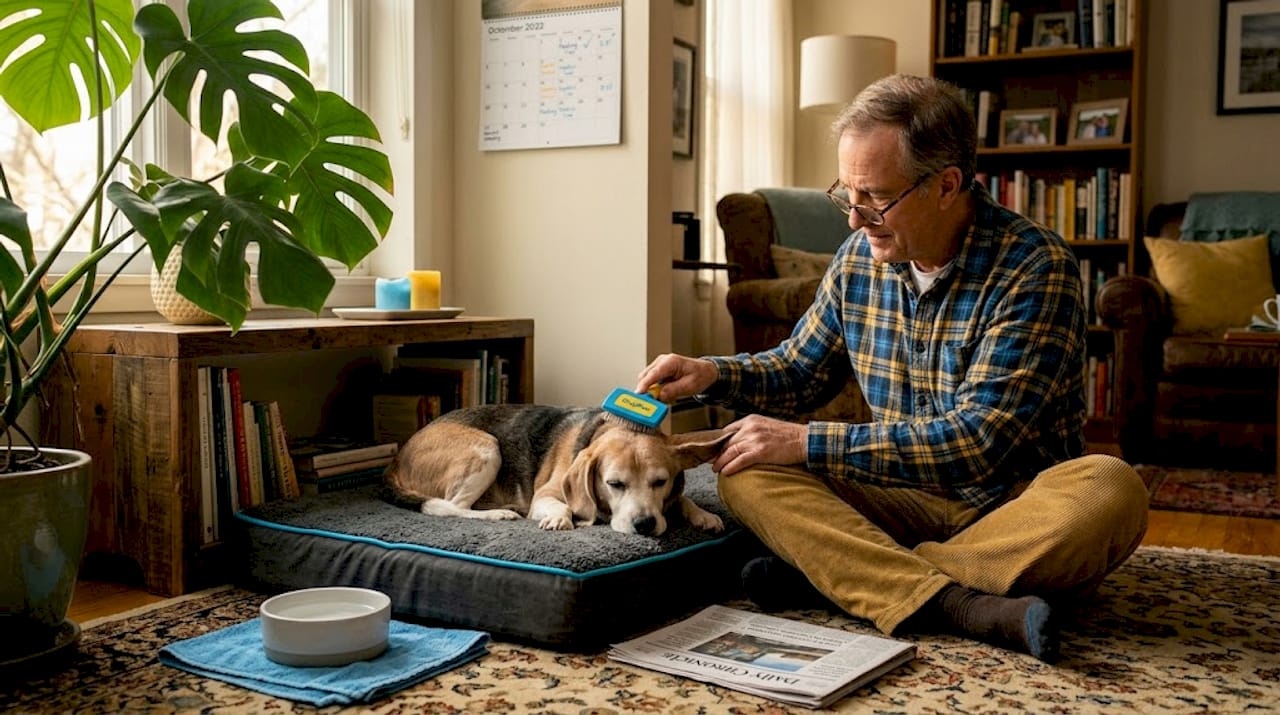
For senior dogs, the logic shifts slightly. Older dogs often deal with arthritis, reduced vision or hearing, and cognitive decline. A predictable routine removes the need for a senior dog to figure out what is happening next. It reduces cognitive load. A gentle walk at the same time each morning, meals at the same hours, and a consistent bedtime spot all signal safety and familiarity, which matters enormously for aging animals that can become easily disoriented.
Service dogs and high-anxiety dogs have perhaps the most heightened need for structure of all. These animals perform demanding tasks or carry a baseline of anxiety that makes unpredictability especially destabilizing. A service dog that knows its schedule can reserve its mental energy for its work rather than spending it managing uncertainty. Learning more about service dog routines is a worthwhile investment for any handler or owner in this situation.
Here is a practical approach to building routines by life stage:
- Puppies (8 weeks to 12 months): Potty break every two to four hours, consistent meal times three times per day, short but regular play and training sessions of five to ten minutes, and nap times in a designated quiet space.
- Adult dogs (1 to 7 years): Two meals per day at fixed times, one to two walks daily, a consistent training or enrichment session, and a wind-down period before sleep.
- Senior dogs (7 years and older): Shorter but more frequent walks to protect joints, two scheduled meals, veterinary-informed rest periods, and gentle enrichment activities.
- Anxious or reactive dogs: Highly predictable sequences with few surprises, gradual desensitization built into the routine, calming wind-down rituals, and consistent social exposure windows.
- Service dogs: Precise work-rest cycles, consistent command practice, defined off-duty periods for decompression, and handler-led routines that signal transitions clearly.
The puppy training benefits of early routine-setting extend well into adulthood, shaping a dog’s temperament and capacity to handle life’s inevitable surprises.
Pro Tip: Do not stress over hitting exact times to the minute. What matters most is consistency of sequence. Your dog learning that walk comes after breakfast, and play comes before bed, matters far more than whether walk happens at 7:02 AM or 7:18 AM.
With these practical strategies tailored to your dog’s needs, let’s look at what most guides overlook when it comes to routines.
The truth about routines: Flexibility, over-training, and real-world life
Here is something most dog routine articles will not tell you: rigid adherence to a schedule can actually work against you. The goal is not to program your dog like a machine. It is to create enough structure that your dog feels secure while remaining genuinely adaptable to real life.
Research confirms that slight variations build adaptability. Consistency in sequence over exact times is what actually works. That means a dog that goes on a walk before dinner every evening will cope fine if dinner shifts by thirty minutes one day. What they struggle with is when the entire sequence breaks down, when there is no walk at all, or when dinner shows up at a completely different point in the day.
The same principle applies to training frequency. Many owners assume that daily multiple training sessions will accelerate learning. The research disagrees. Studies on canine training show that excessive daily training actually slows skill acquisition compared to training one to two times per week with focused, well-structured sessions. Dogs need processing time. Cramming in sessions every day can create frustration and actually impair long-term memory of commands.
The why routines matter conversation is really a conversation about balance. A routine that is too rigid creates a dog that falls apart when life gets unpredictable, which it always does. A routine with zero structure creates chronic low-grade anxiety. The sweet spot is a consistent framework with room for natural variation.
Real life happens. Schedules shift, seasons change, people travel, and households evolve. The best routines are ones you can realistically maintain through those changes, not ideal blueprints that collapse the moment something unexpected occurs. Build the routine around your actual life first, then refine it for your dog’s specific needs. That approach is sustainable, and sustainability is what your dog truly needs from you.
Take the next step with your dog’s well-being
You now have a solid foundation for understanding why routines matter and how to build one that actually works for your dog’s specific stage of life and personality. The next step is putting that knowledge into daily practice, and having the right resources makes that process significantly easier.

At iPupPee, we specialize in helping dog owners, service dog handlers, seniors, and people with special needs build better communication and safer routines with their pets. Whether you are training a new puppy, supporting an anxious rescue dog, or managing the complex needs of a service animal, our blog and product resources are built around your real situation. Visit ipuppee.com to explore in-depth guides, expert tips, and tools designed to support your dog’s well-being every single day.
Frequently asked questions
How strict should my dog’s routine be?
Aim for consistency in sequence rather than exact times, because slight variations actually help build a dog’s adaptability without compromising their sense of security.
What if my schedule changes and I can’t keep the same routine?
Gradually adjust your dog’s schedule and keep the order of core activities the same, since predictable sequences provide security even when exact timing shifts.
Are routines more important for certain types of dogs?
Yes, anxious dogs, chronically ill pets, service animals, and puppies benefit most, with research showing that sleep disruption and unpredictability affect these groups more severely.
Can routine changes cause behavior issues?
Sudden schedule disruptions can trigger destructive behavior, restlessness, and excessive barking as your dog tries to cope with the loss of predictability.
How does a feeding routine affect my dog’s health?
Consistent feeding is linked to significant health protection, with once-daily feeding reducing the risk of gastrointestinal, dental, cognitive, and orthopedic problems across more than 24,000 dogs studied.