

Many believe dogs possess a mystical sixth sense, but science reveals a more grounded truth. Dogs have 220-300 million olfactory receptors, enabling detection of chemical compounds at one part per trillion. This extraordinary sensory biology, not supernatural powers, explains their early warning abilities. You’ll discover how dogs smell, hear, and sense environmental changes to detect danger, plus how technology enhances dog-human communication for safety.
Table of Contents
- Understanding The Canine Sixth Sense Myth
- How Dogs Sense Danger: Biological And Environmental Mechanisms
- How Dogs Sense Danger: Human Emotional Cues And Chemical Signals
- Common Misconceptions About Dogs’ Danger Sensing Abilities
- Practical Applications: Enhancing Safety With Dog Sensing And Human Technology
- Understanding Canine Instincts And Evolution In Danger Detection
- Conclusion: Bridging Canine Instinct With Human Safety And Technology
- Enhance Your Dog’s Safety With IPupPee Communication Technology
- Frequently Asked Questions
Key Takeaways
| Point | Details |
|---|---|
| Acute Senses | Dogs use smell, hearing (including infrasound), and environmental sensitivity to detect danger early. |
| Emotional Detection | Dogs sense human stress through biochemical signals like cortisol and adrenaline in sweat and breath. |
| Science Over Myth | Supernatural beliefs are debunked by sensory biology and cognitive explanations. |
| Evolutionary Foundation | Pack instincts and millennia of genetic selection support natural danger detection abilities. |
| Tech Enhancement | Devices like iPupPee translate dog alerts into clear human signals for improved safety communication. |
Understanding the Canine Sixth Sense Myth
For centuries, people have attributed dogs’ ability to predict danger to supernatural powers. This belief persists in popular culture, fueling stories of dogs sensing earthquakes, storms, or intruders before humans notice anything amiss. Scientific research clarifies that dogs rely on highly evolved sensory organs, not paranormal abilities.
Their sensory capabilities are extraordinary but entirely natural. Dogs process information from their environment using biological systems refined over thousands of years. Their olfactory cortex occupies 40 times more brain space proportionally than ours, allowing complex scent analysis. Combined with superior hearing and environmental awareness, these traits create an impressive early warning system.
Cognitive skills allow dogs to interpret complex sensory information and anticipate threats. They understand 165-250 human words and read our body language expertly. When you pair this intelligence with advanced senses, you get a companion who seems psychic but is actually highly observant.
Misinterpretations often arise from confirmation bias and anecdotal evidence. We remember when our dog alerted us before a storm but forget the false alarms. Dog communication technology helps bridge this gap by providing clearer signals we can verify and track.
Common myths about canine danger sensing:
- Dogs predict earthquakes through paranormal abilities
- Canines see ghosts or supernatural entities
- All dogs automatically sense every type of danger
- Dogs’ predictions are 100% accurate without training
“Dogs don’t have a sixth sense. They have five incredibly powerful ones that work together to detect what we miss. Understanding this distinction transforms how we train and communicate with them.”
How Dogs Sense Danger: Biological and Environmental Mechanisms
Dogs detect danger through specific biological systems that operate far beyond human capabilities. Understanding these mechanisms helps you recognize when your dog is alerting you to genuine threats versus reacting to routine stimuli.
Olfaction stands as dogs’ primary danger detection tool. With 220-300 million olfactory receptors, compared to our mere 5 million, dogs detect volatile organic compounds at parts per trillion. They smell natural gas leaks, smoke from distant fires, and chemical changes signaling medical emergencies minutes before symptoms appear.
Hearing extends into frequency ranges we cannot perceive. Dogs detect infrasound frequencies below 20 Hz, picking up seismic activity and approaching thunderstorms long before we sense anything unusual. This ability explains why dogs often become restless before weather events.
Barometric pressure sensitivity triggers behavioral changes. Dogs respond to rapid drops in atmospheric pressure that precede storms. They may seek shelter, pace, or whine as they sense the approaching weather system through physical discomfort in their ears and joints.
| Sensory Type | Detection Range | Danger Relevance |
|---|---|---|
| Olfaction | Parts per trillion | Gas leaks, fires, medical alerts, intruders |
| Hearing | 67-45,000 Hz (including infrasound) | Earthquakes, storms, distant threats |
| Barometric Pressure | Detects drops of 0.02 inches Hg | Severe weather, natural disasters |
| Chemical Detection | Cortisol, adrenaline, VOCs | Human medical emergencies, emotional stress |
Medical alert capabilities save lives daily. Seizure alert dogs detect unique odors emitted minutes before seizure onset, giving handlers time to reach safety. Similarly trained dogs alert diabetics to dangerous blood sugar levels by smelling chemical changes in breath and sweat.
Pro Tip: Train your dog to signal specific dangers by rewarding alert behaviors consistently. Pair this with advanced communication devices to translate their warnings into actions you can take immediately. This combination maximizes your safety system’s effectiveness.
Training dogs for alert behaviors builds on their natural abilities. You’re not teaching them to sense danger but to communicate their detections clearly. Understanding dogs’ olfactory detection capabilities and environmental sensing helps set realistic training goals.
How Dogs Sense Danger: Human Emotional Cues and Chemical Signals
Beyond environmental threats, dogs excel at detecting human emotional states tied to danger. This ability strengthens the bond between service dogs and handlers while improving safety for vulnerable individuals.
Dogs sense fear by detecting changes in sweat and breath chemistry. When you experience stress, your body releases hormones that alter your biochemical signature. Dogs detect subtle changes in compounds linked to cortisol and adrenaline, hormones your body produces during threatening situations.
Key biochemical signals dogs detect:
- Cortisol in sweat indicating prolonged stress
- Adrenaline metabolites in breath during acute fear
- Changes in body odor from sympathetic nervous system activation
- Alterations in pheromone production during anxiety
Behavioral changes correlate with human emotional signals. Your dog might move closer when you’re anxious, position themselves between you and a perceived threat, or alert you to someone approaching when you’re already on edge. They’re not reading your mind but responding to chemical and physical cues you’re unconsciously broadcasting.
Understanding these cues enhances dog communication with humans and improves safety outcomes. Service dogs trained to recognize these signals can alert handlers before panic attacks escalate or guide them away from triggering situations. Training alert dogs to respond to emotional cues requires consistency and clear reward systems.

Pro Tip: Watch for subtle changes in your dog’s behavior when you’re stressed. Increased attention, positioning changes, or gentle pawing often indicates they’ve detected your emotional state. Recognizing this helps you verify whether they’re responding to external threats or your internal stress, improving interpretation of their alerts.
The connection between dogs detecting human emotional stress and physical safety runs deep. A dog alert to your fear response might indicate genuine danger your conscious mind hasn’t registered. This partnership works best when you trust their senses while training them to communicate clearly.
Common Misconceptions About Dogs’ Danger Sensing Abilities
Clearing up misconceptions improves how you train and interpret your dog’s alerts. Many beliefs about canine danger sensing mix fact with fiction, creating unrealistic expectations.
Dogs do not possess paranormal sixth senses. Their abilities stem from sensory biology and cognitive evolution refined over millennia. What appears supernatural is actually superior hardware processing information we cannot access. This distinction matters because it shifts training from mystical hope to practical skill building.
Misinterpretations arise from confirmation bias and selective memory. You remember the time your dog barked before an earthquake but forget the dozen false alarms. Scientific studies show that dogs’ behaviors before disasters correlate with real sensory cues like infrasound, not premonitions.
Myths versus reality:
- Myth: All dogs automatically sense every danger
- Reality: Detection ability varies by breed, training, and individual sensitivity
- Myth: Dogs predict the future
- Reality: Dogs detect present sensory information humans miss
- Myth: Dog alerts are always accurate
- Reality: False positives and missed alerts occur regularly
- Myth: You cannot improve natural sensing
- Reality: Training significantly enhances reliability and communication
Dogs’ understanding of context strengthens alert reliability. They learn which stimuli warrant alerting and which are routine. A dog who understands 165-250 human words and processes complex environmental information can distinguish between a delivery person and an intruder based on multiple factors, not psychic powers.
Clear distinction between myth and science improves training outcomes. When you understand your dog detects chemical signatures rather than evil spirits, you can train specific responses to measurable threats. Dog alert training methods work best when grounded in biological reality.
Reviewing studies on dog behaviors before disasters and understanding dog cognitive and sensory abilities provides the foundation for evidence-based training. You’ll set achievable goals and avoid disappointment from supernatural expectations.
Practical Applications: Enhancing Safety with Dog Sensing and Human Technology
Applying scientific knowledge about dog sensing abilities creates practical safety improvements. Combining natural detection with modern technology maximizes protection for you and vulnerable family members.
Dogs’ natural detection of environmental hazards becomes more valuable through alert training. Teaching your dog to signal specific dangers like hazardous volatile organic compounds such as gas leaks or smoke creates a reliable early warning system. Consistency matters more than complexity in this training.
Communication devices translate dog alerts into clear human signals. Devices like iPupPee convert alert behaviors into notifications you cannot miss, especially critical for hearing impaired handlers or those who sleep deeply. This technology bridges the gap between what dogs sense and what we understand.
| Method | Pros | Cons | Best For |
|---|---|---|---|
| Traditional Alert Training | Natural, no equipment needed, strengthens bond | Easy to miss subtle signals, requires constant attention | Experienced handlers, daytime use |
| Technology-Enhanced Communication | Clear signals, works 24/7, aids interpretation | Requires device training, initial cost | Service dog handlers, seniors, disabled individuals |
| Combined Approach | Maximum reliability, redundant systems, clearest communication | Requires time investment | Anyone prioritizing safety |
Benefits across user groups:
- Service dog handlers receive unmistakable medical alerts
- Disabled individuals gain independence through reliable warning systems
- Seniors living alone benefit from 24/7 danger detection
- Pet owners proactively protect their families
Training combined with technology creates the most effective safety system. Increase dog safety with communication devices while maintaining strong behavioral foundations through step-by-step dog alert training. The combination addresses both detection and communication challenges.
Pro Tip: Start with basic alert training before introducing technology. Once your dog reliably signals danger through natural behaviors, add a communication device to amplify those signals. This sequence builds on instinct while adding modern clarity.
Explore dog communication technology solutions that match your specific needs. Consider factors like your living situation, any disabilities, and the types of dangers most relevant to your environment. The right system works seamlessly with your dog’s natural abilities.
Understanding dogs detecting household hazards and reviewing iPupPee device specifications helps you make informed decisions. Technology should enhance, not replace, the natural partnership between you and your dog.
Understanding Canine Instincts and Evolution in Danger Detection
Danger sensing roots itself in dogs’ evolutionary survival mechanisms. Understanding this background deepens appreciation for your dog’s natural abilities and informs training approaches.
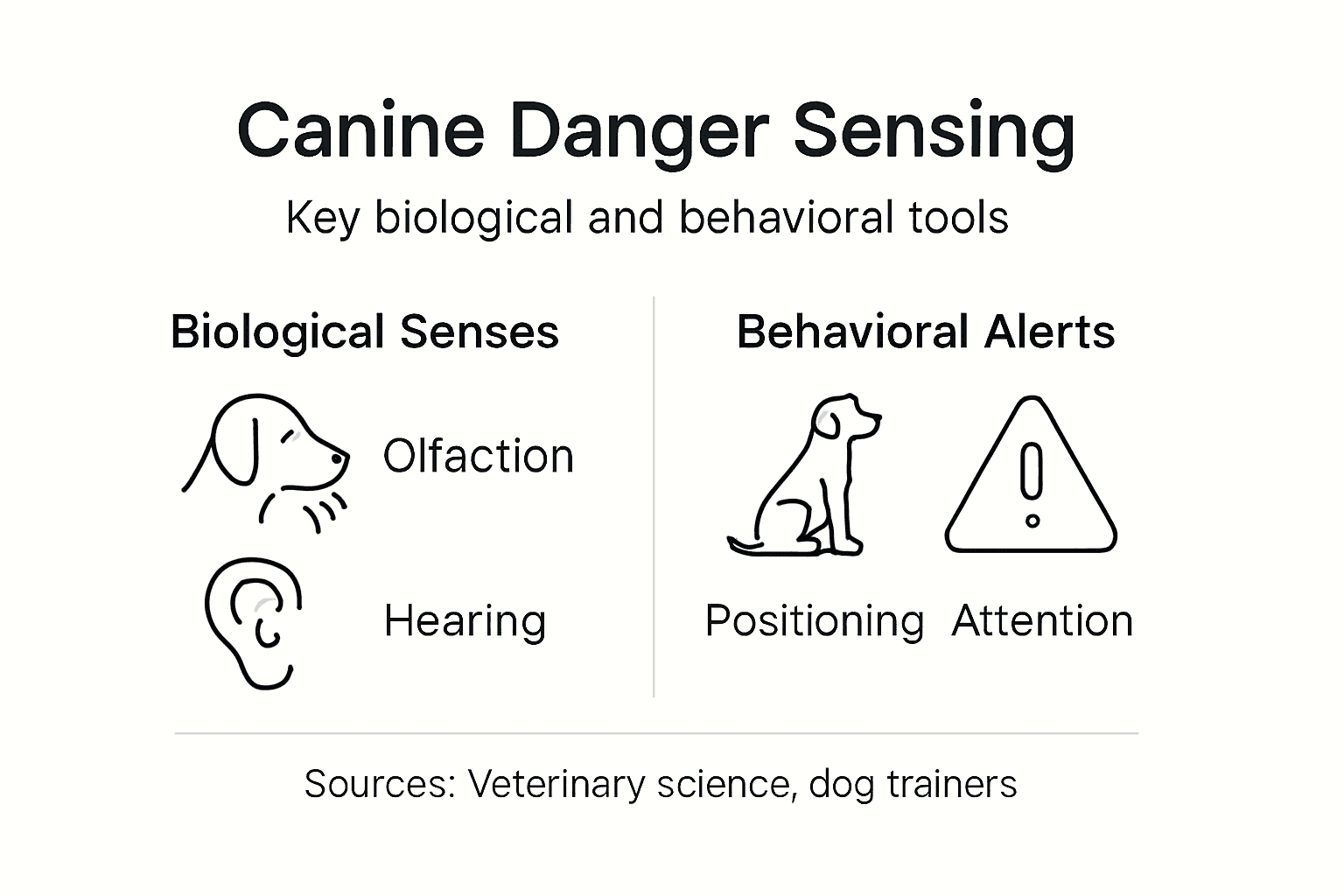
Pack behavior involves early threat detection and alerting others for collective safety. Wild canines who sensed danger first and communicated effectively increased their pack’s survival rate. This trait passed through generations, creating the alert dogs we know today. Your modern dog carries these ancient instincts.
Genetic predisposition has enhanced sensory organs and protective instincts over millennia. Selective breeding amplified traits humans found valuable, including danger detection and communication. Service dog breeds particularly demonstrate these refined abilities, though all dogs retain core instinctual patterns.
Evolutionary advantages in danger detection:
- Superior olfaction for detecting predators and environmental hazards
- Enhanced hearing for perceiving threats beyond visual range
- Social communication systems for pack-wide alerts
- Protective instincts toward pack members (including human family)
Understanding instincts aids training and interpreting alert behaviors. When your dog positions themselves between you and a stranger, they’re following protective pack instincts. Recognizing this helps you distinguish genuine alerts from routine caution. Training works with these instincts rather than against them.
Integrating biological insights, cognitive understanding, and evolutionary context creates a comprehensive view. Your dog’s danger sensing combines acute senses refined through evolution, cognitive skills developed through domestication, and emotional bonds strengthened through training. This multi-layered system explains their remarkable protective abilities.
Exploring canine instincts and behavior provides additional context for understanding your dog’s responses. The more you understand their evolutionary programming, the better you can work with their natural tendencies to create effective safety systems.
Conclusion: Bridging Canine Instinct with Human Safety and Technology
Dogs sense danger through extraordinary biological mechanisms, not supernatural powers. Their 220-300 million olfactory receptors, infrasound hearing, and emotional chemical detection create an impressive early warning system. Evolution has refined these abilities over millennia through pack survival dynamics.
Dispelling myths improves communication and training outcomes. When you understand the science behind your dog’s alerts, you can train specific responses and set realistic expectations. This knowledge transforms vague sensing into reliable safety protocols.
Technology plays a crucial role in enhancing dog-human safety cooperation. Devices that translate natural alerts into clear signals maximize your dog’s protective potential while addressing human sensory limitations. This partnership respects canine biology while leveraging modern innovation.
Apply this knowledge to improve safety with your dog. Combine training with appropriate technology for your situation. The result is a comprehensive safety system that protects you while strengthening your bond with your canine companion. The future of dog-assisted safety looks bright as we continue bridging instinct with technology.
Enhance Your Dog’s Safety with iPupPee Communication Technology
Your dog already possesses incredible sensing abilities. iPupPee bridges the gap between their natural alerts and your understanding with communication tools designed for real-world safety situations. Whether you’re a service dog handler, disabled individual, senior living alone, or proactive pet owner, technology enhances what nature provided.

Combining your dog’s biological advantages with clear communication channels creates the most effective safety system. Dog communication technology works with your dog’s instincts, not against them. Increase dog safety with communication devices while maintaining the natural bond that makes your relationship special. Explore training dogs for alerts to maximize your system’s effectiveness and give yourself peace of mind.
Frequently Asked Questions
How do dogs detect danger before humans?
Dogs detect danger through superior senses of smell, hearing, and environmental sensitivity that process information beyond human perception. They smell chemical compounds at parts per trillion, hear infrasound frequencies below our range, and sense barometric pressure changes preceding storms. Additionally, they read human emotional chemical signals like cortisol and adrenaline to anticipate threats we haven’t consciously recognized. Technology like iPupPee enhances alert communication by translating these natural detections into clear signals humans can act upon immediately.
Can dogs detect medical emergencies like seizures?
Yes, trained dogs reliably detect seizures minutes before symptoms appear by sensing specific odors emitted up to five minutes before onset. This allows early warnings that dramatically improve safety for medical patients. Similar training enables detection of dangerous blood sugar levels in diabetics and other medical conditions through biochemical signature changes.
How can technology like iPupPee improve communication with my dog?
iPupPee provides tools that convert dog alerts into understandable human cues through button-press systems and notifications. This bridges sensory gaps, especially aiding service dog handlers and vulnerable pet owners who might miss subtle behavioral signals. The technology works 24/7, ensuring you receive critical alerts even when sleeping or distracted, maximizing your safety system’s reliability.
Are dogs’ danger sensing abilities always accurate?
Dog sensing is highly sensitive but not infallible, with false alarms and missed alerts occurring regularly. Environmental factors, individual variations, and lack of training affect accuracy. Training and supportive communication devices significantly increase reliability and interpretation accuracy by clarifying which alerts warrant immediate response versus routine caution. Consistent reinforcement of correct alerts improves your dog’s discrimination over time.
What types of dangers can trained dogs detect most reliably?
Trained dogs most reliably detect dangers with strong sensory signatures: gas leaks and smoke through olfaction, approaching severe weather through infrasound and pressure changes, intruders through hearing and scent, and medical emergencies through biochemical changes. Reliability increases with specific training for target threats and clear communication systems that help you distinguish alert types. Combining natural abilities with focused training creates specialized detection capabilities.
Recommended
- Dog Alert Signals: Recognize and Respond for Safety in 2025 – iPupPee
- Understanding How Dog Alerts Work for Owners and Handlers – iPupPee
- Best Dog Alert Options for Owners and Handlers in 2025 – iPupPee
- Dog Alerts Explained: Safety, Training, and Technology – iPupPee
- Which Bear is the Most Dangerous in the United States?
- This is just weird… Spaniels in suspenders – meet the dogs dressed to impress in stockings and stilettos - LoveBelfast