

Pick one reputable free course or video playlist, then commit to daily 3 to 5 minute practice sessions built on positive reinforcement. That combination, backed by humane-training guidance from groups like the American Veterinary Society of Animal Behavior and the ASPCA, gets most owners further than scattered advice. This guide walks through the best free courses, videos, apps, and timelines to use next.
TL;DR:
- Focusing on short, consistent training sessions that target one behavior at a time is more effective than long, variable efforts.
- Using free, targeted resources such as puppy basics, obedience videos, and behavior primers aligns with your dog’s current needs, whether they are a puppy, recently adopted, or already settled.
- Adhering to humane, positive reinforcement methods and avoiding punitive techniques ensures safe, effective training, especially during early socialization and routine building phases.
- Implementing structured practice with apps, timers, and trackers helps maintain daily habits and allows you to monitor progress over time.
- For complex issues like aggression or lack of progress after weeks of practice, consulting a certified trainer or behaviorist remains essential for safety and effective resolution.
Table of Contents
- Quick curated shortlist: best free starting points
- Free video channels and tutorial playlists to follow
- Free apps and everyday tools that support practice
- How to structure practice at home
- Adjustment timelines for adopted dogs: 3-3-3 versus 7-7-7
- Safety and humane methods worth following
- When free resources aren’t enough
- How Ipuppee helps: owned resources and next steps
- Author perspective: practical realism for busy owners and adopters
- A gentle alternative worth knowing about
- Sources
- FAQ
Quick curated shortlist: best free starting points
The fastest way to start is to match a free resource to your immediate goal instead of browsing endlessly. A few collections cover most beginner needs without any signup fee or trial period.
- Puppy basics: The Dunbar Academy free course collection offers self-paced modules on house training, bite inhibition, and early manners, best for owners in the first weeks with a new puppy.
- Rescue and adoption support: Look for free workshops built around decompression and trust-building, best for owners easing an adopted dog into a new home.
- Basic obedience: Free video-based obedience series covering sit, stay, come, and leash walking work well for owners who want a structured skill order.
- Behavior problem primers: Short, single-topic lessons on jumping, barking, or resource guarding are useful once foundational cues are solid.
If house training is urgent, start with puppy basics. If your dog is newly adopted, start with rescue support material before anything obedience-focused. If you already have a settled dog, jump straight to basic obedience or a targeted behavior primer.
Free video channels and tutorial playlists to follow
Single-skill videos work because they let you isolate one behavior, watch a demonstration, and copy it immediately, rather than sitting through a long lecture. Search using the exact cue you want (“dog leave it training” or “puppy crate training first night”) rather than broad terms, and prioritize creators who show real-time practice, not just narration. Pages like Robert Cabral’s free video library are useful examples of this single-purpose format.
Prioritize these playlist types:
- Step-by-step recall progressions that build distance and distraction gradually.
- Leash-manners playlists that show loose-leash walking from the first session onward.
- Crate and house training sequences that cover the first night through the first month.
The simplest viewing plan is watch once, then practice. Watch a single video fully, then run one 3 to 5 minute session copying that exact technique. Repeat the same video’s method for two or three days before moving to the next skill, since dogs need repetition more than variety early on.
Free apps and everyday tools that support practice
Apps turn passive watching into a habit. The most useful categories are training lesson apps with structured curricula, clicker or marker timer apps, habit trackers for daily streaks, and simple reminder apps that nudge you to practice.
Before relying on any app, check that it works without a forced paywall past the first lesson, that key features function offline, and that user reviews mention real training results rather than just design.
- Use a lesson app to assign one skill per day, so sessions never run long.
- Use a clicker or marker app to keep timing consistent between sessions.
- Log each session in a tracker so you can see progress over a week, not just a single day.
How to structure practice at home
A short session works best when it follows the same shape every time, so your dog learns the pattern as much as the cue.
- Goal: Pick one behavior, like “sit,” for the entire session.
- Cue: Say the word once, clearly, without repeating it.
- Prompt: Guide with a treat or gesture if your dog does not respond.
- Mark and reward: Mark the instant the behavior happens, then reward immediately.
- Reset: Step back, reset position, and repeat three to five times before stopping.
Raise difficulty only after your dog succeeds in a quiet room several times in a row, then add mild distractions like a closed door or a person walking by. Keep sessions short even as they get harder, since longer sessions tend to lower a dog’s motivation rather than build it.
If your dog seems bored, switch to a higher-value treat. If distractions derail every attempt, move training to a quieter space and rebuild from there. If cues feel inconsistent, write down the exact words and hand signals you use so every household member repeats them the same way.

Pro Tip: End each session on a success, even a small one, so your dog associates training with winning rather than frustration.
Adjustment timelines for adopted dogs: 3-3-3 versus 7-7-7
The 3-3-3 rule frames early rescue adjustment as three phases: 3 days of decompression, 3 weeks to learn household routine, and 3 months to build real trust. The 7-7-7 framework stretches that same idea further, commonly meaning 7 days decompression, 7 weeks of routine building, and up to 7 months for full acclimation, and is often used for dogs with harder trauma or working backgrounds. Neither is a strict rule, both are planning tools meant to set realistic expectations.
- Days phase: Focus on safety, quiet, and a predictable routine, not training drills.
- Weeks phase: Introduce low-pressure cues like name recognition and simple hand targets.
- Months phase: Build longer skill work once the dog shows consistent comfort at home.
A randomized shelter study found that enrichment paired with short, reward-based training sessions increased desirable behaviors in dogs compared to dogs that did not have that support. That result backs the case for starting slow and letting structured, low-pressure practice do the work.
Match free resources to each phase: watch calming, bonding-focused videos during decompression, and save recall or leash-manners playlists for the weeks and months phases once your dog is settled. This rescue adjustment guide walks through the decompression phase in more detail, and this 2026 adoption guide covers the 3-3-3 framework step by step.
Safety and humane methods worth following
The AVSAB’s position statement states that aversive or punishment-based methods are not necessary and recommends identifying a dog’s motivators and building on positive reinforcement instead. That guidance should shape every free resource you choose.
- Avoid physical corrections such as leash jerks or forced positioning.
- Keep early socialization outings brief and low-pressure rather than flooding a puppy with new stimuli at once.
- Stick to short sessions, since fatigue undermines learning faster than difficulty does.
The AVMA’s review of puppy and kitten socialization also notes that vaccination timing matters for class attendance and public outings, so check with your veterinarian before enrolling a young puppy in group classes.
When free resources aren’t enough
Some situations call for a professional faster than free content can help.
- Aggression, escalating fear, or any safety risk to people or other animals.
- No progress after several weeks of consistent, correctly structured practice.
- A certified trainer (CPDT), veterinary behaviorist, or CAAB/Dip ACVB can offer support beyond video lessons.
Before that first consult, record short videos of the behavior, list known triggers, and note a rough timeline of when problems started.
How Ipuppee helps: owned resources and next steps
The blog complements free courses and videos with practical, session-focused guidance for the same beginner and rescue audiences.
- 3 to 5 minute session templates for gear-free, beginner practice.
- Step-by-step rescue training plans for phased skill building.
- Reward-based training background grounded in AVSAB research.
These posts are optional reading for owners who want more structure alongside the free resources above.
Author perspective: practical realism for busy owners and adopters
Progress comes from small, repeated wins, not long weekend sessions. Patience and safety matter more than speed, and that is the same thinking behind the focus on communication and safety for dogs and their owners.
— Andrew
A gentle alternative worth knowing about
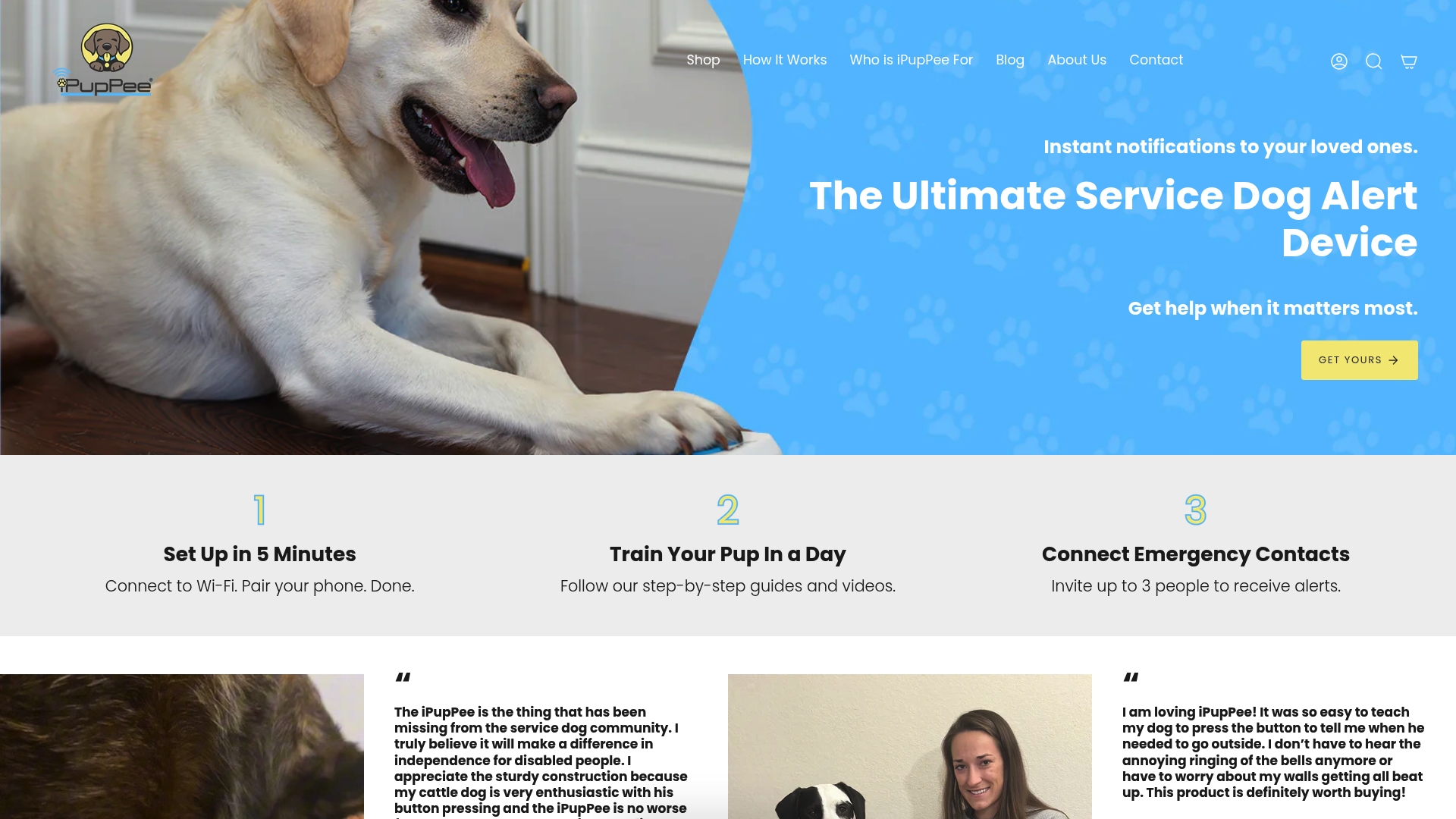
Some owners want more structure than free content offers, or a way for their dog to signal them directly. The iPupPee device lets a dog send a Wi-Fi alert with live video and two-way audio to chosen contacts, useful for service dog teams, seniors, and owners who live alone. Paired with the Psychology & Training Course, it gives owners who want guided, paid instruction a next step beyond free resources.
Sources
- Humane dog training position statement (AVSAB)
- The 3-3-3 Rule for Dogs (And the 777 Rule) | Off Leash K9 Training Jacksonville
- AVMA literature review: socialization of puppies and kittens
- JAVMA study: enrichment plus training improves desirable behaviors in shelter dogs
- Free Course Collection | Dunbar Academy
FAQ
What is the 3-3-3 rule for dog training?
The 3-3-3 rule is a planning guideline for rescue dogs: 3 days to decompress, 3 weeks to learn routine, and 3 months to build trust. It is not a strict timeline, and every dog adjusts on its own schedule.
How do you say no in dog language?
There is no single universal signal, but a calm, neutral interrupt word paired with redirecting your dog toward a correct behavior works better than harsh corrections. The AVSAB recommends focusing on rewarding the right behavior rather than punishing the wrong one.
What is the best free app for dog training?
Definitions of “best” vary since needs to differ by dog and owner, but strong free options typically combine structured lesson plans, a built-in timer or marker tool, and offline access. Check reviews and confirm the core lessons are not locked behind a paywall before committing.
What is the 7-7-7 rule for dogs?
The 7-7-7 rule is a longer version of the 3-3-3 framework, often used for dogs with harder backgrounds: roughly 7 days of decompression, 7 weeks of routine building, and up to 7 months to fully acclimate. Like 3-3-3, it is a guideline rather than a fixed rule.
How long should a free dog training session be?
Most trainers and free resources recommend sessions of 3 to 5 minutes, done once or twice daily. Short sessions keep a dog motivated and reduce the fatigue that leads to stalled progress.