

Adopting a rescue dog brings incredible rewards, but the first days and weeks can feel overwhelming. Many new owners struggle with anxiety, behavioral challenges, and uncertainty about how to help their dog adjust. This guide walks you through proven strategies to build trust, establish routines, and create a foundation for lifelong success. You’ll learn practical techniques for training, bonding, and managing common challenges so both you and your rescue dog can thrive together from day one.
Table of Contents
- Understanding The Unique Needs Of Rescue Dogs
- Preparation: Setting Up Routines, Environment, And Communication
- Execution: Effective Training Techniques For Rescue Dogs
- Verification: Monitoring Progress And Troubleshooting Common Challenges
- Looking For Trusted Supplies And Expert Support?
- Frequently Asked Questions
Key takeaways
| Point | Details |
|---|---|
| Establish routines immediately | Consistent schedules for feeding, walks, and rest reduce anxiety and help your dog understand expectations. |
| Start training on day one | Begin potty and crate training right away using positive reinforcement methods. |
| Build trust through patience | Allow your dog to adjust gradually, following the 3-3-3 rule for decompression and bonding. |
| Use positive reinforcement | Reward desired behaviors generously and avoid punishment-based approaches that increase fear. |
| Seek professional help when needed | Persistent behavioral issues or severe anxiety require guidance from certified trainers or behaviorists. |
Understanding the unique needs of rescue dogs
Rescue dogs arrive with unknown histories that shape their behavior in ways you can’t always predict. Avoiding assumptions about their past helps you respond to their current needs with patience and understanding. Many rescue dogs have experienced trauma, neglect, or instability, making the transition to a new home particularly challenging.
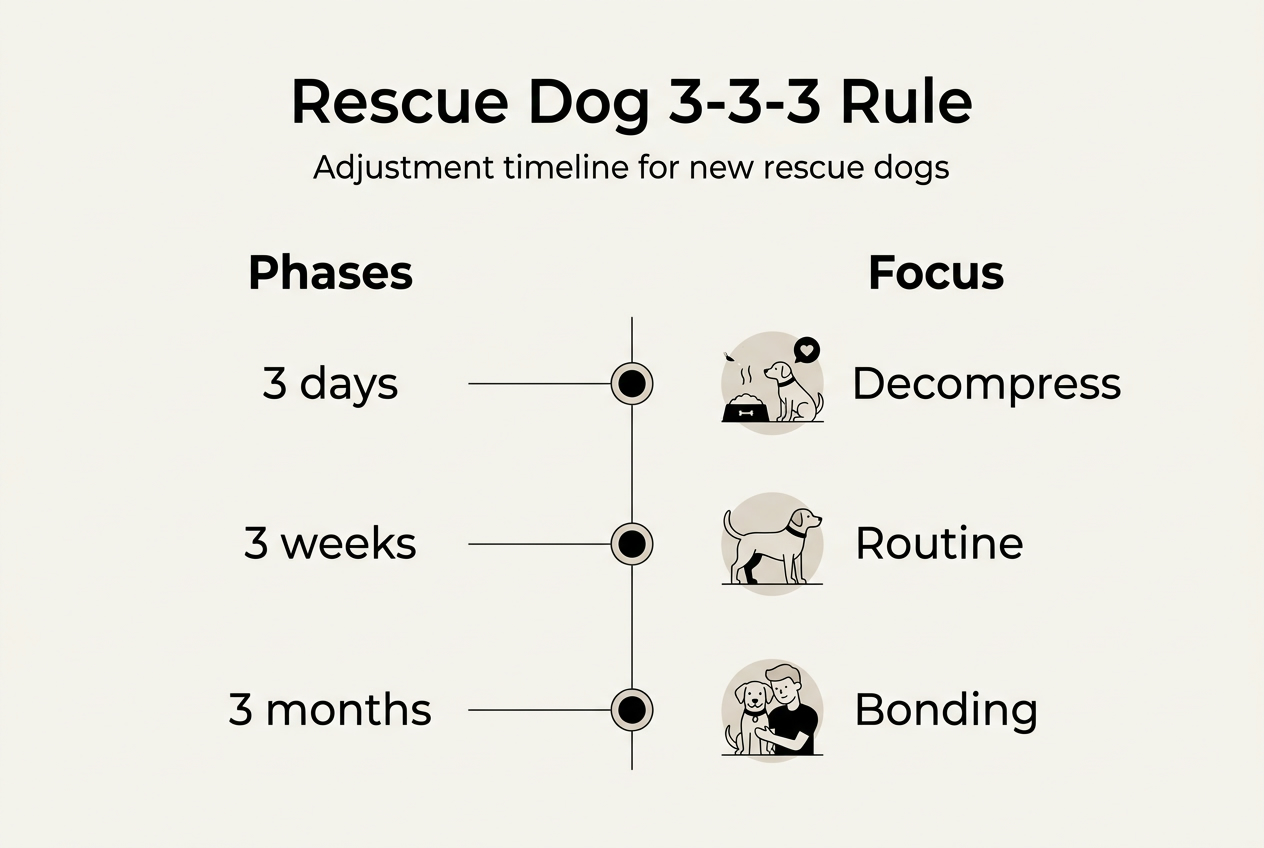
The adjustment period typically follows the 3-3-3 rule: 3 days to decompress, 3 weeks to show personality, and 3 months to fully adjust. During the first 72 hours, your dog may feel overwhelmed and withdrawn. After three weeks, you’ll start seeing their true personality emerge. By three months, they should feel secure and settled in their new environment.
Establishing firm routines and boundaries is crucial for reducing anxiety and helping dogs feel secure. Predictable schedules for meals, walks, playtime, and rest create a sense of stability. Clear boundaries teach your dog what behaviors are acceptable, preventing confusion and stress.
Dogs communicate primarily through body language, and misinterpreting these signals can increase stress for both of you. Watch for signs like tail position, ear placement, body posture, and facial expressions. A tucked tail, flattened ears, or whale eye (showing the whites of their eyes) indicate fear or discomfort. Recognizing these signals early allows you to adjust your approach before anxiety escalates.
Pro Tip: Keep a daily journal during the first month to track your dog’s progress, noting behavioral patterns, triggers, and improvements. This helps you identify what works and when to adjust your approach.
Prepare yourself mentally for behavioral challenges by understanding that progress isn’t always linear. Some days will feel like major breakthroughs, while others may involve setbacks. Consistency and patience during these fluctuations build the foundation for long-term success. For additional strategies, explore rescue dog behavior tips and learn how to handle dog anxiety naturally. The ASPCA dog care advice also offers comprehensive guidance for new rescue dog owners.
Preparation: setting up routines, environment, and communication
Before formal training begins, create an environment that supports your rescue dog’s emotional needs. Structured routines reduce anxiety and help dogs understand what to expect throughout their day. Set consistent times for feeding, typically twice daily at the same hours. Schedule walks and bathroom breaks at regular intervals, usually after meals and first thing in the morning.
Designate a safe retreat area where your dog can decompress when feeling overwhelmed. Create a comfortable space like a crate or designated bed in a quiet corner of your home. This gives your dog control over their environment, allowing them to self-soothe during stressful moments. Stock this area with comfortable bedding, a favorite toy, and access to water.

Use clear, consistent commands from day one to establish communication patterns. Choose simple, one-word cues like “sit,” “stay,” “come,” and “down.” Everyone in your household must use the same words and hand signals to avoid confusing your dog. Consistency in language creates faster learning and reduces frustration.
Limit new stimuli initially to prevent overwhelming your rescue dog. Introduce family members gradually, keep visitor numbers low during the first weeks, and avoid crowded places. As your dog shows signs of comfort and confidence, slowly increase socialization opportunities. This gradual approach prevents sensory overload that can trigger anxiety or fear responses.
Essential supplies for rescue dog setup:
- Appropriately sized crate with comfortable bedding
- Food and water bowls (stainless steel or ceramic)
- High-quality dog food recommended by your veterinarian
- Leash and collar with ID tags
- Safe chew toys and interactive puzzle feeders
- Cleaning supplies for accidents
- Baby gates for managing space access
| Crate Size | Dog Weight | Dimensions | Best For |
|---|---|---|---|
| Small | Up to 25 lbs | 24" L x 18" W | Terriers, small mixed breeds |
| Medium | 26-40 lbs | 30" L x 21" W | Cocker Spaniels, Beagles |
| Large | 41-70 lbs | 36" L x 24" W | Boxers, Bulldogs |
| Extra Large | 71-90 lbs | 42" L x 28" W | German Shepherds, Labs |
| Giant | 90+ lbs | 48" L x 30" W | Great Danes, Mastiffs |
Pro Tip: Place a worn t-shirt with your scent in your dog’s crate to provide comfort and help them bond with you even when you’re not physically present.
Prepare your family by holding a household meeting to establish rules everyone will follow. Decide together on allowed furniture access, feeding responsibilities, and training protocols. When everyone enforces the same boundaries, your dog learns faster and experiences less confusion. For more guidance on creating supportive environments, visit rescue dog behavior tips. The Humane Society socialization advice provides additional resources for gradual introduction strategies.
Execution: effective training techniques for rescue dogs
Potty training should begin immediately upon bringing your rescue dog home. Take your dog outside first thing in the morning, after every meal, after play sessions, and before bedtime. Choose a designated potty spot in your yard and lead them there consistently. When they eliminate in the correct location, offer immediate praise and a small treat to reinforce the behavior.
Crate training creates a safe, den-like space while supporting potty training efforts. Dogs naturally avoid soiling their sleeping area, making crates effective for building bladder control. Start with short periods in the crate, gradually increasing duration as your dog becomes comfortable. Never use the crate as punishment, as this destroys its positive association.
Three basic cues provide big results: “stay,” “sit,” and “drop it,” along with reliable recall. Teaching “sit” establishes focus and impulse control. “Stay” builds patience and safety during doorway exits or street crossings. “Drop it” prevents dangerous ingestion of harmful objects. Recall training ensures your dog returns to you in any situation, potentially saving their life.
Step-by-step basic training routine:
- Begin each 10-minute session when your dog is alert but not overly excited
- Hold a treat close to your dog’s nose, then move it upward to encourage sitting
- Say “sit” clearly once as their bottom touches the ground
- Immediately reward with the treat and enthusiastic praise
- Practice 5-10 repetitions, then take a break
- Repeat training sessions 2-3 times daily for consistency
- Gradually increase difficulty by adding distractions or distance
- Phase out treats slowly, replacing with verbal praise and occasional rewards
Positive reinforcement leads to better outcomes than punishment-based approaches. Reward desired behaviors immediately with treats, praise, or play to create positive associations. Ignore or redirect unwanted behaviors rather than punishing them. Punishment increases fear and damages the trust you’re building with your rescue dog.
Enroll in obedience classes with a professional trainer if challenges arise. Group classes provide socialization opportunities while teaching fundamental skills. Private sessions address specific behavioral issues with personalized strategies. Look for trainers certified by organizations like the Association of Professional Dog Trainers who use force-free methods.
Recommended training supplies:
- Small, soft training treats (pea-sized pieces)
- Clicker for marker-based training
- 6-foot standard leash and 15-foot long line
- Treat pouch for easy access during sessions
- Interactive toys for mental stimulation
- Kong toys stuffed with frozen treats
Pro Tip: Schedule training sessions before meals when your dog is hungry and more motivated by food rewards. Keep sessions short (10-15 minutes) to maintain focus and prevent frustration for both of you.
For comprehensive training frameworks, explore training rescue dogs basics, dog rescue training success tips, and rescue dog training step-by-step. The Association of Professional Dog Trainers offers additional resources for finding qualified trainers and learning evidence-based methods.
Verification: monitoring progress and troubleshooting common challenges
Use the 3-3-3 rule to set realistic expectations for your dog’s adjustment timeline. Don’t expect perfection after three days or even three weeks. Progress happens gradually, with some dogs adjusting faster than others based on their individual histories and temperaments. Track milestones like increased confidence, reduced anxiety signals, and improved responsiveness to commands.
Monitor signs of anxiety or stress by watching your dog’s body language throughout the day. Excessive panting, pacing, destructive behavior, or loss of appetite indicate your dog is struggling. Respond by simplifying their environment, reducing stimuli, and returning to basic routines that provide security. Never punish anxiety-driven behaviors, as this intensifies fear and erodes trust.
| Behavioral Challenge | Common Signs | Effective Solutions |
|---|---|---|
| Separation anxiety | Destructive behavior when alone, excessive barking, house soiling | Gradual desensitization, safe space training, calming aids |
| Fear-based aggression | Growling, snapping when cornered, defensive posturing | Professional behaviorist, controlled exposure, positive associations |
| Resource guarding | Stiffening over food/toys, warning growls, possessive behavior | Trade-up games, hand-feeding, professional guidance |
| Leash reactivity | Lunging, barking at other dogs or people on walks | Counter-conditioning, distance management, focus training |
Professional obedience classes help smooth out training difficulties with rescue dogs. Certified trainers identify issues you might miss and provide targeted solutions. They also teach you how to read your dog’s signals more accurately and adjust your handling techniques accordingly.
Maintain consistent routines even when progress stalls. Setbacks are normal and don’t indicate failure. A dog who regresses in potty training during a stressful period needs patience and a return to basics, not punishment. Stay calm, reinforce successful behaviors, and avoid introducing new challenges until your dog regains confidence.
Approximately 20% of rescue dogs exhibit separation anxiety, treatable with gradual desensitization. Start by leaving your dog alone for just 30 seconds, then return before they show distress. Gradually increase duration over weeks, always returning before anxiety peaks. Pair alone time with high-value treats or puzzle toys to create positive associations.
Common training mistakes to avoid:
- Inconsistent enforcement of rules across family members
- Using punishment or physical corrections
- Expecting too much too soon
- Skipping socialization due to fear of setbacks
- Ignoring early warning signs of stress or fear
- Overwhelming your dog with too many new experiences
- Comparing your dog’s progress to other dogs
Pro Tip: Create a “decompression protocol” for particularly stressful days. This includes extra quiet time in their safe space, gentle music, and avoiding demanding training sessions until your dog shows signs of relaxation.
For targeted support with specific challenges, review dog rescue training challenges and handle dog anxiety naturally. Consult veterinary behavior studies for evidence-based approaches to complex behavioral issues that require professional intervention.
Looking for trusted supplies and expert support?
Successfully integrating a rescue dog requires the right tools, ongoing education, and community support. You’ve learned the fundamentals of training, bonding, and managing challenges, but having access to quality resources makes the journey smoother.
Discover training tools, crates, and communication devices designed specifically for rescue dogs at iPupPee. Our platform offers expert tips, step-by-step training guides, and innovative products that support clear communication between you and your dog. Join a community of pet owners who share experiences, celebrate victories, and problem-solve challenges together. Start your journey well-equipped with trusted resources that help both you and your rescue dog thrive from day one.
Frequently asked questions
How do I help my rescue dog adjust to a new home?
Follow the 3-3-3 rule: give your dog 3 days to decompress, 3 weeks to show their personality, and 3 months to fully adjust. Establish consistent routines for feeding, walks, and rest from day one. Create a designated safe space where your dog can retreat when feeling overwhelmed, and limit new stimuli during the initial adjustment period.
What training methods work best for rescue dogs?
Positive reinforcement methods produce the best results for rescue dogs. Reward desired behaviors immediately with treats, praise, or play to create positive associations. Focus on teaching basic cues like “sit,” “stay,” and “come” using consistent commands and hand signals. Avoid punishment-based approaches that increase fear and damage trust.
How can I manage my rescue dog’s anxiety effectively?
Use gradual desensitization to help your dog build confidence in stressful situations. Start with very brief exposures to anxiety triggers, rewarding calm behavior before stress escalates. Provide a safe retreat space where your dog can self-soothe, and maintain predictable routines that reduce uncertainty. Consider consulting a certified behaviorist for severe anxiety cases.
When should I seek professional help for my rescue dog’s behavior?
Seek professional guidance if your dog shows persistent aggression, severe separation anxiety, or if training progress plateaus despite consistent effort. Certified dog trainers or veterinary behaviorists provide tailored solutions for complex issues. Early intervention improves outcomes and prevents behavioral problems from becoming deeply ingrained habits.
Recommended
- Dog Rescue Training: Keys to Success for Owners & Handlers 2025 – iPupPee
- Rescue Dog Training 2025: Step-by-Step Success for All Owners – iPupPee
- Complete Guide to Training Rescue Dogs Basics – iPupPee
- Rescue dog behavior tips: build trust and calm quickly – iPupPee
- Estate Planning for Pet Owners in North Carolina: Who Will Care for Your Furry Family? - Hickory Attorneys for Family Law, Criminal Defense, & Estate Planning | King & Rowe