

Personalized dog training, a private, one-on-one program built around your dog’s specific triggers, history, and temperament, is the right call whenever off-the-shelf group classes have failed or your dog has a specific issue like reactivity, resource guarding, or separation anxiety. It should use reward-based methods, not correction tools. The next step is simple: book a behavioral assessment or consultation and get a written plan before committing to a package.
TL;DR:
- Reward-based training methods are now industry standard, with 72% of dog training businesses in British Columbia using them exclusively as of February 2025.
- Private training programs vary in format and duration, with in-home and clinic sessions addressing different issues like reactivity, resource guarding, or leash pulling.
- Training progress should be measurable through specific benchmarks, such as decreases in problem behaviors and owner confidence in handling the dog alone.
- Success depends on tailoring training to the dog’s breed, age, and temperament, with early socialization and individual motivators playing key roles.
- Cost typically ranges from $75 to $200 per hour, with multi-session and intensive programs costing more; credentials and program structure are more critical than price alone.
Table of Contents
- What Does Personalized Dog Training Include?
- What Behavior Problems Do Trainers Actually Fix?
- How Does a Personalized Training Program Actually Work?
- Why Reward-Based Methods Are the Standard Now
- What Does Personalized Dog Training Cost?
- How Do You Choose the Right Trainer?
- What Should You Prepare for Your First Session?
- Customizing Plans for Breed, Age, and Temperament
- How Do You Know If the Training Is Actually Working?
- Andrew’s Perspective: Why the Fit Matters More Than the Method
- Where iPupPee Fits Into Your Training Plan
- Sources
- FAQ
What Does Personalized Dog Training Include?
Private training comes in four basic formats, and each one solves a different problem. In-home sessions let a trainer watch your dog react to real triggers, the mail carrier, the doorbell, another dog on a walk, in the exact environment where the behavior happens. In-clinic sessions offer more control and fewer distractions, which helps early skill-building. Virtual consultations work surprisingly well for coaching, plan review, and follow-ups, though they can’t replace hands-on work for physical issues like leash handling. Board-and-train programs offer intensive immersion but require careful vetting, since you’re handing over daily training decisions to someone else.
Session cadence varies by need:
- Single consult: one assessment session to diagnose the problem and build a plan you execute yourself.
- Weekly lessons: ongoing coaching over 4 to 8 weeks. Best for skill-building and reactivity work.
- 3 to 6 session packages: structured programs for specific goals like recall or loose-leash walking.
- Intensive bootcamps: compressed multi-day formats for owners who need faster results and can commit to daily homework.
What Behavior Problems Do Trainers Actually Fix?
Private trainers get hired most often for barking, leash pulling, poor recall, jumping on guests, counter surfing, resource guarding, separation anxiety, and reactivity toward people or other dogs. Basic manners issues, jumping, pulling, mild counter surfing, often show visible improvement within a handful of sessions when owners follow through on homework. Complex cases, real separation anxiety or resource guarding around a specific person, usually take longer and require more structured desensitization work.
- Barking and jumping: fast to address with consistent management.
- Leash pulling and recall: moderate timeline, heavily dependent on practice reps.
- Resource guarding and separation anxiety: slower, layered work.
- Reactivity toward people or dogs: requires careful, gradual exposure.
Aggression deserves its own category entirely. It accounts for roughly 70% of behavioral referrals in clinical veterinary practice, and moderate to severe cases belong with a board-certified veterinary behaviorist, not a general trainer. If your dog has bitten someone or is injuring itself out of stress, that’s the referral point.
How Does a Personalized Training Program Actually Work?
A real personalized program follows a fairly consistent sequence, even though every trainer packages it a little differently.
- Intake and consultation. The trainer gathers your dog’s history, home environment, known triggers, and any relevant vet notes. This is where you should mention past incidents honestly, not just the highlights.
- Behavioral assessment. The trainer observes your dog directly, often watching how it responds to specific setups, to figure out what’s driving the behavior rather than just labeling the symptom.
- Plan development. A written, function-based plan gets built around your dog’s actual motivators and your household’s routine.
- Session structure. Most sessions run a warm-up, focused skill practice, a management or environment change, and homework for the week ahead.
- Progress tracking. Trainers set measurable goals and check in regularly, adjusting the plan as your dog improves or hits a plateau.
Reinforcers aren’t universal. A dog that ignores treats at the dog park might work hard for a squeaky toy or a chance to sniff a bush, and quality trainers test several options before locking in a plan, since reinforcer potency shifts with context and competing distractions.
Pro Tip: Before your first session, spend a weekend testing five different treats and two toys in low-distraction settings. Rank what your dog actually works for, it saves the trainer a step and speeds up the whole plan.
Why Reward-Based Methods Are the Standard Now
The American Veterinary Society of Animal Behavior has taken a clear position on this.
“Reward-based training methods… are associated with the best welfare outcomes for the dog and are effective for addressing a wide variety of behavior concerns,” while aversive methods carry documented risks including increased fear, anxiety, and aggression.
That’s not a fringe opinion anymore. A February 2025 study of dog training businesses in British Columbia found that 72% used reward-based methods exclusively, which tells you the industry has largely moved past the outdated correction-heavy model. For severe cases, particularly aggression that goes beyond what a certified trainer can safely manage, referral to a board-certified veterinary behaviorist is the responsible move, not a workaround.
What Does Personalized Dog Training Cost?
Private sessions typically run somewhere between $75 and $200 per hour depending on your region and the trainer’s credentials, with board-and-train programs and intensive multi-day bootcamps costing considerably more because you’re paying for daily supervision, not just an hourly rate.
- Single assessment: often the entry point, priced as one session.
- 3 to 6 session packages: bundled at a discount versus paying per hour.
- Intensive 3-day or weeklong programs: priced as a flat program fee, not hourly.
Price swings based on the trainer’s certifications, whether they travel to your home, and how intensive the behavior issue is. The real question isn’t the sticker price, it’s what’s included. A plan that comes with a written assessment, clear milestones, and scheduled follow-ups is worth more than a cheaper option that’s just loosely structured coaching.
How Do You Choose the Right Trainer?
Credentials matter more than a confident sales pitch. Look for certifications from the Karen Pryor Academy (KPA), Certified Professional Dog Trainer (CPDT), the International Association of Animal Behavior Consultants (IAABC), Fear Free, or AnimalKind, since these programs require ongoing education in science-based methods.
Ask direct questions before you book:
- What methods do you use, and can you describe them without vague language?
- Can I see a sample training plan for a case similar to mine?
- How do you measure progress, and how often will I get updates?
- What’s my role as the owner between sessions?
Pro Tip: If a trainer can’t answer question three with something specific, no clear milestones, no defined check-in schedule, that’s a sign the program isn’t as structured as it should be.
Watch for red flags: trainers who use choke chains, prong collars, or shock collars as a default tool; anyone secretive about their methods when you ask directly; promises of a “guaranteed fix” in one session for a complex problem; and an unwillingness to provide references. Veterinary guidance on behavioral referrals is clear that practitioner qualifications should be verified before you commit, not assumed from a nice website.
What Should You Prepare for Your First Session?
A little prep work makes the first visit far more productive.
- Write down specific incidents: what happened, when, and what triggered it.
- Take short videos of the problem behavior if it’s safe to capture.
- Have your vet’s contact info and any relevant medical history ready.
- Note your dog’s feeding and exercise schedule for the day of the session.
On visit one, expect the trainer to observe rather than jump straight into drills. They’ll ask questions, watch your dog’s body language, and may suggest immediate management changes, like moving a food bowl or adjusting walk timing, before formal training even starts.
Customizing Plans for Breed, Age, and Temperament
A border collie and a bulldog do not learn the same way, and a trainer who runs identical drills for both isn’t actually personalizing anything. High-drive herding and working breeds often need more mental stimulation built into training itself, think scent games or shaping exercises, or the excess energy shows up as destructive behavior. Brachycephalic breeds like bulldogs and pugs need shorter, lower-intensity sessions with more rest breaks, since heat and exertion affect them faster.
Age changes the plan just as much as breed. Puppies under six months have short attention spans and benefit from frequent, brief sessions focused on socialization windows and basic impulse control rather than complex obedience chains. Adolescent dogs, roughly six months to two years, often regress on previously solid skills as hormones and independence kick in, and a good trainer adjusts expectations rather than assuming the dog “forgot” its training. Senior dogs may need modified physical cues if arthritis or vision loss limits mobility, and sessions should account for slower processing time.
Temperament is the piece owners underestimate most. A confident, pushy dog might need firmer boundaries and impulse-control work, while a fearful or anxious dog needs the opposite: distance from triggers, the ability to opt out of stressful setups, and slow desensitization rather than direct exposure. Forcing a fearful dog into close contact with a trigger tends to worsen the fear response rather than resolve it, so a plan that treats every dog’s confidence level the same way isn’t really personalized at all.

How Do You Know If the Training Is Actually Working?
Progress should be visible in specific, measurable ways, not just a vague sense that things feel better. A solid plan sets baseline metrics at the start, how many seconds your dog holds a stay, how close a trigger can get before reactivity kicks in, how many out of ten cues your dog responds to on the first ask, so you have something concrete to compare against week to week.
Track a few things consistently. Frequency of the problem behavior should drop over weeks, not stay flat. Your dog’s recovery time after a stressful event, how fast it calms down after seeing another dog, for example, should shorten. And your own confidence handling the situation without the trainer present is a real indicator, since the goal is independence, not permanent reliance on sessions.
Plateaus are normal, especially with anxiety-based behaviors, and don’t automatically mean the plan has failed. What matters is whether your trainer adjusts the approach when progress stalls rather than repeating the same drills and hoping for a different result. Owners who follow through consistently on homework between sessions tend to see meaningfully better long-term outcomes than those who treat sessions as the only training that happens.
For complex disorders, expect the plan to include more than just training drills. Some cases genuinely need environmental management or, in severe situations, veterinarian-guided medication alongside behavior modification. If a trainer insists training alone will fix a severe anxiety disorder with no mention of a veterinary consult, that’s worth questioning.

Andrew’s Perspective: Why the Fit Matters More Than the Method
The plans that work aren’t the fanciest ones, they’re the ones matched to what actually motivates that specific dog. I’ve seen owners get further in two weeks with the right reinforcer than in months using a generic program. The iPupPee blog covers this well if you want more detail.
— Andrew
Where iPupPee Fits Into Your Training Plan
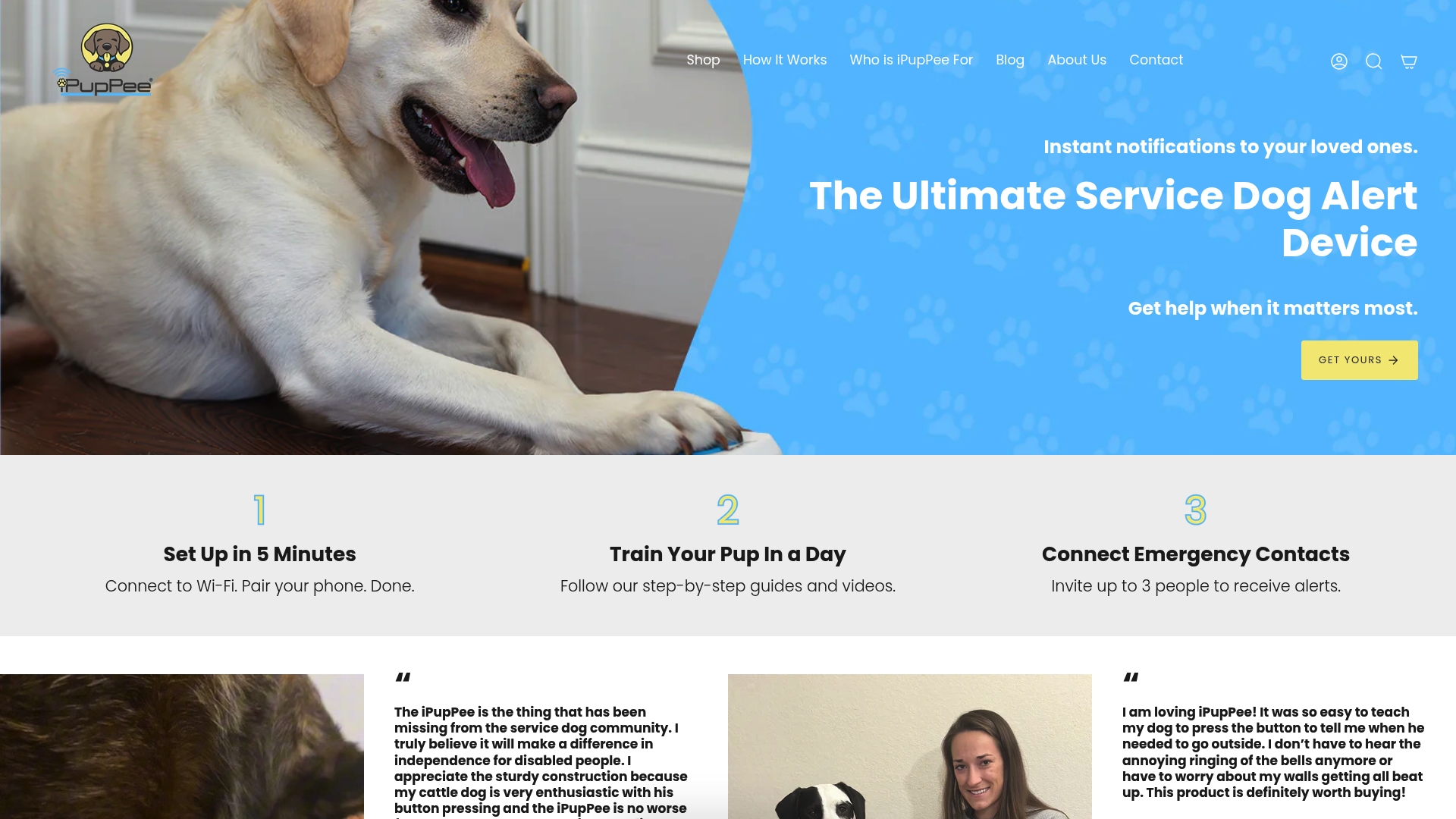
Private lessons handle the diagnosis and skill-building, but consistency between sessions is where most plans actually fall apart, and that’s the gap iPupPee was built to close. The iPupPee device lets your dog send a direct Wi-Fi alert with live video and two-way audio to you or another contact, which matters most for service dog teams, seniors, and owners who can’t always be in the room to reinforce a behavior the moment it happens.
Pair the device with the Psychology & Training Course, a self-paced program that walks you through reward-based principles to help your homework between sessions stay consistent. Combining a device and course with private lessons makes the most sense for service dog handlers, remote reinforcement needs, or households where multiple people need to stay on the same page. Neither requires a monthly subscription. If you’re already checking out, shipping protection covers your order against damage, loss, or theft for $5. Start with the iPupPee device or the training course, whichever fills the gap your current plan is missing.
Sources
The recommendations here follow the AVSAB position statement on humane dog training, the MSD Veterinary Manual’s behavior guidance, and industry adoption data from the British Columbia reward-based training study. Each source is worth reading in full if you want the clinical detail behind the recommendations above.
- Study: prevalence of reward-based methods in training businesses (BC study)
- MSD Veterinary Manual — diagnosing and managing behavior problems in dogs
- Behavioural referrals — who to choose
FAQ
What is the 3-3-3 rule for dog training?
It’s a rough guideline for newly adopted dogs: expect about 3 days to decompress, 3 weeks to start learning your routine, and 3 months to feel fully settled. It’s a general framework, not a strict timeline, and individual dogs vary widely.
Is it good to send your dog away for training?
Board-and-train programs can work well for intensive, structured immersion, but they carry real risk if the facility isn’t transparent about methods or won’t let you observe sessions. Ask detailed questions about daily methods and staff-to-dog ratios before committing, and prioritize programs that use reward-based techniques exclusively.
What is the 7-7-7 rule for dogs?
It’s an informal socialization guideline suggesting puppies get exposed to a variety of experiences, surfaces, sounds, people, and situations, in structured, positive ways during early development. Definitions of the specific categories vary by source, so treat it as a general socialization checklist rather than a fixed rule.
Where should you rub a dog to calm it down?
Slow, gentle strokes along the chest, the base of the ears, or the side of the neck tend to have a calming effect on many dogs, though every dog’s preferences differ. Watch your dog’s body language, a relaxed posture and soft eyes mean it’s working, while pulling away means it isn’t.
How much does personalized dog training cost?
Private sessions generally run $75 to $200 per hour depending on region and trainer credentials, with multi-session packages and board-and-train programs priced higher for the added intensity. If you want a lower-cost complement to private lessons, iPupPee’s Psychology & Training Course is priced at $119 one time.