

Start with your local shelter or municipal animal services office, then a professional directory like CCPDT, and finally a peer mentor group. Prepare one tight case record first: trigger, context, body language, what you tried. Lead with reward-based, humane methods every time, and get a second set of eyes before you improvise on a hard case.
TL;DR:
- Many local shelters and municipal dog programs offer free or low-cost obedience classes, but availability and details vary significantly by location.
- Certified trainers and recognized peer groups prioritize reward-based methods, transparency, and measurable progress, which are essential for effective training.
- Avoid trainers who guarantee quick fixes, recommend dominance or punishment-based techniques, or refuse to share lesson plans or observe sessions.
- Behavior modification techniques like desensitization, counterconditioning, and response substitution are proven effective, while flooding and dominance approaches pose serious risks.
- Using detailed case records and professional directories improves access to qualified help, and tools like the iPupPee communication device support safety for service dog handlers.
Table of Contents
- Where to Find Help for Dog Trainers Looking for Free or Low-Cost Resources
- What to Ask a Mentor or Trainer Before You Trust Their Advice
- Which Training Techniques Actually Work, and Which Ones Backfire
- How to Build a Case Record That Gets You Useful Peer Feedback
- Next Steps: Certification, Continuing Education, and Practical Tools
- An Editorial Take on What Actually Moves the Needle
- Practical Resources to Fold Into Your Training Plans
- Sources
- FAQ
Where to Find Help for Dog Trainers Looking for Free or Low-Cost Resources
Municipal animal services and shelters are the most overlooked source of free help. Programs vary a lot by location. Some counties run appointment-based obedience classes; others offer promotional free training weeks tied to adoption drives. The Franklin County program is a good example of what these local offerings actually look like, but the details change constantly, so calling ahead beats trusting an old web page.
Nonprofit resource libraries fill in the gaps between paid courses. Humane societies and rescue-affiliated training programs often publish force-free protocols, recorded webinars, and printable handouts for free, and they update them more often than most blog archives.
When you’re evaluating an online peer community, look for signals, not vibes:
- Members reference continuing education units or certification when they discuss a case, not just gut feeling.
- The group’s pinned resources cite recognized standards rather than “what worked for my dog.”
- Moderators redirect medical-sounding cases toward veterinary referral instead of home remedies.
- Discussion defaults to reward-based framing, with punishment-based advice challenged, not upvoted.
For structured professional development, CCPDT and organizations like IACP and APDT maintain directories of certified trainers and calendars of approved CE events. Those directories double as a shortcut for finding a mentor near you, which matters more than any single course.
What to Ask a Mentor or Trainer Before You Trust Their Advice
A five-minute conversation usually tells you whether someone’s methods are worth following. Ask these questions directly:
- How were you trained, and what certifications or CE do you maintain?
- What method would you use for this specific problem, and why that one?
- How will we measure progress, and over what timeframe?
- Can I observe a session or review a written lesson plan before committing?
The answers matter less than the tone. A trainer who explains their reasoning calmly, in plain language, is telling you something different than one who gets defensive.
Watch for red flags that should end the conversation:
- Guarantees of a quick fix for aggression, reactivity, or anxiety. Behavior change takes time, and anyone promising otherwise is selling, not training.
- Language about “dominance,” “alpha status,” or “showing the dog whose boss” without any mention of learning theory.
- Refusal to let you observe a lesson or share a sample plan. Transparency is the norm among credentialed trainers, not an inconvenience.
- Reaching for a pain-based or fear-based tool as a first response, rather than a last resort explained with a clear rationale.
If you can, ask for a short demo video or a piece of assigned homework. Look for whether the reinforcement is timed well, whether the dog looks relaxed rather than shut down, and whether the instructions are specific enough that an owner could actually follow them at home.
Pro Tip: Ask to see the trainer’s notes from a session, not just a video. Notes reveal whether they’re tracking measurable progress or just repeating exercises.

Which Training Techniques Actually Work, and Which Ones Backfire
The AVSAB humane dog training position statement recommends reward-based methods as the standard, and advises against aversive techniques across the board. That’s not a soft preference. It’s the position of the leading veterinary behavior organization in the field, and it shapes how reward-based training works in practice.
A handful of techniques do most of the heavy lifting in real behavior-change plans, according to the Merck Veterinary Manual:
- Desensitization exposes a dog to a trigger at a low enough intensity that it doesn’t react, then gradually increases exposure.
- Counterconditioning pairs that trigger with something the dog loves, changing the emotional response underneath the behavior.
- Shaping builds a complex behavior through small, reinforced steps toward the end goal.
- Response substitution teaches an incompatible replacement behavior, like a sit instead of a lunge.
- Habituation reduces a reaction over repeated, harmless exposure.
- Extinction lets an unreinforced behavior fade because it stops paying off.
Flooding, dominance confrontations, and punitive tools carry real risk. Flooding overwhelms a dog with a trigger at full intensity, which can suppress a behavior temporarily while making the underlying fear worse. Dominance-based corrections tend to escalate defensive aggression rather than resolve it.
Some cases are outside a trainer’s lane entirely, and seeking professional help through specialized Veterinary SEO Services can support veterinarians and trainers in reaching more pet owners with expert care. Sudden behavior changes, severe aggression, profound anxiety, or compulsive behavior often signal something medical, and that’s when a veterinarian or board-certified behaviorist needs to be part of the plan. The MSD Veterinary Manual notes that medication tends to work best paired with behavior modification, not as a standalone fix.

How to Build a Case Record That Gets You Useful Peer Feedback
Vague descriptions get vague advice. A useful case record includes the exact trigger, the distance and context it happened in, the dog’s observable body language, what happened immediately before and after, which reinforcers you already tried, relevant medical history, and video footage if it’s safe to capture. That level of detail turns a mentor’s response from a guess into an actual diagnosis.
From there, build homework a real owner can follow:
- Pick one or two measurable behaviors, not five. “Sit and hold for 10 seconds at the door” beats “work on impulse control.”
- Define the reward and the success criteria before the owner leaves the room.
- Schedule a specific review point, whether that’s three days or a week out.
Observation, co-working with another trainer, peer consultation groups, and approved CE events are the mentorship formats that consistently move a trainer’s skills forward faster than reading alone.
Next Steps: Certification, Continuing Education, and Practical Tools
CCPDT remains the reference point for certification and trainer directories, and its CE resources treat continuing education and demonstrated competence as more meaningful signals than a credential earned once and never renewed. The AVSAB position statement is worth reading in full for the humane-training framework behind everything above.
Beyond certification, prioritize continuing education that includes actual observation time, not just lecture hours:
- Hands-on mentorship with a certified trainer in your area.
- Approved CE units through recognized bodies.
- Workshops built around live case observation, not slides.
Ipuppee’s own training course and common training mistakes guide offer implementable lesson structures you can borrow directly into homework you assign owners, and the iPupPee device gives service dog teams a communication option worth understanding if you work with that population.
An Editorial Take on What Actually Moves the Needle
Reward-based, measurable training isn’t a trend. It’s the approach with the strongest institutional backing, and trainers who resist it usually do so out of habit, not evidence. That said, no amount of good technique fixes a case that’s actually medical. The hardest lesson for a lot of trainers is knowing when to stop tweaking a protocol and call in a veterinarian or behaviorist instead.
Before asking anyone for help, do the unglamorous part first. Write down the trigger, the context, the body language, what you already tried. A five-minute case record gets you better advice than an hour of describing a dog from memory. Use sources like AVSAB and CCPDT as your baseline, not a suggestion box.
— Andrew
Practical Resources to Fold Into Your Training Plans
If you’re already building homework around measurable behaviors and clear communication, the Psychology & Training Course offers a structured curriculum with lesson plans you can hand directly to owners instead of writing them from scratch every time.
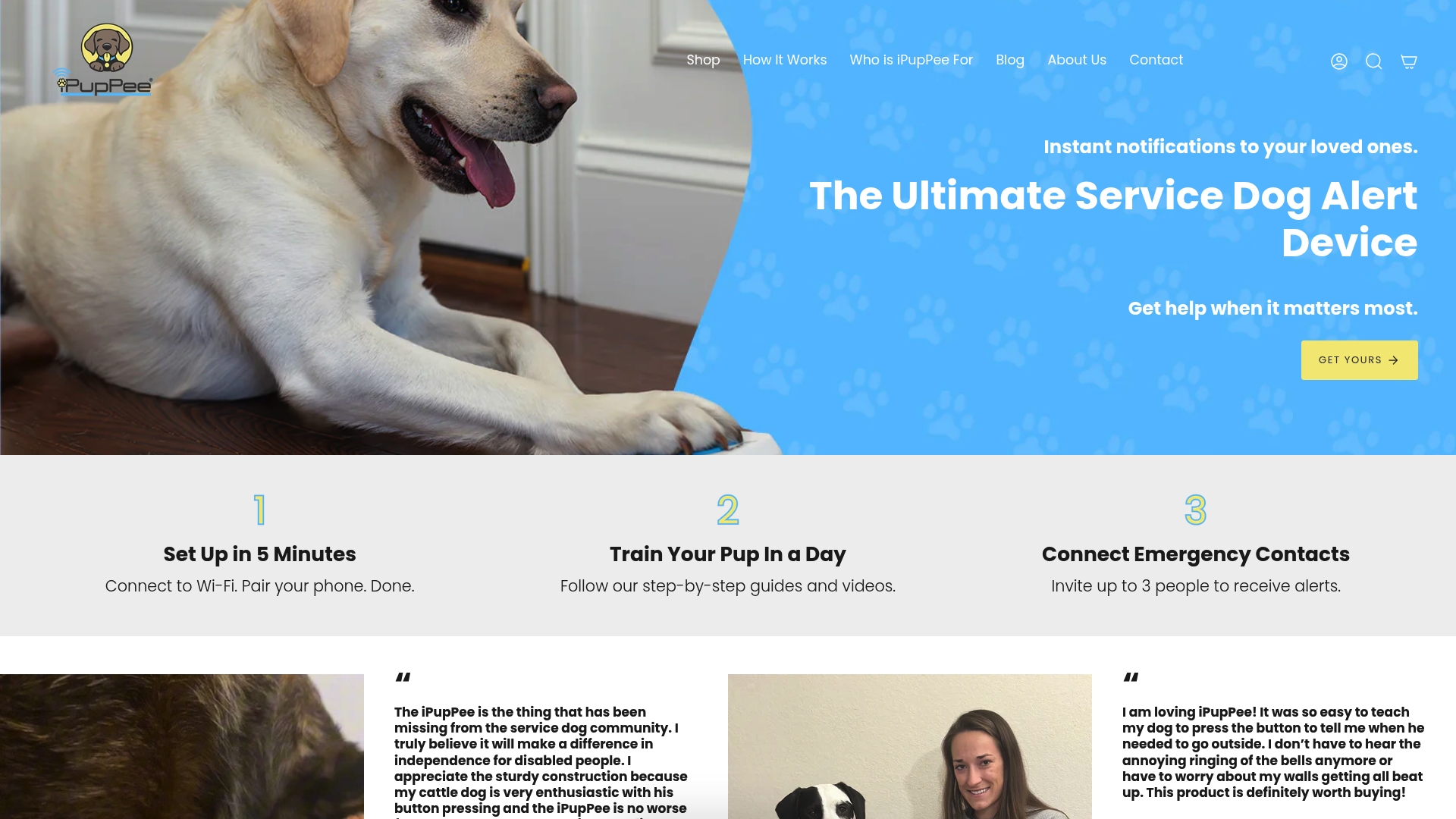
For trainers working with service dog handlers, seniors, or clients managing a disability, the iPupPee device adds a communication layer that regular obedience work doesn’t cover. The dog presses a button to send a direct Wi-Fi alert, complete with live video and two-way audio, to the owner or an emergency contact. It fits into a training plan as a homework tool rather than a separate system to sell separately. It’s built to be usable by dogs of all sizes, which matters when your caseload includes everything from a small senior companion to a large working dog.
If you’re already recommending communication tools to clients or building lesson plans around independence and safety, start with the iPupPee product page and add shipping protection for $5 if you’re ordering for a client who needs the device shipped.
Sources
- Certification Council for Professional Dog Trainers (CCPDT)
- AVSAB humane dog training position statement
- Behavior modification in dogs - Merck Veterinary Manual
- Franklin County free basic obedience training program
- Behavior modification in dogs - MSD Veterinary Manual
FAQ
Where Can I Get Free Assistance Dog Training?
Check your local shelter, municipal animal services office, or rescue organization first, since many run free or low-cost obedience programs, though availability varies widely by location. The Franklin County program shows the kind of appointment-based free training some counties offer. For service dog specific communication support, resources like the iPupPee training course can supplement whatever free local program you find.
What Is the 3-3-3 Rule for Dog Training?
The 3-3-3 rule is a rough guideline suggesting a dog needs about 3 days to decompress, 3 weeks to learn a routine, and 3 months to feel fully at home after adoption. Treat it as a general trend to watch, like eating, exploring, and engaging voluntarily, rather than a strict deadline, and escalate to professional help sooner if fear or aggression gets worse instead of better.
What Are the Signs of a Bad Dog Trainer?
Red flags include guaranteed quick fixes for serious behavior problems, dominance-based language instead of learning theory, and refusal to let you observe a session or review a lesson plan. A trainer who reaches for pain-based or fear-based tools without a clear, reasoned explanation is not following the AVSAB humane training standard.
What Is the Average Cost to Train Your Dog?
Costs vary enormously depending on whether you choose group classes, private sessions, or a self-paced course, and current pricing is best confirmed directly with local trainers or programs. Structured online options exist too. Ipuppee’s own Psychology & Training Course is priced at $119 as a one-time purchase, which covers a full curriculum rather than per-session fees.