

Yes, you can train a dog easily at home using short, reward-based sessions and consistent cues. This approach gets most beginners to solid sit, come, stay, loose-leash walking, and housetraining without a trainer’s help. It takes real consistency over several weeks, not a weekend miracle, but the daily time investment is small.
TL;DR:
- Reward-based training with short, frequent sessions speeds up learning and reduces the chances of behavior problems.
- Consistent use of markers like a clicker or word enhances the dog’s understanding of correct behaviors.
- Management tools such as crates, gates, and leashes are crucial to prevent mistakes and build reliability.
- Stronger treats, gradual proofing, and a calmer environment improve motivation and success for beginners.
- Off-leash recall remains one of the most challenging skills and requires high-value rewards with gradual difficulty.
Table of Contents
- Quick-Start Checklist: Your First Week of Dog Obedience Training at Home
- Why Positive Reinforcement Works Better Than Corrections
- Step-by-Step Basics: Teaching Sit, Come, Stay, and Leash Manners
- How Long Should a Training Session Last?
- Fixing Common Beginner Mistakes in Dog Training
- Where iPupPee Fits Into Your Training Toolkit
- A Few Thoughts on Training as Daily Communication
- Give Your Training a Head Start With Guided Tools
- Sources
- FAQ
Quick-Start Checklist: Your First Week of Dog Obedience Training at Home
You do not need special gear or a training degree to start. You need five minutes, some good treats, and a plan for the first few days.
Daily rhythm: Aim for three to five sessions a day, each lasting just three to five minutes. Dogs, especially puppies, lose focus fast, so several short bursts beat one long drill.
Gather these tools before session one:
- Soft, pea-sized treats your dog rarely gets otherwise (cooked chicken, cheese bits, or a training-specific treat)
- A clicker or a consistent marker word like “yes”
- A flat collar or a well-fitted harness
- A crate or baby gates for containment during unsupervised moments
Start with three behaviors, in this order:
- Name recognition/attention: Say your dog’s name; the instant they look at you, mark and reward.
- Sit: Hold a treat at nose height, move it slowly up and back over the head until the hips drop, then mark and reward.
- Recall: Crouch down, say “come” in a happy voice, and reward heavily the moment your dog arrives.
Manage the environment from day one. Close doors, use the crate for downtime, and keep a leash on indoors if your dog tends to bolt. Reducing chances to fail is half the battle.
Why Positive Reinforcement Works Better Than Corrections
Positive reinforcement means adding something the dog wants (a treat, praise, play) right after a good behavior, which makes that behavior more likely to happen again. Negative punishment, by contrast, removes something the dog wants, like ending playtime when biting starts. Both work through consequences, but one builds trust and the other risks eroding it.
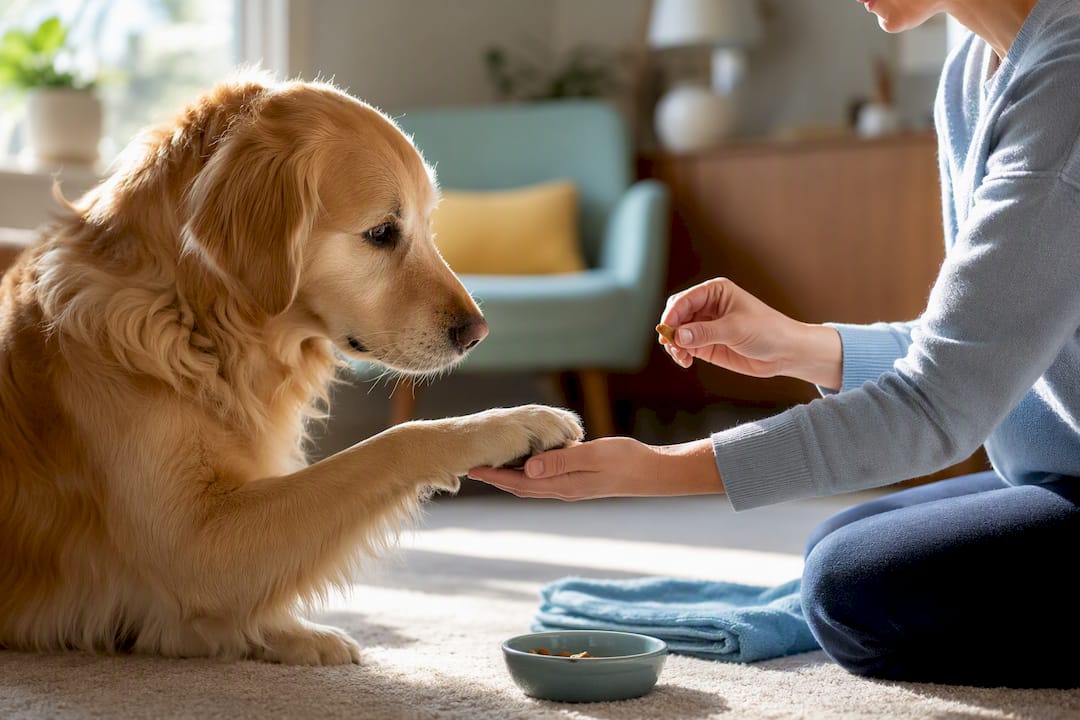
The AVSAB position statement on humane dog training recommends reward-based methods and warns that aversive techniques, like shock collars or leash jerks, can damage the human-animal bond and increase fear or aggression. A controlled comparison of reward-based and mixed training methods in working dogs measured both how many sessions dogs needed to learn a task and how well they performed on standardized tests. Reward-based groups came out ahead on both counts, backing up what the AVSAB statement recommends.
A marker, whether it is a clicker click or a spoken word like “yes,” tells your dog the exact instant they did something right. Timing matters enormously here: a reward that arrives even two seconds late can mark the wrong behavior entirely.
- Positive reinforcement adds a good consequence to increase a behavior.
- Markers bridge the gap between the action and the treat, sharpening the dog’s understanding.
- Management (crates, gates, leashes) prevents mistakes from ever becoming habits.
Quick fact: A review of training method outcomes found reward-based training linked to faster learning and fewer behavior problems compared with aversive approaches across multiple studies.
Step-by-Step Basics: Teaching Sit, Come, Stay, and Leash Manners
Every basic command follows the same pattern: lure the behavior, mark it, reward it, then fade the lure into a verbal cue.
Sit
- Lure with a treat over the nose, up and back, until the dog sits.
- Mark the instant the hips touch the ground, then reward.
- After a few clean reps, say “sit” right before you lure, so the word starts predicting the action.
- Once the dog sits on cue reliably, drop the hand lure and use just the word plus a hand signal if you like.
Come (recall)
- Practice in a hallway or fenced yard first, never near traffic or off-leash in open areas until the behavior is bulletproof.
- Use your highest-value reward for recall specifically. This command can be a literal lifesaver, so it deserves the best treat in the bag.
- Start at three to five feet away and build distance gradually.
Stay
- Ask for a sit, then reward for just one second of stillness before releasing with a word like “okay.”
- Add a second or two at a time. Rushing duration is the most common reason stay falls apart.
- Reward generously for holding position, and always release with the same word so the dog knows when they are free to move.
Loose-leash walking
- Reward your dog every few steps for staying near your side.
- The moment the leash goes tight, stop walking entirely. Wait for slack, then reward and continue.
- This stop-and-reset method teaches the dog that pulling gets them nowhere, literally.
Housetraining
- Take puppies out every one to two hours, plus immediately after meals, naps, and play.
- Reward elimination in the right spot within seconds, while your dog is still finishing.
- Use the crate for any time you cannot supervise directly. Dogs rarely soil the space they sleep in.
Pro Tip: Keep treats in a pouch on your body at all times during the first two weeks. The single biggest reason beginners struggle isn’t the dog, it’s not having a reward ready within one second of the right behavior.
How Long Should a Training Session Last?
Short sessions work because attention spans, especially in puppies, drop off fast once boredom sets in. Sessions lasting a few minutes, repeated several times a day, generally work better than one long marathon session.
- Warm up with a known behavior like sit to build momentum and confidence.
- Introduce or drill the target skill for the bulk of the session.
- Proof it by adjusting one of three variables at a time: distance, duration, or distraction, the framework AKC trainers use to make behaviors reliable anywhere.
- End on a win. Close every session with something the dog already knows well.
Once a behavior holds up around real distractions, start fading treats to intermittent rewards, praise, and life rewards like a walk or a chance to sniff. Jot down a one-line note after each session (“sit held for 10 seconds with the doorbell ringing”) to track real progress instead of guessing.
Fixing Common Beginner Mistakes in Dog Training
Low motivation almost always traces back to reward value or difficulty, not a stubborn dog. Bump up to a stronger treat, back away from distractions, or break the task into a smaller step before trying again.
Punishment tends to backfire. It can suppress a behavior temporarily while teaching the dog to fear you or the situation rather than what to do instead, according to the Merck Veterinary Manual’s overview of behavior modification. Manage the environment so unwanted behaviors simply cannot happen, rather than waiting to correct them after the fact.
- Low motivation: raise reward value, lower difficulty, shrink the step size.
- Distraction: retreat to an easier environment, then rebuild gradually.
- Regression: check for a schedule change, illness, or a skipped proofing step.
- Red flags needing a vet or certified behaviorist: sudden aggression, unexplained fear, or any abrupt personality shift that might signal pain or illness.
Where iPupPee Fits Into Your Training Toolkit
Reading your dog’s signals matters just as much as timing your rewards. Ipuppee’s guide to canine body language and stress detection and its breakdown of easy training methods for better communication both expand on the basics covered here.
For owners who want a next-level layer of communication, especially service dog handlers, seniors, or anyone managing a dog with special needs, the iPupPee device and its companion course pair reward-based fundamentals with tools built for real-world independence.

A Few Thoughts on Training as Daily Communication
Training a dog easily isn’t really about tricks. It’s about building a shared language, one small rep at a time. Some days you’ll see obvious progress; other days it feels flat, and that’s normal. The wins compound quietly over weeks, not sessions. Keep the credentials and stories above in mind. They exist because this stuff works when you stick with it.
— Andrew
Give Your Training a Head Start With Guided Tools
Ipuppee is the option for owners who want structured, step-by-step help instead of piecing a plan together from scattered articles and videos. The Psychology & Training Course walks you through the same reward-based fundamentals covered here, priced once at $119 with no recurring fees.
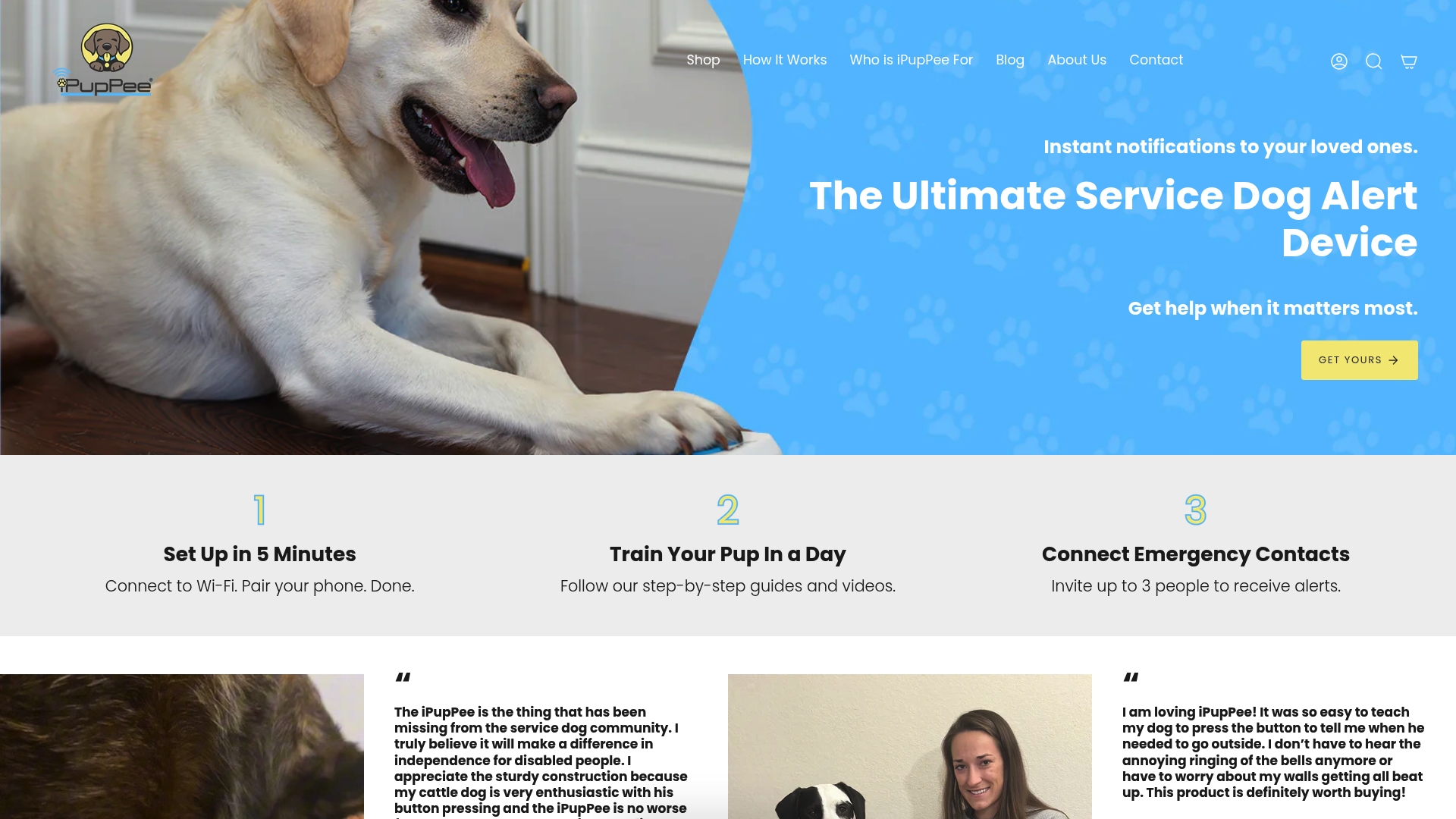
For service dog handlers, seniors, and owners managing accessibility needs, the iPupPee alert device adds a layer these basics can’t: a button your dog can press to send a real-time Wi-Fi notification with live video and two-way audio to you or an emergency contact, no monthly subscription required, at $129.99 one-off. It’s built for dogs of all sizes and comes with its own training guides, so it slots directly into the reward-based habits you’re already building. Check the training course page to see what’s included before your next session.
Sources
- AVSAB humane dog training position statement
- Comparative study of reward vs mixed training methods (PMC)
- AKC expert tips for dog training
- Merck Veterinary Manual — behavior modification in dogs
FAQ
What Is the 3-3-3 Rule for Dog Training?
The 3-3-3 rule is a rough guideline for newly adopted dogs: expect roughly 3 days to decompress, 3 weeks to settle into a routine, and 3 months to feel fully at home. It’s a general expectation-setting tool, not a strict training schedule, and individual dogs vary widely.
What Is the Fastest Way to Train Your Dog?
The fastest reliable path combines short, frequent reward-based sessions with immediate marker timing and consistent cues, an approach AKC trainers recommend for quicker, more durable learning. Rushing past proofing steps, like adding distractions too soon, usually slows things down instead.
What Is the 7-7-7 Rule for Dogs?
Definitions vary across sources, and there’s no single research-backed standard for this rule, so treat any specific version you find online with caution. If you’re using it as a socialization checklist for a young puppy, confirm the details with your veterinarian rather than a generic list.
What Is the Hardest Thing to Teach a Dog?
Reliable off-leash recall around heavy distractions is one of the toughest skills for most beginners, because it requires the dog to choose you over something exciting in the environment. When recall breaks down, AKC guidance on reliable recalls suggests dropping back to shorter distances and higher-value rewards before building difficulty again.