

Most advice about independent dog behavior gets it wrong. Many American families assume dogs that act on their own are stubborn or unfriendly when in fact, true independence shows complex thinking and adaptability. Studies reveal that physical traits are poor predictors of independence in any breed, upending common dog-owner assumptions. This guide highlights what really shapes independent dog behavior, dispels myths, and shows how understanding these traits can help every American dog owner build a better bond with their pet.
Table of Contents
- Defining Independent Dog Behavior And Misconceptions
- Types Of Independent Behavior In Dogs
- Traits And Origins Of Canine Independence
- Independent Dogs In Service And Home Life
- Training Methods And Common Challenges
Key Takeaways
| Point | Details |
|---|---|
| Understanding Independence | Independent dog behavior reflects unique psychological traits and is influenced by breed characteristics and individual experiences. |
| Complex Behavioral Spectrum | Independence is not binary; dogs exhibit a range of self-directed behaviors and social engagement preferences. |
| Training Considerations | Tailor training methods to respect a dog’s autonomy, emphasizing patience and clear communication. |
| Service Dog Roles | Independent dogs can excel in service roles, balancing self-sufficiency with the ability to collaborate with their handlers. |
Defining Independent Dog Behavior and Misconceptions
Understanding independent dog behavior involves recognizing the complex psychological patterns that define a dog’s capacity for autonomous decision making. Contrary to popular belief, independence in dogs is not simply about being aloof or unresponsive, but represents a nuanced spectrum of behavioral traits that reflect a dog’s individual temperament, breed characteristics, and learned experiences.
Research challenges traditional assumptions about breed-based behavior prediction. A comprehensive study published in the journal Science revealed that physical characteristics alone are poor indicators of individual behavioral patterns. While certain breeds might exhibit tendencies toward independence, individual dogs can demonstrate significant variation in their behavioral responses. This means that a dog’s background, training, and personal experiences play a crucial role in shaping their independence level.
The scientific understanding of canine independence is further complicated by breed-specific traits. Research in Applied Animal Behaviour Science demonstrates how different breeds, historically selected for varying levels of human cooperation, exhibit distinct separation-related behaviors. Some breeds display more intense reactions to owner separation, suggesting that genetic predispositions significantly influence a dog’s capacity for independent functioning.
Pro Tip for Dog Owners: Assess your individual dog’s independence by observing their problem-solving skills, adaptability to new environments, and ability to self-entertain, rather than relying solely on breed stereotypes.
Types of Independent Behavior in Dogs
Dog independence manifests through various complex behavioral patterns that reflect an animal’s unique psychological makeup. While independence might seem straightforward, it encompasses a nuanced range of interactions and self-directed actions that differ significantly across individual dogs and breed characteristics.
Urban ecosystem studies of free-ranging dogs reveal fascinating insights into canine social independence. Research demonstrates that dogs often make deliberate choices about social engagement, with some preferring solitary activities while maintaining the capacity to form temporary, uncorrelated social groups. This suggests that independence is not a binary trait but a sophisticated behavioral spectrum.
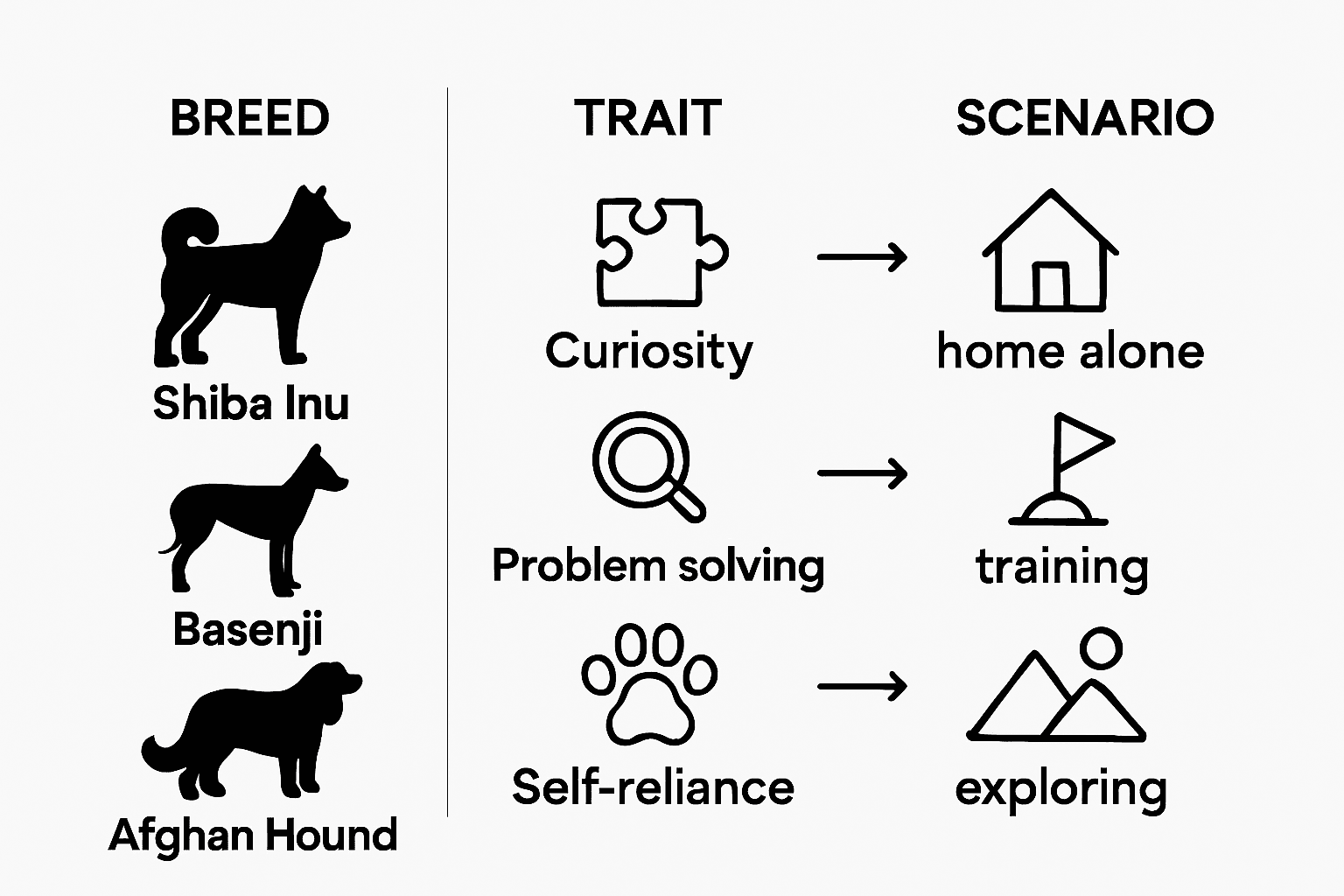
Certain dog breeds are particularly renowned for their independent nature. Specific breeds like Greyhounds, Shiba Inus, Basset Hounds, and Chinese Shar-Peis consistently exhibit distinctive independent behaviors, which might include:
- Seeking personal space and solitude
- Displaying strong-willed personalities
- Maintaining calm, self-contained temperaments
- Showing less dependence on constant human interaction
- Demonstrating problem-solving skills without continuous guidance
These independent behaviors do not necessarily indicate a lack of affection, but rather represent a dog’s unique approach to navigating their environment and social interactions. Understanding these nuanced behavioral patterns helps owners develop more effective communication and training strategies.
Pro Tip for Dog Owners: Recognize and respect your dog’s individual independence by providing structured opportunities for autonomous decision-making during training and daily interactions.
Traits and Origins of Canine Independence
Canine independence is a complex behavioral trait deeply rooted in evolutionary history and selective breeding practices. Genetic predispositions play a crucial role in shaping how individual dogs interact with their environment, respond to human commands, and make autonomous decisions.
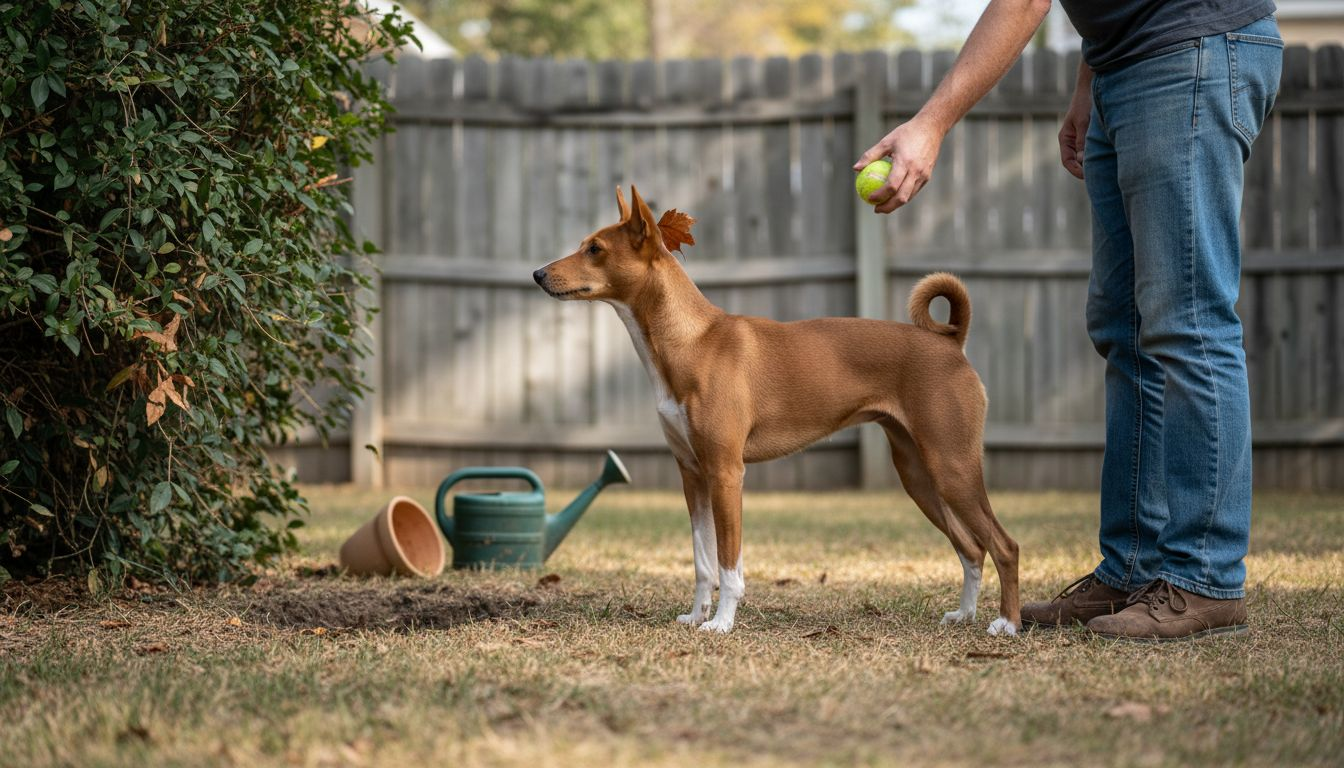
Stanley Coren’s seminal work on dog intelligence reveals that independence is not a monolithic trait, but a nuanced combination of three distinct intelligence types: instinctive, adaptive, and working/obedience intelligence. Instinctive intelligence particularly highlights how certain breeds were historically developed to perform tasks requiring significant independent thinking and problem-solving skills.
Breed-specific characteristics significantly influence independent behaviors. Research from the International Veterinary Chiropractic Association demonstrates that herding and hunting breeds often exhibit the most pronounced independent traits. These dogs typically display unique behavioral characteristics such as:
- Preference for one-on-one interactions
- Ability to make autonomous decisions
- Strong task-oriented behaviors
- Less dependency on constant human direction
- Quick adaptive problem-solving skills
The origins of canine independence can be traced back to their wolf ancestors, where survival depended on individual decision-making capabilities. Domestication and selective breeding have refined these traits, creating dogs with varying levels of independence tailored to specific working and companionship roles.
Pro Tip for Dog Owners: Recognize your dog’s unique independence profile by observing their problem-solving approaches and adaptability to different situations, rather than expecting uniform behavior across all dogs.
Independent Dogs in Service and Home Life
Service dog roles demand a unique blend of independence and cooperation, with certain breeds demonstrating remarkable adaptability to complex working environments. The relationship between a dog’s independent nature and its ability to perform specialized tasks creates a fascinating dynamic of trust, training, and mutual understanding.
Research on functional breed selection reveals that dogs bred for cooperative tasks exhibit nuanced separation-related behaviors, which significantly impacts their performance in service and home environments. Independent dogs often excel in roles requiring autonomous decision-making, such as guide dogs for individuals with disabilities, medical alert dogs, and mobility assistance dogs.
Independent dog breeds demonstrate unique characteristics that make them exceptional service and home companions, including:
Here is a comparison of independence-related dog personality traits and their ideal home or work environments:
| Trait Focus | Example Breed | Best Home Environment | Ideal Service Role |
|---|---|---|---|
| High problem-solving | Shiba Inu | Active owners, mental enrichment | Medical alert work |
| Calm self-sufficiency | Basset Hound | Quiet home, moderate exercise | Therapy or emotional support |
| Task-oriented autonomy | Border Collie | Working farms, interactive play | Herding or search and rescue |
| Quick adaptability | Greyhound | Urban families, routine walks | Mobility assistance |
- High adaptability to changing environments
- Strong problem-solving capabilities
- Reduced anxiety when working or left alone
- Enhanced ability to focus on task-specific requirements
- Minimal dependency on constant human direction
These dogs strike a delicate balance between self-sufficiency and attentiveness, making them ideal for handlers who require a reliable yet not overly clingy companion. Their ability to assess situations independently while maintaining a strong connection with their handler represents the pinnacle of canine-human partnership.
Pro Tip for Dog Handlers: Cultivate your independent dog’s strengths by providing structured training that respects their autonomous nature while reinforcing critical communication and teamwork skills.
Training Methods and Common Challenges
Training independent dogs requires a sophisticated approach that recognizes their unique psychological profile and intrinsic behavioral patterns. Behavioral modification techniques must be carefully tailored to respect their autonomous nature while establishing clear communication and mutual understanding.
Experimental research examining behavioral interventions reveals that consistent positive reinforcement strategies are remarkably effective in addressing canine behavioral challenges. These studies demonstrate that methods like response-independent treat delivery and differential reinforcement can successfully mitigate unwanted behaviors, particularly in dogs with strong independent tendencies.
Scientific personality assessments of dogs highlight the complexity of individual behavioral traits, identifying seven core personality dimensions and six distinct unwanted behavior categories. This research underscores the importance of personalized training approaches that consider:
- Individual temperament variations
- Breed-specific behavioral predispositions
- Unique learning and communication styles
- Contextual environmental influences
- Psychological motivation patterns
Successful training of independent dogs demands patience, consistency, and a deep understanding of their intrinsic motivations. Handlers must balance structured guidance with opportunities for autonomous decision-making, creating a collaborative learning environment that respects the dog’s inherent personality.
This table summarizes positive reinforcement methods and their primary benefits for training independent dogs:
| Training Method | Key Benefit | Typical Outcome |
|---|---|---|
| Response-independent treat giving | Builds trust, reduces anxiety | Increased engagement |
| Differential reinforcement | Focuses attention on desired action | Faster learning curve |
| Consistent verbal cues | Clarifies expectations | Better long-term retention |
| Short, frequent sessions | Prevents boredom | Sustained interest in training |
Pro Tip for Training Independent Dogs: Design training sessions that provide clear boundaries while simultaneously allowing your dog to exercise problem-solving skills, using positive reinforcement to encourage desired behaviors without suppressing their natural independence.
Enhance Communication and Safety with Your Independent Dog
Independent dogs often present unique challenges in communication and safety. This article highlights how recognizing your dog’s autonomous nature and problem-solving skills can improve your training and daily interactions. However, these very traits can sometimes create gaps in communication when quick or clear signals are needed for safety, especially for service dog handlers or owners living alone.
Discover how the innovative device from iPupPee bridges this communication gap. Designed specifically to empower independent dogs and their owners, the iPupPee alert device lets your dog easily convey needs or emergencies through a simple button press. This tool supports safety without compromising your dog’s autonomy. Visit iPupPee now to explore training guidance and real customer experiences that prove its effectiveness for independent breeds and service dogs alike. Take control of communication today to strengthen trust and ensure your dog’s independence works for you both.
Frequently Asked Questions
What is independent dog behavior?
Independent dog behavior refers to a dog’s capacity for autonomous decision-making, showcasing a range of traits shaped by temperament, breed characteristics, and experiences rather than being purely aloof or unresponsive.
How can I assess my dog’s level of independence?
You can assess your dog’s independence by observing their problem-solving skills, adaptability to new environments, and ability to self-entertain during training and daily interactions.
What breeds are known for independent behavior?
Breeds such as Greyhounds, Shiba Inus, Basset Hounds, and Chinese Shar-Peis are often recognized for their independent nature, displaying distinct traits such as seeking personal space and showing strong-willed personalities.
How can I train an independent dog effectively?
Training an independent dog requires using positive reinforcement techniques that respect their autonomy while establishing clear communication. Incorporate short, frequent sessions that allow them to exercise problem-solving skills without suppressing their independent tendencies.
Recommended
- Pet Communication: Enhancing Safety and Independence – iPupPee
- 8 Essential Dog Safety Training Tips Every Owner Should Know – iPupPee
- How to Improve Dog Safety at Home and Outdoors 2025 – iPupPee
- Top Benefits of Dog Training for All Pet Owners in 2025 – iPupPee
- Bearded Dragon Behavior Signs – What Owners Must Know