

More than forty percent of American households include at least one dog, yet misunderstandings about pet communication remain stubbornly common. Many owners still believe all dogs behave the same way, but every animal interprets signals and emotions differently. Knowing how to read subtle behaviors and debunking old myths can dramatically improve the relationship between people and their pets. This guide reveals how paying attention to small cues leads to better safety, stronger bonds, and happier dogs.
Table of Contents
- Defining Pet Communication And Common Myths
- How Dogs Express Needs And Emotions
- Pet Communication Devices For Better Safety
- Role In Service And Assistance Dog Support
- Risks Of Miscommunication And Training Challenges
Key Takeaways
| Point | Details |
|---|---|
| Dynamic Communication | Pet communication is a reciprocal process involving both animals and humans, requiring attentive observation of subtle cues. |
| Unique Expression | Dogs exhibit individual communication styles influenced by breed, personality, and past experiences, leading to diverse expressions of needs and emotions. |
| Technology’s Role | Innovative communication devices can enhance understanding between pets and owners, promoting safety and well-being. |
| Training Challenges | Miscommunication can lead to behavioral issues; successful training relies on patience and a commitment to understanding each dog’s unique signals. |
Defining Pet Communication and Common Myths
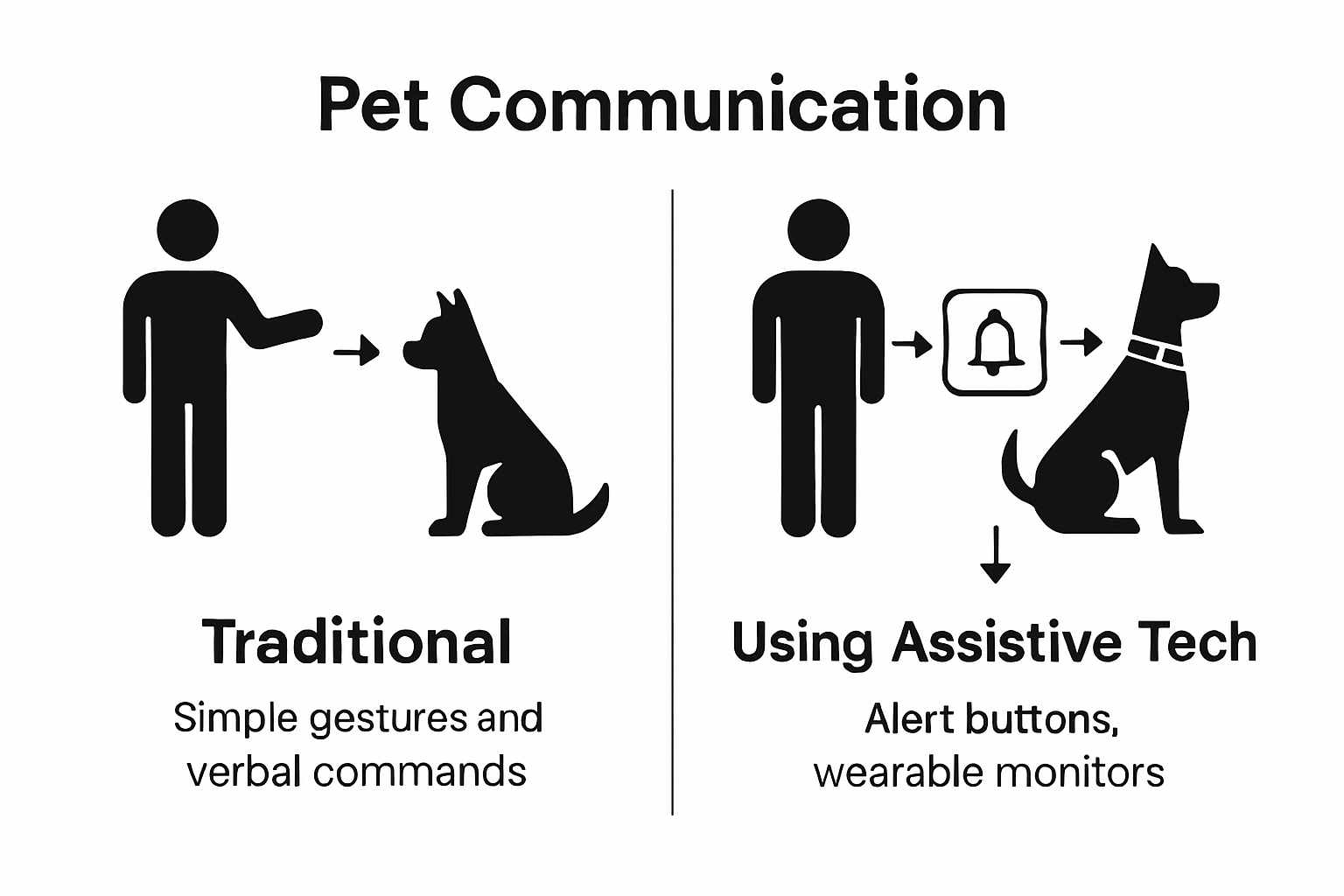
Pet communication is a nuanced system of interaction between animals and humans that goes far beyond simple vocal commands. At its core, communication involves the transfer of information through behavioral signals, body language, vocalizations, and contextual understanding. Dogs have developed sophisticated communication strategies that allow them to convey complex emotional and physical states to their human companions.
Contrary to popular belief, pet communication is not a one-way street where humans simply issue instructions. It’s a dynamic, reciprocal process involving subtle cues and mutual understanding. Dogs use an intricate combination of tail positions, ear movements, facial expressions, and vocalization pitches to express everything from anxiety and excitement to pain and contentment. Body language plays a critical role, with specific postures communicating different messages that attentive owners can learn to interpret.
Some common myths about pet communication persist, creating barriers to effective human-animal relationships. One prevalent misconception is that all dogs communicate identically, when in reality, communication styles vary significantly across breeds, individual personalities, and past experiences. Another myth suggests that dogs always want direct eye contact or constant physical interaction, when many animals actually find prolonged staring threatening. Philosophical analysis of animal communication reveals that understanding requires nuanced observation and respect for each animal’s unique communicative approach.
Effective pet communication involves several key elements:
- Recognizing individual communication patterns
- Understanding contextual signals
- Developing consistent response mechanisms
- Practicing patient, attentive observation
By debunking myths and developing a more sophisticated understanding of how pets express themselves, owners can build stronger, more responsive relationships with their animal companions.
How Dogs Express Needs and Emotions
Dog communication is a complex, multilayered process that goes far beyond simple barking or tail wagging. Dogs have developed intricate ways of communicating their emotional states and physical needs, demonstrating remarkable emotional intelligence that allows them to interact deeply with human companions.

Emotional expression in dogs involves a sophisticated combination of physical signals and behavioral cues. Tail positioning, ear movements, body posture, and facial expressions all work together to convey nuanced emotional information. A tucked tail might signal fear, while a relaxed, slightly wagging tail indicates contentment. Vocalizations also play a critical role, with different types of barks, whines, and growls communicating distinct messages ranging from excitement and playfulness to anxiety or potential threat.
Scientific research reveals dogs’ remarkable ability to recognize and respond to human emotional signals, indicating a profound interspecies emotional connection. Dogs can detect subtle changes in human facial expressions, vocal tones, and body language, allowing them to adjust their behavior accordingly. This emotional attunement helps them communicate their own needs effectively, whether they’re signaling hunger, discomfort, the need for attention, or a desire to play.
Key ways dogs express their needs and emotions include:
- Physical positioning (leaning, sitting close, moving away)
- Specific vocalizations (whining, barking, soft grumbles)
- Eye contact and gaze direction
- Tail and ear movements
- Overall body language and posture
By learning to read these complex communication signals, dog owners can develop deeper, more responsive relationships with their animal companions, enhancing mutual understanding and emotional connection.
Pet Communication Devices for Better Safety
Advancements in technology are transforming how we understand and support pet safety through innovative communication devices. Machine learning approaches are revolutionizing our ability to interpret canine emotional states, offering unprecedented insights into pet communication and potential safety interventions.
Modern pet communication devices range from simple alert buttons to sophisticated emotional analysis systems. These technologies help bridge communication gaps between pets and their owners, particularly for individuals with disabilities, seniors, or those living alone. Some devices can detect changes in a dog’s vocalization patterns, body temperature, or movement that might indicate distress, medical issues, or potential safety risks.
Continuous emotion monitoring models provide increasingly nuanced representations of pet emotional states, enabling more proactive safety interventions. These advanced systems can track subtle changes in a dog’s behavior, potentially alerting owners to conditions like anxiety, pain, or emerging health concerns before they become critical. The goal of these technologies is not just to monitor, but to enhance mutual understanding and create safer environments for both pets and their humans.
Key features of modern pet communication devices include:
- Real-time emotional state tracking
- Customizable alert systems
- Integration with smartphone applications
- Advanced sound and movement analysis
- Health and behavioral monitoring capabilities
By leveraging these innovative technologies, pet owners can create more responsive, safer environments that prioritize their animals’ well-being and strengthen the human-animal bond.
Role in Service and Assistance Dog Support
Service dogs play a transformative role in supporting individuals with disabilities, providing far more than companionship through their specialized training and remarkable ability to enhance personal safety and independence. These extraordinary animals undergo rigorous preparation to assist people with diverse physical, emotional, and neurological challenges, developing sophisticated communication skills that enable them to respond to complex human needs.
The responsibilities of service and assistance dogs extend across multiple domains of support. For individuals with mobility impairments, these dogs can retrieve objects, open doors, provide physical stability, and help navigate challenging environments. Those with medical conditions like epilepsy or diabetes benefit from dogs trained to detect and alert their handlers to potential health emergencies before they become critical. School environments have also recognized the profound therapeutic impact of trained support dogs, demonstrating how these animals contribute to emotional well-being and safety beyond traditional assistance roles.
Training for service dogs involves intensive preparation that goes far beyond basic obedience. These animals learn complex task sequences, emotional regulation techniques, and highly nuanced communication strategies. They must remain calm in stressful situations, ignore potential distractions, and maintain laser-focused attention on their handler’s specific needs. This level of training requires exceptional temperament, intelligence, and a deep capacity for interspecies communication.
Key support roles of service and assistance dogs include:
- Medical emergency detection
- Mobility assistance
- Emotional regulation support
- Navigation and orientation guidance
- Psychiatric and psychological support
By providing comprehensive support across physical, emotional, and practical domains, service dogs help individuals with disabilities achieve greater autonomy, confidence, and quality of life.
Risks of Miscommunication and Training Challenges
Communication breakdown between humans and dogs can lead to significant behavioral and safety challenges that extend far beyond simple training frustrations. Research into canine emotional intelligence highlights the critical importance of understanding nuanced communication signals, revealing that misinterpretation can result in escalating tensions and potential safety risks.
Dog body language represents a complex system of emotional and intentional communication that requires careful study and interpretation. Misunderstanding these signals can lead to inappropriate responses, increased anxiety, and potentially dangerous interactions. For instance, a dog’s seemingly aggressive posture might actually be a fear response, while a wagging tail doesn’t always indicate friendliness. Trainers and owners must develop sophisticated observation skills to accurately read and respond to these subtle communication cues.
Training challenges emerge from multiple sources, including individual dog temperaments, past experiences, breed-specific characteristics, and human communication limitations. Some dogs may have experienced trauma that complicates their ability to trust and communicate effectively. Others might have neurological or sensory differences that make traditional training approaches less effective. The most successful training strategies involve patience, consistent positive reinforcement, and a deep commitment to understanding each dog’s unique communication style.
Key risks of miscommunication include:
- Escalating aggressive behaviors
- Increased anxiety and stress
- Breakdown of trust between dog and handler
- Potential safety incidents
- Reduced effectiveness of training interventions
Successful communication requires ongoing education, empathy, and a willingness to learn and adapt to each dog’s individual needs and communication preferences.
Strengthen Your Bond with Your Dog Through Clear Communication and Enhanced Safety
The article highlights the crucial need to understand your dog’s unique communication signals to avoid misinterpretation that can lead to anxiety, stress, or even safety risks. If you want to bridge this communication gap and support your dog’s emotional and physical needs effectively, explore solutions that empower you to respond promptly and accurately. Whether you have a service dog, a new puppy, or a rescue dog, recognizing and addressing their signals helps build trust and independence while preventing dangerous situations.

Discover the innovative iPupPee communication device designed to simplify interaction between dogs and their owners. This easy-to-use alert system allows dogs to convey their needs with a simple button press, offering safety and independence especially for disabled individuals, seniors, and those living alone. Supported by detailed training instructions and heartfelt customer testimonials, iPupPee helps you turn subtle signals into clear messages. Take the first step toward stronger communication and safer companionship today by visiting https://ipuppee.com and learn how you can enhance your dog’s well-being and your peace of mind.
Frequently Asked Questions
What is pet communication?
Pet communication refers to the nuanced interactions between animals and humans, which include behavioral signals, body language, and vocalizations. It allows pets, especially dogs, to convey their emotional and physical states effectively to their human companions.
How do dogs express their needs and emotions?
Dogs express their needs and emotions through a combination of physical signals like tail positioning, ear movements, and body posture, as well as vocalizations such as barking, whining, and growling. For example, a wagging tail indicates happiness, while a tucked tail may indicate fear.
What are modern pet communication devices, and how do they enhance safety?
Modern pet communication devices range from alert buttons to advanced emotion monitoring systems. These devices help bridge communication gaps by detecting changes in a pet’s vocalizations or behavior that indicate distress or potential safety risks, ultimately creating safer environments for pets and their owners.
What role do service dogs play in enhancing independence for individuals with disabilities?
Service dogs provide vital support by assisting with mobility, alerting to medical emergencies, and offering emotional regulation support. Their specialized training allows them to communicate effectively and respond to the complex needs of individuals with disabilities, enhancing their independence and quality of life.